
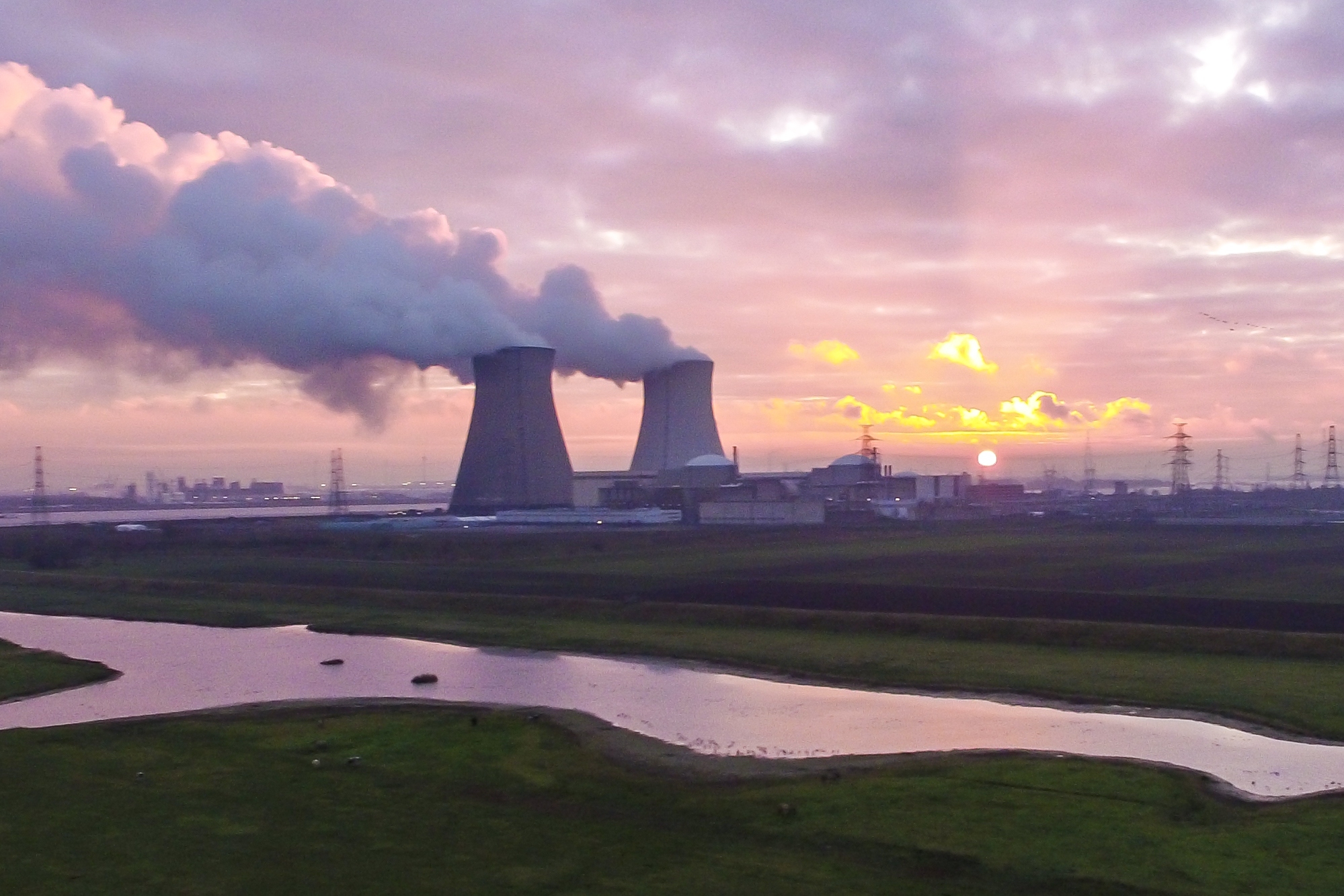
Belgium spent two decades preparing to abandon nuclear power. Now it is extending reactors, exploring a new generation of mini-nukes and rediscovering the appeal of atomic energy. Dennis Abbott finds out whether it is, as its proponents say it is safer, cleaner and more essential than ever.
Anicet Touré is one of the country’s foremost nuclear engineers, and a man on a mission to extol the virtues of an industry that still inspires qualms – not least over its safety record (Chernobyl and Fukushima immediately spring to mind) and the health risks associated with radiation and radioactive waste.
In an era of geopolitical instability, there is also the fear that an unhinged government leader could press the nuclear button. And if that sounds a tad far-fetched (one hopes), given the multiple authentications required in military communications, few among the powers-that-be can entirely rule out a non-state actor getting hold of a nuclear weapon and triggering a global catastrophe.
So, to put it mildly, the benefits of much-heralded low-carbon nuclear will never be an easy sell, even for a man as evangelical as Touré, the 36-year-old head of strategy, business development and innovation at Tractebel’s Brussels headquarters.
A subsidiary of French utility giant Engie, Tractebel provides the engineering and design know-how for its better-known sister company Electrabel, which operates Belgium’s two nuclear power plants at Doel in Flanders and Tihange in Wallonia. But let’s not get ahead of ourselves. It takes some time before I am acquainted with Touré.
Belgium’s nuclear landscape is fiendishly complex, with a web of federal, regional, private and academic players. They bear unlikely-sounding acronyms such as HADES (not reassuring at first glance, given the subject matter) and Dutch-Francophone mash-ups such as FANC-AFCN and NIRAS-ONDRAF.
Ironically, they are better known by their English names:the Federal Agency for Nuclear Control in the former case, and the National Agency for Radioactive Waste and Enriched Fissile Material in the latter – neither exactly trips off the tongue.
Polarised
The debate over nuclear power remains polarised in Belgium. Uncertainty over how the country’s plants will be run in future – and the eye-wateringly expensive arrangements involved – is the focus of intense negotiations between Engie and the government.
The sensitivities mean few in the industry are prepared to talk. The editor’s initial idea for a site visit is rejected out of hand. “Access to our nuclear power plants is strictly limited to staff and contractors,” says an Engie Belgium spokesperson sniffily.
“What if the prime minister wants to come?” I gently inquire.
“In the rare event that a government member visits one of our nuclear sites, they enter the restricted area alone. Journalists are not permitted to join them.” Right.
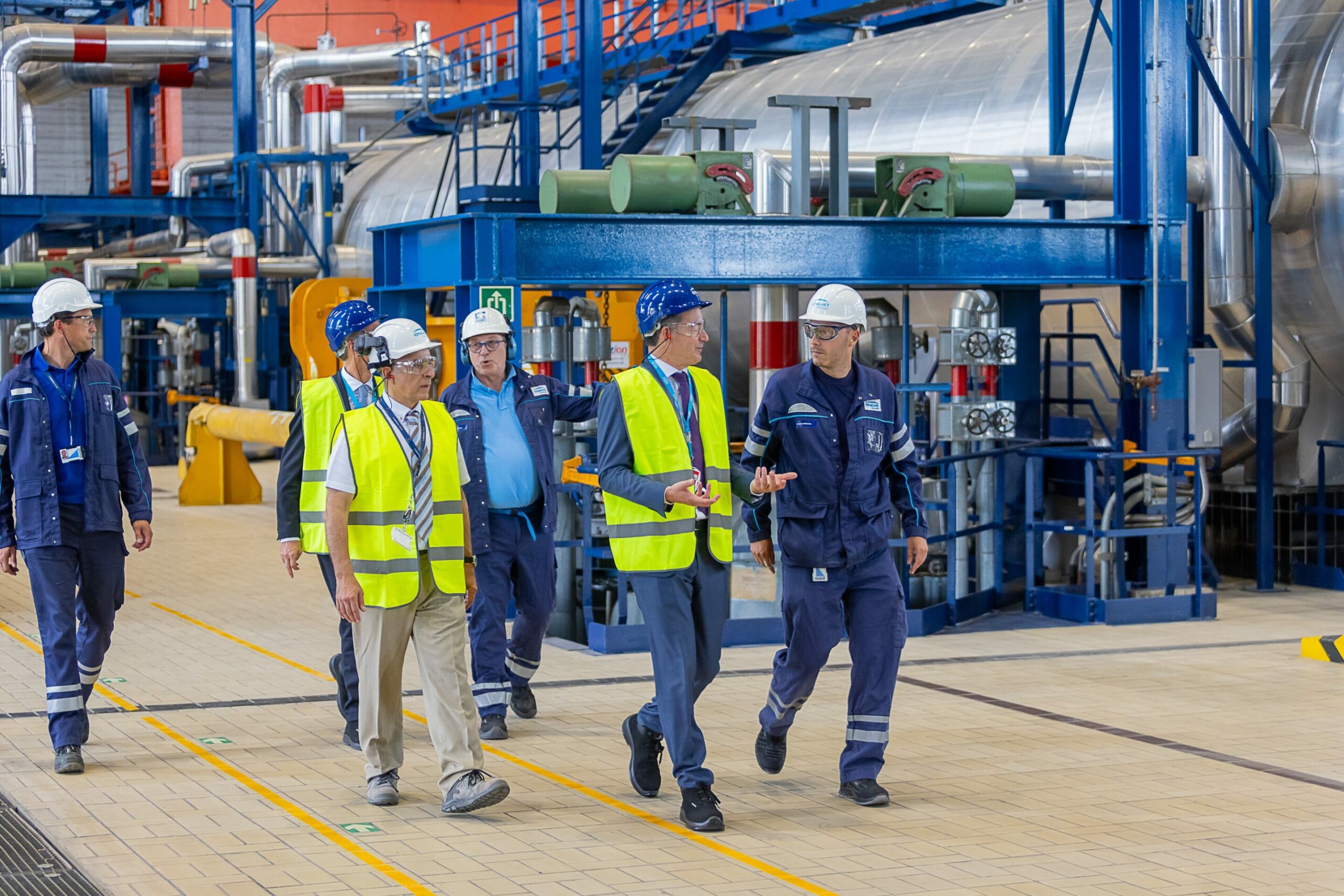
Electrabel chief nuclear officer Thierry Saegeman, Prime Minister Alexander De Croo and Thiange nuclear plant CEO Antoine Assice, Thursday 13 July 2023. Credit: Belga/Serch Carriere
Indeed, everyone seems keen to keep their head down until Touré’s name crops up.
A quick internet search reveals that he is something of a nuclear transparency campaigner – unusual in a business hardly known for its openness.
Brought up in Tournai, Touré is the son of an architect from Mali who met his mother after coming to Belgium to study. When Touré was nine, his father returned to Africa and he developed a strong bond with his maternal grandfather, Jozef Hermans.
“We spent a lot of time playing with computers. My grandfather served in the Belgian Army as telecommunications engineer and my passion for engineering definitely came from him,” he says.
Initially, Touré wanted to be an astrophysicist, but by 14 he realised he wanted to do something that could, in his words, “have a real impact in the world."
After high school, he completed his bachelor’s and master’s at the Ecole polytechnique, part of the Université libre de Bruxelles (ULB). Specialising in nuclear engineering, he landed an internship with Bel V, a subsidiary of FANC, before being selected for Engie’s nuclear traineeship programme in 2015.
Halfway through his studies, in March 2011, a tsunami struck the Fukushima nuclear plant in Japan, causing meltdowns in three reactors and releasing radioactive particles that forced the evacuation of more than 150,000 people within a 20-kilometre radius.
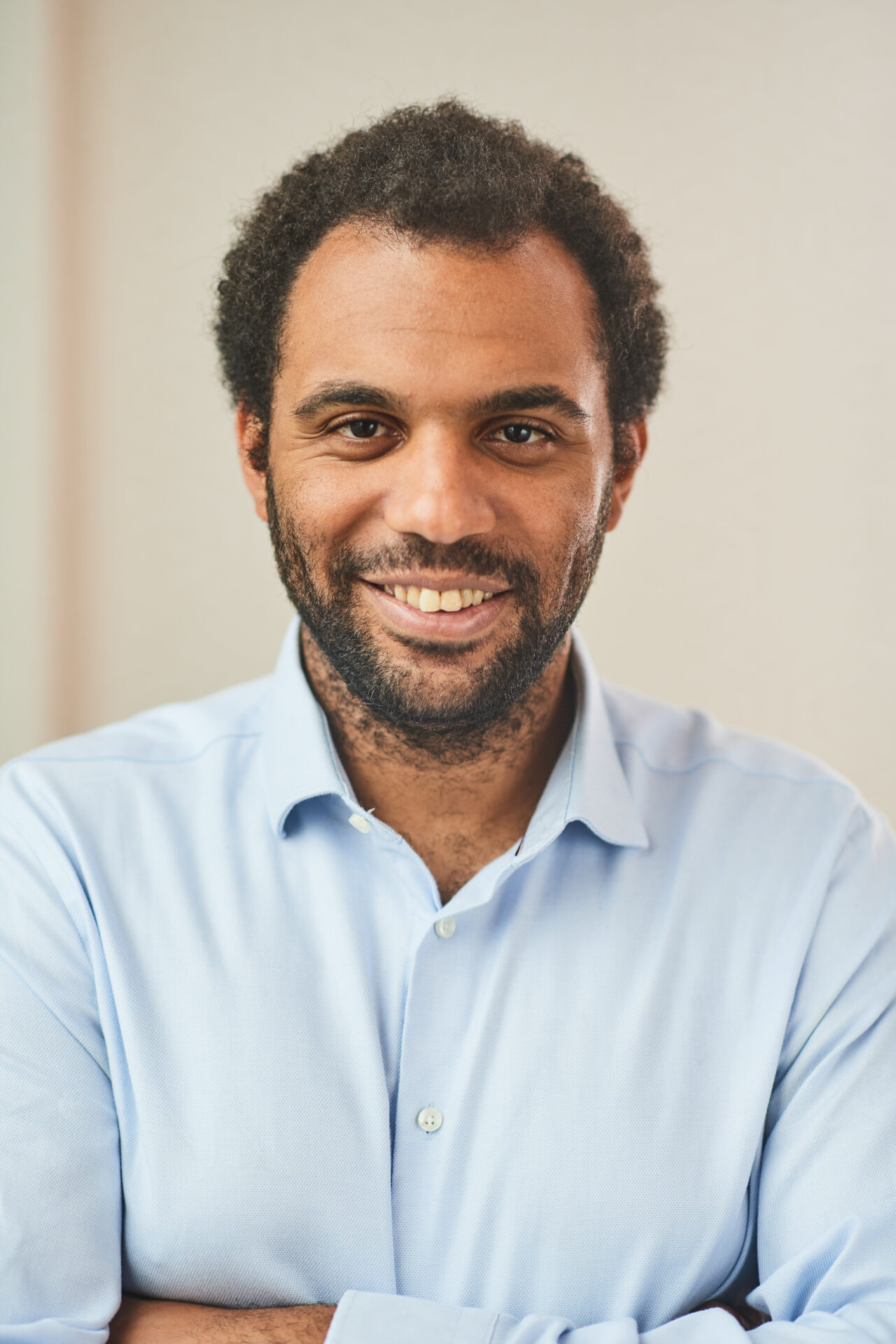
Anicet Touré.
It didn’t put Touré off. He joined Tractebel as a design engineer in 2015.
Looking back at Fukushima in a 2021 YouTube interview for the US “Titans of Nuclear” series, Touré pointed out that it was far less severe than the 1986 disaster at Chernobyl in Ukraine, then part of the Soviet Union, where a reactor exploded, blowing off the roof and exposing the core. Thirty people died from the immediate blast and acute radiation syndrome; thousands more are thought to have died from radiation-induced cancer.
In 2021, Touré acknowledged that trust in nuclear remained an issue – not only because such incidents loomed large in the public consciousness, but because, for too many years in his view, the industry was unwilling to discuss nuclear energy and obsessed with protecting “secret or confidential information."
But he is convinced greater transparency has since begun to move the needle.
“As one of my favourite maxims puts it: ‘In climate science, the more you know, the more you worry. In nuclear science, the more you know, the less you worry’. “I believe that, as we have been discussing this topic more openly in recent years, public trust has increased. Going forward, we should continue to explain how nuclear energy works,” he declares.
Nationalisation
But even Touré’s transparency has limits. Asked for his view of the government’s planned semi-nationalisation of the Doel and Tihange plants, he is uncharacteristically silent.
A Tractebel spokesperson intervenes on his behalf: “Due to the ongoing negotiations between Engie and the Belgian State, we are unable to comment on this matter.”
But there is plenty he is willing to discuss, especially safety and the industry’s future.
“Safety is the cornerstone of nuclear energy and the guiding principle behind every nuclear activity,” he says. “Nuclear energy is one of the most strictly regulated and closely monitored industry in the world. Safety is built into every stage of a nuclear facility’s life, from design and construction to operation, long-term operation and decommissioning."
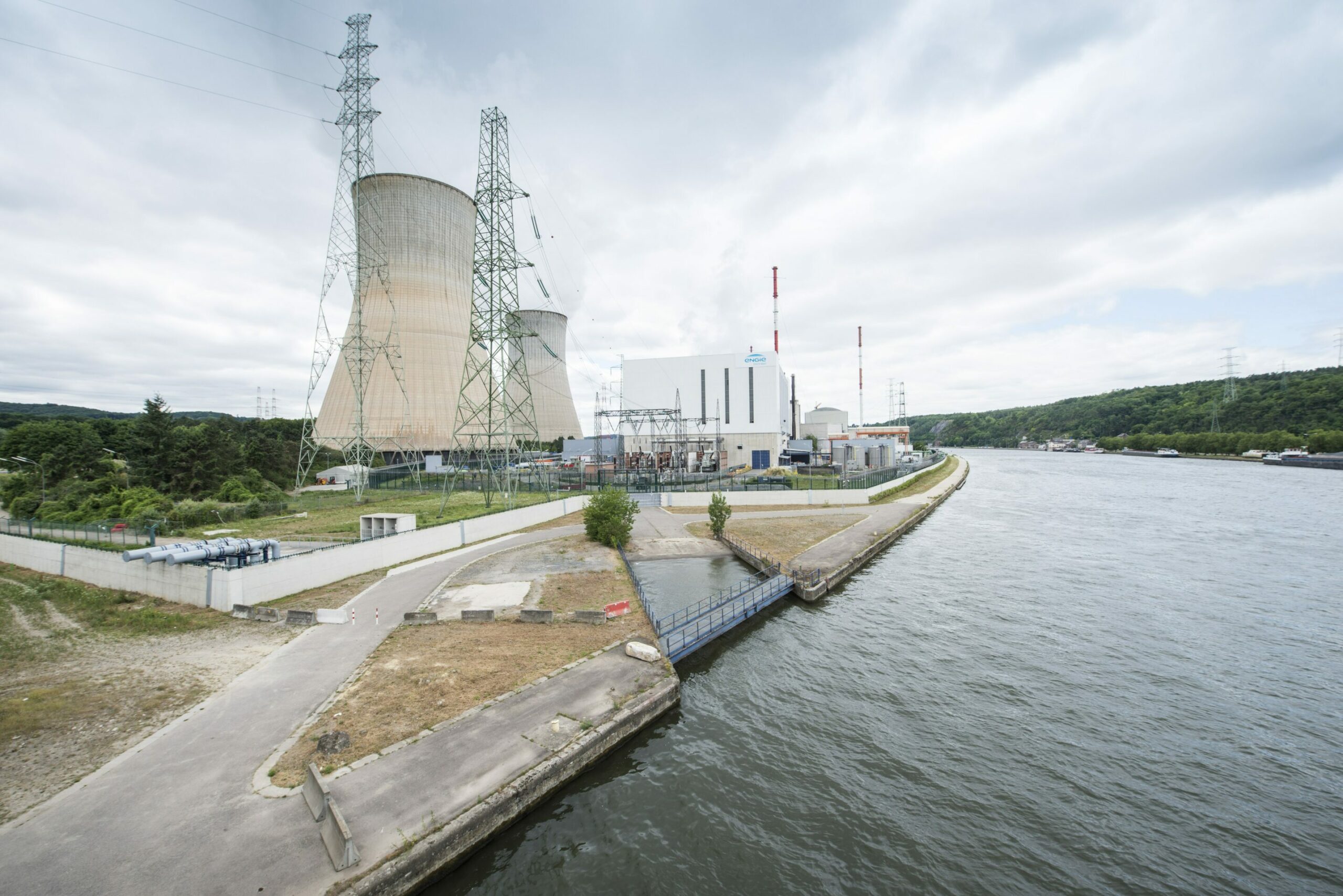
Tihange nuclear plant. Credit: Belga/Anthony Dehez
“Experience shows that nuclear power is a safe means of generating low-carbon electricity, with a very low risk and impact of accidents that continues to decline thanks to continuous safety assessments, periodic reviews, modernisation programmes, independent regulatory oversight and a strong safety culture. New reactor technologies have made nuclear technologies resilient to the most adverse conditions.”
What does he mean by adverse conditions? “Extreme external events such as earthquakes and tsunamis, as well as their direct consequences, including the loss of off-site power.” So, the Fukushima scenario. But we move on.
From European Commission President Ursula von der Leyen, who has labelled the decision to phase out nuclear energy a “strategic mistake”, to Belgian premier Bart De Wever, who recently declared “this government is choosing safe, affordable and sustainable energy, with less dependence on fossil fuel imports and more control over our own supply”, political leaders increasingly appear nuclear-minded.
Targets
One chief reason is Europe’s commitment to cutting greenhouse gas emissions. The EU aims to reduce net emissions from 1990 levels by at least 55% by 2030 and 90% by 2040, and to reach net-zero by 2050. In July, the Commission unveiled its “Electrification Action Plan”, aimed at doubling electricity’s share of the EU energy mix from 23% today to 46% by 2040 while drastically reducing oil and gas imports.
Nuclear energy is seen as fundamental to those goals, Touré says: “Nuclear energy is first and foremost a very low-carbon source of electricity. A nuclear power plant does not emit greenhouse gases, NOx (nitrogen oxides) or fine particles because there is no combustion of fossil fuel.
“Nuclear power belongs to the low-carbon technologies, broadly comparable with wind energy and far below fossil-fuel energies.”
Touré is far from alone in comparing nuclear with wind energy, even if he knows this is bound to put the wind up advocates of the latter. There is, ofcourse, a crucial difference: wind is renewable, while nuclear is not. But wind, by its nature, is intermittent.
Nuclear complements “intermittent renewables” such as wind and solar by providing electricity when their output is low, while some reactors can also adjust output to support grid stability, he says.
SMRs: the future
Touré is on less contested ground when discussing small modular reactors (SMRs), seen by many experts as key to nuclear energy’s future.
He was quick to spot their potential, carrying out his first study of the so-called “mini nukes” in 2015 and persuading management to invest in further research. Tractebel is now recognised as a global frontrunner in SMR innovation.
SMRs work on the same principle as large reactors: a nuclear reaction generates heat, which drives a turbine to produce electricity.
Their main advantage is that they are cheaper and more flexible than conventional pressurised water reactors (PWRs) such as those at Doel and Tihange. Designed to be built as factory-made modules and assembled onsite, they have been dubbed the “IKEA furniture of energy”.
Cost is a key attraction for governments. A traditional plant with one or two reactors can cost up to €35 billion to build, while a single commercial SMR can cost as little as €1 billion.
However, SMRs generate far less power. Typical output ranges from around 50 to 450 MW (megawatts) per unit, compared with around 1,000 to 1,700 MW for a large reactor. In other words, a PWR produces roughly three to five times more electricity.
Recycled
The real strength of SMRs, Touré explains, is that they can broaden nuclear applications, for example through cogeneration – combined heat and power – and by supplying steam or heat for industrial processes.
Advanced “Generation IV” designs require little or almost no water for reactor cooling and can operate with new types of fuel, including recycled nuclear waste.
“That can help close the fuel cycle by using recycled materials from spent fuel produced by today’s reactors. In a circular economy logic, uranium, plutonium and potentially some other heavy radioactive elements could be recovered and reused as fuel instead of being treated as waste,” adds Touré.
For now, only China and Russia have SMRs operating, but the Belgian government is keen to follow in the not-too-distant future. It is investing in further research – Tractebel and universities in Leuven, Ghent, Louvain-la-Neuve and Liège were among the beneficiaries of an €11 million grant in July – and has set up an SMR working group to examine the practicalities.
While nuclear energy is a federal competence, site allocation and licensing fall to the regions. Flemish Minister-President Matthias Diependaele has confirmed that Flanders is looking for four sites, likely to include Antwerp and Ghent. Tractebel has already conducted a preliminary nationwide analysis, although Touré says no decisions have been made on SMR locations.
Meanwhile, Tractebel is building its expertise. It has supported major new-build programmes at Penly near Dieppe in France, and at Hinkley Point C in Somerset and Sizewell C in Suffolk. “In Canada, we are integrated into Ontario Power Generation’s team supporting the first SMR project of its kind in the western world. We’re also the owner’s engineer partner for Nucleaire Energie Organisatie Nederland,” adds Touré.
Belgium’s energy mix
Belgium’s electricity mix is currently dominated by nuclear and gas, although renewables have steadily increased their share. In 2023, nuclear, gas and renewables accounted for 39.9%, 21.4% and 32.7% respectively (European Commission data).
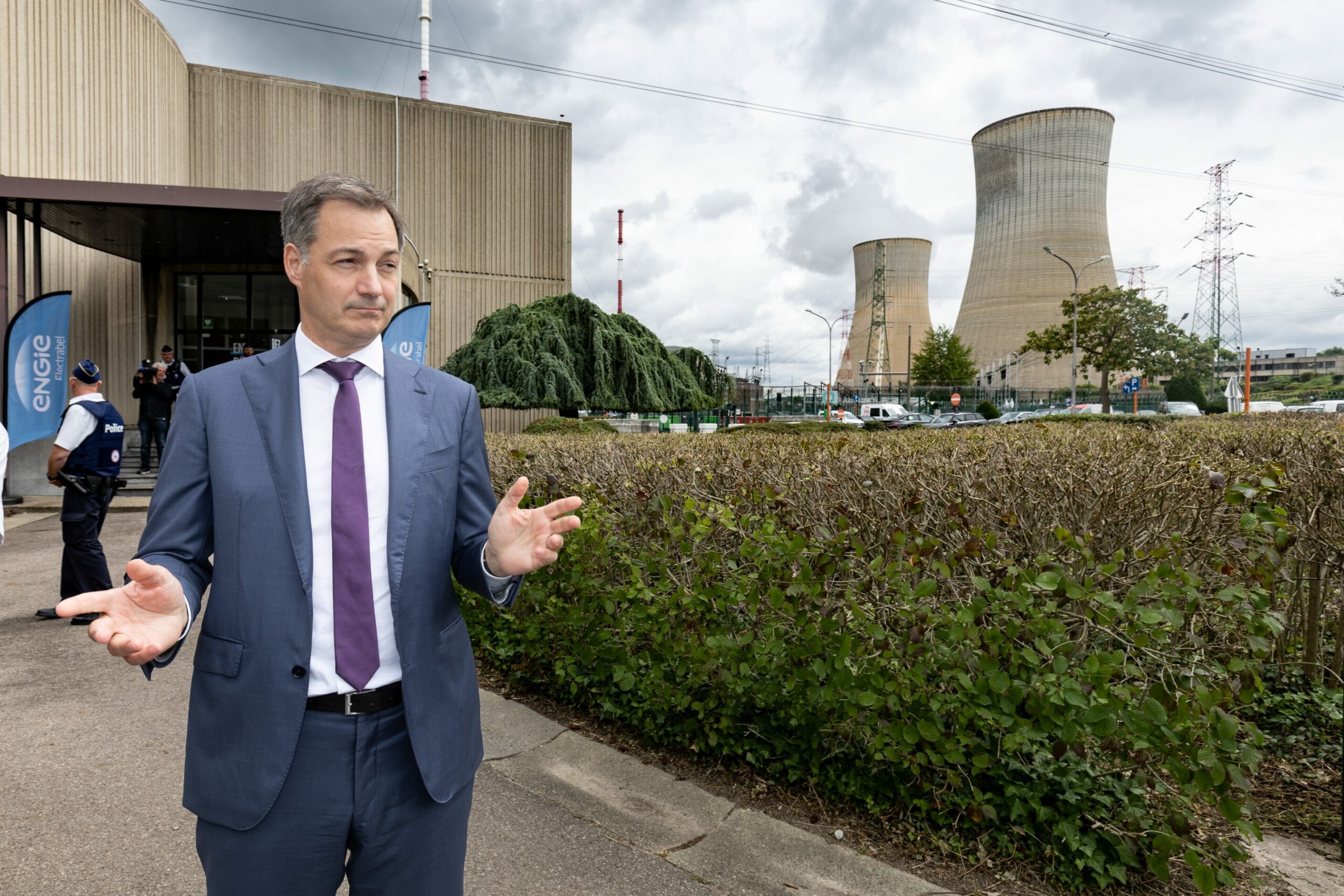
Former Belgian Prime Minister Alexander De Croo. Credit: Belga/Bruno Fahy
Belgium’s nuclear power plants
Belgium built seven pressurised water reactors (PWRs) between 1969 and 1985.
Four are on an 80-hectare site at Doel near Antwerp, on the left bank of the Scheldt. They are unimaginatively called Doel 1, 2, 3 and 4. The other three are on a 75-acre site at Tihange near Huy in Wallonia, on the right bank of the Meuse: Tihange 1, 2 and 3.
The two plants, easily recognisable by their iconic hyperboloid, hourglass-shaped cooling towers, each employ more than 1,000 workers, a figure that doubles when external contractors are brought in for maintenance and refuelling.
Their nuclear fuel comes from uranium ore containing a fissile isotope known as U-235. Spinning it in ultra-high-speed centrifuges enriches the isotope from its natural 0.7% to the 3–5% needed for nuclear fuel. The concentrate is then baked into ceramic pellets and sealed in alloy tubes known as fuel rods.
In 2003, the Belgian government passed a nuclear phase-out law, with all seven reactors due to close by 2025. The decision, following a coalition deal between Francophone liberals and the Greens, was considered progressive at the time, part of a European shift towards renewables and away from what was seen as risky, outdated atomic energy.
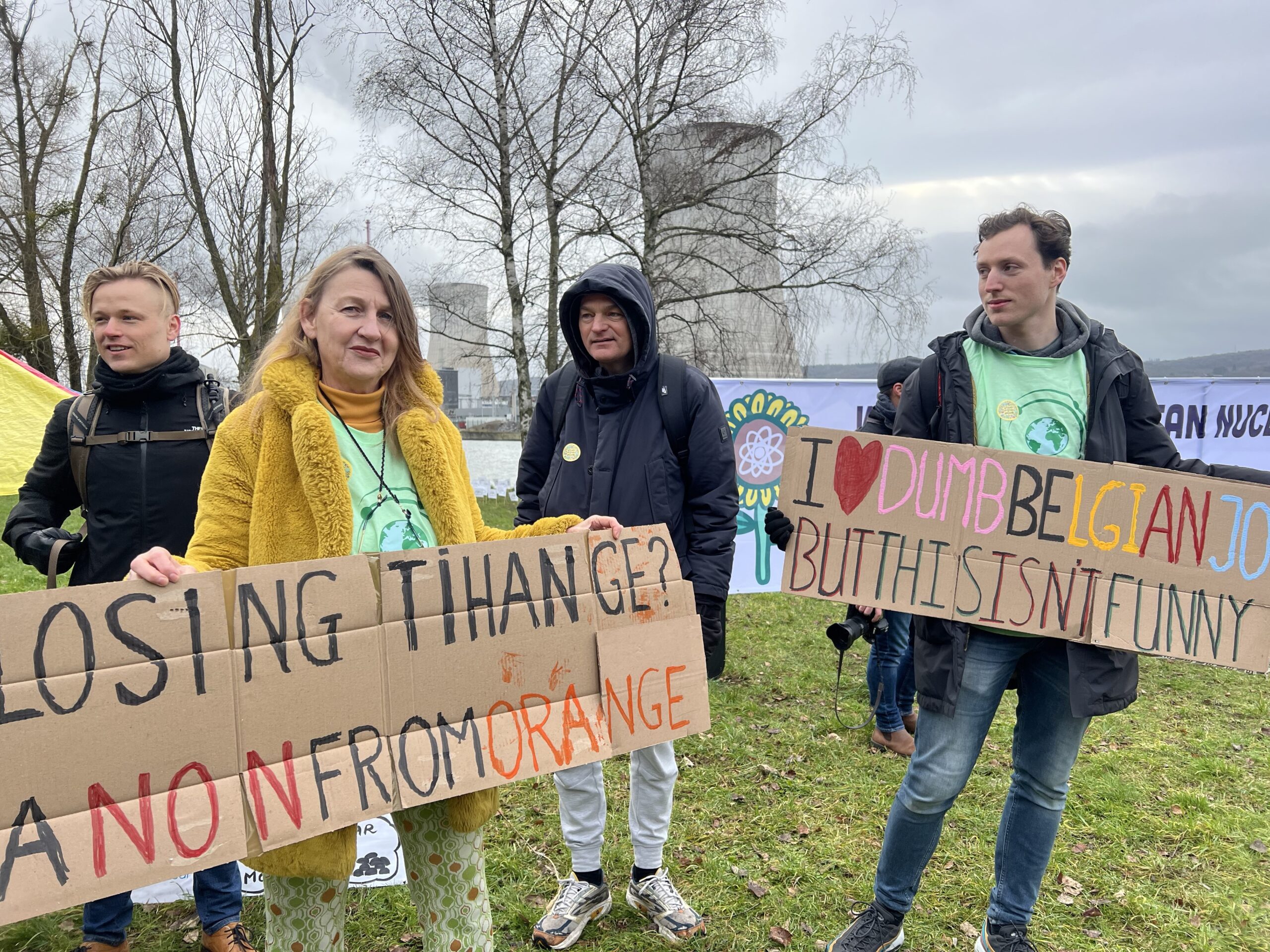
Protesters during an action from Standup4nuclear on Tuesday 31 January 2023 in Tihange. Credit: Belga/Didier De Hoe
The government later had second thoughts amid concerns over security of supply and soaring energy prices following Russia’s invasion of Ukraine. In March 2022, it decided to extend the lives of the two newest reactors, Tihange 3 and Doel 4, both operational since 1985, by ten years to 2035. It added that the five other reactors, shut between 2022 and 2025, should not be dismantled, keeping future options open.
Energy Minister Mathieu Bihet says the phase-out decision is rooted in environmentalist narratives. “Nuclear was dangerous, unmanageable, and we thought renewables would cover all the energy we needed,” he says. The reactors’ closure was ideological, but “the decision to reopen them is pragmatic”.
Tihange 3 and Doel 4 have a combined capacity of 2 GWe (gigawatts electrical), or two billion watts, enough to power nearly five million households.
Continuing to operate the reactors carries significant costs. A budget presented by Electrabel shows costs have risen since a 2023 agreement with then Prime Minister Alexander De Croo’s government, which envisaged €1.6 billion to €2 billion of modernisation work.
Electrabel now estimates the cost for Be-Nuc, the nuclear joint venture between Electrabel and the Belgian state, at €2.4 billion, including a share attributable to EDF Luminus, which holds a 10% stake in the two plants.
What happens to Belgium’s nuclear waste?
Highly radioactive spent fuel and high-level waste are currently stored in temporary facilities on site at Doel and Tihange.
A laboratory known as HADES (High Activity Disposal Experimental Site), 225 metres underground near Mol, is researching a safe, permanent disposal solution. Scientists are exploring how layers of clay could provide a natural barrier against leakage.
The lab is operated by EURIDICE (European Underground Research Infrastructure for Disposal of Nuclear Waste in Clay Environment), a partnership between NIRAS-ONDRAF, the agency responsible for radioactive waste management, and SCK CEN, the Belgian Nuclear Research Centre in Mol.
Some spent fuel is reprocessed at La Hague, a plant in Normandy that extracts recyclable materials and returns the remaining waste to Belgium in solid, vitrified form.
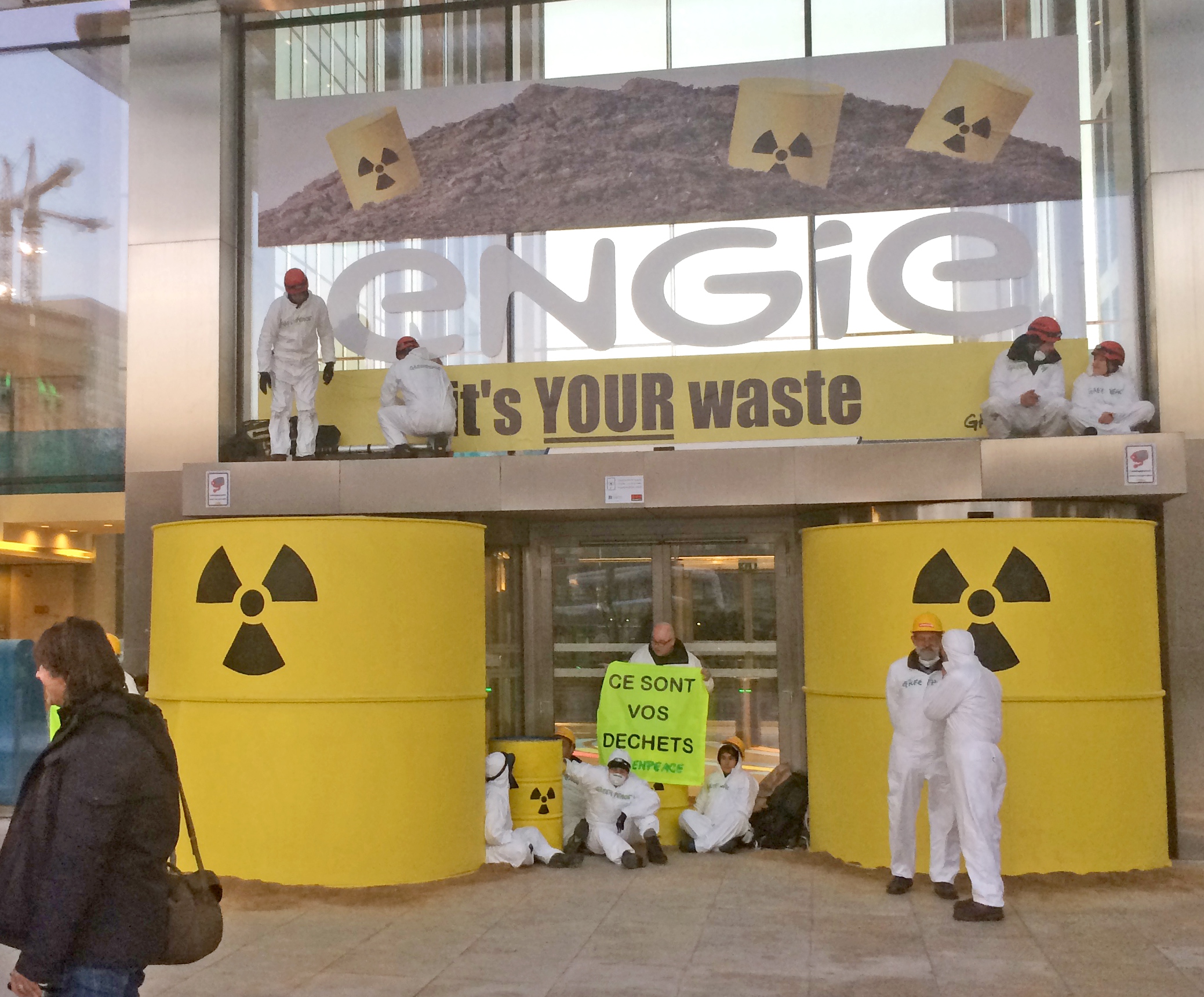
Greenpeace Belgium simulating nuclear waste and blocking the entrance of the headquarters in Brussels, 14 November 2018. Credit: Belga/Charlotte Van Oudenhove
Low- and intermediate-level short-lived waste, mainly from industry, medicine and scientific research, is disposed of above ground at facilities in Mol and Dessel operated by Belgoprocess, the industrial subsidiary of NIRAS-ONDRAF.
Belgium’s first surface disposal facility for radioactive waste is under construction at Dessel and is expected to be completed by 2030.
In the past, Belgium’s low-level nuclear waste was simply dumped at sea.
More than 27 tonnes of radioactive waste went into the northeast Atlantic.
The closest site to the European mainland was Hurd’s Deep, around 15kmoff Cap de la Hague.
As part of the deal to continue operating Tihange 3 and Doel 4, Engie has agreed to pay the government €15 billion to take responsibility for nuclearwaste and spent fuel accumulated at the plants. Under the terms, Engie subsidiary Synatom transfers its obligations to Hedera, a public institutionset up by the state.
Belgium and the nuclear bomb
Belgium supplied uranium from its Shinkolobwe mine in Katanga province in the Belgian Congo (now the Democratic Republic of the Congo) for the atomic bombs dropped on Hiroshima and Nagasaki.
The heavy metal was discovered at the site in 1915 by geologist Robert Rich Sharp, who was exploring for copper. The find initially attracted attention for its radium content but later played a critical role in developing the first nuclear bombs.
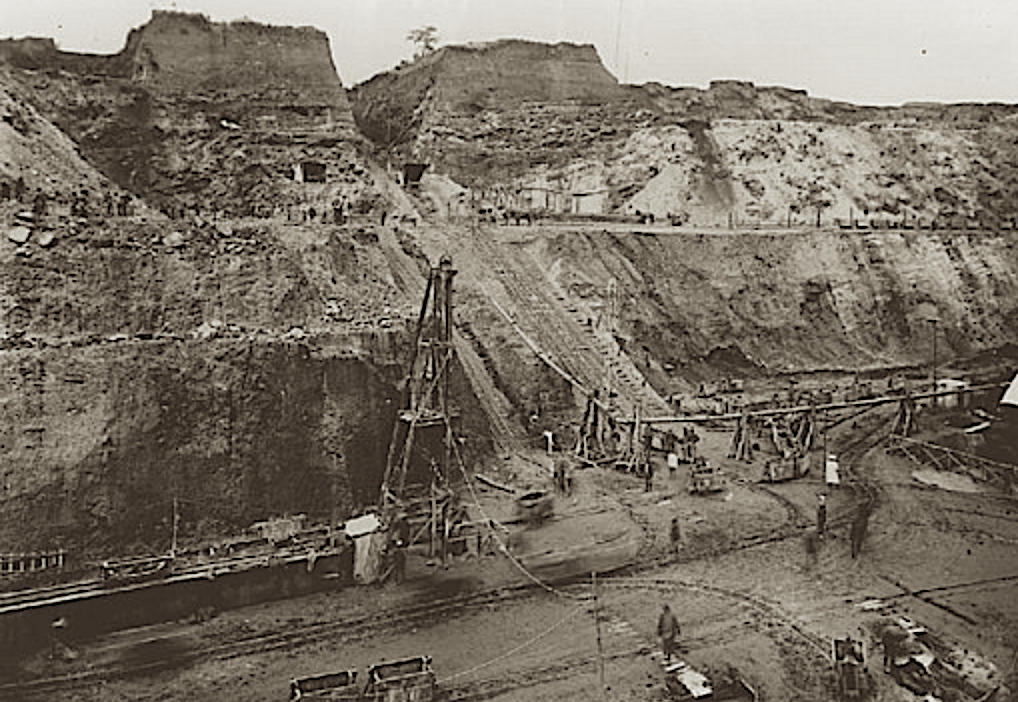
Mine in Congo.
In the 1930s, scientists raced ahead with discoveries about nuclear fission, in which a large atom is split into smaller atoms, producing heat and radiation. The implications were monumental: it was soon realised that the process could produce an explosive chain reaction.
Soon after the outbreak of the Second World War, Edgar Sengier, head of Union Minière du Haut-Katanga, which operated the Shinkolobwe mine, negotiated a deal with the United States to supply uranium for the Manhattan Project, the secret research programme that developed the atomic bomb.
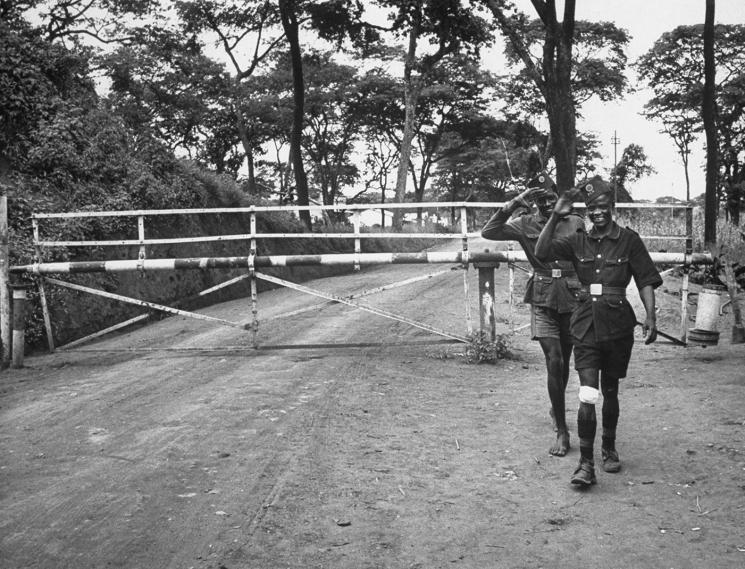
In Congo.
The project, whose Los Alamos laboratory was directed by J. Robert Oppenheimer – the focus of Christopher Nolan’s Oscar-winning 2023 film – successfully tested the first nuclear weapon in July 1945. On 6 and 9 August, the US detonated atomic bombs over Hiroshima and Nagasaki, killing around 200,000 people and helping bring the war to an end.
Belgium’s role, and that of the Shinkolobwe mine, was deliberately underplayed to protect the project’s secrecy. A disinformation campaign claimed the uranium came from Canada.
Shinkolobwe closed in 1960 when Congo gained independence. Its entrance was filled with concrete, but miners continued to work around the sealed shafts. In 2004, eight were killed when a passage collapsed.
