
Music thundered through the club. A young woman was out with her friends, and strangers kept approaching her, touching her without asking. Some put their hands on her wheelchair.
"It felt very intrusive, because I wasn't consenting," the woman said. Then came the compliments. "Men would come up and say: ‘Oh, you're so beautiful, you don't look disabled."
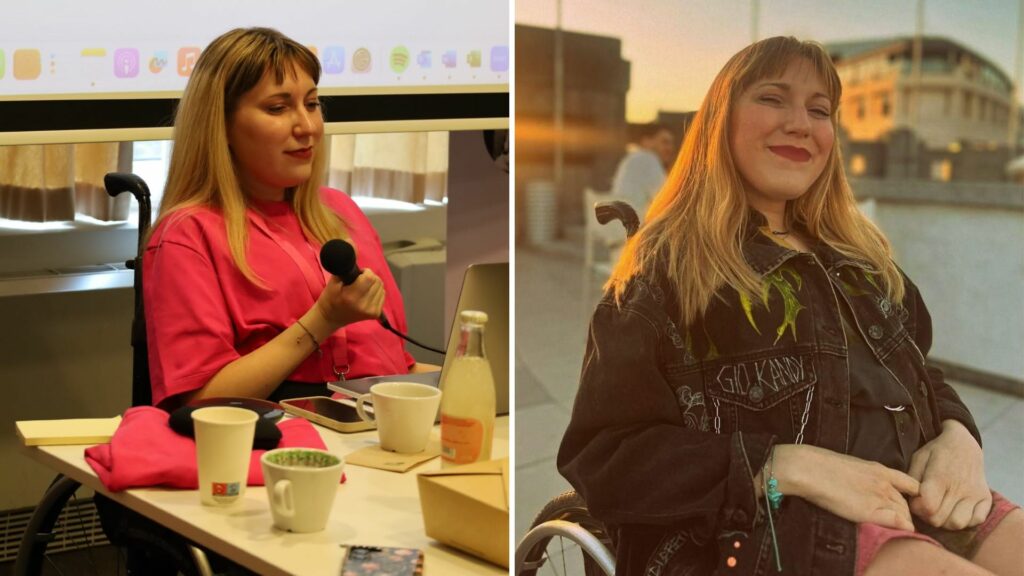
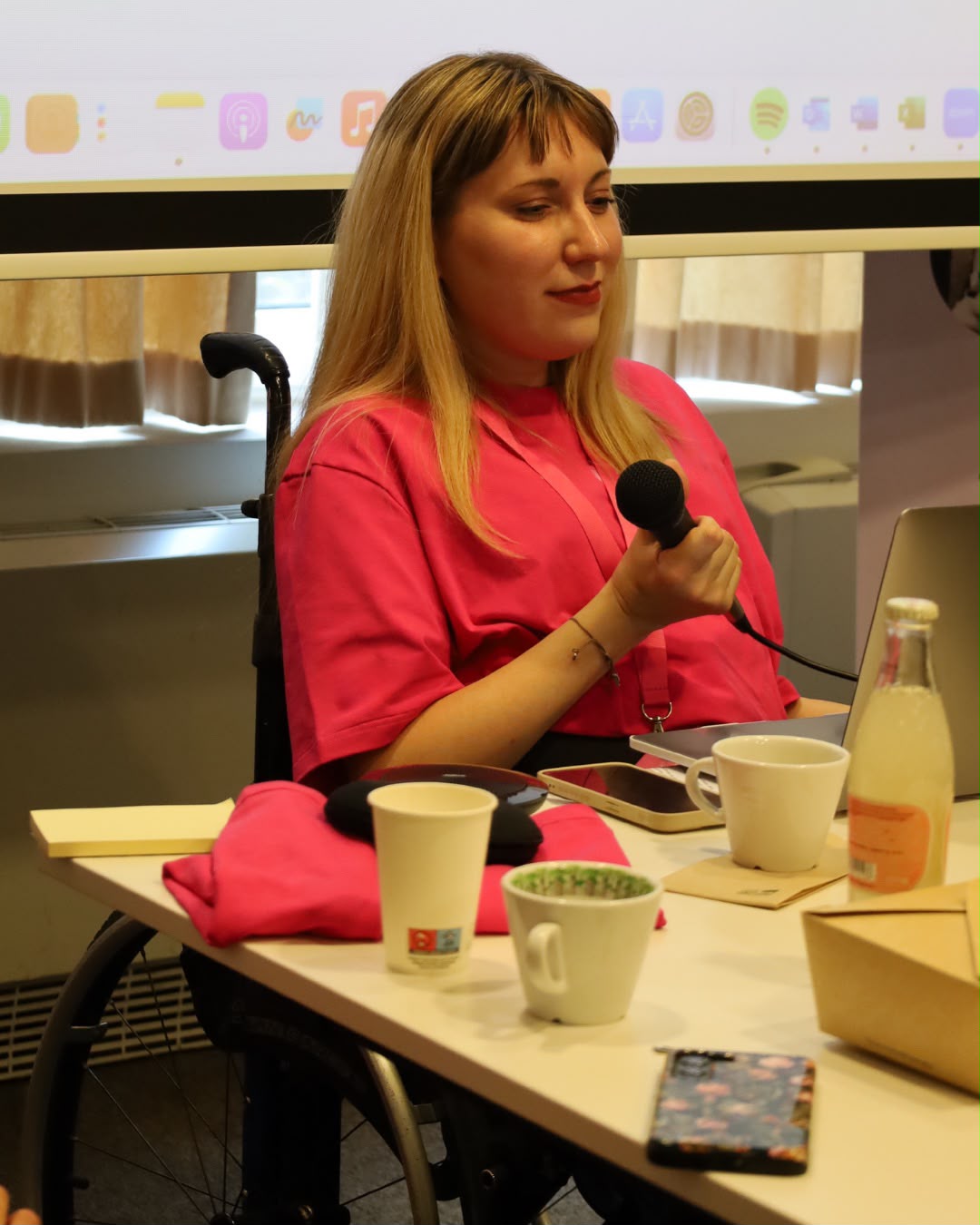
The young woman was Antonella Candiago, recalling her teenage years in Italy. Today, she is a disability rights and gender equality advocate in Brussels.
In a way, people with disabilities are often "infantilised and considered undesirable," Candiago told The Brussels Times. "It is often thought that we don't have sexual desires or sexual needs."
On the other hand, disabled people, especially disabled women, sometimes have to deal with "fetishisation and hypersexualisation," she said.
On Saturday 17 and Sunday 18 October, Candiago will lead a workshop on the subject at Brussels' ENCORE festival, run by and for disabled people at Kaaitheater in Brussels.
Her argument is simple: "We need to stop thinking of accessibility as something that comes after desire, an obstacle to overcome before we can experience intimacy," she said. "Accessibility, communication and care can be part of what makes intimacy pleasurable and meaningful."
"I never heard the word disability"
Candiago traces the problem back to sex education. Italy, she said, is one of the few European countries where sex education in schools is not mandatory. When it exists, it is "very poor and not inclusive of gender and queer identities."
Disability connected to intimacy and sexuality was absent from the conversations she encountered growing up. "For a long time I felt I wasn’t entitled to sexuality and pleasure," she said. "When you don’t see yourself represented in media, in films, in stories, you don’t feel legitimate in having those emotions, desires and needs."
In the absence of that representation, Candiago began educating herself. Over the years she collected podcasts, articles, blogs and videos about disability and sexuality.
The consequence of silence
For her, the silence on this topic has consequences as it excludes disabled people from the conversation. In extreme cases, it can leave them vulnerable to violence.
A study conducted by Ghent University in 2023 found that 48% of women with disabilities in Belgium had experienced sexual abuse involving physical contact, compared with 40% of women without disabilities.
When disabled women report abuse, Candiago explained that they are often not believed, because they may not fit professionals' stereotypical image of a survivor of violence. Some also experience violence at the hands of the very same people who provide their care.
"How do you report the person who is hurting you but also provides your care?" she asked.
Part of the problem, she said, is shame. "We live in a society where we’re ashamed of needing more or different support than what’s considered normal and that makes it hard to express our needs, our desires and even our consent."
However, shame is not the only problem: governments also need to provide the community-based services that allow disabled people to live independently, such as affordable, accessible housing and personal assistance.
Everyone has access needs
"We’re taught not to talk about or disclose our access needs," Candiago said. "The first step is to normalise that everyone has needs, not only disabled people."
In intimate situations, those needs might concern mobility aids, physical positioning, breaks, or what someone's body and mind can manage.
Such conversations do not have to happen spontaneously or in the middle of an intimate moment, Candiago said. She suggested setting aside time to talk about them in advance.
Candiago also questions how society thinks about independence. "No one is totally independent. We all need each other, and it’s normal to give and receive care," she said. "Partners shouldn’t be our main caregivers, but caring for each other is a normal part of a relationship, and it doesn’t make us less autonomous or less desirable."
However, interdependence should not be confused with forced dependence, she said. In some countries, disabled people can see their benefits reduced when they live with a partner, making them financially dependent, "which can create very dangerous situations."
A lack of essential support such as a personal assistance can have the same effect. "If you need daily support, like help getting dressed or getting to work, you shouldn't be forced to rely exclusively on your partner," she said.
For her, interdependence means recognising that "all human beings rely on one another to thrive and meet their needs," as opposed to what she calls "the capitalist and ableist myth of independence."
Entitled to desire
Even when sex education includes disabled people, she said, it talks about health, reproductive rights and parenthood. "This is important, especially because we’re always excluded from it," she said. "But we also have to talk about everything that makes us a whole person."
"We have to make space for discussions about dating, flirting, eroticism, joy and pleasure. We need to feel legitimate, and to normalise that we can access pleasure too," Candiago said.
"Being desirable shouldn’t mean being independent, having a certain kind of body, or not needing help from anyone," she said. "Accessible intimacy is about creating the conditions where everyone can feel entitled to desire, pleasure, autonomy and care, without first having to prove that their body or needs are ‘normal’."
It is good, she said, "to realise how ableism can impact our way of seeing intimacy, of seeing care, of seeing desire, and to become less scared of disability, of naming the word disability and especially naming it in relation to sexuality."
