
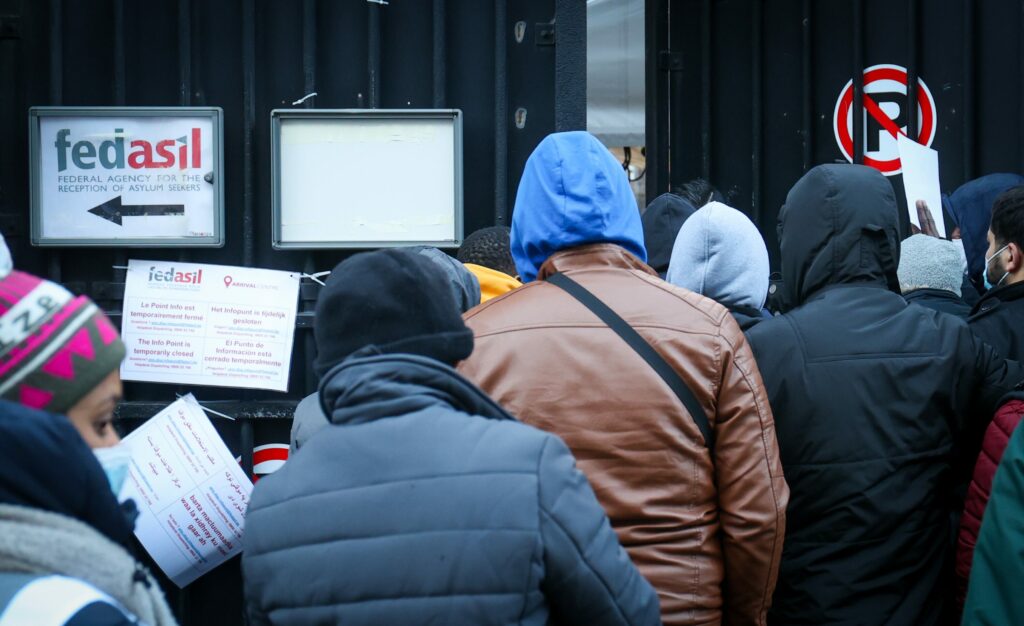
The number of asylum applications in Belgium has fallen for the ninth consecutive month compared with last year, with the decline significantly sharper than across the European Union.
According to figures from Belgium's Immigration Office (DVZ), 2,071 asylum applications were registered in September, down almost 30% from the 2,897 recorded during the same month last year. The number of unaccompanied minors seeking asylum has also fallen sharply, dropping from 1,334 to 684.
Asylum and Migration Minister Anneleen Van Bossuyt (N-VA) credits the government's stricter migration policies, although refugee organisations question whether these measures are responsible for the drop. "This proves wrong those who, two years ago, still claimed that nothing could be done about the high influx of asylum seekers," Van Bossuyt told Het Nieuwsblad.
The minister highlighted that asylum applications across the European Union have decreased by 18%, compared with around 30% in Belgium, arguing that the federal government's approach is contributing to the sharper decline.
However, a policy officer at refugee organisation Vluchtelingenwerk Vlaanderen Thomas Willekens questioned the minister's interpretation of the figures.
He argued that international developments, particularly the end of the civil war in Syria, have played a much greater role in reducing asylum applications. "Syrians have largely disappeared from the statistics," Willekens explained.
He nevertheless acknowledged that increasingly restrictive European migration policies, including agreements with countries such as Tunisia, Libya, Sudan and Egypt, have contributed to preventing migrants from reaching Europe. However, he warned of the human consequences, arguing that people who eventually reach Belgium and obtain asylum are increasingly likely to have experienced severe trauma.
Growing backlog despite fewer applications
While the decline in applications has reduced pressure on Belgium's Immigration Office, the situation is different at the Office of the Commissioner General for Refugees and Stateless Persons (CGRS). The Immigration Office's workload has fallen by 77.6% compared with September last year.
Meanwhile, the CGRS is facing a growing backlog, with 27,794 applications still awaiting processing. This is the highest figure recorded this year and four times the level considered manageable under current staffing conditions.
The situation is partly linked to the European Migration Pact, which entered into force in June and requires authorities to prioritise applications from countries with low asylum recognition rates. Decisions on these applications must be issued within three months. According to Willekens, this also helps explain why seven out of ten asylum decisions are currently negative, as migration services are required to prioritise cases with a low likelihood of approval.
Vluchtelingenwerk Vlaanderen also expressed concern that the falling number of asylum applications could be used to justify cuts to migration services.
Van Bossuyt has already announced plans to gradually reduce Fedasil's reception network but insisted that the government is continuing to invest in the Immigration Office and the CGRS to accelerate asylum procedures.
