
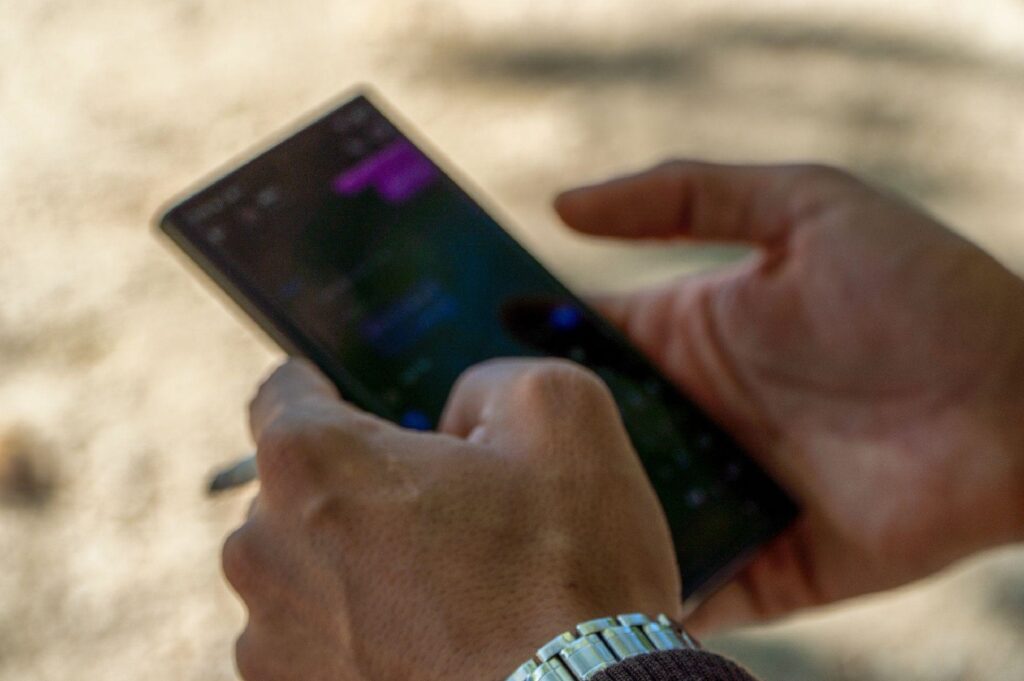
For 15 days, Reza’s phone showed the same thing: One grey tick. He was supposed to study for his January exams at a Belgian university, but studying was the last thing on his mind.
Back home in Iran, a million people had taken to the streets to protest against the regime, and the government had cut off the internet in an attempt to curb the protests.
Some estimates put the number of those killed by the regime during the protests as high as 20,000. But Reza* didn’t know if his family was among those killed.
"I think during those days I ate like three, four times. I didn't sleep," he told The Brussels Times. "And the only thing that was important for me was just to get some news from my family to see that they are alive."
Emergency mode
Reza is one of many Iranian students in Belgium, with figures by KU Leuven putting Iranian students as the fifth most common nationality among its students from outside Europe for 2025-2026.
While internet access in Iran has been partially restored and the protests have been crushed, for Iranian students in Belgium, the crisis hasn’t yet ended.
"The past nine months have been a really, really tough situation for the Iranian community in general, and specifically Iranian students," Ali Bagheri, secretary of the Iranian Youth Communities in Belgium, told The Brussels Times.
"We finished 2025 and began January with massive protests that were going all around the country. And then we had around three months of internet blackout. And then the war started again," Bagheri added.
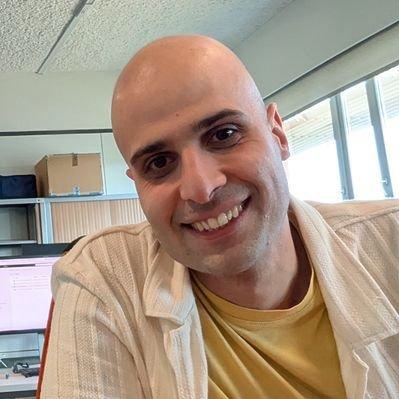
Ali Bagheri. Credit: Jan Rehaag
Yasmin*, another Iranian student, describes the past few months as a feeling of only "temporary safety."
"It feels like my mind stayed in emergency mode somehow," she said. "I still wake up anxious at night sometimes and check my phone for some news."
Negotiations between Iran and the United States have stalled, and news website Axios recently reported that the United States is preparing for a new round of strikes against Iran.
Yasmin said she feels "helpless" living in safety in Belgium, while her friends and family back in Iran could be in danger at any time.
Running out of money
As the war drags on into its eighth month, it has also taken an increasing toll on the Iranian economy. Iran's currency, the rial, has plummeted, leaving some students in Belgium struggling to pay their tuition fees.
Especially those students who rely on their family for money transfers have been hit by inflation, sanctions and internet blackouts that can make money transfers impossible.
Yasmin said she was lucky to receive financial support from her university, but one of her Iranian classmates had to drop out due to the financial situation of his parents back in Iran.
Many Iranian students in Belgium are afraid of speaking openly about the Iranian regime. "The mere fact of studying abroad could be a problem for getting back into the country," Bagheri explained.
He argued that if students are politically active abroad, the regime often tries to put pressure on their families back home to silence them. Bagheri described a system of surveillance that the Iranian regime uses to make sure students abroad stay in line.
Credit: Jan Rehaag
Darya*, another Iranian student, said she would love to connect with other Iranians in Brussels, but her parents do not want her to take the risk. "You can’t trust all people. You never know; they might rat you out," she said.
Iran has long been known to recruit informants among Iranian students abroad. In 2013, Hamid Babaei, a PhD student at the University of Liège, was jailed in Iran after refusing to spy on Iranian students in Belgium.
He returned to Belgium in 2021, after six years in prison.
A 2023 report by the research service of Belgium's asylum agency, CGVS-CGRA, describes a similar pattern. It named Iran as one of the world's main perpetrators of "transnational repression" and said the regime recruits Iranians abroad as informants, monitors their social media and puts pressure on their families back home.
No way back
For Reza, who is politically active in Belgium outside of his student life, there is no way to return.
"When you're in a position where you can't go to your own city, to your friends, to your family to visit them, it feels like you have lost everything. And you have to start in a new society, with a new culture, with new language barriers," he said.
Starting over hasn’t been easy for him, he said, adding that he sometimes feels like he is "not really wanted" here, and he finds it hard to connect with Belgians.
Even so, he thinks coming to Belgium was "one of the best choices you can make." And he hopes that he will return to Iran one day, once the regime has fallen.
Darya is less certain, but shares the hope. When she arrived, she expected to go back after her studies, "but with the situation there, I don’t know if it’s possible anymore," she said. "But I’m still hopeful."
For now, she has turned Belgium into home and feels welcome in the country: "The strangers, they were all so nice and helped me. So I really came to like the people too."
She still remembers stepping off the plane the day she arrived. Her first impression of Belgium was the colour of the sky.
"Believe it or not, the sky here is really nice," she said, laughing. "It's much bluer than in Iran."
*Names of the students have been changed for their safety.
