
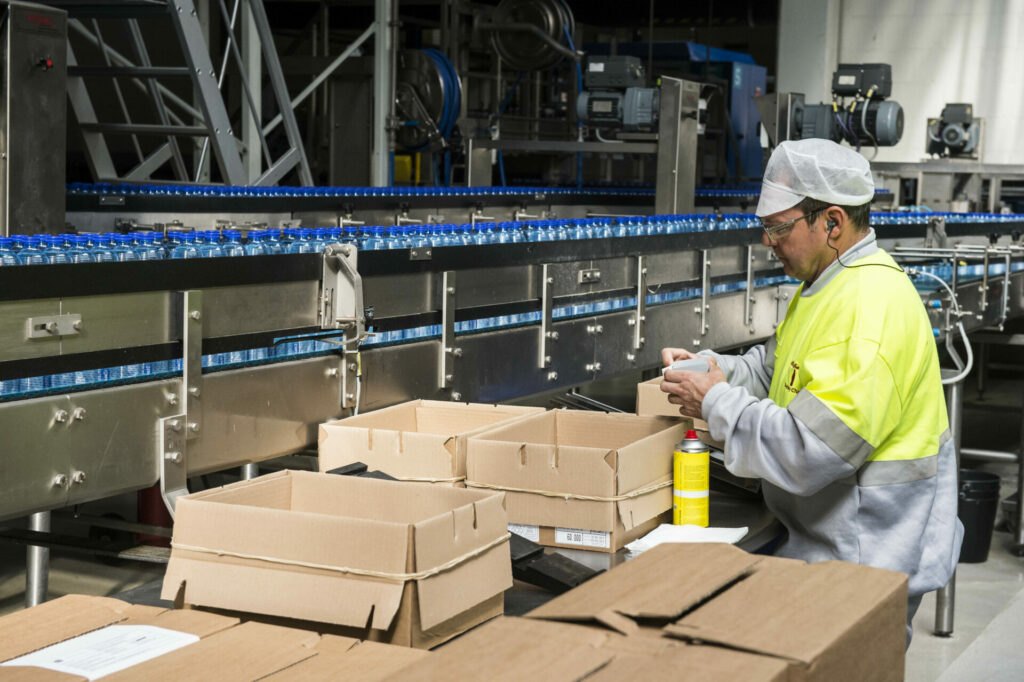
Belgium’s industrial slowdown has deepened sharply in recent months, with the utilisation of production capacity falling to its lowest level since the start of the Covid-19 crisis.
On average, 27% of machines in Belgian industry stood idle in recent months according to an update published on Tuesday by the National Bank of Belgium and analysed by De Tijd.
Capacity utilisation in manufacturing, a key indicator of the sector’s health, fell to 73% in the third quarter of 2026, the lowest reading since April 2020. A fall in capacity utilisation points to weaker demand, or weaker expectations for demand, and increases the risk of job losses.
Related News
- The Brussels economy minister has a strategy for jobs, growth and Midi – but will it change anything?
- Jobseekers in Brussels are struggling to find roles – here's why
- For how long can you receive unemployment benefits in Belgium?
Since records began in the late 1980s, there have only been four quarters with lower capacity utilisation in Belgian manufacturing. Aside from the Covid-19 crisis, those periods were mainly in 2009 during the financial crisis.
Compared with the average for 2021 to 2025, utilisation in manufacturing is now nearly 4 percentage points lower, and there is a marked regional divide between Flanders and Wallonia. In Flanders, 75.3% of available capacity is being used, while in Wallonia, the figure is 67.1%.
The weakest sectors include metal production, iron and steel processing, building materials, and machinery manufacturing, where across the country, capacity utilisation in those industries is well below the level of recent years.
