
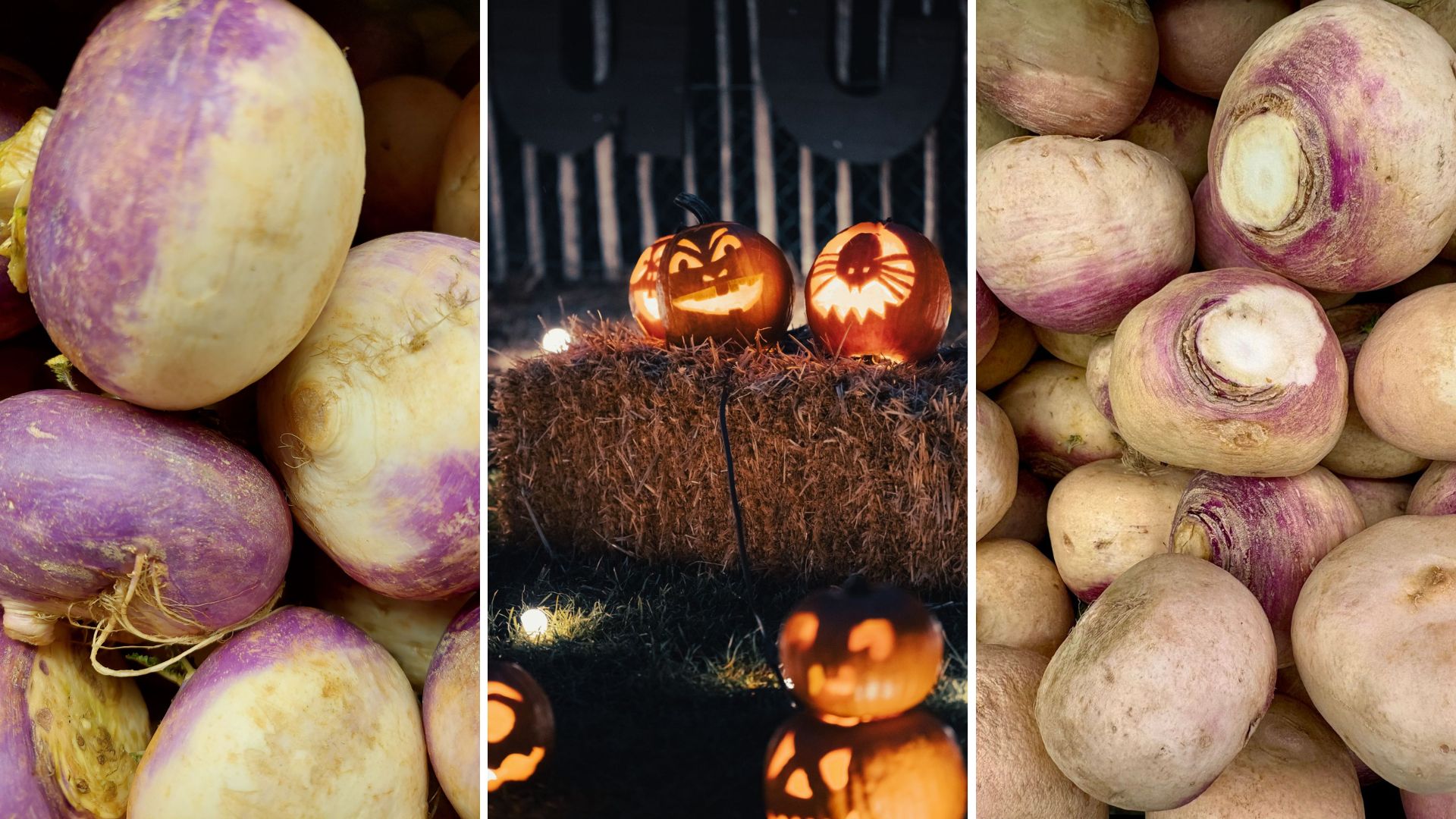
There’s a November vegetable that I can’t help feeling sorry for. It should, by rights, be the one vegetable we'll all talk about this month because it’s been around since the beginning of time, giving us much-needed nourishment. But we don’t, instead, we all go pumpkin-crazy at this time of year.
So, today I’m giving the stage to one of the most forgotten plants, forever overshadowed by all other autumnal vegetables. I’m referring to the unassuming, uncolourful, unloved, turnip.
The turnip is so underrated that it breaks my heart. Why? When it is so versatile and full of flavour? Turnips can be what you need them to be: peppery and crisp when raw, but then mellow and almost sweet when cooked.
Their taste takes another shape altogether when you pair them with, say, butter or olive oil or mustard or herbs… ah, the goodness! Apart from fibre, they’re packed with vitamin C – much needed for our winter immune system, and potassium, which helps us maintain normal blood pressure.
It’s a very giving vegetable: not only does it give us its roots, but also its edible bountiful leafy greens are full of vitamins A and K.
Irish roots
We don’t know much about its origins: its precise geographical origin and date of domestication remain shrouded in mystery. But we do know that the poor turnip was the OG star of Halloween. Back when the Irish were still in charge of it, that is.
According to my Irish sources (Irish readers, please correct me), Samhain was an ancient festival marking the transition into winter, with roots stretching back more than 2,000 years. Traditionally celebrated at the beginning of November, Samhain came at the end of the harvest, when crops like turnips were gathered and stored for winter.
It was a pretty dismal time of year, so dark and so cold, that the boundary between the living and the dead was believed to grow thinner.
So, the Irish being Irish, they spun some craic to it. Enter the legend of Stingy Jack, a trickster who so outwitted the Devil that when he died, neither Heaven nor Hell would accept him. This Jack was therefore condemned to wander the earth with a glowing coal inside a hollowed-out turnip to light his way. Yes, turnip!
That’s how the humble turnip became the first spooky Jack-o’-lantern: people carved frightening faces into turnips, placed candles inside them and carried them around on the eve of Samhain.

Credit: Unsplash
When the Irish began immigrating to the US in the 19th century, they took their traditions with them, lock, stock and barrel. But turnips weren’t as plentiful there as they were back home, so they had to find a replacement, something native to the new continent and abundant in autumn. Voilà, the pumpkin.
Pumpkins offered a much bigger and easier carving canvas than turnips, whose flesh was dense and hard. Although both had an earthy taste, turnips were sometimes slightly bitter. The pumpkin, au contraire, was mildly sweet and nutty, so all in all, the flesh scooped out of a pumpkin could be turned into more creative dishes than that of a turnip.
Americans, as we know, are very good at selling a product, and they turned the pumpkin into the face of Halloween, a look the rest of the world has since bought into.
Turnips didn’t disappear, of course, but sadly, they gradually became a less fashionable presence on our dining table. I’m especially proud of Ghent because they are still holding the flag for turnips with their hochepot gantois, the traditional meat stew in which our vegetable is the main actress.
As for the rest of us? Can we collectively agree to stick up for the turnip? Send me your turnip recipes, your turnip photos, your turnip love. Let’s make this underdog vegetable fashionable again!
What to do with turnips:
1. Shaved turnip salad
Slice very thinly with a mandoline or vegetable peeler. Dress with lemon juice, extra virgin olive oil, salt and black pepper. Add parsley, toasted hazelnuts or Parmesan shavings.
2. Turnip slaw
This is a crunchy alternative to cabbage coleslaw. Grate turnip with apple and carrot. Toss with Greek yoghurt, lemon juice and a little Dijon mustard.
3. Crudités with a dip
Cut into sticks and serve with hummus, tzatziki or a yoghurt and herb dip. Small, young turnips tend to be sweeter and less pungent than large, mature ones.
4. Roast them
Cut into wedges or cubes, toss with olive oil, salt, pepper and thyme, then roast at 200°C for around 30 minutes, turning once. Add a little balsamic vinegar or mustard towards the end. Roasting brings out their natural sweetness.
5. Mash them
Boil peeled chunks until tender, drain well and mash with olive oil or butter, black pepper and nutmeg. For a milder flavour and creamier texture, mash half turnip and half potato.
6. Make a winter soup
Sweat leeks and garlic in olive oil, add diced turnips, a potato, vegetable stock and thyme, then simmer until tender. Blend until smooth. Finish with black pepper, parsley or a spoonful of yoghurt.
7. Glaze them in a pan
Cube the turnips and cook in a little butter or olive oil with a splash of water, covered, until tender. Remove the lid and let the liquid evaporate. Add a teaspoon of honey or a little mustard, plus parsley.
8. Make a gratin
Layer thinly sliced turnip with potato, garlic, thyme and a little cream or milk. Bake until tender and golden. The potato softens the turnip's sharper flavour.
Kristina Chetcuti is a registered health coach (UKIHCA) specialising in behaviour change and lifestyle medicine (ELMO).
