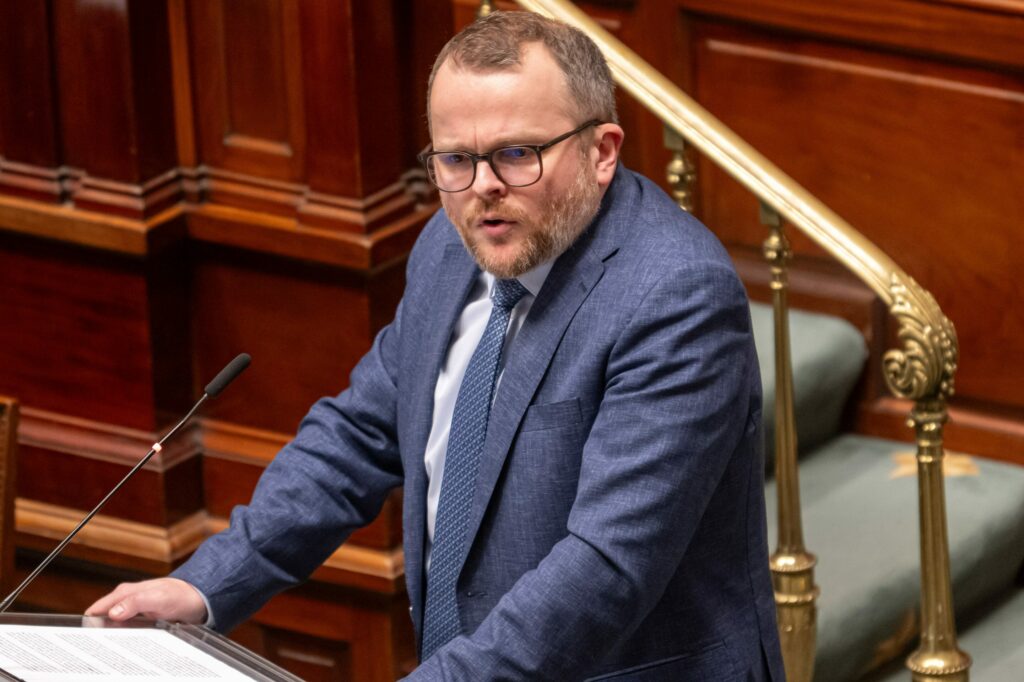
For the first time, Belgium is chairing a ministerial meeting of the Nuclear Alliance, Energy Minister Mathieu Bihet (MR) said on Thursday on the sidelines of an EU Energy Council meeting in Luxembourg.
The alliance was created at France’s initiative in February 2023 and brings together European countries that want to promote nuclear power as a pillar of the energy transition alongside renewable sources.
Belgium, which initially took part as an observer, became a full member of the alliance in February 2025.
“Belgium has chosen to place nuclear energy back at the centre of its energy policy,” said Bihet. “We are defending the same ambition at European level: nuclear power must be fully recognised for its contribution to security of supply, decarbonisation and the competitiveness of our industry.”
The alliance now includes 15 of the EU’s 27 member states. Alongside Belgium, its members are Bulgaria, Croatia, Estonia, Finland, France, Hungary, Italy, the Netherlands, Poland, Romania, Slovakia, Slovenia, Sweden and the Czech Republic. Greece and Latvia take part as observers.
The group is lobbying for an EU energy strategy that gives full backing to nuclear power as well as renewables, particularly in the post-2030 policy framework that the European Commission is due to present in the coming months.
It is also calling for stronger guarantees on the supply of medical radioisotopes.
More than two decades after Belgium voted to phase out nuclear power, Prime Minister Bart De Wever’s government has fully reversed course and is once again backing the technology.
The government is currently negotiating with energy group Engie over the purchase of nuclear power plants.
On Tuesday, newspapers De Tijd and L’Echo reported that the government could be prepared to use expropriation if those talks fail.
