
Good afternoon, goeiemiddag, bonjour!
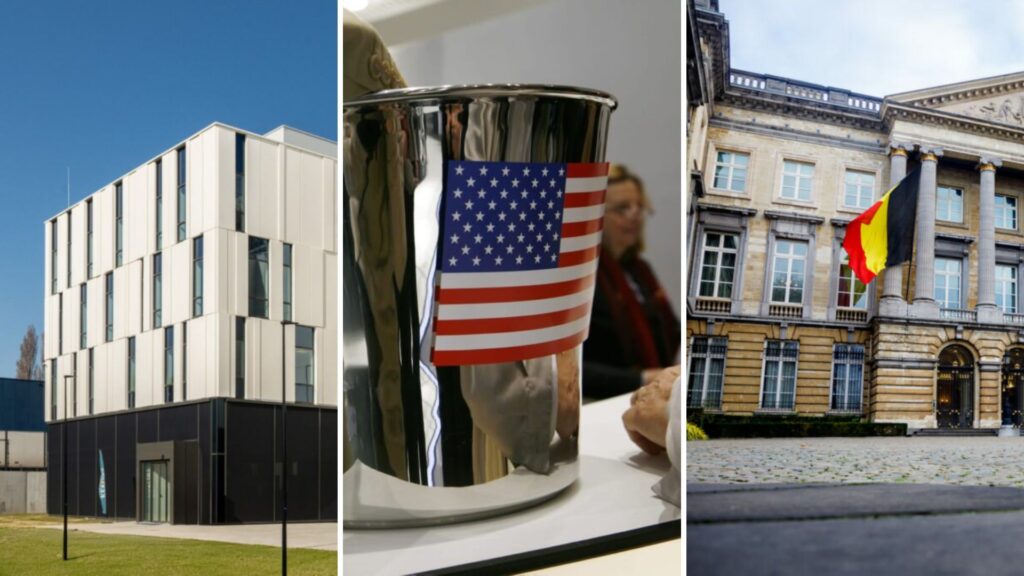
This morning, Europe woke up to a big American surprise. While Democrats were expected to win at least one body of Congress during the midterm elections last night, few people saw this landslide victory coming.
The Democrats won control of both the House of Representatives and the Senate, and even managed to flip deep-red states such as Texas and Kansas.
Many Europeans are celebrating this outcome, seeing it as a sign that things might soon go back to the way they were before US President Donald Trump took office and thoroughly shook up the US-EU relationship. However, experts are calling for caution.
As our editor Alexander Chituc reports, some fear that it may be too late to go “back to normal,” and the damage may already be done.
European leaders have learned an important lesson from Trump: that they should not let their policies depend on two-year election cycles in the US. Is this the end of the “Trump effect”? And will these midterm results change anything for Europe? Read more here.
Closer to home, we also have a story about a new AI data centre coming to Brussels soon. Built in the north of the city in Neder-Over-Heembeek, the centre is predicted to consume 140 Gigawatt-hours (GWh) of electricity per year in its first phase – or around 3% of Brussels’ total electricity consumption.
Due to their high electricity consumption, data centers are among the fastest-growing sources of global greenhouse gas emissions.
In addition to concerns about electricity consumption, there are also questions about water use (to the amount of more than 50 Olympic-sized swimming pools per year), heat waste, and potentially even PFAS forever chemicals. Read the full story here.
Next up, if you’ve been wondering what has been happening with the cyber-attacks on Belgian supermarket refrigerators, our reporter Anas El Baye has a story for you.
While Belgium’s cybersecurity authority says that warnings issued before the attacks helped limit the damage, one expert told Anas that the incidents could have been prevented altogether. Get the details here.
And lastly, we have a story by reporter Christopher Richards about how the OECD is pouring extra oil on the fire that are Belgium’s explosive budget negotiations. On Tuesday, the organisation argued that reducing Belgium's deficit should rely primarily on expenditure restraint and efficiency gains, rather than taxes.
How well that suggestion will be received by the parties already fighting over subsidies, taxes and cuts remains up in the air. Christopher tells you what’s going on.
And as always, if you have any comments, tips or suggestions, you can find me at m.chini@brusselstimes.com.
Have a good day!
Belgium in Brief is a free daily roundup of the top stories to get you through your coffee break conversations. To receive it straight to your inbox every day, sign up below:
1. ‘We cannot trust the US’: The European lesson from America’s midterm landslide
While Europeans may be relieved by the Democrats' midterm landslide, experts warn that it does not mean the transatlantic relationship is back to normal. Read more.
2. New data centre in Brussels to account for 3% of region’s total electricity consumption
"Every Megawatt of grid capacity allocated to these servers is capacity that can no longer be used for a hospital, a tram depot, or an electric vehicle charging station." Read more.

3. Belgian supermarkets were warned of cyber risks. Could the attacks have been prevented?
Belgian authorities warned of cyber risks weeks before supermarket attacks. An expert says they could have been prevented. Read more.
4. More cuts over tax rises: OECD weighs in on Belgium’s budget debate
Belgium's politically charged budget negotiations received a fresh injection from the OECD, which argued that the country primarily needs spending cuts – more so than tax rises. Read more.
5. One in three Belgian firms expect their workforce to shrink next year
Roughly one in three Belgian firms expect their domestic sales to decline next year, hitting business confidence and prospects for employment growth. Read more.
6. Former Schaerbeek city councillor De Herde to appear in court on suspicion of rape
Former Schaerbeek city councillor Michel De Herde (ex-DéFI), suspected of raping several victims, is due to appear in court in March 2027. Read more.
7. Violent role-playing in games flagged as tool for terrorism, Europol informs
Europol flags over 9,000 extremist links in gaming and social media, warning of recruitment risks involving minors and violent role-playing communities. Read more.
