
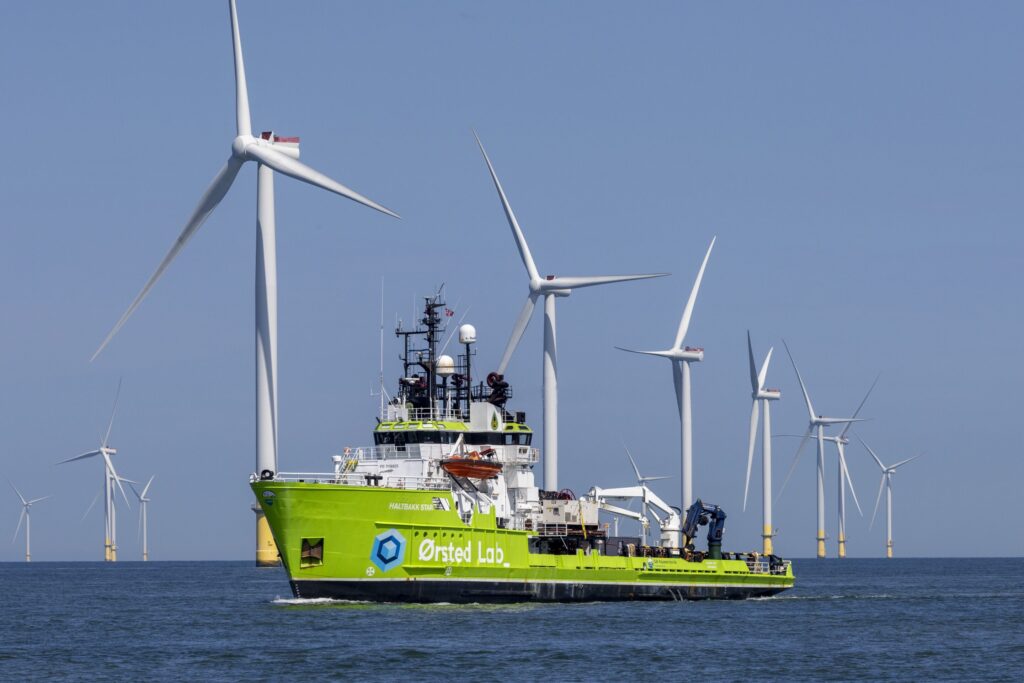
The European Commission has approved a Belgian support scheme worth €2.04 billion for the construction and operation of the first offshore wind farm in the Princess Elisabeth Zone in the North Sea.
The wind farm will have a maximum capacity of 735 megawatts and is expected to generate up to 2.6 terawatt hours of renewable electricity each year.
“The energy we produce ourselves is energy we do not have to import,” Commission Vice-President Teresa Ribera said in a statement, adding that the project would strengthen both energy independence and decarbonisation.
The EU had already approved €682 million in state aid for the project in 2024 under the temporary crisis framework linked to the war in Ukraine. However, that support could not be granted before the 31 December 2025 deadline as Belgium suspended the tender because of sharply rising costs for the grid infrastructure.
The support will take the form of a two-way contract for difference. Under this system, the government will compensate the producer if market prices fall below an agreed level, but will also recover excess profits if prices rise above it.
A key feature of the mechanism is that support will be calculated on the wind farm’s theoretical capacity rather than the actual amount of electricity delivered to the grid. This is intended to avoid subsidising production at times when electricity prices are negative.
