
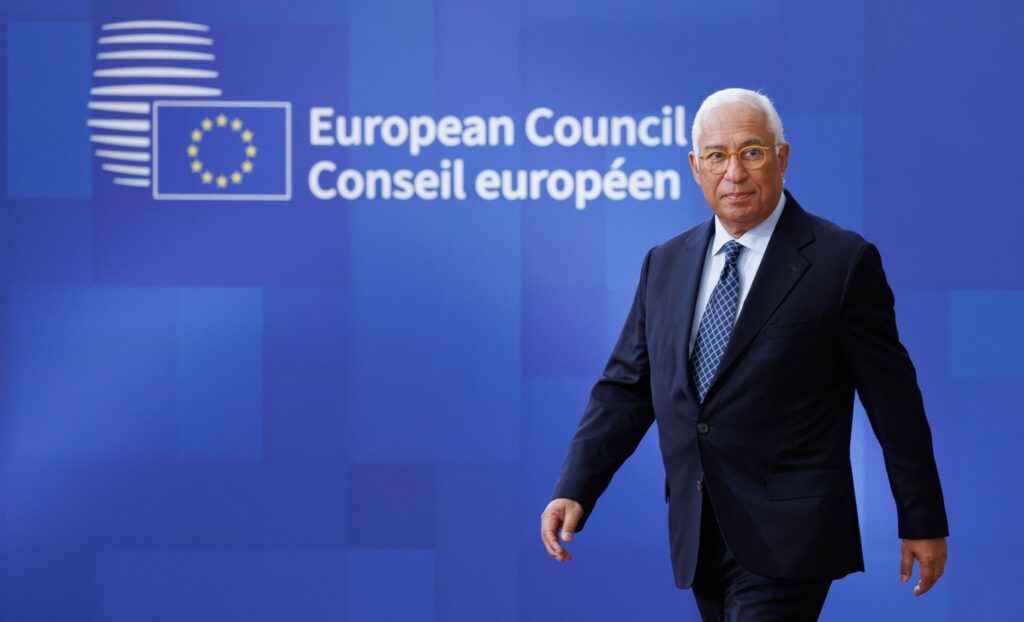
European Union leaders agreed at the Dublin summit on Friday on a joint European team to represent the bloc in any possible peace talks with Russia on Ukraine, European Council President António Costa said.
The team will include five countries from the so-called coalition of the willing — the E5 group of France, Germany, the United Kingdom, Italy and Poland — along with representatives of the European Commission and the European Council, Commission President Ursula von der Leyen confirmed.
Costa said only Ukraine could decide on questions of its territory and sovereignty. He added that the EU had a central role in Ukraine’s future, including its accession process, reconstruction and long-term prosperity.
He said any security guarantees offered to Ukraine after a possible peace agreement would be examined within the coalition of the willing and in close co-ordination with NATO.
“We will work as a European team,” Costa said, comparing the format with the small groups already used by the United States and Ukraine in diplomatic contacts.
The individuals who will sit at the table have not yet been named. Earlier on Friday, EU foreign policy chief Kaja Kallas, seen by Moscow as too hostile, had argued that she was the legitimate representative for the EU on security and foreign affairs issues.
Costa said the EU treaties were clear: the President of the European Council represents the bloc on security and foreign affairs at the level of heads of state and government, while the President of the Commission represents the EU externally on matters falling under the Union’s competences.
Von der Leyen welcomed what she described as a decision taken jointly by “27 sovereign countries” and the EU institutions. She said Europeans were there to defend their own interests and to keep supporting Ukraine until a just and lasting peace was achieved.
She also confirmed that a 22nd package of sanctions against Russia would be proposed soon, alongside a plan to close Ukraine’s funding gap for 2027, ahead of the next summit in Brussels at the end of November.
Overnight from Thursday to Friday, the United States indicated that Russian President Vladimir Putin might be ready to allow Europeans to join peace talks on Ukraine, after they were excluded from recent discussions in Abu Dhabi.
The Kremlin, however, said on Friday that it had not yet agreed and was still waiting to understand what it called Europe’s “real intentions”.
“That is the Kremlin’s usual game,” German Chancellor Friedrich Merz said. He said there was a clear understanding with the Americans, set out on Thursday evening, that for the first time there would be concrete peace talks in the coming weeks in which Europeans would be represented.
“The coming weeks will be a decisive test of whether Russia is ready to end this war,” Costa said. “Its conduct so far, marked by escalation and strikes against Ukrainian civilians, suggests otherwise. Russia must change course.”
