
A group of 26 Greenlanders are suing Denmark for compensation, saying a discriminatory paternity law left them legally fatherless for decades simply because they were born in Greenland.
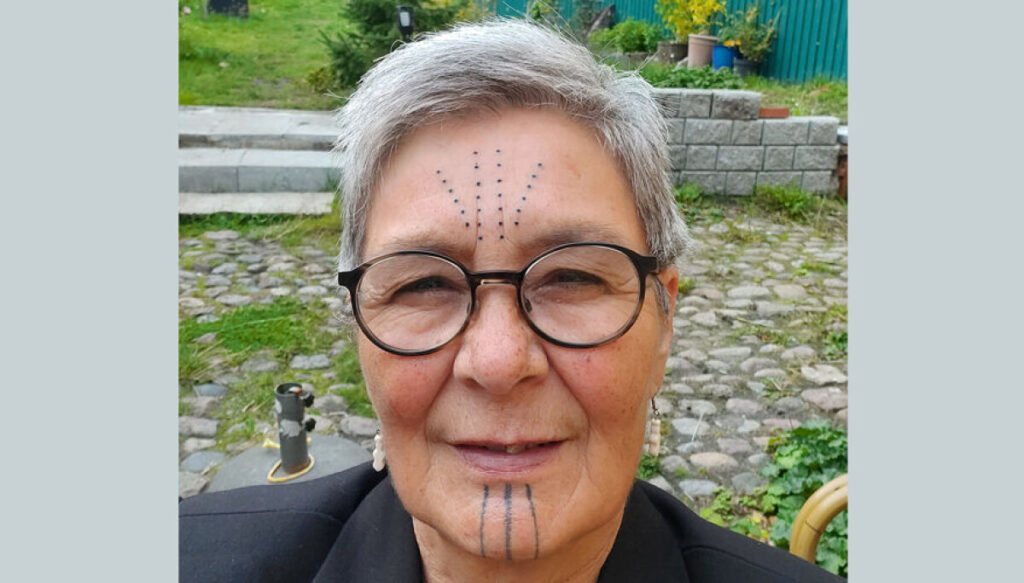
Tida Ravn, 69, one of the claimants, said she grew up without knowing her father or her family origins because Denmark kept the system in Greenland for more than 20 years after abolishing it in Denmark itself.
Between 1938 and 1963 in the more populous west of Greenland, and until 1974 in the rest of the territory, children born out of wedlock to a Danish father could not have that paternity legally recognised, unlike children living in Denmark.
Official apology said to be in the offing
The plaintiffs argue that this difference in treatment, based on their origin, harmed their family life and amounted to discrimination.
“We would have preferred not to get to this point, but Denmark must take responsibility,” Ravn told French news agency AFP.
She said the group filed its complaint three years ago and had hoped the government would acknowledge its responsibility and offer compensation. “If the political system does not want to deal with us, we are forced to go to court,” she said.
Ravn noted, however, that the government is considering an official apology after the expected publication of a report on relations between Denmark and Greenland, although no date has yet been announced.
Precedents
The case comes amid wider historical and political scrutiny of ties between Denmark and Greenland in the post-colonial era.
Public testimony and academic research have in recent years exposed the trauma suffered by children taken from their families in the 1950s and by women subjected to forced contraception.
In both cases, victims received apologies and compensation. Other cases, including children adopted without their families’ consent, have also come to light.
On Wednesday, the second day of the trial, Ravn and three other Greenlanders described in court how the absence of legal paternity shaped their lives.
'A personal matter and a matter of principle'
Asked by AFP, Denmark’s social affairs minister declined to comment on the case.
“I know my mother’s side, but all my life I have carried a mystery inside me: I have a father, but I did not know who he was. Yet it is my fundamental right to know where I come from,” Ravn told the judges.
She said establishing that a wrong had been committed was important because it showed their rights had been violated. “For me, it is both personal matter and a matter of principle,” said the former journalist, who wears traditional Inuit facial tattoos.
In her generation, nearly a quarter of Greenlanders were legally fatherless.
Ravn said the lack of legal parentage overshadowed her youth and much of her adult life.
Holding back tears, Klaus Frederiksen, Dorthea Josefsen and Uullat Bach also told the court about lives marked by absence.
Violation of the European Convention on Human Rights
Their lawyer, Mads Pramming, said the case was above all a legal matter. He argued that maintaining in Greenland a system different from the one applied in Denmark breached Articles 8 and 14 of the European Convention on Human Rights.
He also pointed to what he called the scale of the psychological harm.
“It was shameful to grow up without a father and, because society was also more Christian at the time, it was also shameful to be born outside marriage,” he told AFP before the hearing.
The trial is due to end on Thursday.
Since a reform adopted in 2014, those affected have been able to seek legal recognition of paternity and, where an estate has not yet been settled, claim inheritance rights.
Each of the 26 claimants is seeking 125,000 Danish kroner, about €16,500. The families of two plaintiffs who died during the proceedings have also joined the case.
