
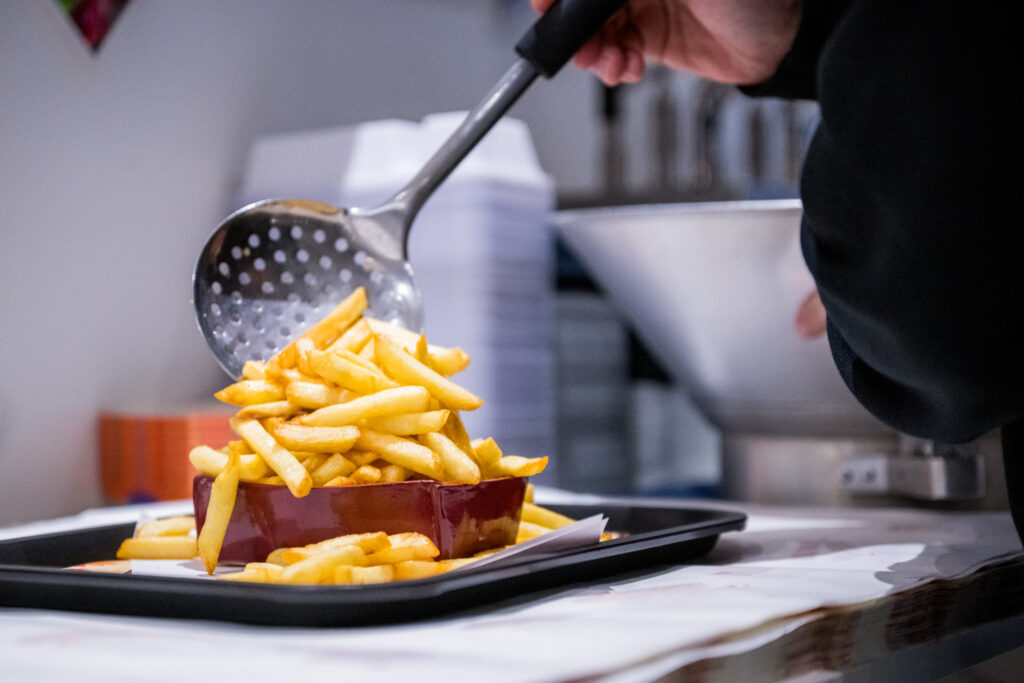
The price of a portion of chips in Belgium has risen by 74% over the past decade, more than double the rate of inflation, according to Monizze, which says meal vouchers should now be indexed automatically.
In its latest 'Frietindex', the meal voucher issuer said inflation rose by 36% between 2016 and 2026, far below the increase in the price of a portion of chips.
Monizze said the rise was driven by lasting increases in the cost of potatoes, up 54%, and oils and fats, up 95%. It added that prices never fell back after the 2022-2023 shock.
Ten years ago, a portion of chips cost just over €2.31, but it now costs €4.01, the company said. Had the price simply followed overall inflation, it would now stand at €3.13.
The maximum value of meal vouchers, by contrast, remained unchanged for almost a decade before being raised to €10 this year, Monizze noted. That represents a 25% increase, three times less than the rise in the price of chips.
Despite the increase, a €10 meal voucher now buys less than it did in 2016. Monizze said €10 today is equivalent to €7.38 ten years ago, and stressed that €10 is only the legal ceiling, which many workers still do not receive.
While wages are automatically linked to price rises, meal vouchers are not, the company said. Their value changes only when the government decides to raise the cap.
Monizze also warned that a planned second increase to €12, included in the government agreement but not yet given a timetable, would still not be enough to make up for lost purchasing power.
According to the company, a meal voucher would need to be worth €13.89 today to match its 2016 buying power at a chip shop.
Monizze is therefore calling for the maximum value of meal vouchers to be indexed automatically. It said meal vouchers, which are exempt from social security contributions within the legal limits, are a direct tool for supporting workers’ net purchasing power.
