
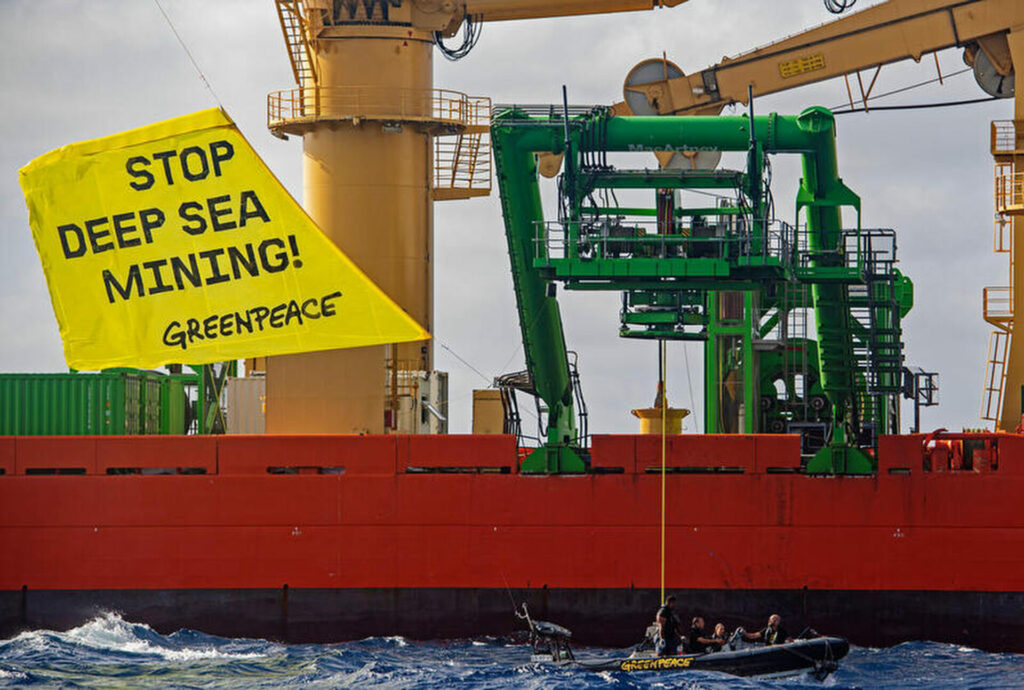
Deepwater mining could pose "significant risks to ocean ecosystems" and its potentially "irreversible" effects on cetaceans (aquatic mammals) need to be urgently assessed, urged researchers in a paper published on Tuesday.
The disruption to these animals is likely to be "long-lasting and irreversible", warned the scientists from the UK’s University of Exeter and a laboratory of the NGO Greenpeace, in the journal Frontiers in Marine Science.
The authors called for "urgent research to more fully assess the potential impact of deep-sea mining on cetaceans" such as whales, dolphins or porpoises.
The seabed is increasingly coveted because some of it contains metals, including manganese, cobalt or nickel, which are in high demand for making batteries for electric vehicles.
Disruption of vulnerable species
Deep-sea mining does not yet exist, but the International Seabed Authority (ISA) could this year adopt a mining code paving the way for it.
Mining companies are particularly eyeing the potential of the Clarion-Clipperton Zone (CCZ), located between Mexico and Hawaii in the Pacific Ocean, which is home to at least 25 species of cetaceans, including dolphins and sperm whales.
In the paper, the researchers are particularly concerned about the noise pollution that would be produced "24 hours a day and at various depths" if such an industry were to develop.
"The sound produced by mining operations, including by remotely operated vehicles on the seabed, overlaps with the frequencies at which cetaceans communicate," the authors pointed out.
"Imagine if your home was suddenly disrupted by construction work that was going on 24 hours a day, seven days a week; your life would change dramatically. Your mental health would be affected and your daily life disrupted. The same is true for whales or dolphins," said Kirsten Thompson, a biologist at the University of Exeter.
Related News
- European Commission closes parts of the Atlantic to bottom fishing
- Flushed antidepressants and anti-anxiety drugs put fish in danger, study show
This prospect is all the more problematic given that cetaceans are already facing many sources of stress, including those related to climate change, and species are just recovering from being hunted by humans.
The mining industry "could damage the oceans in ways we don’t fully understand and to the detriment of species like blue whales that have been the focus of conservation efforts for many years," Louisa Casson, campaigner at Greenpeace International, stated.
"Governments cannot meet their commitments to protect the oceans if they allow deepwater mining," she said.
