
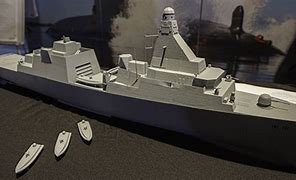
Belgium and the Netherlands on Monday announced orders for four frigates, warships set to form the backbone of their joint fleet at the turn of the decade, for a total of more than €4 billion.
While the price tag is well above initial estimates, the purchase comes with economic benefits estimated at several hundred million euros for Belgian industry, the two governments said simultaneously.
The purchase was approved on Friday by the two countries’ councils of ministers, but the decision was only revealed on Monday.
The purchase of its two frigates will cost Belgium about € 2.0 billion, more than had been expected in 2018. The extra cost is due in part to inflation, and in part to Defence Minister Ludivine Dedonder’s decision to fully equip the frigates in terms of weapons and on-board sensors, her ministry said in a statement.
The Dutch navy will have two identical ASW frigates built to renew the joint fleet from 2029.
The ships, which specialise in anti-submarine warfare – hence the name ‘Anti-Submarine Warfare Frigates’ (ASWF) – will, however, be capable of dealing with both air and surface threats, giving them a high degree of versatility. They will have an expected lifespan of around 40 years, according to a specialist in the matter.
The new ships will replace the current warships, four Dutch-built multi-role frigates or ‘M-fregatten’ that entered service in the 1990s. Belgium bought two of them, the Leopold 1 and the Louise-Marie, second-hand from the Netherlands in December 2005 for €230 million.
Deliveries to the Belgian Navy are scheduled for the second half of 2030 and the second half of the following year, about two years behind the original schedule.
