
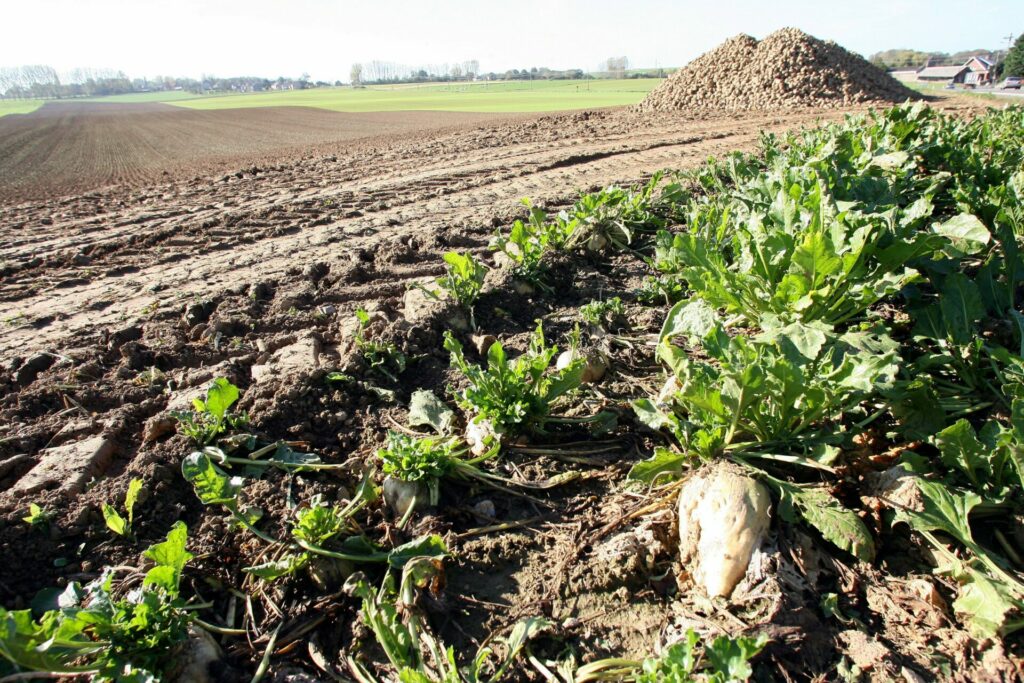
Concerns remain over possible water contamination in areas of Belgium and France where the pesticide chlorothalonil has been used on beet fields before being banned last year after a report showed that residues from the chemical had been found in tap water in Hauts-de-France.
Back in September 2022, France’s National Agency for Food, Environmental and Occupational Health and Safety (ARS) began investigating the quality of water in 105 municipalities in Hauts-de-France, the country’s northernmost region which shares a border with Belgium. The investigation was launched after the discovery in groundwater and tap water of metabolites (residues) of chloridazone, a pesticide used in beet cultivation until it was banned two years ago.
As a result of the investigation, inhabitants were informed and asked not to consume the water until the standard complied with the quality criterion. As of this month, the situation remains the same and some inhabitants still have to travel to areas with safe water to fill cans and barrels for their own use, a problem for some with reduced mobility or lack of transport.
Related News
- Large-scale drinking water contamination in France
- Belgium named largest exporter of EU-banned pesticide
Given the geographical proximity, questions have arisen over whether tap water is consumable in Belgian beet regions. Laboratory tests on tap water from Limal, a Walloon village in the beet region near Wavre showed that the water there does contain metabolites of chloridazone. The levels are above the quality criterion of 0.1 mg.
The authorities in France are now concerned about another pesticide, chlorothalonil – which was also banned for sale in 2019. According to a report by the ARS, about a third of the water distributed in France would not comply with the regulations because of the chlorothalonil metabolites present.
