
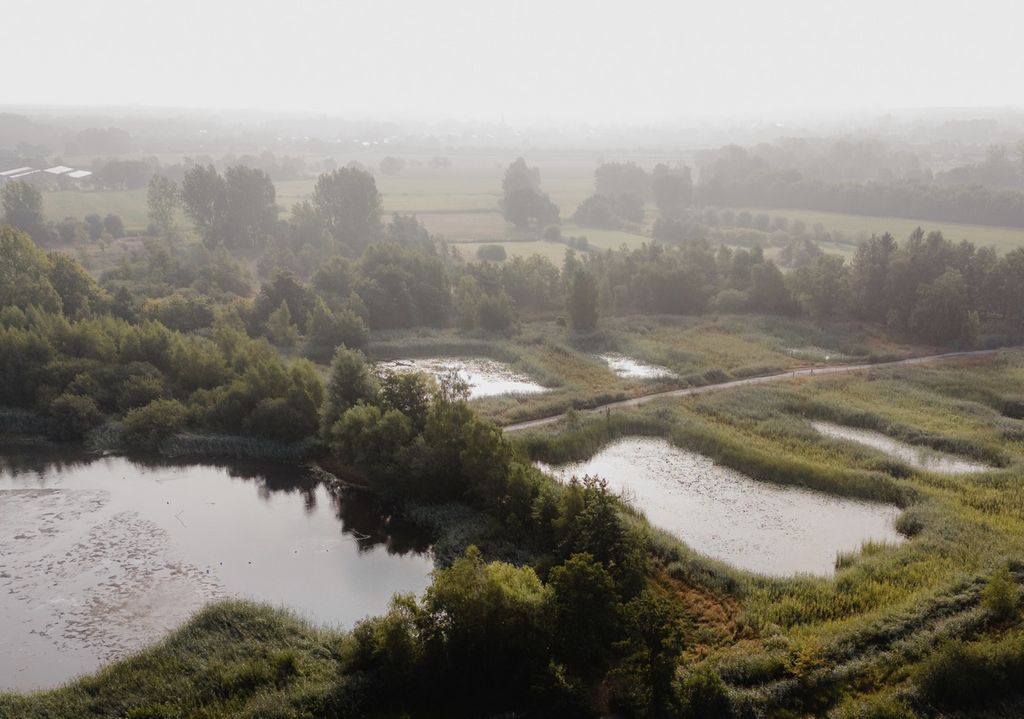
Flanders' peat bogs contain 3.5 times more carbon per hectare than the Amazon rainforest, it emerged on Tuesday from measurements carried out by Natuurpunt in the Limburg valley of the Grote Beek.
These wetlands, colonised by vegetation in a water-saturated environment, are "practically Belgium's tropical forest," according to the Flemish nature conservation organisation.
As the soil in peat bogs is very wet, dead leaves and other organic matter can accumulate underwater without oxygen being able to reach them. Yet these areas are now at risk of drying out, which would release the stored carbon.
As part of the European LIFE Multi Peat project, Natuurpunt is working to restore the 230 hectares of peat bogs along the Grote Beek: a watercourse that flows through Beringen, Oostham and Bourg-Léopold.
Peat accounts for only 3-5% of the total land area in the northern hemisphere, but these peat bogs contain 33% of all the carbon in the soil. According to preliminary research by the LIFE Multi Peat project, the Grote Beek valley alone stores around 162,000 tonnes. Only a quarter of this total is found in trees, while the rest locked in the soil. By way of comparison, an aeroplane emits the same amount of carbon after 440 revolutions around the earth.
"With or without trees, peatlands store a lot of carbon," explains researcher Cyr Mestdagh. "Yet it is still difficult to protect peatlands. It takes years to obtain permits. Before we can start working on them, the peat may have disappeared completely."
