
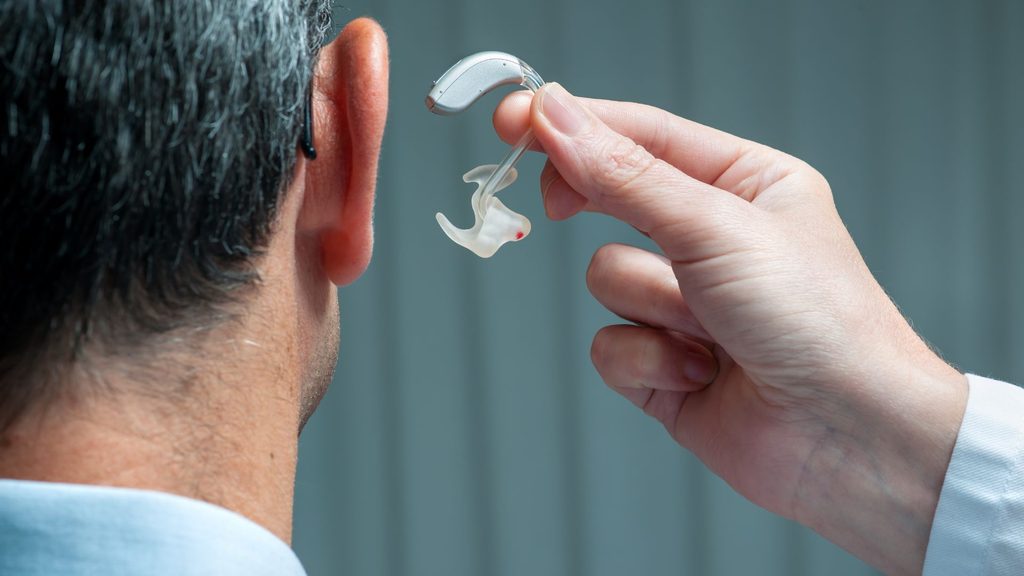
Hearing loss can be a deeply isolating experience for many, and the cost and complexity of obtaining hearing aids in Belgium is only exacerbating the problem.
Recent studies reveal that just one third of individuals who require hearing aids actually obtain them, exposing a significant public health issue linked to social isolation brought about by deafness. However, there are solutions available that could provide much-needed relief for those grappling with hearing impairment.
The journey toward acquiring a hearing aid begins with a fundamental step: a hearing test, or 'audiogram'. The process is straightforward, involving the use of headphones through which the individual signals when they detect sounds at varying frequencies.
Up to €5,550 for a pair
Research indicates that professionals then tend to recommend the most expensive hearing devices on the market. Brands such as Bernafon, Oticon and Resound offer devices that come at a staggering price range of between €5,300 and €5,550 for a pair.
Fortunately, a reimbursement system through RIZIV (National Institute for Health and Disability Insurance) can help alleviate some of the financial burden, provided the chosen device falls within the list of approved models. The amount of financial assistance varies according to the patient's age, with reduced rates for those over 65. For instance, a 21-year-old student may receive a reimbursement of €1,500, leaving a personal expense ranging from €3,800 to €4,050.
Many people favour these high-end devices and emphasise their benefits: they often include features such as embedded artificial intelligence and an abundance of adjustable channels.
Some customers feel that their lifestyles and personal situations were not adequately considered during the initial audiologist consultation. There is a perception that these major brands are primarily focused on boosting their revenue, and audiologists, while skilled in their profession, may not always be comfortable with the sales aspect that has become an integral part of their role.
Undoubtedly, hearing aids come with a hefty price tag, justified in part by the extensive services offered over five years. During this time, customers have the opportunity to return for maintenance, adjustments, repairs, replacements, and new batteries (for charger-equipped models).
Related News
- World Health Organization criticises Belgium over high medical costs for poorest households
- One third of over-65s expected to develop hearing loss in future
The value of these services is undeniable. Yet, audiologists are required to present a fully or almost fully reimbursed high-performance device, a requirement often not met by major retailers. When clients raise this concern, they frequently encounter resistance and scepticism from audiologists regarding the quality and standard of these so-called "reimbursed" devices, which cost around €750 each. Entry-level hearing aids are seldom showcased in stores.
However, some independent professionals argue that these lower-cost devices can be perfectly suitable for the majority of cases. These models, typically from two to three years ago, may have fewer channels and finesse in settings but remain effective. At the very least, they should be offered for trial, a gesture that is often absent from the practices of major retailers, according to independent audiologists.
It is essential for individuals facing the financial challenge of acquiring a hearing aid to assert their rights and demand alternatives if the available options are unaffordable. This may require reminding major brands of their legal obligations, ensuring that accessibility to hearing assistance is not solely dependent on one's financial means.
