
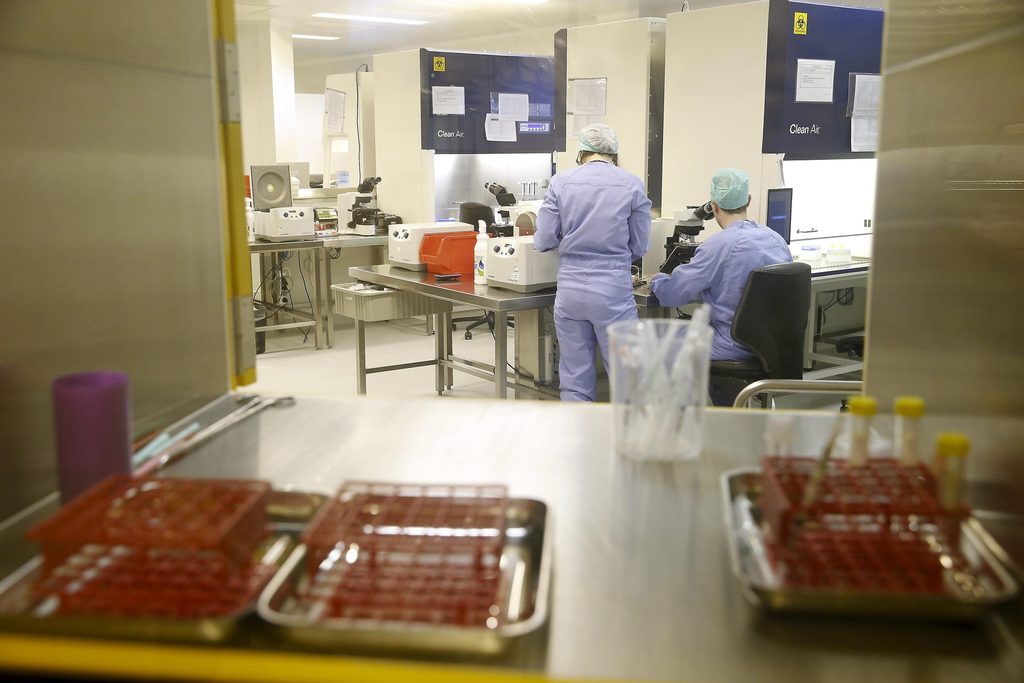
While male infertility is a major health problem globally, scientists still lack a relevant model to study this issue. One Brussels-based researcher is working on a new progressive and animal-free testing model to fill the gap.
Infertility rates have increased worldwide in recent decades, especially among men. Sperm production has almost halved in the last 50 years, but finding out the problem is proving to be challenging for the medical world.
"There is indirect evidence pointing to the negative impact of things we ingest through air and food or that our skin comes in contact with," said Dr Yoni Baert of the University of Brussels (VUB). Those substances likely interfere with the normal functioning of the testicle.
However, there are many causes that are still unknown, and scientists lack a relevant study model for the testicles which work outside the human body, in order to conduct in-depth studies and understand the impact of certain substances.
For this purpose, most researchers turn to animal testing out of necessity, relying on mouse cells, but these have many disadvantages. "Firstly, it is not nice to work with laboratory animals, it costs a lot of money and it is also not always applicable," Baert said.
Related News
- Groundbreaking discovery in Alzheimer’s disease made by Belgian researchers
- AI seen as possible saviour in tech sector's environmental struggles
Baert is now investigating whether human medical waste could be an animal-free solution. He believes testicular organoids, an artificial organ made in the lab from stem cells, from human medical waste can be a substitute for laboratory animals.
"Medical waste, tissue from people after surgery, could be an interesting solution," Baert explained. "Normally that waste is thrown away after surgery. But that sometimes involves very large organs from which we can extract millions, sometimes even billions of cells to perform in vitro research on."
