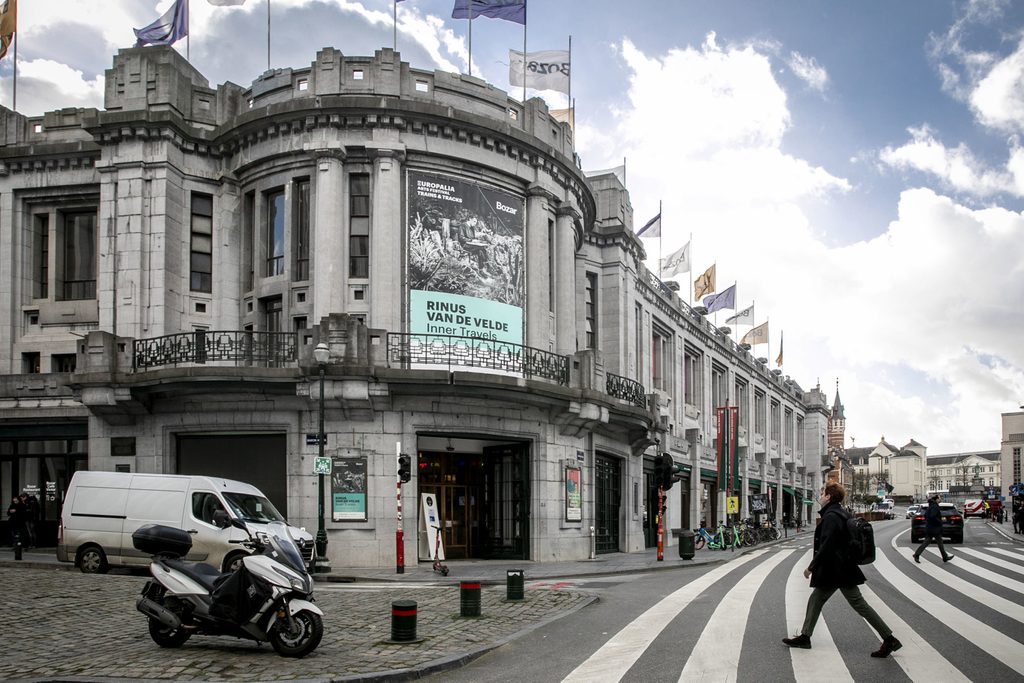
The Europalia biennial arts festival opens its doors to the public on Thursday with an exhibition titled 'The Avant-Garde in Georgia' at the Bozar in Brussels.
The Europalia festival, held every two years, presents a multifaceted artistic project based around a country or theme. This year, it honours the art and heritage of Georgia, offering nearly sixty interdisciplinary events (exhibitions, films, concerts, theatre, dance) in various cultural venues in Brussels and throughout Belgium.
The opening exhibition, which lasts until 14 January 2024, portrays the Georgian avant-garde period (1900-1936) through a large body of work - paintings, drawings, books, films, photographs, theatre and cinema sets - mainly preserved in Georgia. Performances and guided tours accompany the exhibition to enable the public to immerse themselves even further in these works.
“We decided to create this exhibition during a trip to Georgia a few years ago, where we discovered names of artists we had never heard of before," art historian Eva Bialek, coordinator of Europalia, explains. "This exhibition is a form of restoring history, and allows us to show another perspective on the European avant-gardes.”
The exhibition offers a chance to discover the Georgian avant-garde in all its diversity, blending the country’s traditions with influences from East and West. Visitors will be able to admire works from movements as varied as (neo-)symbolism, futurism, Dadaism, Zaum, Toutism, Expressionism, Cubism and Cubo-futurism.
“This is the first time for us that our cultural heritage has been brought to such a large-scale European event," a delighted Nana Kipiani, one of the Georgian curators, said on Wednesday. "In a way, it brings us closer to Europe.”
