
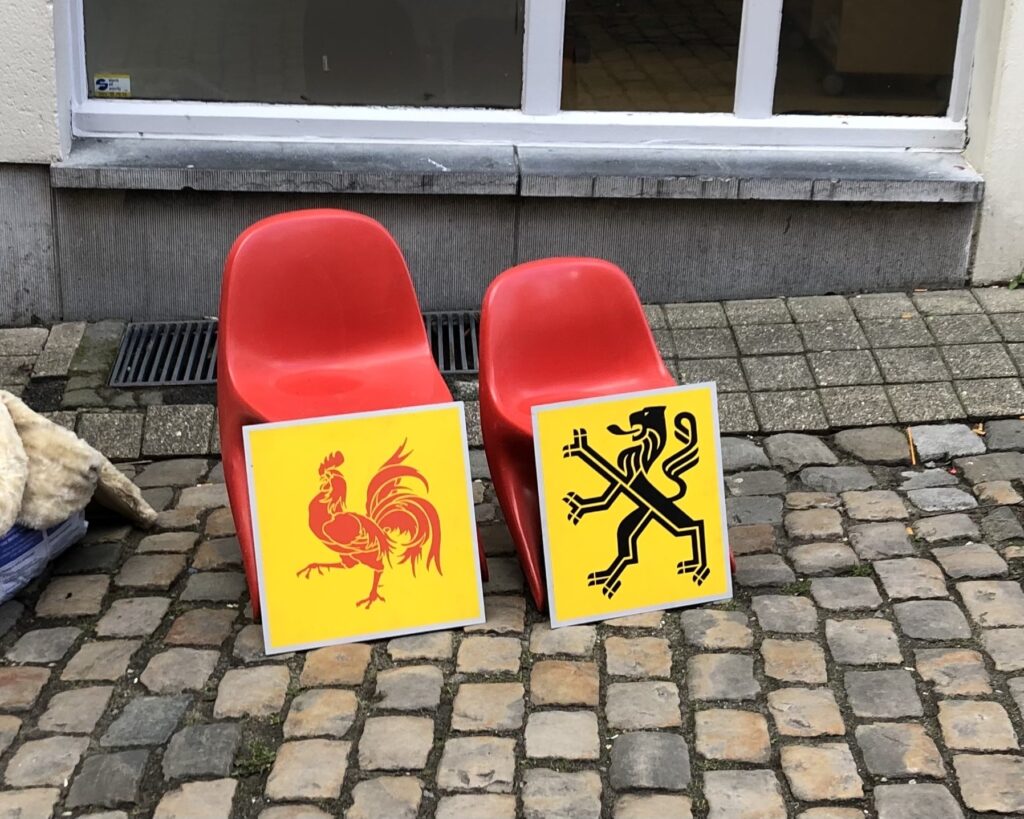
The more attached a person is to their Walloon identity, the more positive their attitude towards migrants, the Institute for Social and Political Opinion Research (ISPO) at KU Leuven University reported in a study on Friday.
Among Flemings, the opposite is true. The more a person identifies with Flanders, the less tolerant they are of migration.
In 2003, researchers showed that the more a person identified with Flanders or Wallonia, the more negative their attitude towards migrants. The aim of the new study by KU Leuven was therefore to determine whether these trends were still valid by observing a period of almost 30 years, from 1991 to 2020.
After each federal parliamentary election, between 600 and 1,000 people were questioned in Wallonia. In Flanders, between 1,000 and 1,700.
This new study shows that Belgians’ attitudes to migration have remained relatively stable over this period, except between 2010 and 2014. Over these four years, the researchers found a significant increase in positive views towards migrants.
Related News
- Brussels and Wallonia take in far more asylum seekers than Flanders
- Working asylum seekers in Belgium to be forced to pay for reception centre stay
- Majority of Belgians support State Secretary De Moor's migration policy
"This positive trend runs counter to what we expected," say the researchers. "There is a continuing climate of economic crisis, strong calls from right-wing political parties for more restrictive social reforms and a predominantly negative discourse towards migrants and refugees. However, according to the 2020 data, this positive trend is not continuing. We suspect that politicised events have broken it, such as the terrorist attacks, among others."
In addition, the study shows that the more a person identifies with Wallonia, the more tolerant they are of migration, and vice versa for Flanders. The 2003 results are therefore partially confirmed.
