
When travelling by train between the United Kingdom and mainland Europe, the best-known and most used option remains Eurostar through the Channel Tunnel. Sure, you can also drive through, take a ferry, a bus, or fly, but the most comfortable and efficient way is by train.
After nearly thirty years of Eurostar’s dominance, that monopoly has finally come to an end. Though the Tunnel has technically been open to competitors since 2010, real interest only surged recently, driven by new regulations and the push for greener transport. So, who are the new challengers, and why now, after fifteen years of near standstill?
The Temple Mills depot: The key obstacle
Breaking Eurostar’s monopoly was never going to be easy, especially due to the rail depot, as consumer champion Mark Smith, also known as 'The Man in Seat 61' explains: “Temple Mills depot is the only UK depot that can handle Continental-gauge trains and which is accessible from HS1 (HS1 is also known as the Channel Tunnel Rail Link (CTRL) and is the high-speed railway linking London with the Channel Tunnel.)”.
The depot’s regulator, the Office of Rail and Road (ORR) launched a consultation in March 2025 on an independent report by consultancy IPEX, which found that some capacity could be made available at Temple Mills. ORR announced on 5 June 2025 that the report accurately reflected the situation, confirming that there was enough capacity for either one new operator or for Eurostar to expand. ORR then asked Eurostar and other applicants to provide details of their plans, stating that a final decision on access to Temple Mills would be made by 31 October.
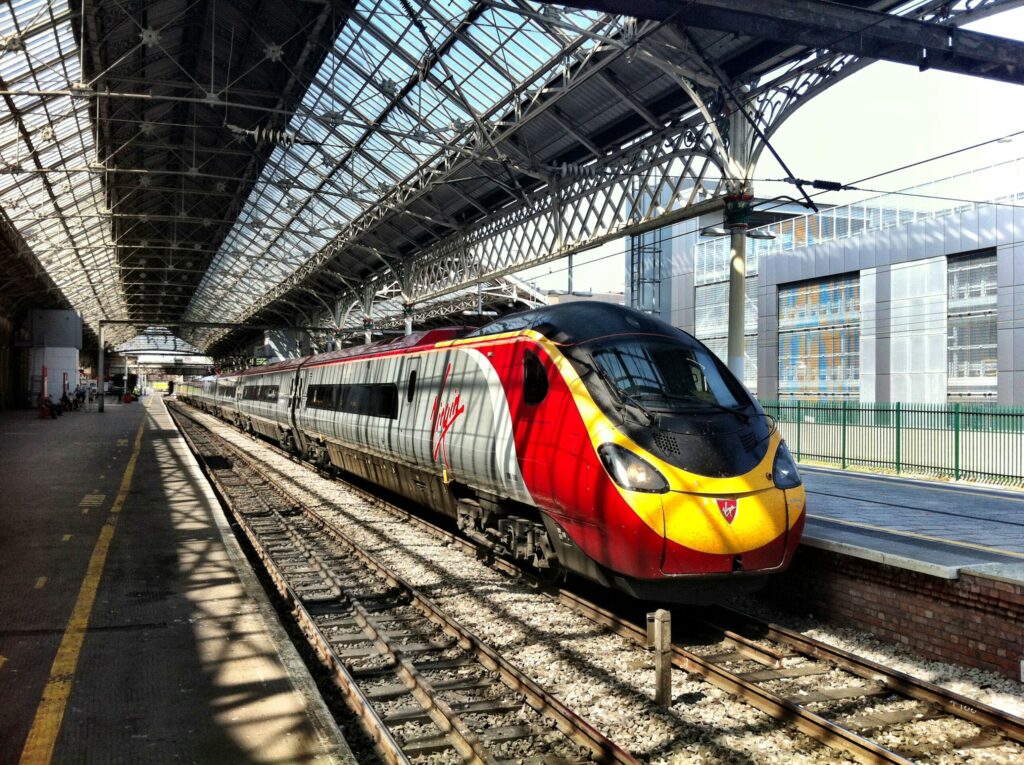
The ORR was even faster in their decision than promised, as they announced on 30 October that Virgin Group could move forward with its plans to use the Temple Mills International rail depot. As the company explained in a press release, this was a necessary step: “This is a major breakthrough for Virgin, which can now progress its plans to launch a cross-Channel rail service through the Channel Tunnel, expecting to launch in 2030.”
Other competitors
Virgin was obviously not the only company looking to get access to that depot. Evolyn is a company run by a Spanish family, which was backed by French and British industrial and financial partners, including British transport operator Mobico, formerly the National Express.
They were the first to drop their depot access applications back in the summer of 2024. The business had stated that it had secured an agreement with Alstom to buy 12 high-speed trains for the service, which planned to start between London and Paris, without plans to extend their line to Brussels. Evolyn has probably remained the most discreet contender, with very little information available on who they are and what they do.
As far as we know, they have not released a statement since losing the option to Temple Mills.
The other primary competitor was Gemini Trains, headed by former Eurotunnel engineer and British aristocrat Lord Tony Berkeley. Gemini had submitted an application for an operator's license to run a fleet of ten trains between Paris, Strasbourg, Cologne, and Geneva by 2029.
Gemini Trains has commented on the ORR’s decision by way of a press release stating: “We are disappointed not to be successful in our application to the ORR, and we wish Virgin the best of success in offering international rail customers choice and value. We created a unique alliance of experts and major transport organisations, and we will consult them to seek other ways of bringing the Gemini service to the UK and Europe.”
“Bringing some Virgin magic to the cross-Channel route”
The Virgin group and its long-time boss Richard Branson didn’t hide their joy on being selected. As Mark Smith notes: “It now looks like a two-horse race, Virgin and Eurostar”.
The ORR explained their choice by saying: “Virgin Trains’ plans were more financially and operationally robust than those of other applicants, and it provided clear evidence of investor backing and an agreement in principle to deliver the necessary and appropriate rolling stock.”
Virgin hasn’t been too forthcoming on the details of what their offer is going to look like, but Smith is confident that the prices are going to lower: “Competition will increase capacity and drive down fares, as it has in Italy and Spain, for example.
Unlike airlines, Eurostar was given no support during the pandemic, and because of that it has a big debt to service. They know they can price up quite high before travellers will vote with their feet and schlepp to an airport to fly, (editor’s note: stop using it and fly) or take a 10-hour bus ride”.
He continues by saying: “As far as I can see, Virgin plans to be a full-service operator, so I expect them to compete with Eurostar for both budget and business travellers on both price and service quality, probably some sort of included food & drink service in 1st class”. Travelers should expect a service similar to the one already offered by Eurostar, but most perhaps at a cheaper price.
What happens to the rest?
According to a private source working in the railway world, three options are now open to the “losing” competitors: first option is that they contest the decision of the ORR, which seems the least probable option, given that the ORR explained their decision thoroughly.
The second option is to find another depot just like the one in Temple Mills, capable of welcoming such trains. Again, our source believes this is unlikely because if such a place existed close to London, it would be known.
Finally, the most likely, though ambitious, option would be to build their own depot facility, a costly and time-consuming process. Indeed, this would be a major investment, and even though said investment could prove profitable in the long term, the calendar would be something difficult to manage, between finding the terrain, buying and certifying the necessary equipment, and actually building the place…
So, what will they do? It’s hard to say at this moment, given none of them have given an official statement about what their next steps will be.
In any case, Virgin also has some figuring out to do together with the companies running the stations and the other depot that Eurostar uses in Paris and Brussels. Our source tells us: “The arrival of this new competitor raises questions about the capacity of stations to accommodate new passengers in the long term.
It will be necessary to expand existing facilities, whether arrival stations or depots in Brussels, Paris and Amsterdam, as size will be essential for the smooth operation of trains.”
Virgin’s victory marks a historic turning point for cross-Channel rail travel. For the first time in three decades, passengers will soon have a choice between two operators beneath the Channel, a shift that could redefine pricing, comfort, and connectivity between the UK and the continent. Yet as the ORR’s decision shows, this new chapter is as much about infrastructure as innovation. The race for the Tunnel has only just begun.
