
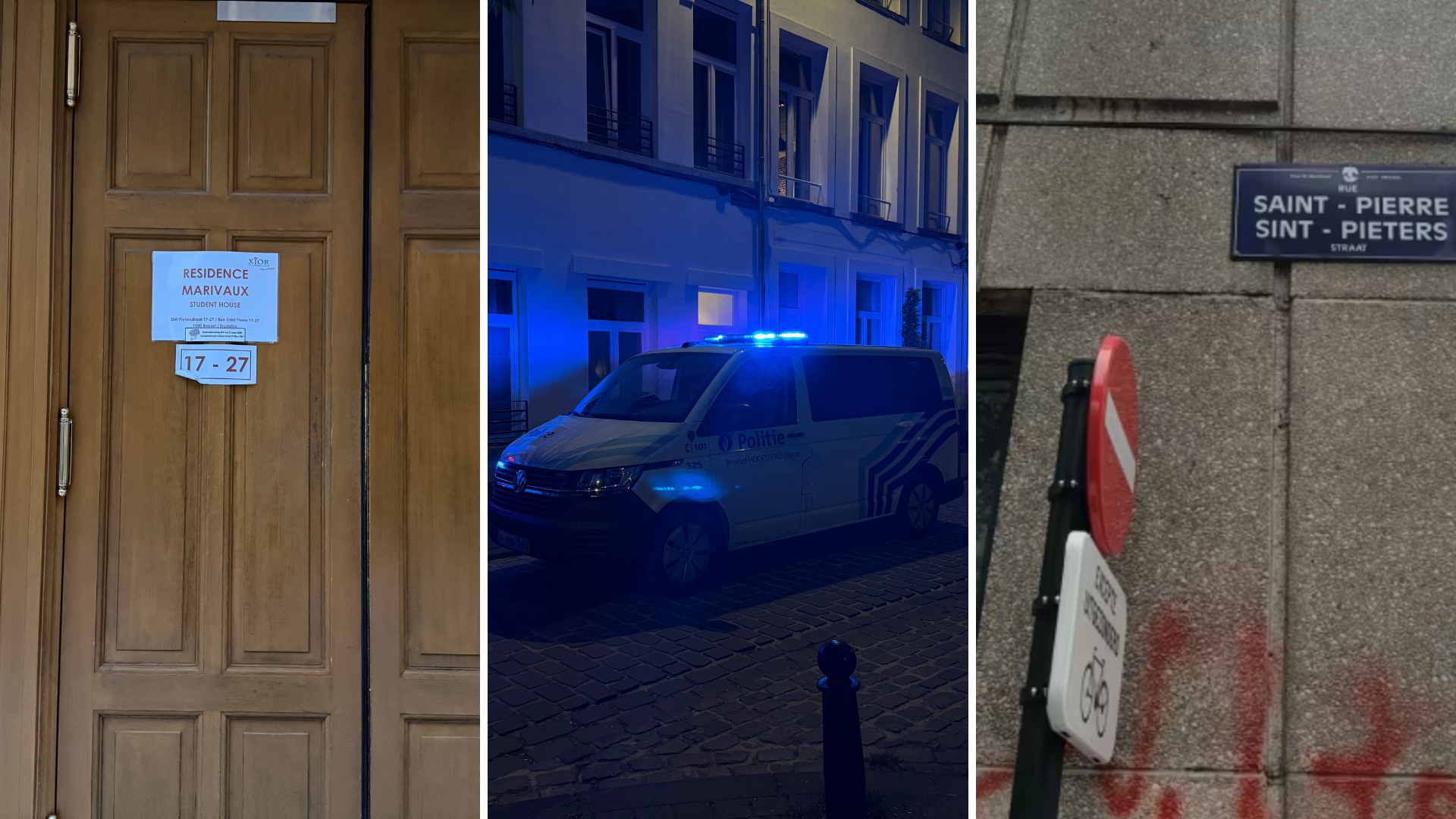
Six months ago, my friend Vind was stabbed to death just steps from the student residence where I lived. His murder shocked Brussels, dominated national headlines, and sparked promises from city leaders that safety for students in the city centre would be improved.
But those promises didn’t last. The truth is, very little has changed.
Vind, originally from Singapore, was a second-year business student at KU Leuven. He was one of those people who lit up the room — outgoing, funny, always pulling people together for Friday-night drinks or parties.
He sometimes came by our dorm at Rue Saint-Pierre 17 — a tight-knit, multicultural student residence known as Marivaux.
On the night he was killed, Vind had been out with friends. Two young men, both 18 years old, began to follow and harass them near the Bourse. They later attacked the group. Vind was stabbed near the entrance of our building.
A few students who happened to be watching TV in the common room rushed to his aid and tried to stop the bleeding. They couldn’t save him.
I found out minutes later. My phone rang at around 3 a.m. — a friend told me there were police officers and ambulances. I ran down to the ground floor. By the time I arrived, Vind’s body was already being taken away.
When the police confirmed his death later that night, many of us broke down. People wept. Others stared in silence. I didn’t sleep at all that night.
Ignored warnings
What makes this tragedy even harder to live with is the fact that we — students — saw it coming. We had warned the authorities again and again: Rue Saint-Pierre wasn’t safe. Our dorm had no permanent manager at the time, so I unofficially took on the role of coordinating emergencies. I dealt with the police that night, provided them with CCTV footage and contact details.
In the past, I had also organised a petition demanding security upgrades, including replacing the front gate, which could be forced open by anyone. The management ignored it. They said the gate couldn’t be changed because of heritage restrictions.
It wasn’t just about the gate. Our residence had been broken into numerous times. Burglars stole computers, a TV, even books. Students — myself included — had reported harassment and threats. The city centre is full of vulnerable people, yes — but also drug trafficking, prostitution, and violent crime. We knew it. We lived it.
We begged for more police presence. On the night of the murder, one officer told me flatly: “We’re not paid enough to patrol this area.”
Short-term response, long-term neglect
In the immediate aftermath, things changed. Credit where it’s due: the mayor got involved, the police patrolled daily, and dorm management came back on site. For a while, it felt like the authorities were listening. We even received official statements that felt sincere.
But within a few weeks, the patrols faded. Management no longer stayed overnight. Security concerns were no longer treated as urgent.
Today, six months later, the atmosphere on our street is exactly what it was before. Everyone knows the risks. We’ve just grown used to them again.
Living with fear and loss
Vind’s murder devastated our community. Some residents suffered PTSD. We started doing night shifts — if someone needed to go to the shop late at night, we’d go in groups.
It wasn’t just about grief. It was fear. The kind of fear that lingers long after the crime scene is cleaned up.
As international students, we often feel like we’re left to fend for ourselves. Brussels isn’t an unsafe city overall — but it is politically fragmented, and student safety falls through the cracks. Policing is divided by commune. No one seems clearly responsible for protecting students in central areas.
Vind was an ordinary guy. Caring, bright, sociable. He never caused problems. He was just in the wrong place at the wrong time — in a city that ignored our warnings. Vind wasn’t an exception. What happened to him could have happened to any of us. And unless something changes, it still could.
Have a story to share?
If you’ve experienced something important, unusual, or thought-provoking — or have insight into an issue that deserves more attention — we’d like to hear from you. Send a short description to stories@brusselstimes.com, and one of our editors will be in touch if we decide to follow up.
