
Today, 9 August, marks the 717th edition of the Meyboom festival in Brussels. But what is this centuries-old folkloric tradition and what is happening in Brussels' city centre today?
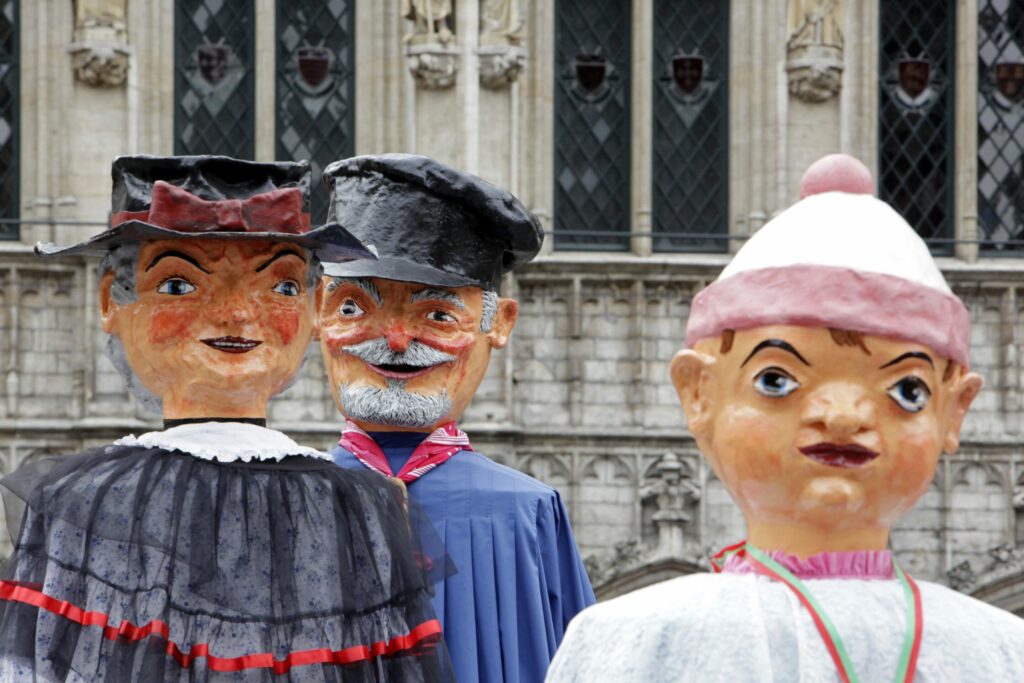
Every year on 9 August, crowds gather in central Brussels for the traditional Meyboom celebration, which dates back to 1213 but is still very much a firm fixture in the regional calendar. As well as planting the tall 'Tree of Joy' (known as the 'Meyboom'), there are colourful parades, brass bands, giant puppets and folklore groups.
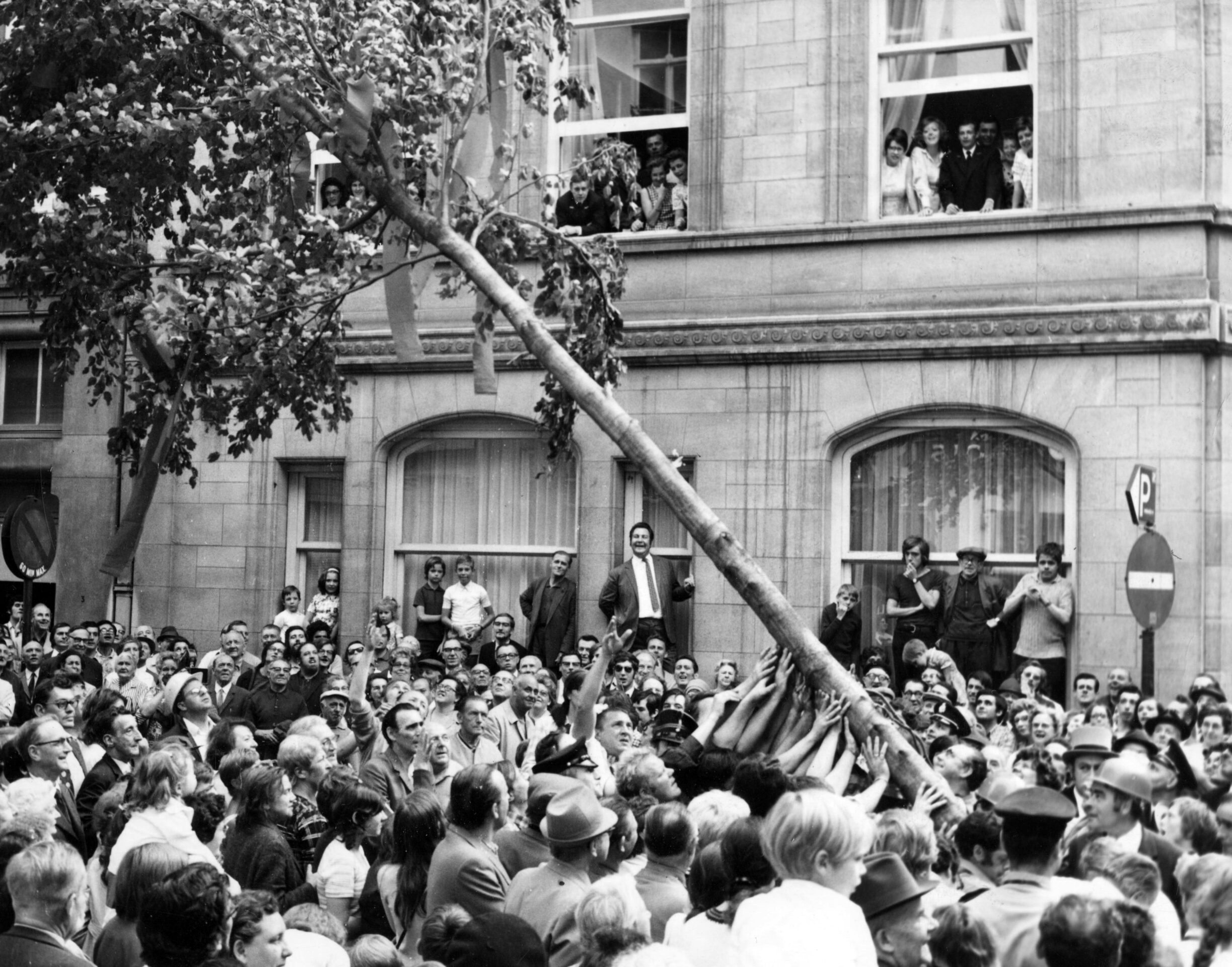
The planting of the Meyboom in Brussels. Credit: Belga Archives
The planting of this tree is one of the lasting symbols of Brussels folklore and has been recognised as an intangible heritage by UNESCO, and 2025 marks its 717th year.
The Meyboom was first planted in 1213 (although the tradition did not formally take shape until 1308), when Brussels won an important victory over Leuven – although history is unclear about what the dispute was about exactly, with legends ranging from a disrupted wedding party to a beer tax.
To mark Brussels' victory, the Duke of Brabant gave the Companions of St Laurentius the privilege of planting a Meyboom every year on 9 August.
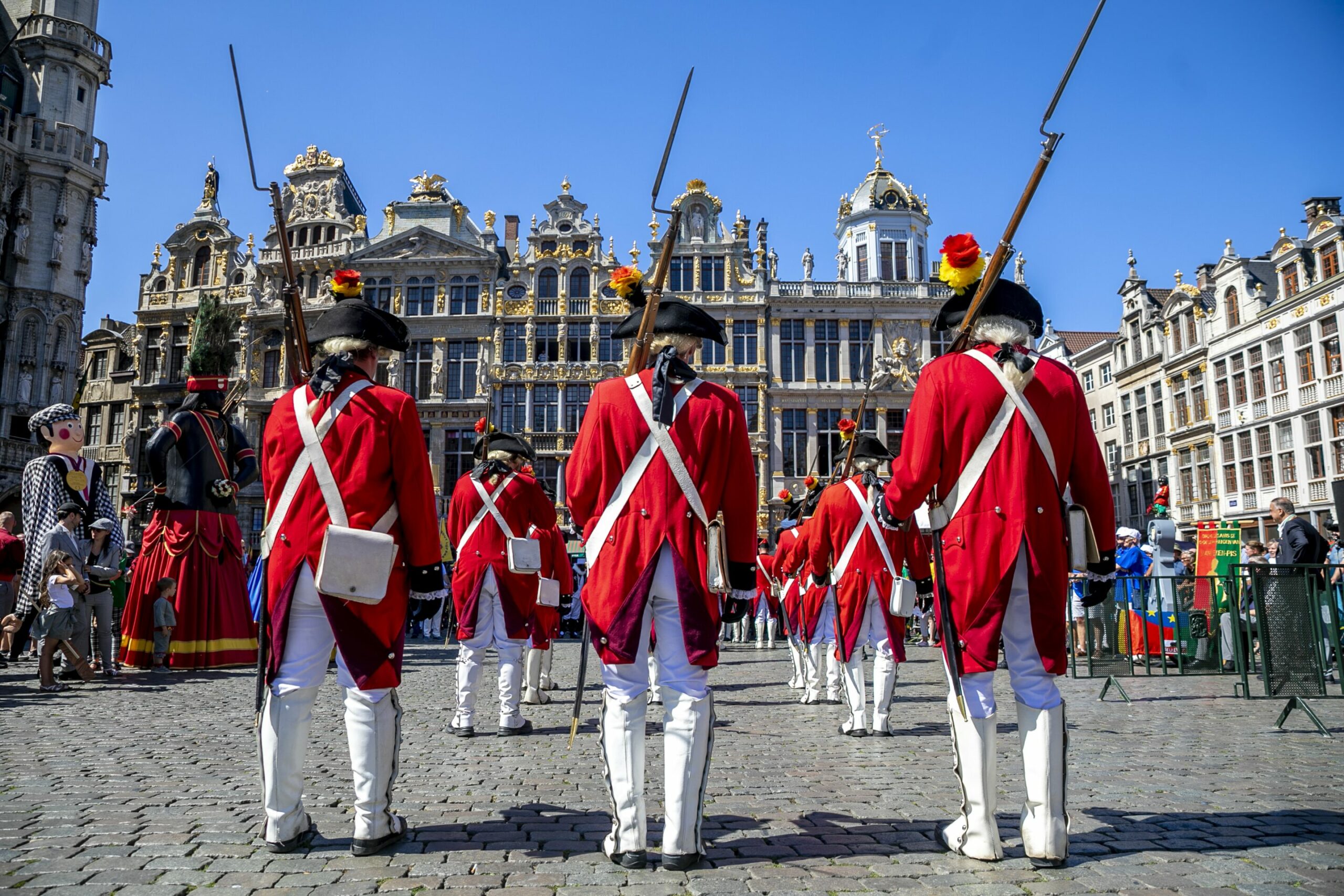
Meyboom festivities in Brussels, 9 August 2022. Credit: Belga / Hatim Kaghat
What's the order of the day?
The occasion is still commemorated every year on this date. In the morning, participants cut down the tree in question at 06:00 in Bois de la Cambre in the Belgian capital (having chosen it the week prior).
The tree passes through Grand Place where it is presented to the public and the city's dignitaries before the parade finishes at Rue des Sables in the city centre (near the Belgian Comic Strip Centre).
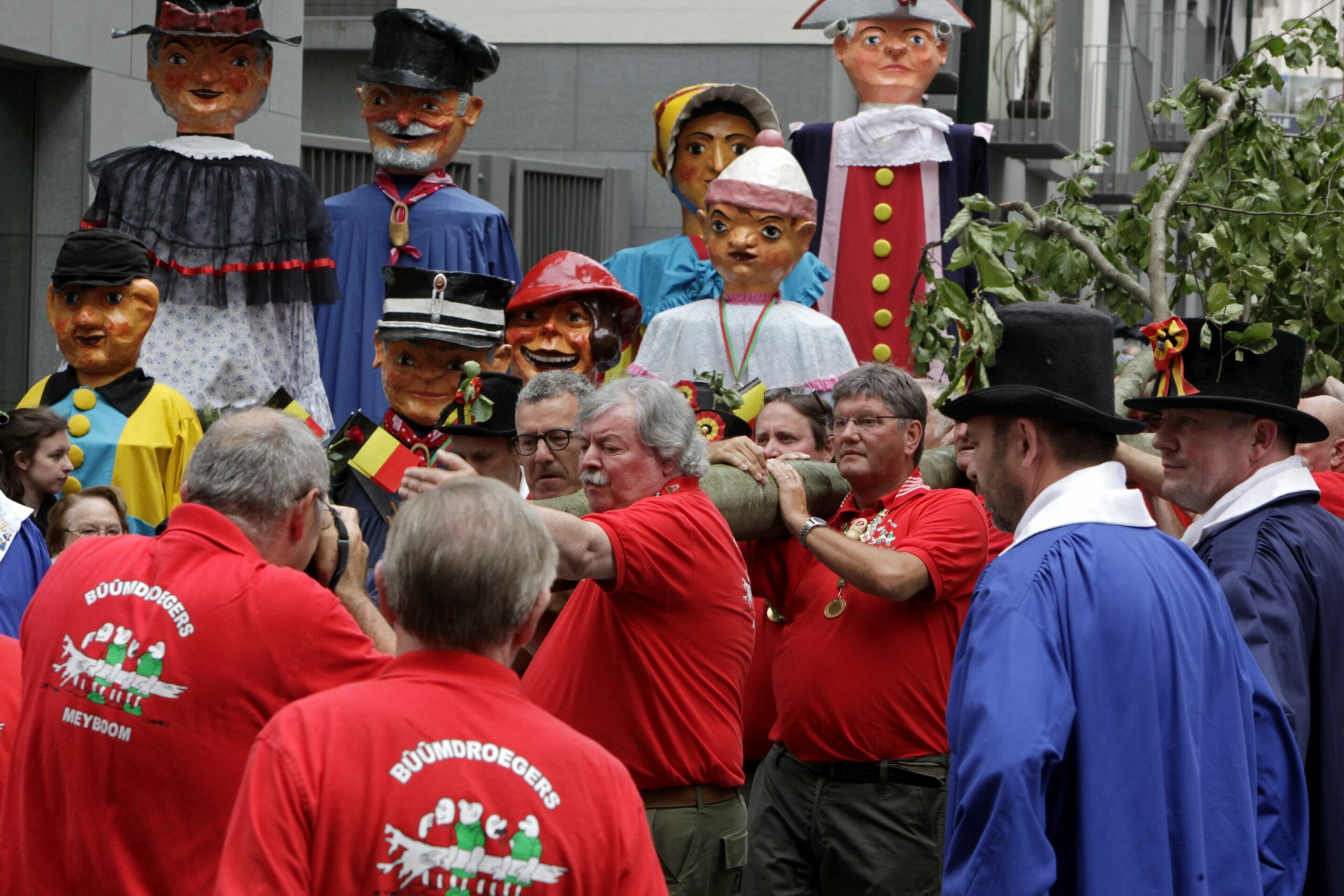
Former City of Brussels Mayor Freddy Thielemans pictured at the 707th edition of the Meyboom in Brussels, Sunday 9 August 2015. Credit: Belga / Aude Vanlathem
The Gardevils and the Bûûmdroegers go out of their way to move quickly and protect the tree from lurking men from Leuven – who do their best to block the procession somewhere along the route – as the tree must be planted at the intersection of Rue du Marais and Rue des Sables by 17:00. Legend has it that the people of Brussels defeated the people of Leuven on this corner.
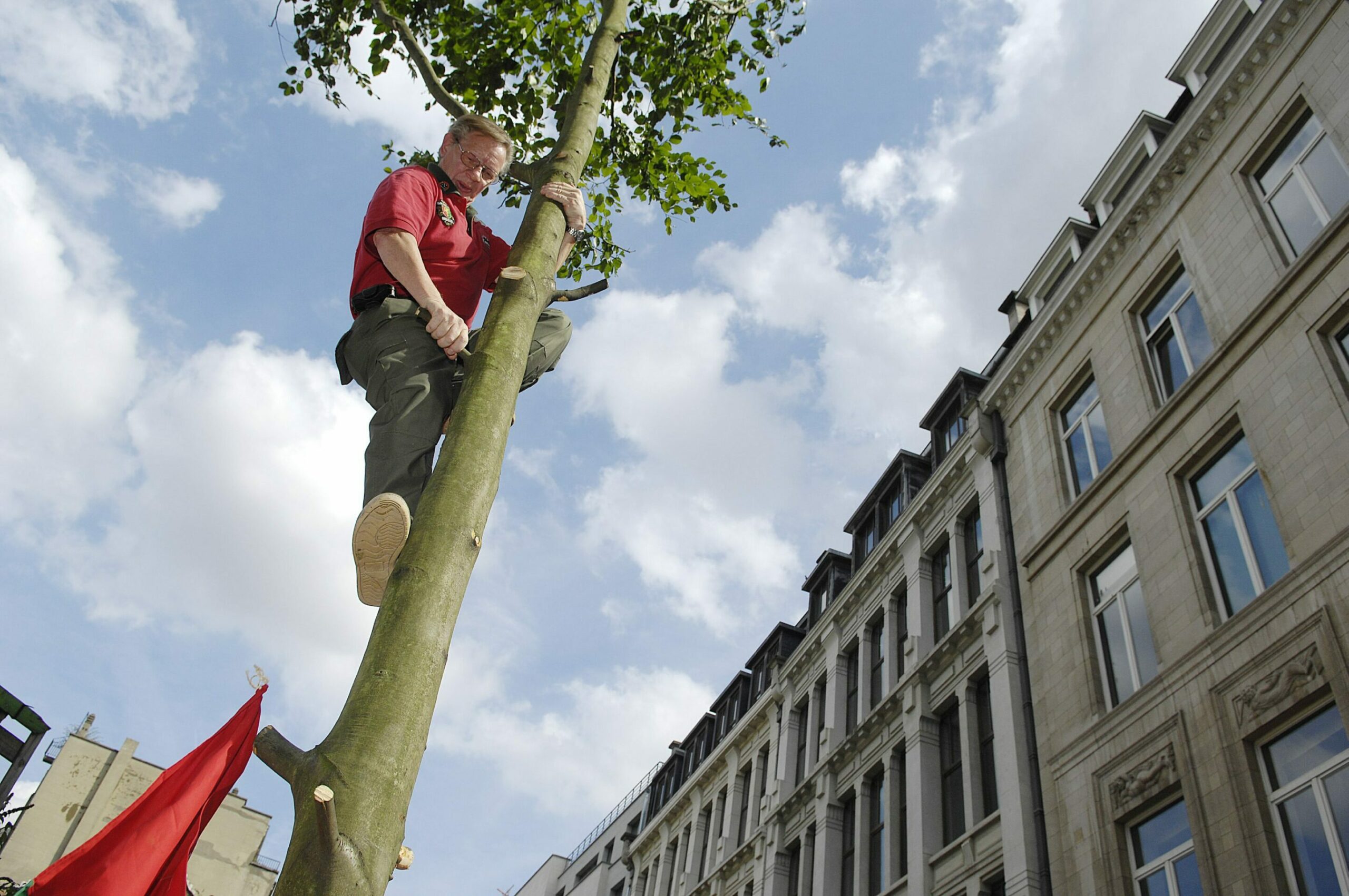
Someone up in the famous tree during the 700th edition of Brussels' famous folklore event, 9 August 2008. Credit: Belga / Olivier Papegnies
The deadline is a consequence of the "opening hours" of Brussels' city walls in the Middle Ages. as they closed after this hour, meaning the tree could no longer be planted.
If this does not happen in time, the victory goes to the people of Leuven. But if the people of Brussels succeed, celebrations begin and last until the early hours of the morning.
