
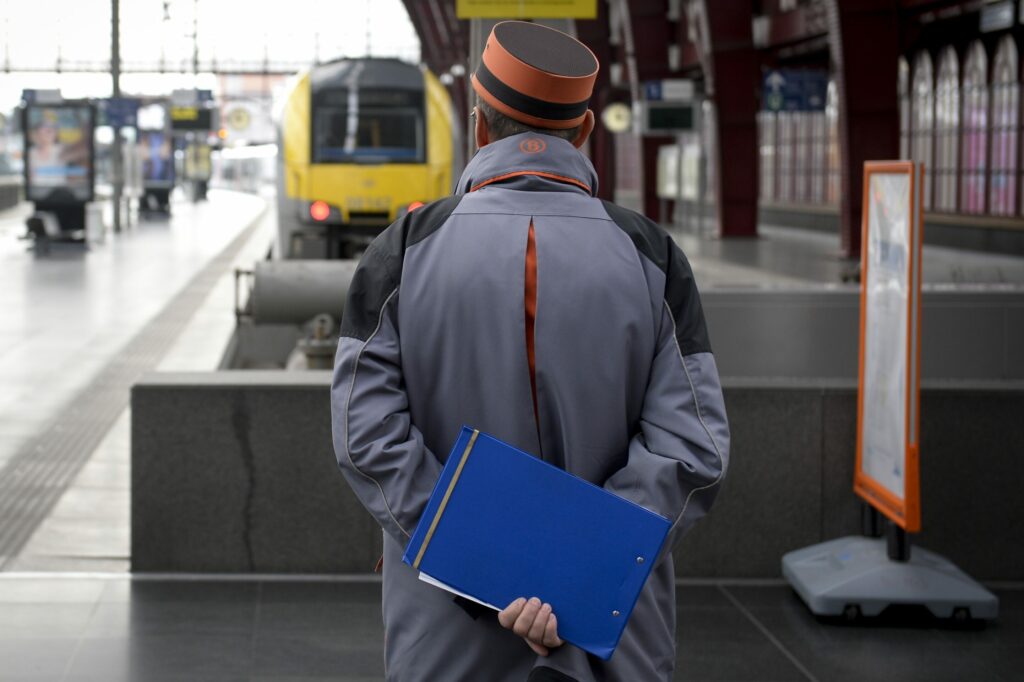
Another train employee from the Belgian railway operator (SNCB-NMBS) was assaulted last week, 5 October, while checking tickets on a train between La Louvière-Sud and Charleroi.
Sécurail, a special rail security service, and police intercepted the attackers. However, such incidents have become all too common for SNCB personnel.
To learn more about the situation, The Brussels Times spoke with train staff, who were granted anonymity to comment on a sensitive matter.
Conflicts with passengers who do not have a valid ticket and refuse to cooperate happen almost daily, sometimes escalating from personal insults to threats and even physical violence.
"Any case can be overwhelming, either physical or verbal aggression, and when it happens multiple times in a week, it becomes too much for me. Then, I lose sleep and even doubt the entire job at times," one train attendant said.
The SNCB-NMBS receives an average of six aggression reports per day. More than 40% involve physical violence.
These numbers are "unacceptably high", the SNCB-NMBS spokesperson told The Brussels Times. In reality, the number could be even higher, since, as we have learned, personnel often do not report minor incidents.
Around 3,000 conductors work for Belgium's national railway operator. According to official records, in 2024, 350 employees were absent due to aggression, resulting in a total of 5,900 days of disability.
Another conductor said that, even with 10 years experience and knowing how to both handle certain situations and avoid escalation, he is still not able to do his job as he is supposed to.
"In most trains, conductors work alone, and when you are alone, you are not much of an authority. In practice, most of the conductors would not control tickets thoroughly, letting go of many situations to avoid conflicts."
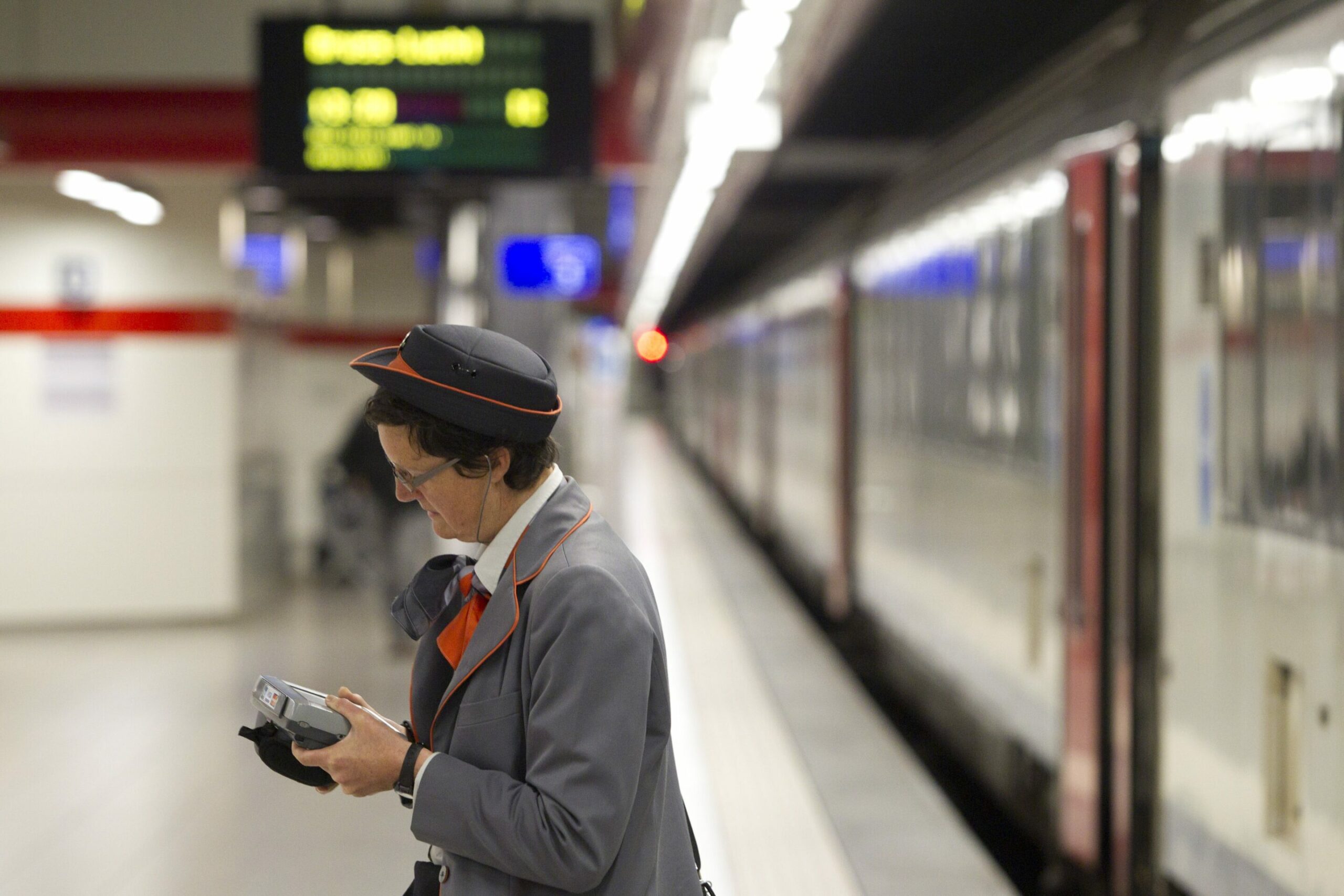
A train conductor at the train station in Zaventem, Brussels, in June 2012. Credits: Belga / Kristof Van Accom
Have the numbers increased?
"Attacks, both against escorts, station staff, and Sécurail agents, continue to increase," the national secretary of the Francophone public service union (CGSP) told The Brussels Times.
SNCB did not provide comparative statistics, but the railway operator also neither confirmed nor refuted the rise in assaults.
A conductor who worked for SNCB for about 10 years said he has not seen the increase, but thinks the problems are related to personnel issues.
"What we see is that it became more difficult to handle those situations because railways have less staff in stations, less conductors in trains. Before, there were two of us on large trains."
SNCB coordinates with the police on the routes requiring more control. Networks of surveillance cameras are directly accessible to the railway police and will be accessible to the local police in the coming months.
Sécurail has more than 500 officers; however, as we learned from conductors, Sécurail is available in very few stations. "They are mainly stationed at the larger stations, and after a certain hour in the evening, when you have the most problems, in very, very few stations," a conductor says. "Sécurail is a good service, but there should be more staff."
The special ticket control brigades (TICO), which are deployed to conduct a thorough ticket control, used to work in teams of three. "Now, because we are understaffed, the new policy is that they work alone or together with a regular train conductor. That means that the company sends train attendants to conduct a strict control, but does not provide the support as it used to be."
"The railway police (SPC) has also got smaller and smaller. Now we have to rely on the local police. But local police have so many other priorities. So if they are called to a station, sometimes they can come and sometimes not."
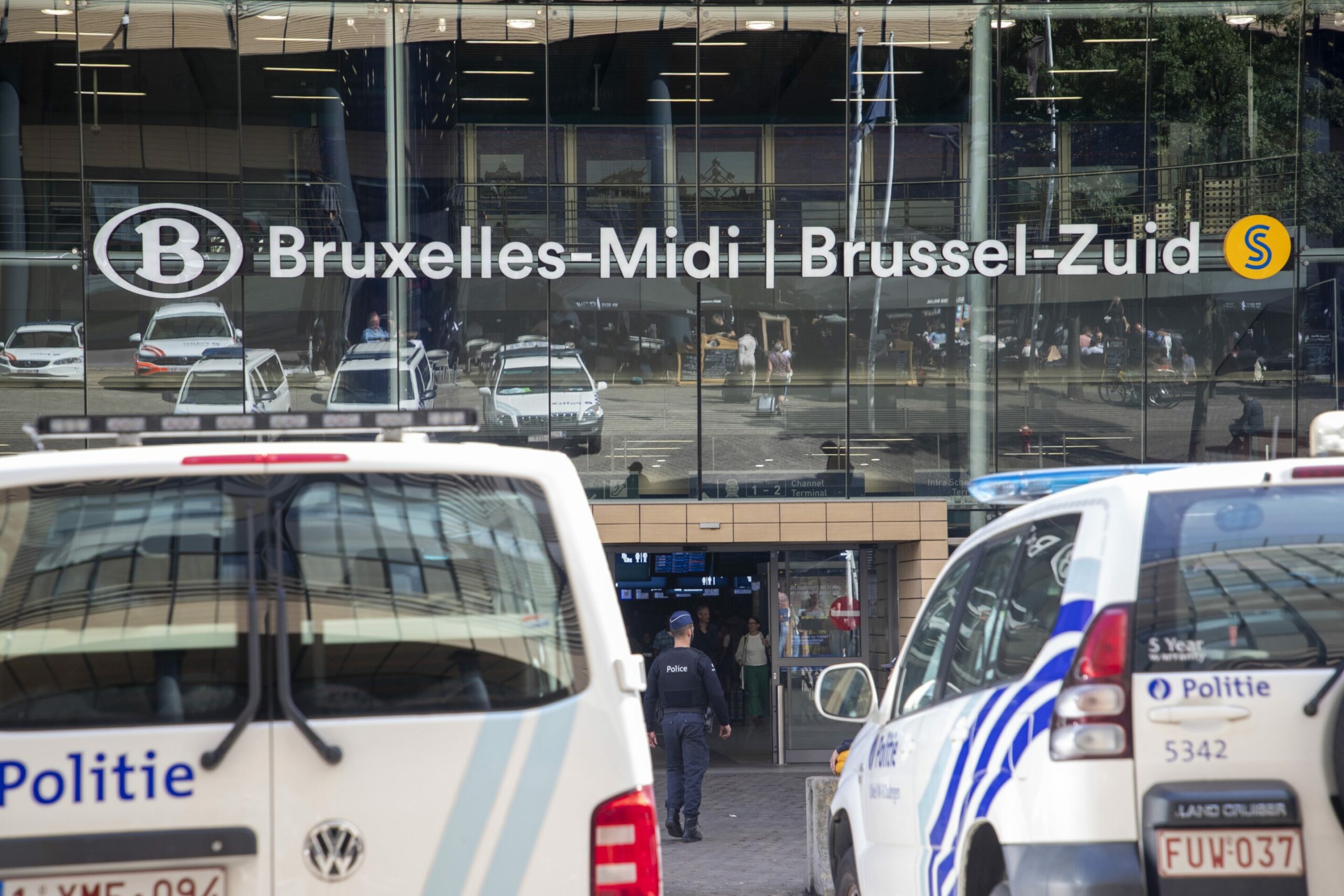
About 200 officers descended for a police action related to crime and anti-social behaviour in and around the Bruxelles-Midi station, to improve security in late August 2023. Credits: Belga / Nicolas Maeterlink
Sécurail also conducts random ticket control campaigns at stations that see an increase, to keep any conflicts off the train as much as possible. But according to the conductors, this is not a solution in the long term.
"We have hundreds of trains running. We should be proud of it. But we also have to make the trains effective, functioning, clean, and with enough staff, to make a good public service of it," the conductor says.
"And of course, it requires a budget and an investment. But when you tell the direction that we need to have more staff, for them, it's not a solution, because it costs money. They are open to doing some things that don't require a budget."
'Societal problem'
More needs to be done, the SNCB spokesperson said, adding that the "senseless" violence against people on duty is "a societal problem" that extends far beyond the train. They are urging the police and the judiciary to severely punish any form of aggression.
"As a train company, we cannot win this fight alone. The visible presence of the various police services is essential, both in stations and on the train, to support our own security service."
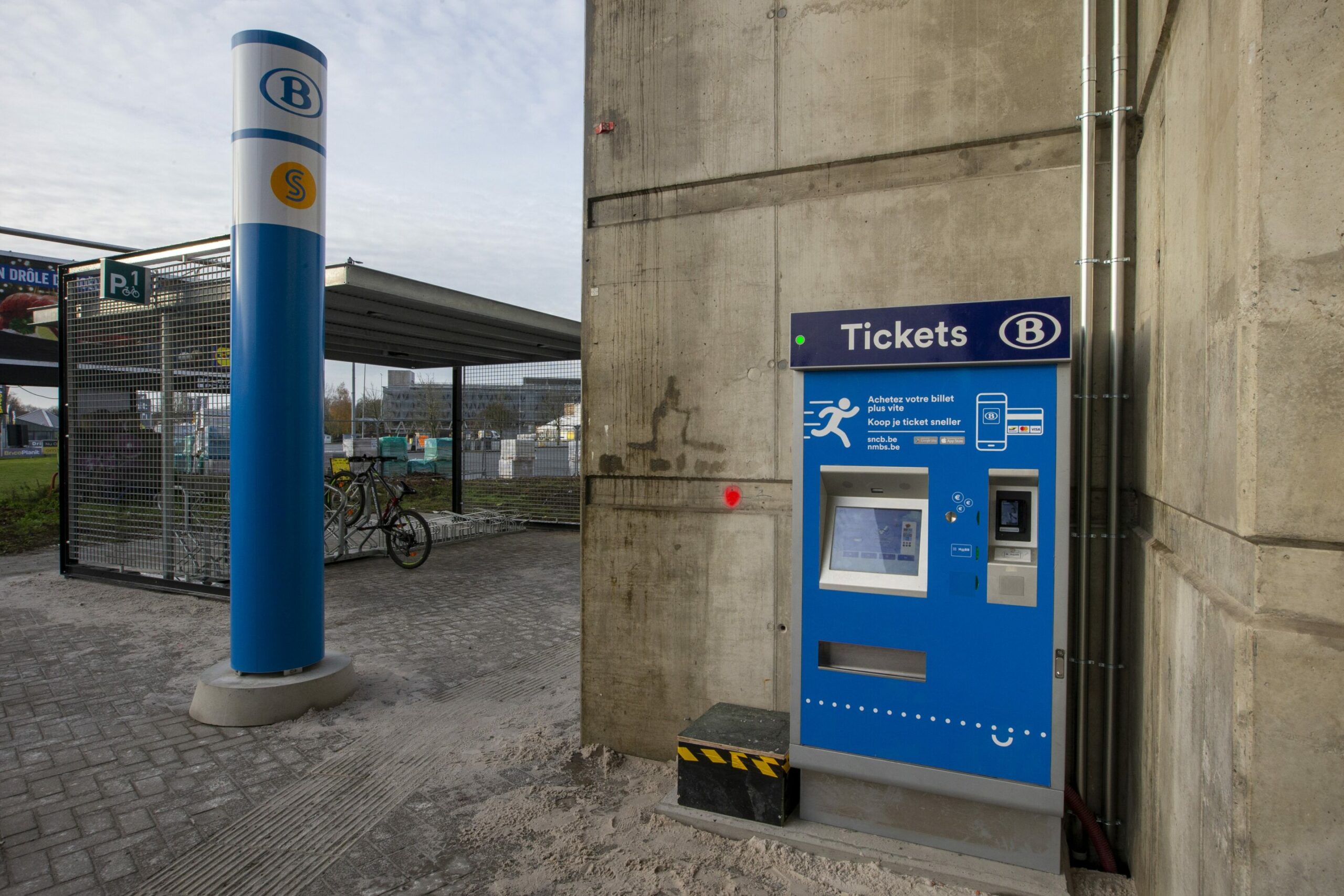
Ticket box at the station in Anderlecht, Brussels. Credits: Belga / Nicolas Maeterlinck
CGSP added its voice on the need to increase the security presence at the stations, particularly at intermediate stations, which are often neglected compared to large ones.
The gradual closure of stations and ticket offices has contributed to the feeling of insecurity. "Some stations become real lawless zones, especially in the evening," CGSP says. "People are left to their own devices to buy their transport tickets; the machines often fail, and for some, using the web is not accessible."
"The most important thing for me is that there are at least two of us in a train. I wish we were able to do our job properly, but for that, you cannot be alone in the train; it's not possible," the conductor says.
"But other things could be done too. The possibility of an intervention is important, so that, if you have a problematic person, you know there can be support waiting at the next train stop."
The Brussels Times reached out to SNCB for extra comments on TICO and understaffing issues but did not receive a response at the time of publication.
