
Over 5,000 non-profit organisations employing some 105,000 workers in Brussels face severe budgetary uncertainty due to the region’s prolonged lack of a fully functional government, which puts their survival at risk.
These associations play a vital role in addressing social issues such as mental health, poverty, drug addiction, and refugee care. After more than 500 days without a stable government, they are grappling with frozen budgets, halted projects, and increasing insecurity.
Emilie Vinçotte, co-director of the Agency for the Non-Profit Sector, warns that the sector is unravelling due to the lack of a government and long-term financial planning.
Budget freezes, limited subsidies take their toll
Budget freezes and limited subsidies have already affected many of the organisations.
These include Apis, an environmental association, which has had to scale back its activities and stop renewing fixed-term contracts.
Projet Lama, an organisation that specialises in supporting vulnerable and addicted individuals through its 'Cover' programme, faces funding uncertainty and risks losing staff, forced to seek more stability.
According to its coordinator, Rémi Dekoninck, job insecurity is driving talented workers away from the sector, carrying their specialised knowledge with them.
Smaller grassroots groups are the hardest hit
Bruno Gérard, director of Bruxeo, the representative confederation of Brussels’ social-profit enterprises, stresses that smaller grassroots associations are the hardest hit. These groups, described as the “hidden threads” of the social fabric, often lack the resources and expertise to navigate complex administrative systems.
The Maison des Parents Solos in Forest, which supports single-parent families, recently had to stop providing free legal services due to structural underfunding and the political paralysis in Brussels. Its team warns that the closure of its services leaves families with nowhere else to turn.
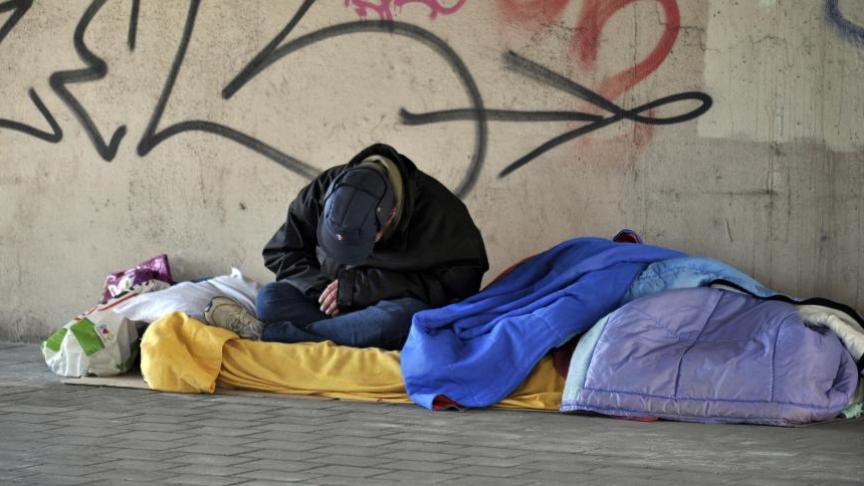
Doucheflux, an association assisting homeless individuals, has raised concern over the growing demand in the face of societal decline in Brussels. Its director, Benjamin Brooke, argues that the sector has long been forced to work with threadbare resources, leaving services overstretched.
Regional subsidies reduced by 15%
Yahyâ Hachem Samii, director of the Brussels Mental Health League, stresses the urgency of securing political and financial stability. He reflects that health and social policies established in recent years need to continue to progress, but he struggles to foresee how they will do so without a regional government.
In addition to these issues, sector representatives have noted that the ongoing impasse is not only delaying provisionally allocated funds but also triggering a 15% reduction in regional subsidies. This has heightened concerns about meeting structural needs in the community.
The political deadlock in Brussels/Capital Region stands in stark contrast to other governments in Belgium, which continue to enact decisions that have a direct impact on people living in Brussels. For instance, reforms to unemployment benefits jeopardise the already precarious financial situations of many residents, but the lack of an active regional government slows responses to such challenges.
Facing the consequences of egos, political indecision
The sector has reached its limit. Emilie Vinçotte urges elected officials to set aside egos and take responsibility. “Hundreds of associations are at risk, and behind them are human lives," she notes. "This cannot go on without leadership.”
Bruxeo’s director, Bruno Gérard, calls for genuine political decisions and meaningful social dialogue to address Brussels’ worsening budget crisis and the growing needs of its population.
These pleas reflect the desperation of a sector facing the consequences of political indecision. They represent a call to take action before more lives are affected.
