
Non-Belgians make up nearly 40% of Brussels' population, and among the top nationalities are Spaniards. But the official figures don't tell the full story: many say the community is not what it once was, and that "nothing is left now."
Through a series of interviews, The Brussels Times takes a closer look at Brussels' Spanish community, the fourth-largest expat group in the capital. What are their stories, and how does the city bring them together?
Nowadays, the area around Brussels-Midi station has an insalubrious reputation, but it was once the beating heart of the city's Spanish community; a thriving and bustling nexus of bailes (dances), bars and restaurants. Now, just a handful of Spanish businesses remain.
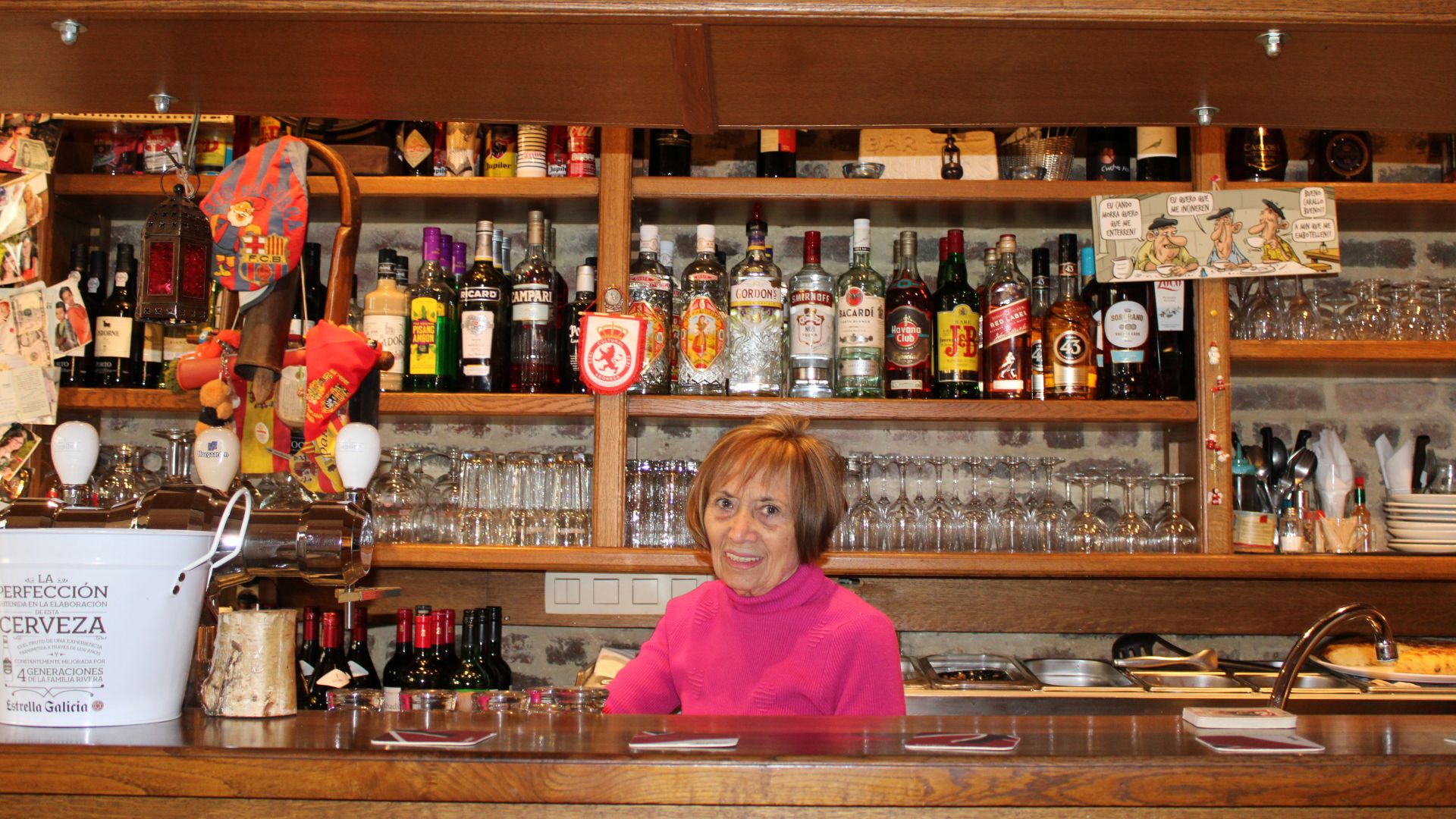
One of those is Bar Asturias, a cosy and unassuming Spanish restaurant run by the glamorous and quick-witted 76-year-old Aurora González.
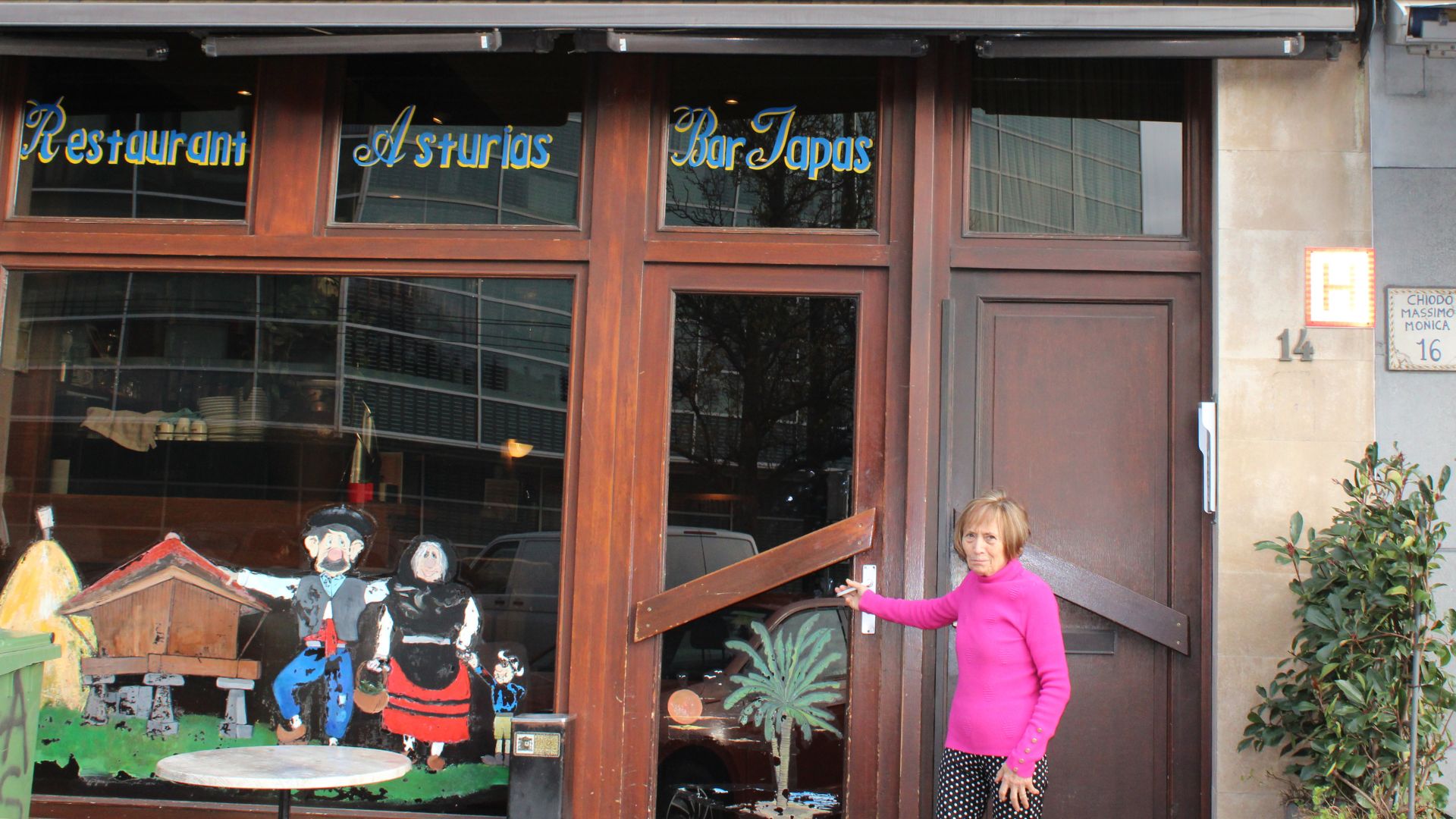
Aurora González, standing outside her restaurant Bar Asturias in Brussels. Credit: The Brussels Times / Isabella Vivian
Aurora came to Brussels from north-western Spain in May 1965. "Spain was in a lot of crisis in the 1960s. The mines in Asturias weren't doing well and many people came here, which was the first wave of migration," she tells The Brussels Times, while sipping on a café con leche.
She grew up in rural Galicia and says working the land was hard, especially for women. Travelling to Belgium at age 16 for the wedding of her sister (who ran away from a nunnery in Rome to get married in Brussels) therefore came as a welcome respite. "I came here and found work and didn't go back until I was 18; I didn't want to leave."
Others have similar stories. Tucked around another corner of Brussels-Midi is Spanish supermarket España Calidade, run by David Álvarez, 45, and his brother Daniel, and opened by their parents in 1990.
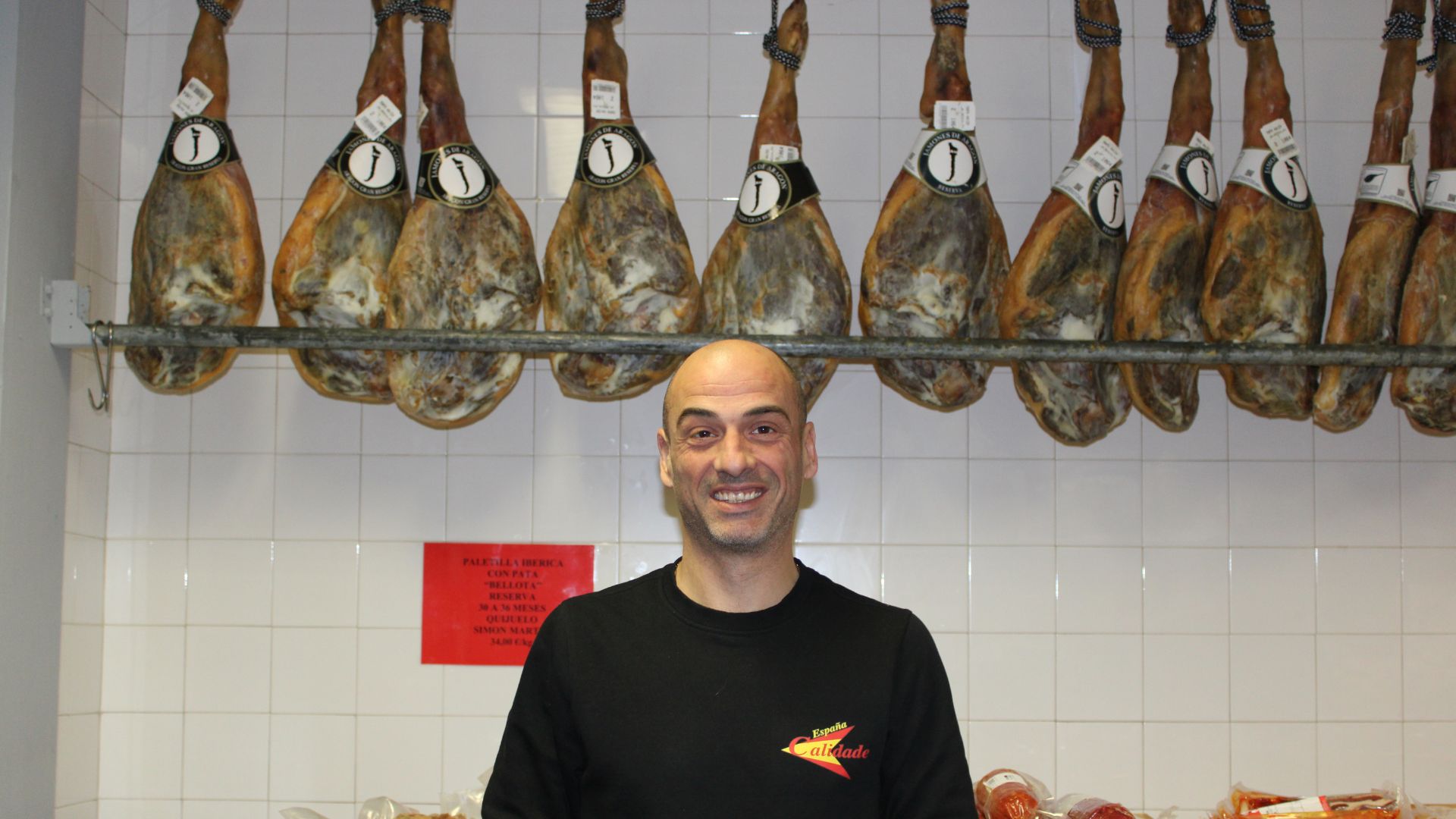
David Álvarez, co-owner of Spanish supermarket España Calidade. Credit: The Brussels Times / Isabella Vivian
"My parents came from Spain in 1970 because it was in a very bad way under Franco's dictatorship," says David, who grew up in Vilvoorde just outside Brussels. Many came for the mines and settled in Saint-Gilles and Anderlecht.
"They decided to come to Belgium to have a better life. And we've all stayed here," he adds.
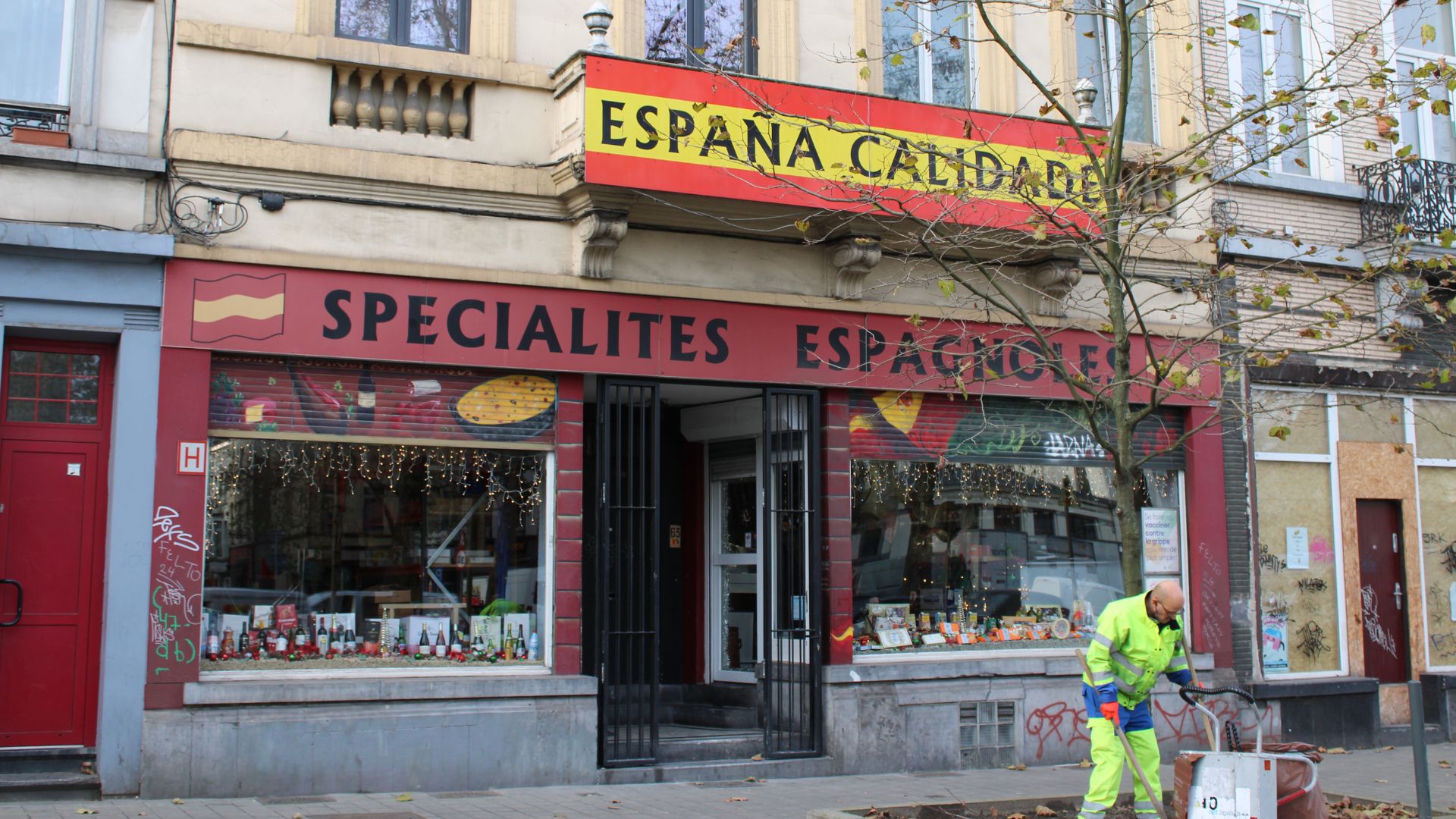
España Calidade. Credit: The Brussels Times / Isabella Vivian
Belgium's liberating lifestyle was also a draw for Aurora. Although she missed the motherland, its food, customs and sunshine, and found Brussels' cloudy skies "suffocating" in the early years, Spanish society was far too backward for her in the 1970s.
"It was difficult to adapt when you had this freedom here and were earning money, and then you went to Spain and it was the same routine again, with women being very controlled. The men would come home, change their clothes, and go out to play cards or visit prostitutes. And the women would make dinner and wait in bed. That was Spain."
She describes herself as "very revolutionary" for the time: wearing short skirts and even speaking to a doorman was frowned upon and quickly became the talk of the town. She was offered a school scholarship at 14, but her mother forced her to stick to sewing. "She was a submissive woman and saw that as normal; I didn't want to live as she did."
From pralines to paella
After several years of cleaning houses, babysitting and working at multinational chocolate maker Godiva, Aurora eventually decided to buy Bar Asturias in 1978 with her husband Luis, who made pornographic books.
At that time, there were three or four Spanish bars in the area, a Spanish cinema (and another in Schaerbeek) – but now there's only one left, she says.
Luci, 78, arrives at the restaurant during our conversation. An old friend of Aurora, their stories are almost identical. She also followed her sister to Brussels in the 1960s and recounts how she, too, would go dancing every week, which is where the pair first met. Both women got married in 1971 and had their first child in 1973.
"We were tourists who came and stayed. There was a free, respectful, family atmosphere. Anything good that can be said about Belgium, I will say it," Luci says earnestly.
"We had a very good life. Brussels used to be like a village. Belgians, Italians and Spaniards here in Brussels were like family, but there's nothing left now."
Neighbourhood nostalgia
Aurora has watched the world go by through her restaurant windows, and says the neighbourhood started to change when the Berlin Wall fell.
"It went from bad to worse: rubbish in the streets, people sleeping outside, violence and robberies." The business hasn't been affected, but she says some people are afraid to come to the restaurant. "I don't take out the bins at night anymore either."
Her clientele has changed, too: before it was mainly Spaniards, but lately there have been many Japanese and Chinese tourists – "probably because of social media," she muses. Diners are also often now Spanish tourists, rather than Spanish residents. She says many who made a life here have now retired to Spain, as the higher Belgian pensions mean they can have a better quality of life there.
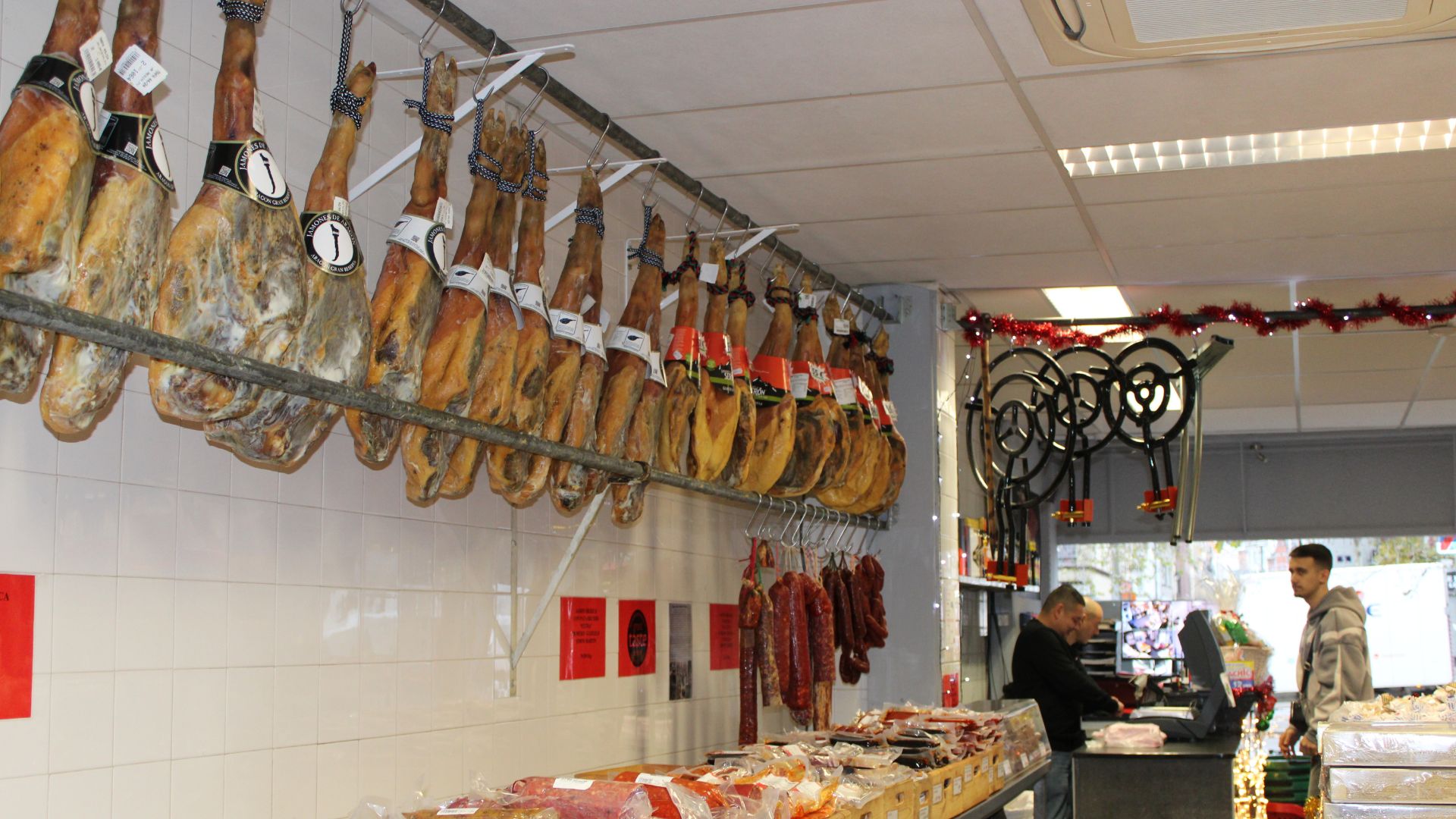
Legs of jamón hanging from the ceiling in España Calidade. Credit: The Brussels Times / Isabella Vivian
David maintains that most of his customers at España Calidade are still Spanish, but Belgians are gradually catching up. "They are increasingly fond of Spanish food as they go on holiday to Spain and eat good food, and then want to eat it here too. There's a lot of demand."
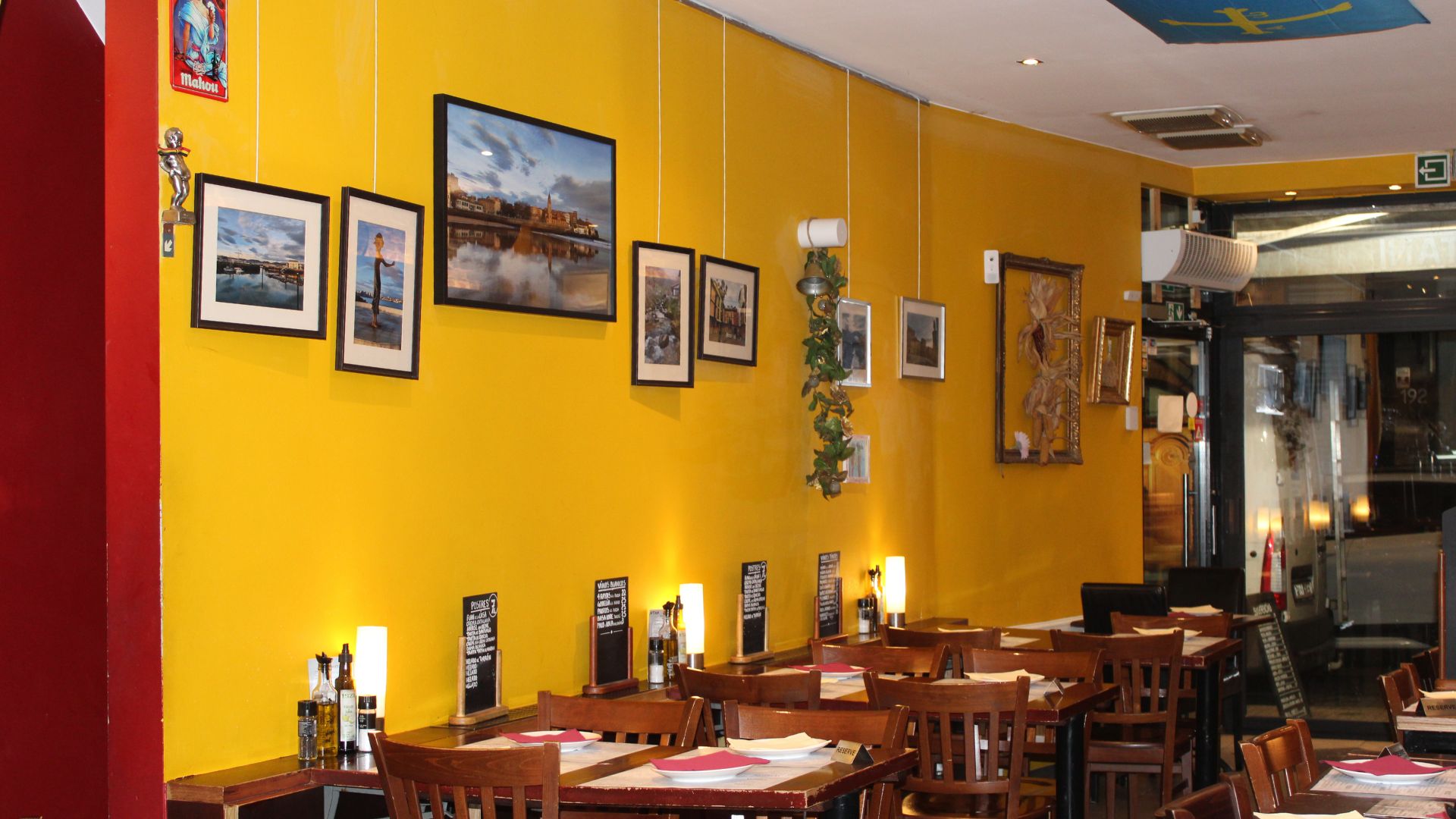
Alejandro Quintana, 51, of the Marolles-based El Fontán, agrees, saying that Belgians see his Asturian restaurant as a "mini-break" – a Spanish escape from Brussels life.

Alejandro Quintana in his Spanish restaurant El Fontán. Credit: The Brussels Times / Isabella Vivian
Hailing from Gijón, the self-proclaimed new kid on the block only arrived 15 years ago but has also observed a shift in the community.
"When I arrived, there was a Spanish immigrant community, but the grandparents have passed away and the young people who were born here in Belgium have not continued with the Spanish businesses. Now there is nothing."
Credit: The Brussels Times / Isabella Vivian
Come rain or shine
The Spanish community in southern Brussels clearly isn't what it once was, but elsewhere it is thriving. In the EU quarter, hundreds of beady-eyed young Spaniards flood the capital each year in search of a dream job within the institutions.
Helena Tudela, 27, from Castellón, is currently working as a Blue Book trainee at the European Commission and feels "very comfortable" in Brussels – except for the weather, of course, but "that's just the way it is."
Having also lived in the Dutch city of Maastricht and Newcastle in northern England, she says Belgians are noticeably "friendlier and kinder" and are "used to people who don't speak their language well."
Spending time with Spanish friends and at cultural centres, such as Metaprosa, Instituto Cervantes, Casal Català and Espai València, helps keep her homesickness at bay.
At a football match organised by the Basque Cultural Centre (Bruselako Euskal Etxea), for instance, there were sandwiches filled with chorizo and tortilla de patatas (Spanish omelette). "It felt like home because it's the kind of food your mum makes for you."
Metaprosa also organises regular talks, craft workshops, quiz nights, language exchanges or book clubs – all enjoyed over a coffee or a beer and a chat in Spanish.
"We feel homesick because the weather is unbeatable in Spain. But otherwise, Metaprosa makes up for it and makes you feel like you're in Spain. When you walk into Metaprosa, you forget you're in Brussels," says Clara Marcos, 35, from Salamanca.
Spaniards in the spotlights
For Rafael 'Rafa' Plata, 46, from Córdoba, the key to feeling at home lies in theatre. Rafa is the president of amateur theatre group TeatroBE – one of six Spanish theatre groups in Belgium.
Belgium's Spanish theatre scene originated in Luxembourg, he explains, when a group of EU translators and interpreters set up a theatre group in the 1990s. As many migrated to Brussels, their theatre followed them.
TeatroBE was formed in 2006 and its first production – Federico García Lorca's 'Bodas de Sangre' ('Blood Wedding') – sold out every night. All six theatre groups collaborate and support each other and are even holding a joint Spanish theatre festival in June 2026, together with the embassy and Instituto Cervantes.
Rafa has enjoyed getting involved in as much theatre as possible over his 23 years in the Belgian capital, most recently in 'La Ternura' in November.
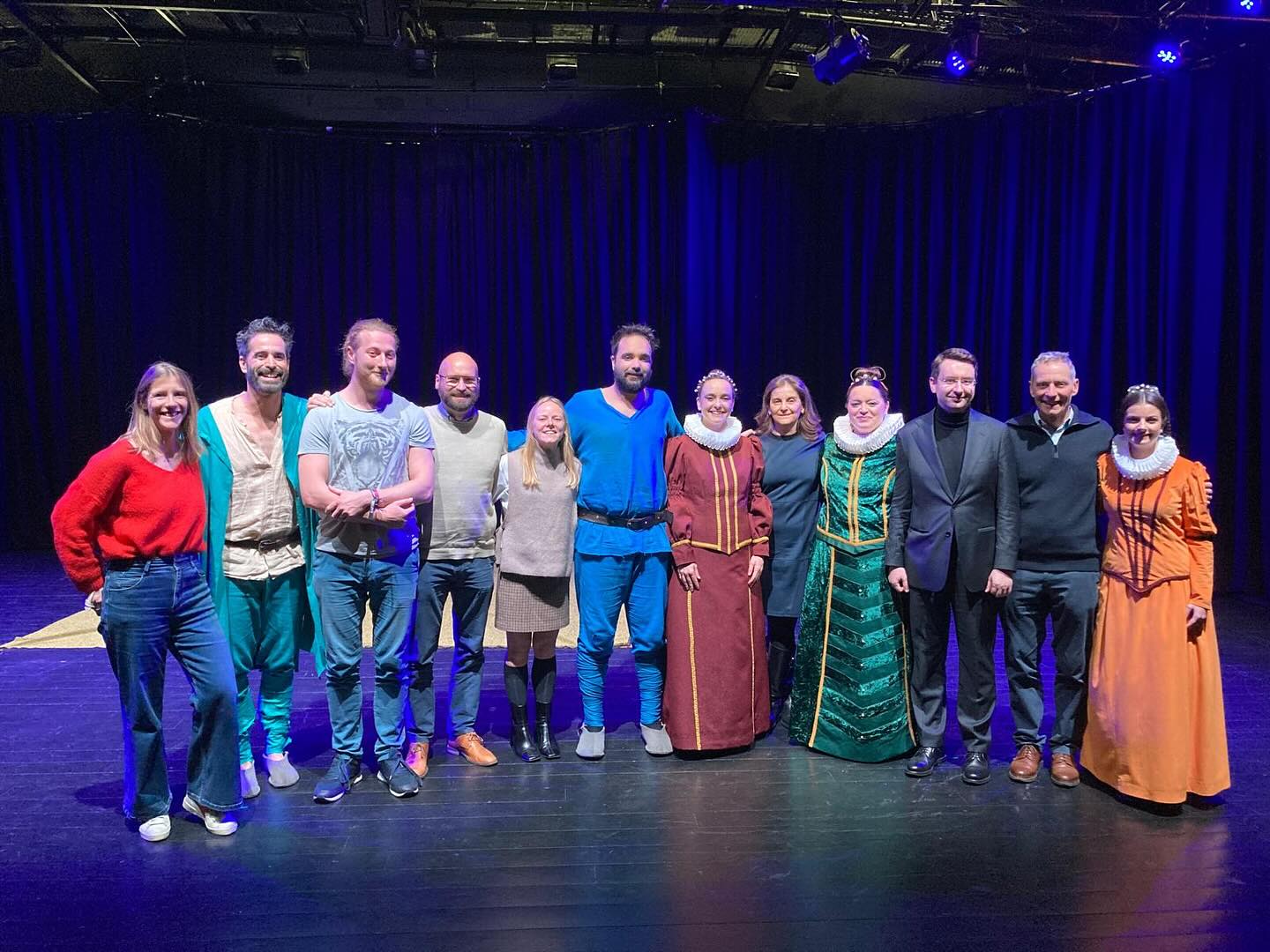
Rafael Plata, second from left, and the rest of his cast in 'La Ternura' and members of the Instituto Cervantes. Credit: TeatroBE
"Brussels works through networks, and theatre is another node in Brussels' networks." At a work event, he was even approached by the chair of the Women's Committee of the European Parliament, who told him she wanted to sign up.
As well as maintaining his Spanish identity through theatre, Rafa has spent many years dancing flamenco and enjoying the rich Spanish-language cultural programmes at Bozar, KVS or Théâtre National Wallonie-Bruxelles.
Brussels' buzzing cultural scene kept Rafa here. He had only planned to stay for a couple of years and then move back to Spain, but when he arrived, Brussels "captivated" him.
Related News
- 'A love letter to the city': Who are Brussels' expats?
- Brussels' expats make up 40% of population - which nationalities come out top?
- Should English be Europe's common continental language?
- 'Communities change history': A snapshot of Brazil in Saint-Gilles
"Brussels is a mixture of the best stereotypes of northern Europe and the best stereotypes of southern Europe, because it can be very organised and everything can work very well, and then it can be completely chaotic and anarchic," he says.
"Most people in the world dream of living in New York, Paris, Dubai, Shanghai... they don't dream of living in Brussels. But when you get here, some people get hooked, and I got hooked."
Can he see himself going back to live in Spain now? "That's the big question!" he laughs. As the years have gone on, he has become more certain of his decision to stay, but he may have to move at some point to take care of his parents. "But for now, I'm here, and I'm very happy."
