
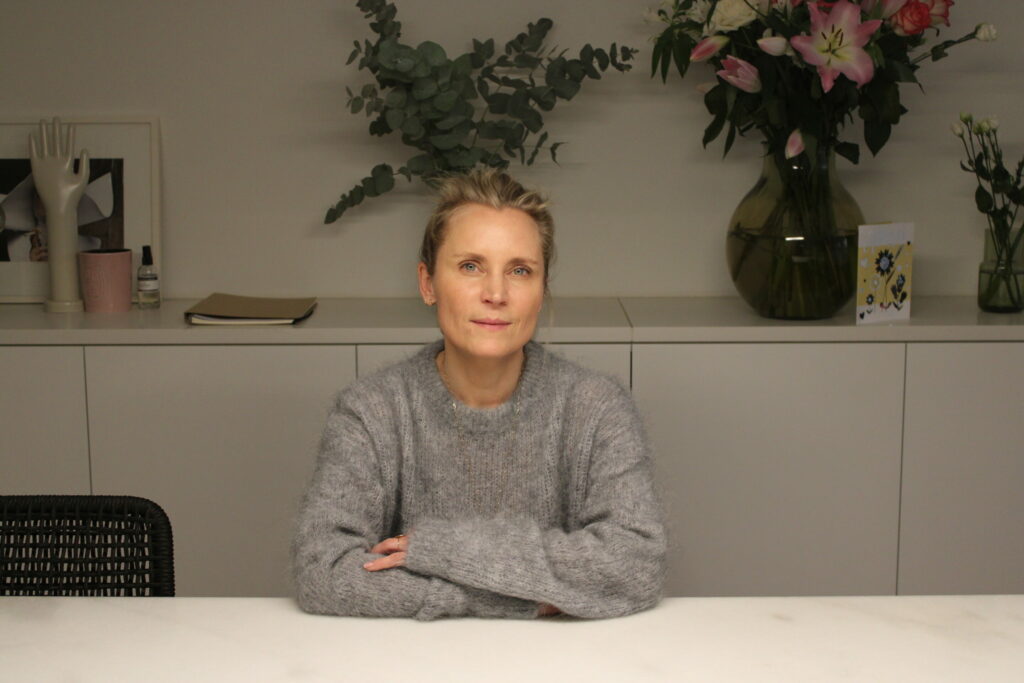
Is everyone entitled to a fair defence? Belgian barrister Caroline Poiré believes so. But unlike others in her profession, she now only defends victims of sexual assault and not perpetrators.
Poiré, 46, actually grew up with dreams of being an actress. But after her parents told her that a life in theatre was not a "proper job", the courtroom became her stage.
She studied law at the Université Libre de Bruxelles for five years, and always knew she wanted to specialise in criminal law. "I really wanted to defend people who were in complicated situations and be able to speak on their behalf," she tells The Brussels Times, from her law firm Defendere, just a stone's throw away from Saint-Gilles prison in Brussels.
But acting was never far away. Law, like theatre, is a performance: a delicate dance in which a barrister must convince their audience of their role and of their lines.
"From the moment you take on the role of a barrister, you wear the gown, so there's a kind of decorum that's like theatre, and that allowed me to play that role, whether on the defence side or on the civil party side. And for several years, I was on both sides of the bar."
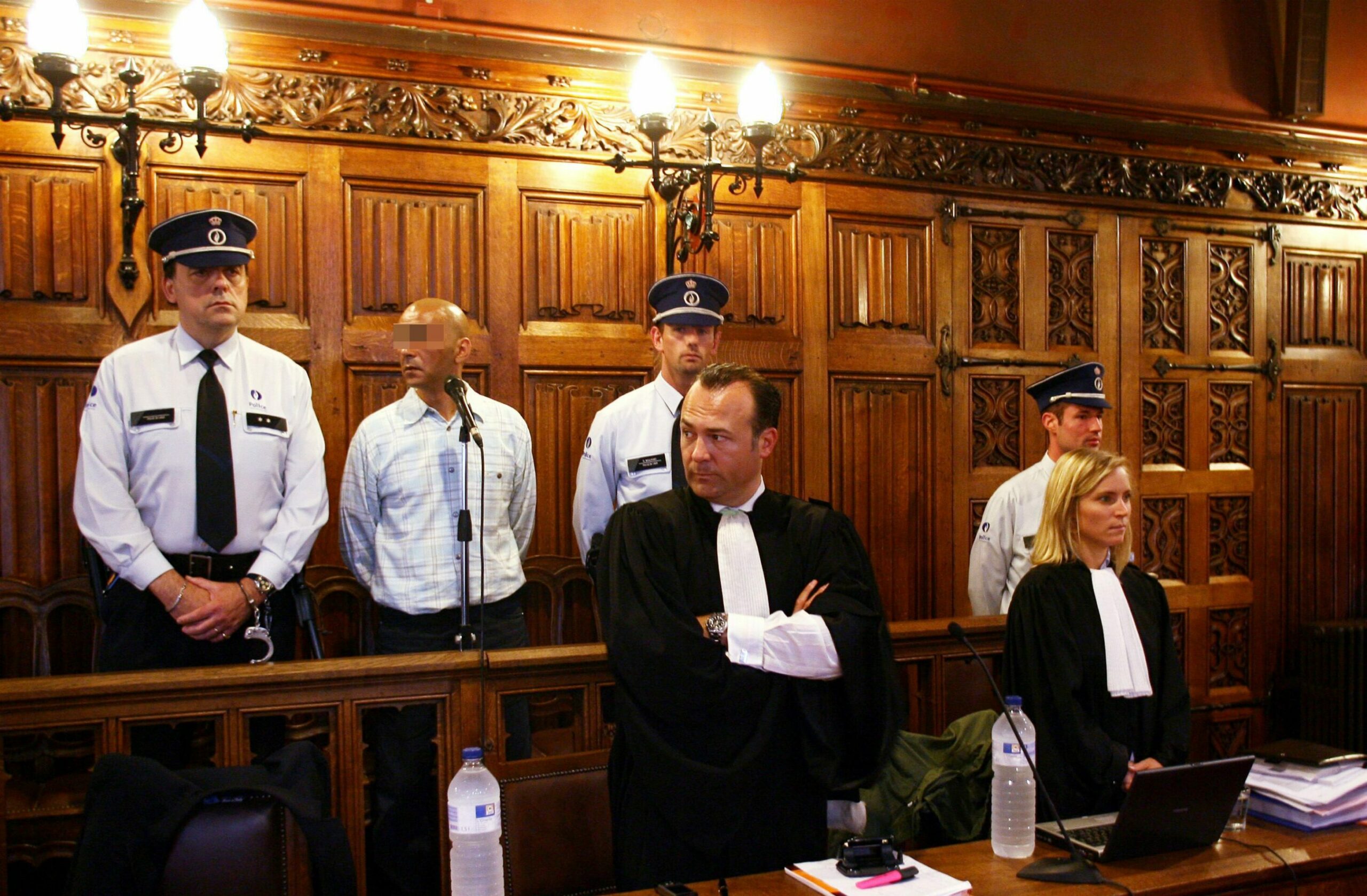
Caroline Poiré and fellow barrister Olivier Martins on the third day of Abdallah Ait Oud's trial at the Liège assize court, 28 May 2008. Credit: Belga / Michel Krakowski
This all changed in 2019, however, when Poiré made the controversial decision to solely defend victims of sexual violence and domestic violence – a move which garnered widespread support but also attracted scrutiny and criticism.
She fiercely defends her career choice for several reasons. "Everyone has the right to a defence. In taking this position, I'm not saying that we shouldn't defend the perpetrators, that we shouldn't defend men, but you have to defend them properly, and from a different perspective."
The system pushes perpetrators to contest the facts, she says, because they're afraid of the punishment if they admit to them and so would rather shirk responsibility. "Defence lawyers must be trained and able to get these perpetrators to admit their responsibility."
Working as a barrister for 21 years, many of which were spent defending men who had sexually assaulted women, gave Poiré the essential knowledge to understand how best to protect victims and warn them of the system they would be facing.
She also underlines that other lawyers are equally selective in the people they represent, but are not questioned or judged in the same way she has been.
"There are criminal lawyers who specialise in financial criminal law and have decided to defend only perpetrators of financial offences. No one ever asks them: Why did you decide only to defend perpetrators of financial crimes? There are lawyers who work for the Belgian state and only defend the Belgian state. No one asks them why they made that choice."
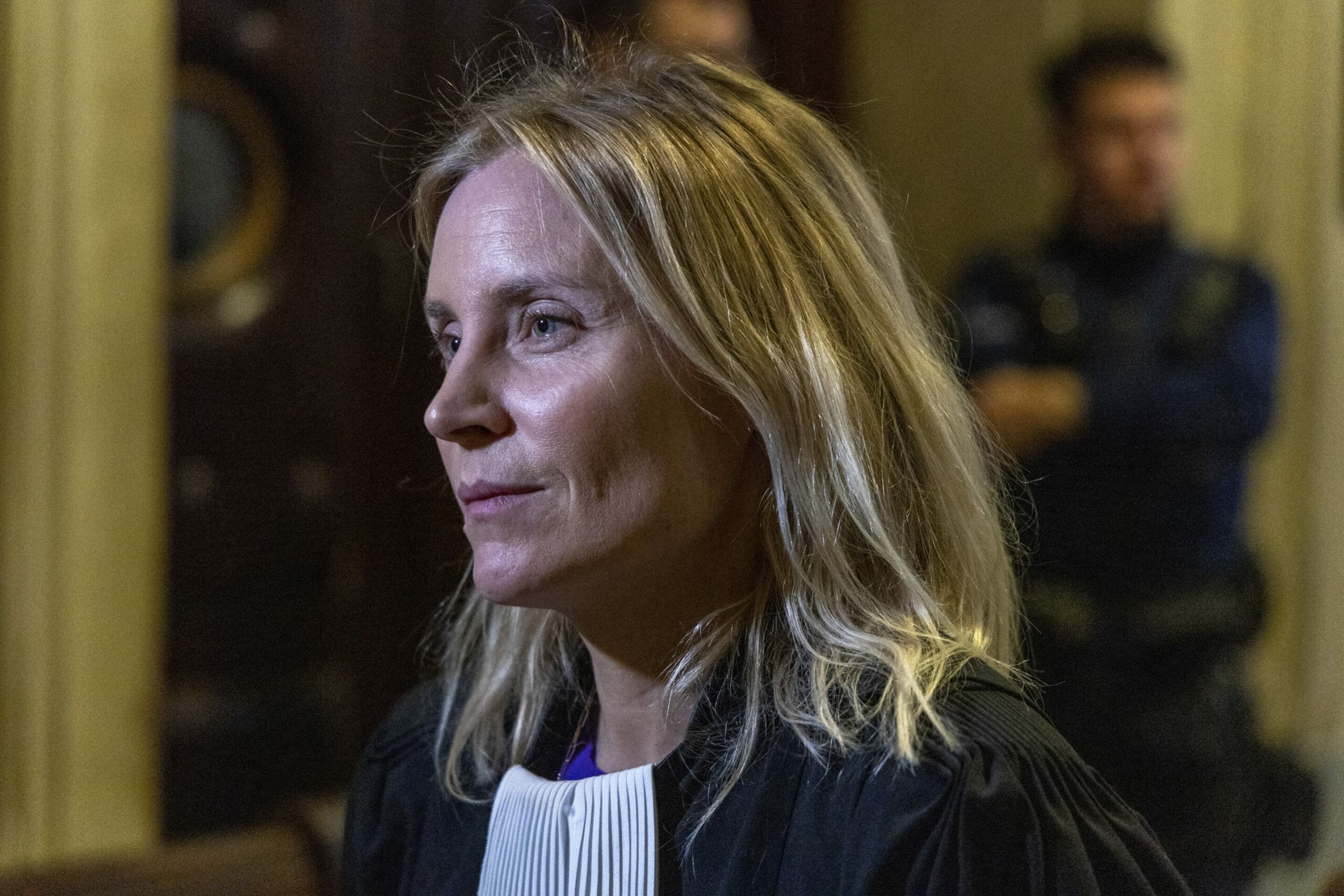
Caroline Poiré speaking to the press after hearing the judgment in the trial of a man accused of raping a student on the Plaine campus in Ixelles in December 2022, in Brussels criminal court, 29 November 2023. Credit: Belga / Nicolas Maeterlinck
Poiré says her decision to only defend victims stems from the shortcomings she observed in the handling of sexual assault cases.
"My intention was to support victims of sexual violence and domestic violence, to help them through these shortcomings and the legal process, which is generally extremely long, burdensome, and sometimes violent," she asserts.
"We stand up for them, and we confront the judicial system on their behalf to try to make their journey easier. I believe that here, at our firm, we are in fact a bulwark for victims."
She distinctly remembers one particularly violent case of sexual assault which triggered the move.
"The victim had all the necessary resources to enter into legal proceedings," Poiré says, referring to her client's vast support network, knowledge of the legal system, and that she had the financial means to hire a lawyer.
"She knew what to do. She went straight to hospital, then to a centre that cares for victims of sexual violence, and she quickly filed a statement against the person who raped her in very violent circumstances."
Through her statement, police were able to find that her perpetrator had already committed other sexual assaults in the past – all of which had been dismissed.
Those victims, one of whom was a sex worker, lived in precarious situations and had not had the necessary resources to fight their corner. They had therefore not been believed, and the cases had been dropped.
Related News
- 'It was pure hatred' - Brussels journalist on the night he was gay bashed
- Between 150 and 225 sexual offences are registered in Brussels every month
- Why Brussels is forced to release serious young offenders
It was at that moment that Poiré realised it wasn't a level playing field. "I saw that not all victims are equal before the justice system. I wanted to ensure that all victims could receive the same support and have access to all the resources they needed."
Through her law firm Defendere – the only one in Brussels to work exclusively with victims of sexual and domestic violence – she and her team build support networks for victims of sexual assault.
When someone is sexually assaulted, she says, their state of shock leads to a loss of power and inability to react, leaving them feeling vulnerable and immobilised. This also prevents them from acting quickly and filing a complaint. "They feel ashamed and guilty, because society places this responsibility on them."
Poiré wants to enable victims to regain their power through creating a network and referring them to a psychologist, social worker, victim support centre, or a police station that specialises in and is sensitive to these issues.
Freedom, but at what cost?
The shift in her career also came off the back of the #MeToo social movement and awareness campaign, which gained momentum in 2017 and encouraged victims to speak out about their experiences of sexual assault.
"This freedom of speech scared me," says Poiré. She remembers thinking victims speaking out would be "catastrophic" because she feared they would not be listened to by barristers and magistrates and instead would be blamed.
From then on, a core part of her work became training lawyers and police officers in the mechanisms that come into play during sexual assaults or domestic violence.
She has also raised awareness of victim blaming and the failures of the police and lawyers in dealing with victims through collaborating on a play called 'Classement sans suite' ('Case closed'). The powerful play has already toured Brussels and Wallonia and will continue to do so this year.
Victims of the system
Over the course of her career, societal perceptions and understanding of consent and rape culture have come a long way; victims feel more able to speak up, and there is better support in place for them.
But the Belgian criminal justice system currently lacks resources, both human and financial, and it is underfunded. "The previous government was very involved and made a huge difference, but now we are really taking a step backwards," she says, in reference to the current government with Bart De Wever at the helm.
"There can even be situations where the judicial system is even more violent than the original violence. This is what we call secondary victimisation. It is a double punishment that comes from the institutions. So, we try to act as a bulwark against this victimisation and ensure that it does not happen again."
Victims of sexual violence can call 1712 anonymously, chat on nupraatikerover.be (in Dutch) or see seksueelgeweld.be (in Dutch, French and German) for more information.
If you have been having suicidal thoughts or are worried about someone else, contact one of the help organisations listed here.
