
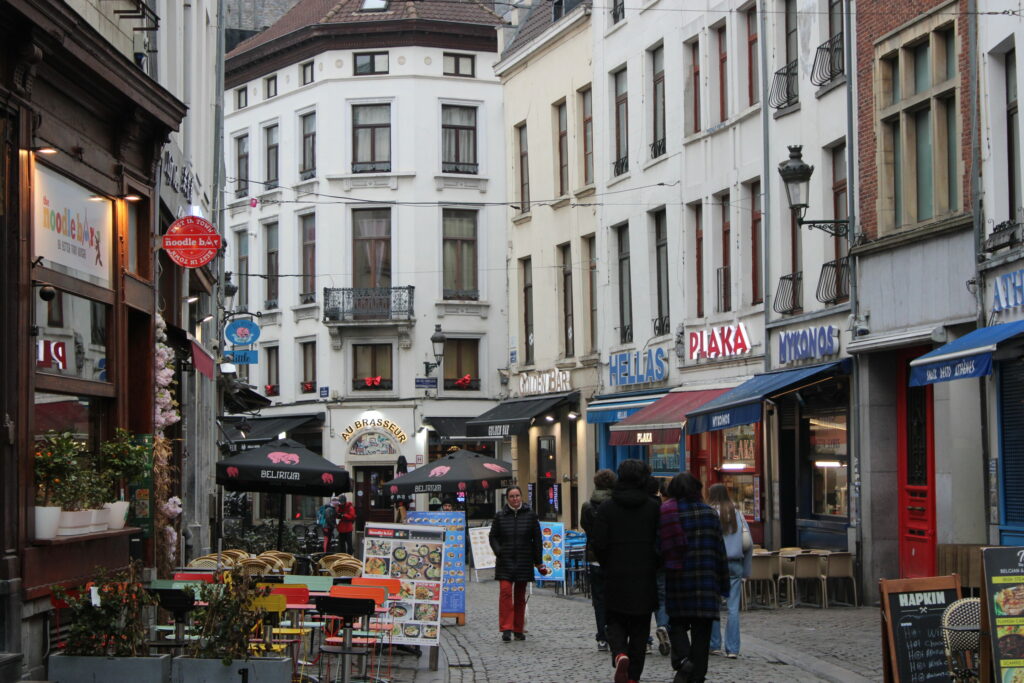
Greeks make up tens of thousands of Brussels' international population, each with their own unique story. Whether for money, love or a lifestyle change, everyone has their own reasons for coming to Belgium, but they can all agree on one thing: it certainly wasn't for the weather.
Several decades ago, locals affectionately nicknamed the quiet, cobbled Rue du Marché aux Fromages, which leads to Brussels' Grand Place, 'Rue des Pitas', because of the many Greek restaurants lining its edges.
From Santorini to Mykonos, it seems there is a gyros shop for almost every Greek island. One of the owners, Ioannis, 60, from Ypiros, tells The Brussels Times that he came to the Belgian capital as a semi-professional football player back in 1988.
In Greece, he says, there was "corruption" and "no future", so moving abroad seemed like a better alternative. "It was a shock for me. It was another planet," he says, from a table at his restaurant Mykonos.
He remembers when Greek cuisine was introduced to Belgium in the early 80s. "We created this street when Snack Athènes opened in 1982. Back then, there were 11 snack bars here. Now there are four. We've remained the most powerful," he says.
"Before, it was a party every day here. But the atmosphere is gone. It's not the same anymore."
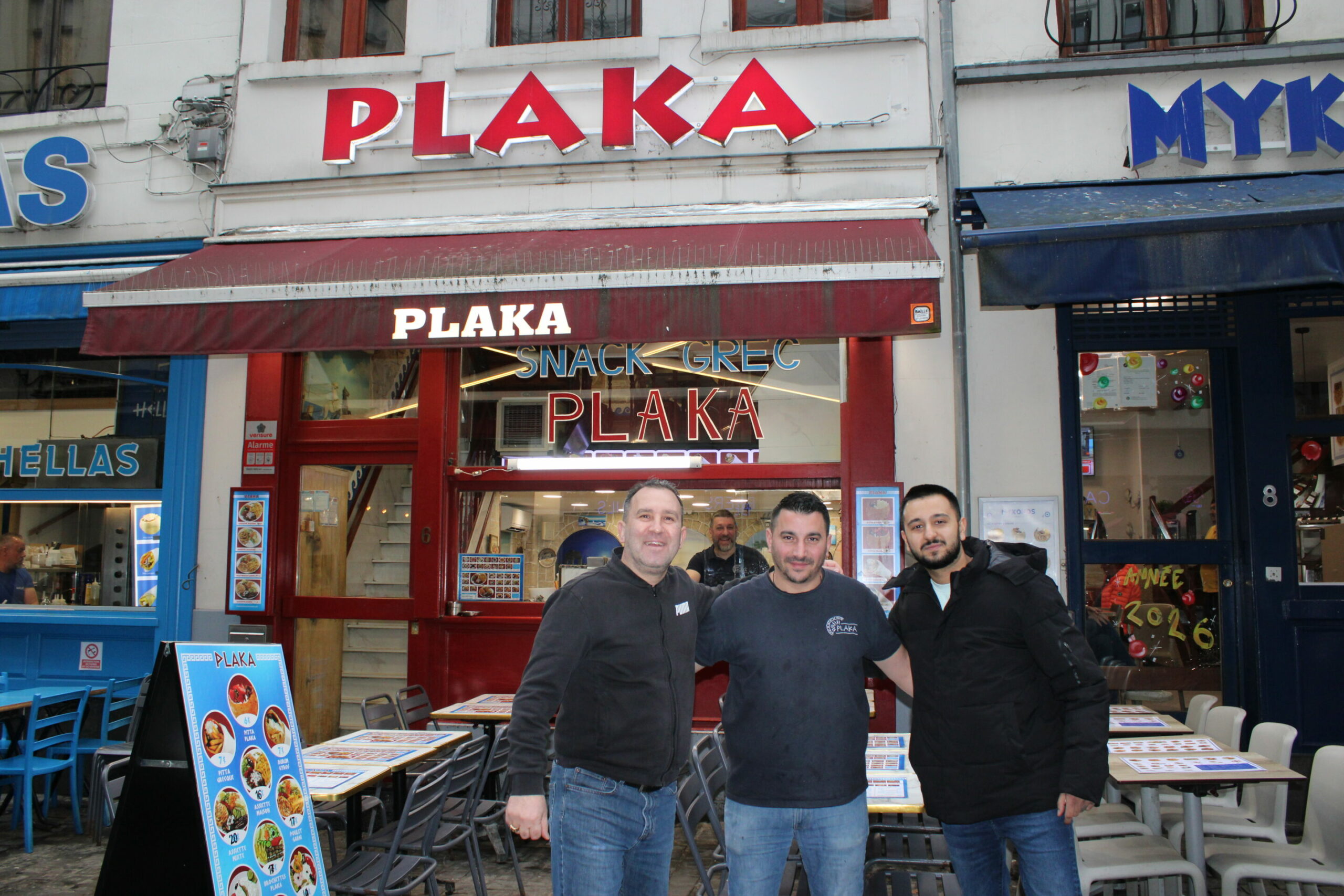
Staff at neighbouring Plaka and Mykonos pose for a photo. Credit: Isabella Vivian / The Brussels Times
Elsewhere in Brussels, the Schuman roundabout is home to one of the city's most-loved Greek spots: To Meli, where friendly service and delicious Greek pastries offer a much-needed escape from meetings.
Georgios Patkos, 41, from Thessaloniki, opened To Meli with his business partner Filippos Ioannou, in November 2019. "The idea came from something we were truly missing from Greece: the feeling of authentic quality, warm hospitality, and the taste of home," he tells The Brussels Times.
"We wanted to create a place where people could enjoy genuine Greek products and experience a small piece of Greece here in Brussels – and I really believe we have achieved that."
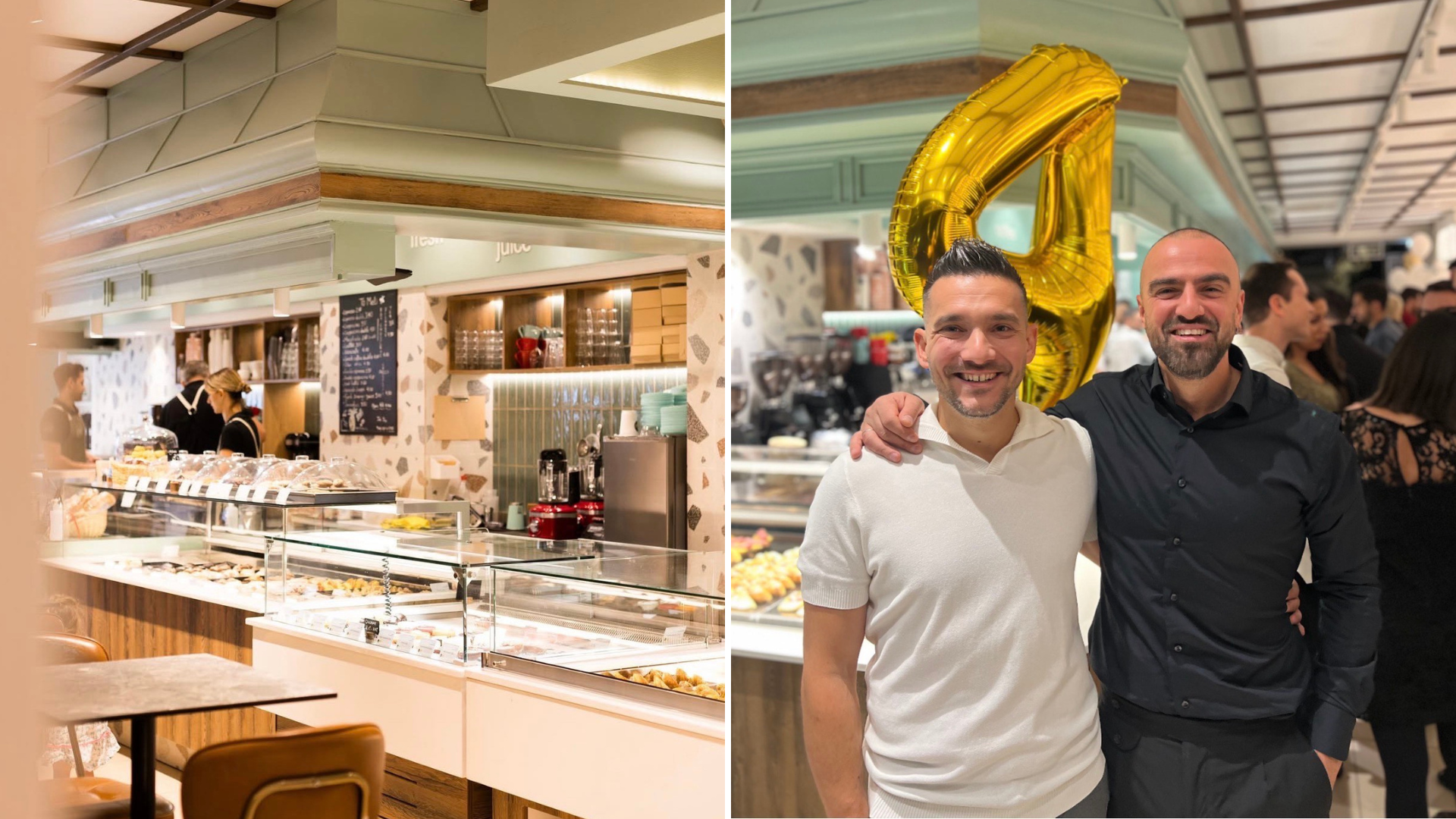
To Meli co-owners, Georgios Patkos (Left) and Filippos Ioannou (Right). Credit: Georgios Patkos
Georgios first came to Belgium in 2013, aged 29. "The situation in Greece after the crisis affected the whole country a lot, and I was obliged to leave in search of better opportunities."
Arriving in May, he caught a rare glimpse of Belgian sunshine and says it was "the perfect time to fall in love with the beauty of this country." For him, Belgium almost immediately felt like home, and it still does.
Working conditions are better here compared to back home, he says, and there is more respect for work-life balance.
"People usually follow rules and schedules more strictly, compared to Greece, where things can sometimes be more flexible or unpredictable," he says.
Brussels is much more international and multicultural compared to his native Thessaloniki. "You meet people from many different countries and backgrounds, which is unique. Greece is very welcoming too, but it feels more culturally homogeneous compared to Belgium."
Despite how international it is, Georgios believes it is "easy" to stay connected to Greek culture in Brussels, through clients, friends and social activities.
He attends Greek cultural events such as theatre performances and concerts, and also plays for a Greek football team called Hermes FC, which was founded in 1984 and is integral to the city's Hellenic community.
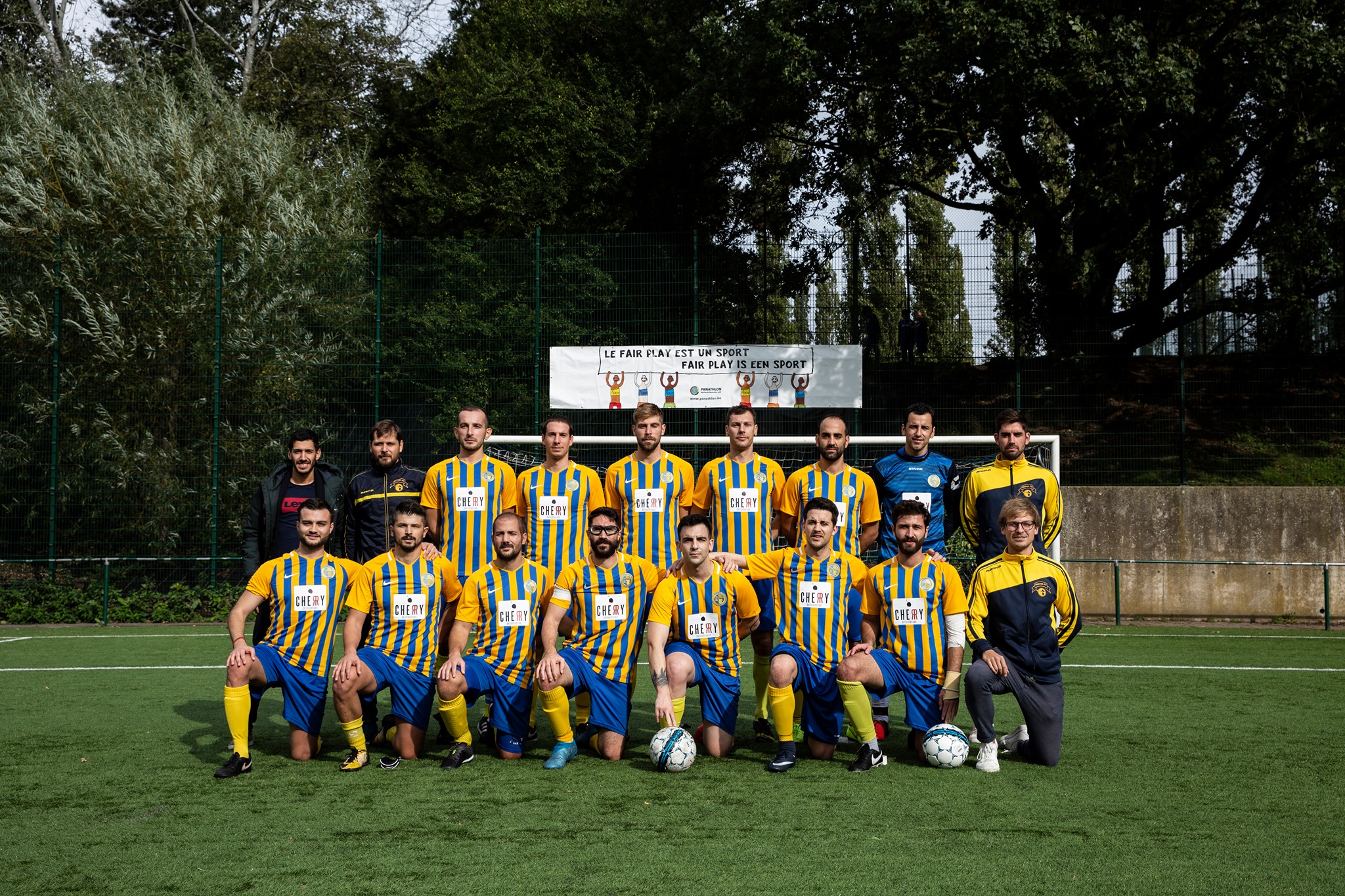
Credit: Hermes FC
Home in a foreign city
A few roads away on Place Jourdan, Anastasios "Tassos" Mourtzoukos, 35, from Athens, and Yannis Tolkoutsis, 33, from Delphi, also met through the Hermes football team. Now, they are co-owners of the lively Greek bar Kosmos – "and we spend more time with each other than our girlfriends," says Yannis.
For Tassos, who arrived 18 years ago to study IT and civil engineering at ULB, the main draw was Brussels' diversity and feeling at home even in a foreign city. "You have people from everywhere; you don't feel alone. You don't really feel that you're abroad."
Yannis excitedly adds that in his French classes, all 15 students are of different nationalities. "We meet people from around the world, and you can learn from them all their traditions, their language, and how they live."
What's the biggest difference between Belgium and Greece? "The weather, of course. But we're still all here," he laughs.
Both say the city has changed considerably over their time here: there were only a handful of Greek spots when they first moved. Moving from their small communities to the heart of Europe was therefore not easy.
Yannis, a mechanic by training, has lived here for nine years, but was ready to go back to Greece after the first. "You are in a lake [in Greece] and you move to the ocean."
But times have changed, and the pair say they don't need to get a flight home to drink Greek coffee or speak their native language anymore.
"More Greeks come every year, and this makes it feel even more like home. It's much easier for new people coming to Brussels to integrate," says Tassos.
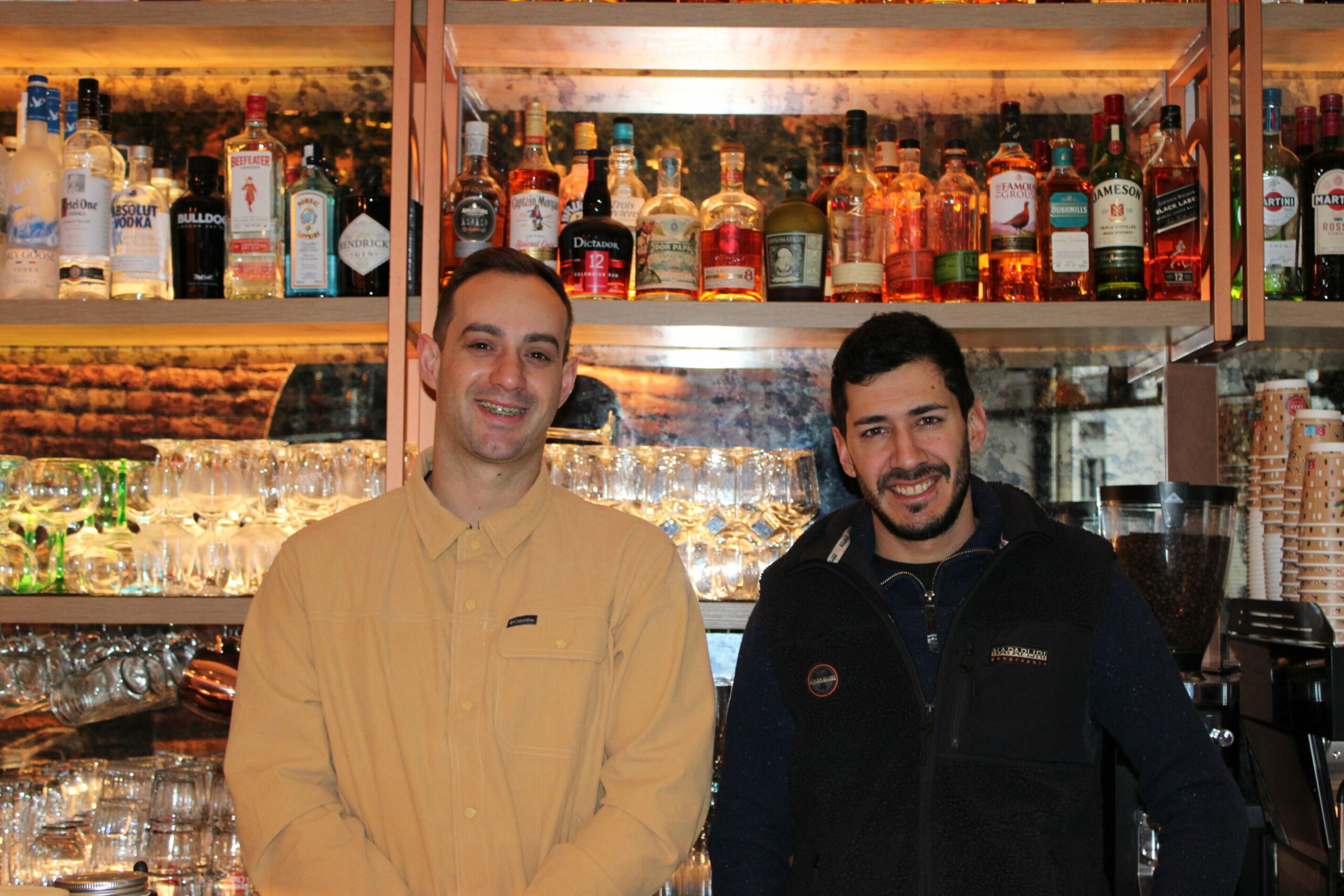
Yannis Tolkoutsis (Left) and Tassos Mourtzoukos (Right). Credit: Isabella Vivian / The Brussels Times
With the football team Hermes, basketball team Asteras, regional groups which organise Greek dance lessons for children on Saturdays, and theatre groups, the entire community supports each other.
The two friends also host DJ parties on the weekends with traditional and modern Greek music, they say, pointing to the colourful array of Greek wines, beers and spirits on offer above their heads.
"It's our job to help new Greek people feel at home, and also help non-Greeks learn about Greek products, traditions, and music," says Tassos.
"When you meet someone new in Brussels, you feel that it's you some years before. You see yourself in them. So you talk to them so they don't feel alone," Yannis adds.
'I have more dignity here'
Kosmos' previous owner, Konstantinos Ioannina, 45, now owns Greek restaurant Attica, just around the corner from the Greek Permanent Representation to the EU.
Konstantinos came to Belgium with his wife, Vicky, 49, who was raised here after her parents opened a grocery business in 1977.
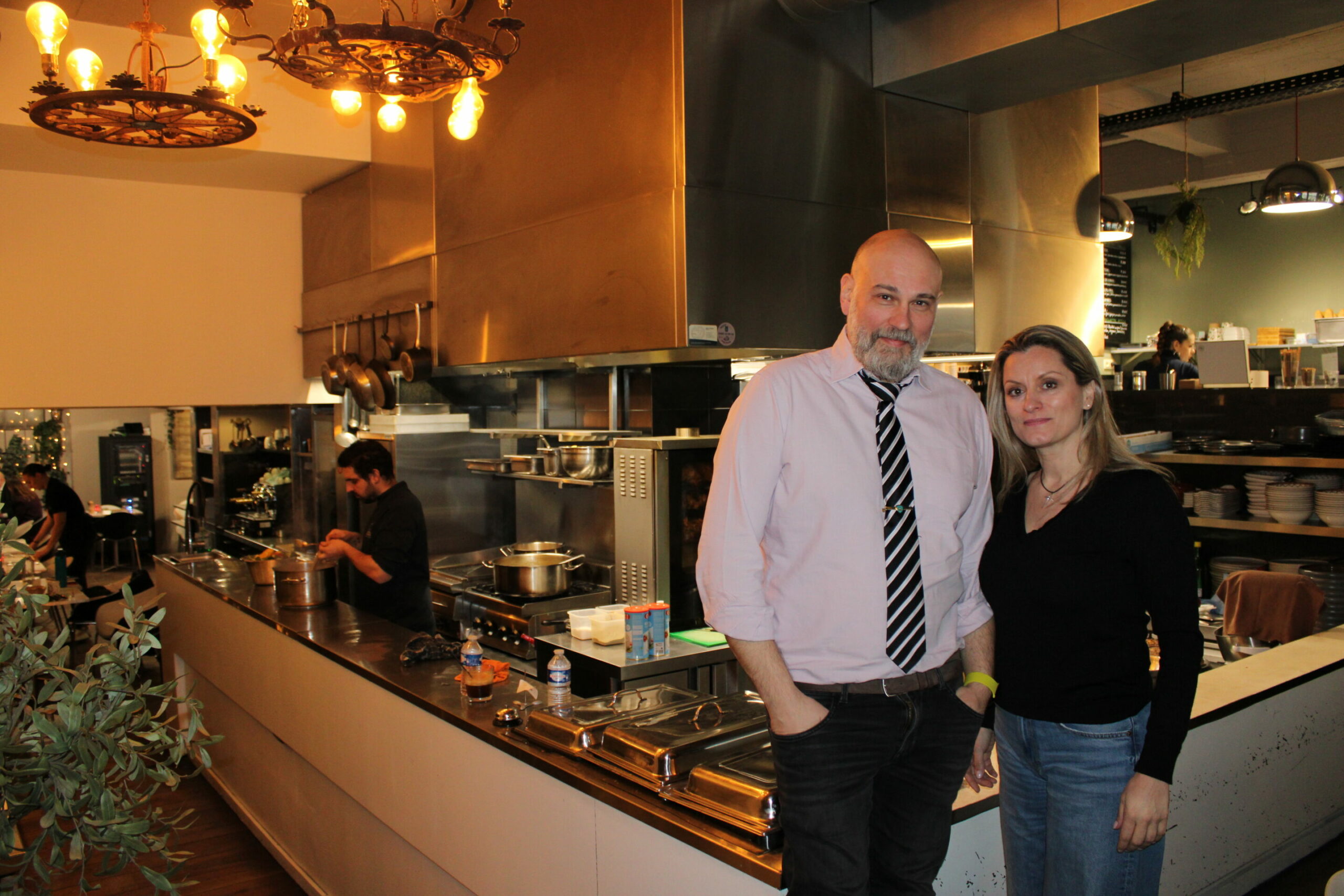
Konstantinos and Vicky Ioannina. Credit: Isabella Vivian / The Brussels Times
"Greek people first came in the 1960s for the mines. After a couple of years, they changed their jobs to taxi drivers, and then most of them started opening restaurants and grocery shops," he tells The Brussels Times.
After meeting and marrying in Greece, the couple returned to Belgium in 2016 due to the financial crisis in their home country. Though Konstantinos describes himself as a patriot, he also wouldn't want to live there again.
Money and opportunities have kept them in Brussels, as well as "the whole construction of the society," he says. "It's not perfect, but it's good. I like it. I have more dignity here."
Konstantinos now feels part of both the Greek community and the international community. "I have Belgian friends, I have international friends, I have Greek friends. I don't feel that I belong to only one community. I adapt. It's very easy, especially in this area."
Flavour of Greece
Over in Schaerbeek, Athens-born Sofia and Antreas Nikidimas feel similarly.
Having lived in Brussels for 14 years and initially spent their time at Greek establishments such as Kafenio and Kosmos, where they'd play Tavli (Greek backgammon), they now have mainly international friends. Their small bakery business, Kapa, reflects this.
Launched in 2023, the couple prides themselves on offering a range of international products, but with a Greek character: among the carrot cakes, Basque cheesecake and pistachio croissants are custard filo Galaktoboureko, spinach and feta Spanakopita, and orange Portokalopita.
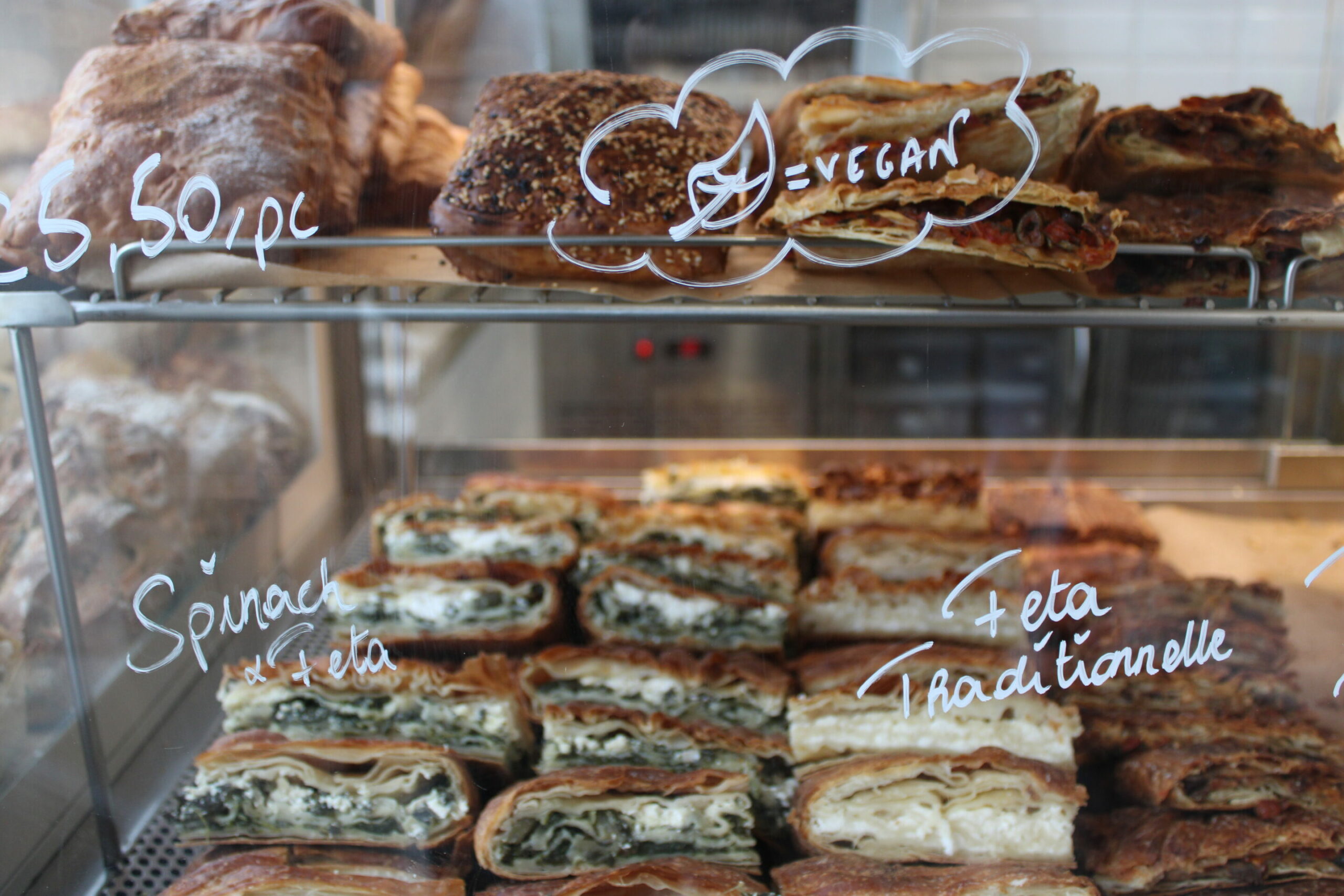
Credit: Isabella Vivian / The Brussels Times
The pair remember coming to Brussels for a holiday in autumn 2012. Within two weeks, they had found an apartment and moved to the city.
Antreas struggled at the start and remembers looking up flights back to Greece every night for his first three years, but the city has since grown on him.
"All the world is here in Brussels. It's a micrography of the world. Imagine having the whole world in one city. It's beautiful," he smiles.
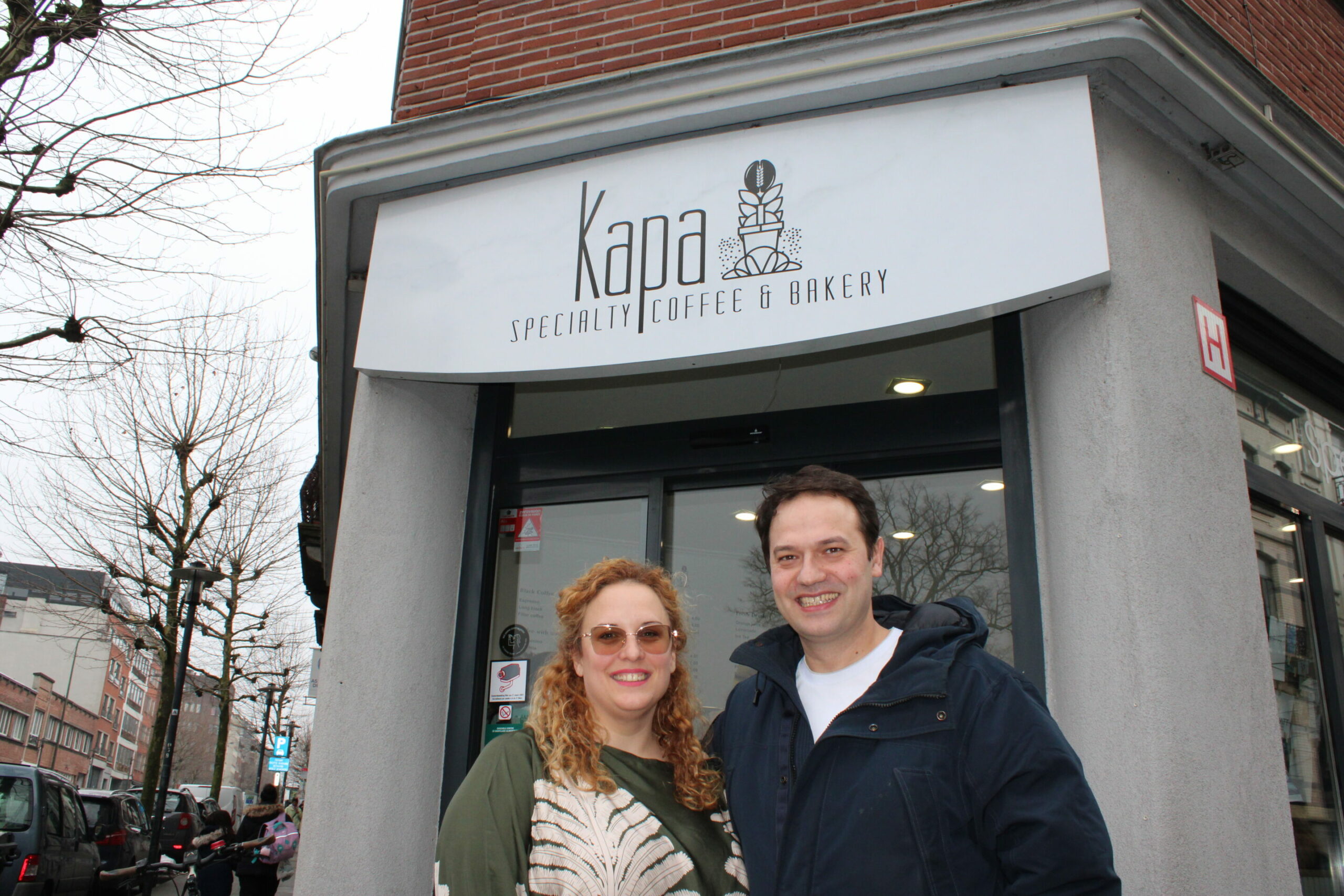
Sofia and Antreas Nikidimas. Credit: Isabella Vivian / The Brussels Times
Sofia also had difficulties with the city's transient nature, losing newfound friends after a few months.
But ultimately, she felt she needed separation from the restrictive religion, traditions and the "prison of family" in their home country. She distinctly remembers how "liberating" Belgium felt in comparison to Greece. "There are some people who really came here for economic reasons, or jobs, or love. But for me, it was freedom."
As a 42-year-old woman, she also feels no pressure to end her career early like in Greece, and she finds it "inspiring" watching people change jobs in Brussels, even in their 50s.
"This is the magic of this city: you learn how to love people who are different, regardless of age or nationality."
