
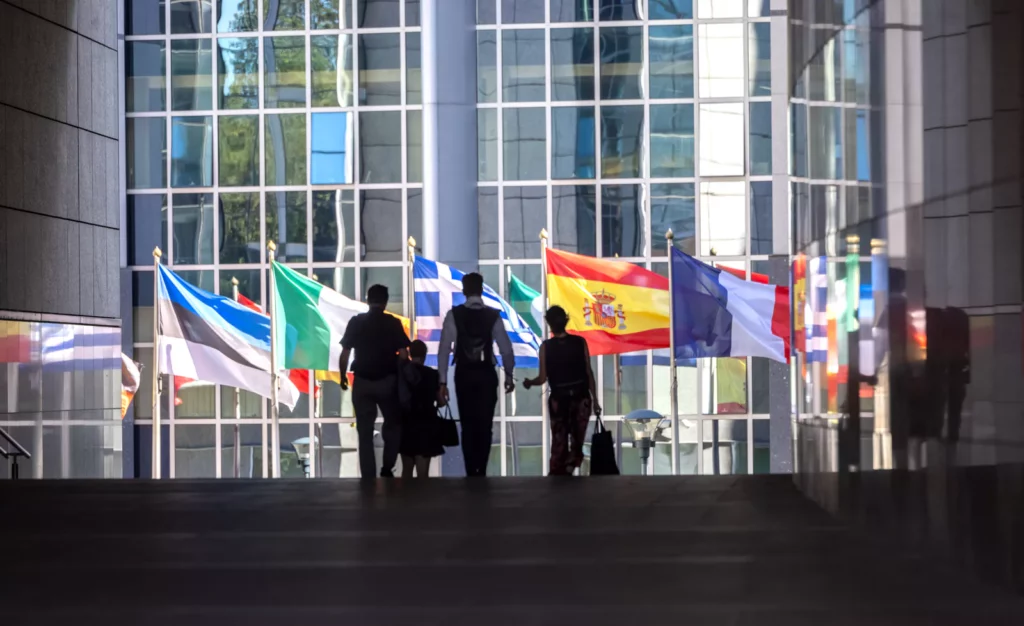
What comes to mind when you hear "expat" and "immigrant"? These two terms have long sparked heated debate, especially in Brussels. Which word do the city's residents identify with, and how semantically similar are they?
Brussels is home to a diverse range of cultures, with 40% of the population being non-Belgians, and 85% first or second-generation immigrants. It is therefore no wonder that non-Belgians have varying views on how they identify, particularly when it comes to using "expat" and "immigrant".
Thomas Huddleston, a migration expert at the University of Liège, believes we should not use them to create a divide between two groups of people who are, in reality, the same.
"Dividing up people and saying these are immigrants, and these are not immigrants, when, in fact, they all are, tends to downplay the contribution that immigrants make," Huddleston told The Brussels Times.
"Brussels would not work if we lost 85% of the population. And the Belgian economy wouldn't work if we didn't have all these engines of its economic integration."
The word "expat" has, in fact, become so entrenched in Brussels' culture – and synonymous with the EU bubble for some – that many use it even though they might not like it or wouldn't use it to describe themselves. It then becomes herd mentality.
"Many people who identify as part of the 'expat bubble' would also say they support migrants – but they don't see themselves as belonging to that category. But my question is: what really is the difference?" Amanda Klekowski von Koppenfels, a researcher on migration at the University of Kent, said.
"Is there a distinction between the Italian colleague at the Commission and the Italian person who runs the pizzeria, who might have been a mine worker in Wallonia back in the 60s?"
How do residents identify?
Near the EU institutions, opinion is particularly divided. Some claim the word "expat" is racially loaded and creates a "condescending hierarchy", while others vehemently disagree. Some identify with both, and others feel they do not fit into either box.
A 50-year-old Cypriot lawyer firmly told The Brussels Times that she identified as an expat. She said that anyone who had a problem with the word should "get a life," and that "It's a fuss where fuss shouldn't exist."
Hugo Soares, 46, a Portuguese EU Parliament official, disagreed: "It's semantics! Of course, they're the same. As I wear a suit and a tie, everybody says I'm an expat, but we are all immigrants. I think if everybody started using the word 'immigrant', it would be maybe not so hard on other people."
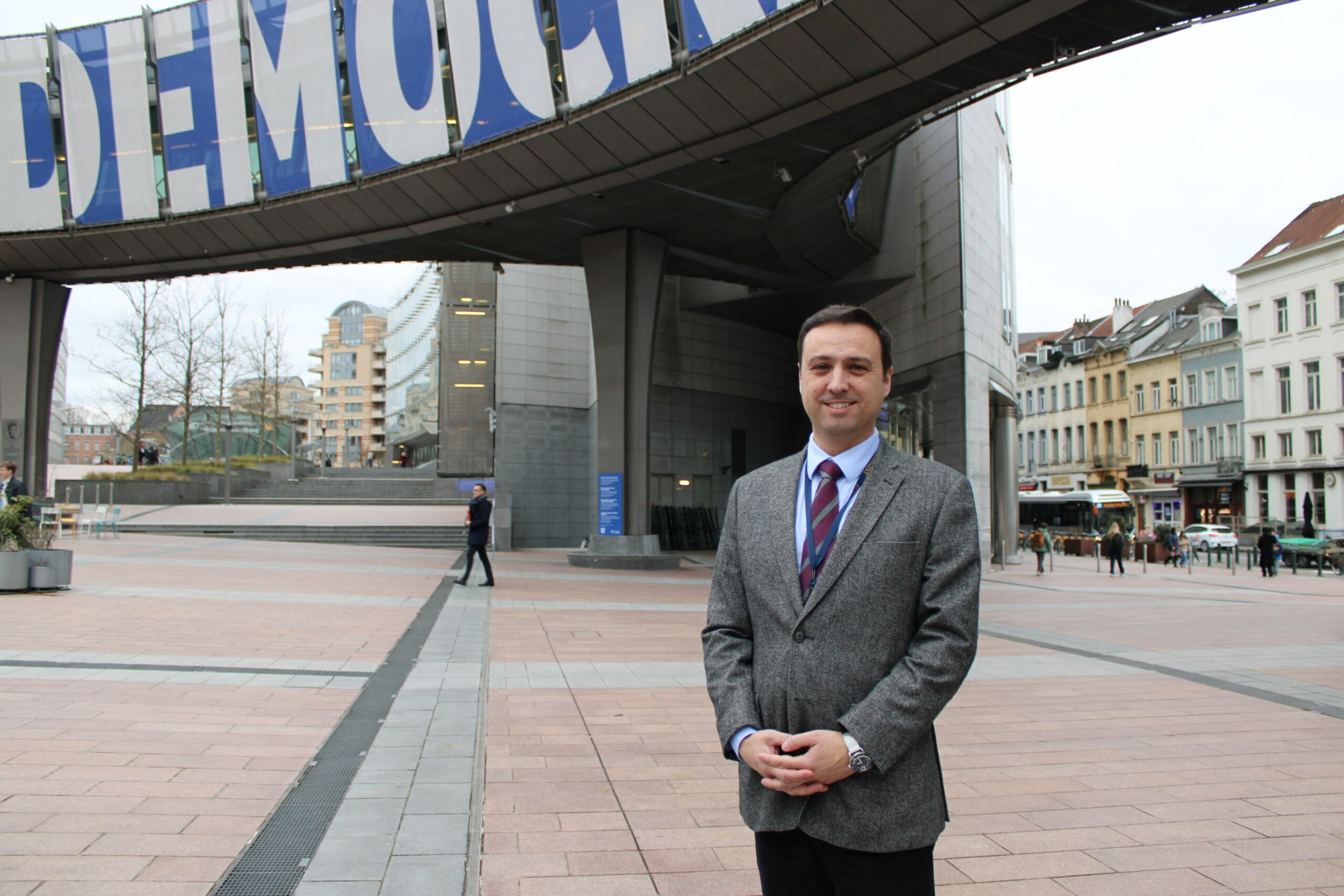
Hugo Soares, who believes all international residents are immigrants. Credit: Isabella Vivian / The Brussels Times
French tourist Emmanuel, 68, was paying a visit to the EU quarter and spoke of a "condescending hierarchy” between migrants and expats, adding that the choice of wording was not neutral.
"When you talk about the European or American people who go and live abroad, you choose the word expats, and when you choose to talk about people from the rest of the world, you say migrants."
A 42-year-old woman from Greece, meanwhile, said she was an "expat", having lived in Brussels since 2012, but was concerned with the "high crime rates caused by immigrants."
British painter Anthony Oliver, 60, who moved to Belgium in 1996, associates the word "expat" with the EU bubble. "I don't really like boxes or categories much. I don't see myself as an expat. For me, 'expat' and 'EU crowd' are interchangeable."
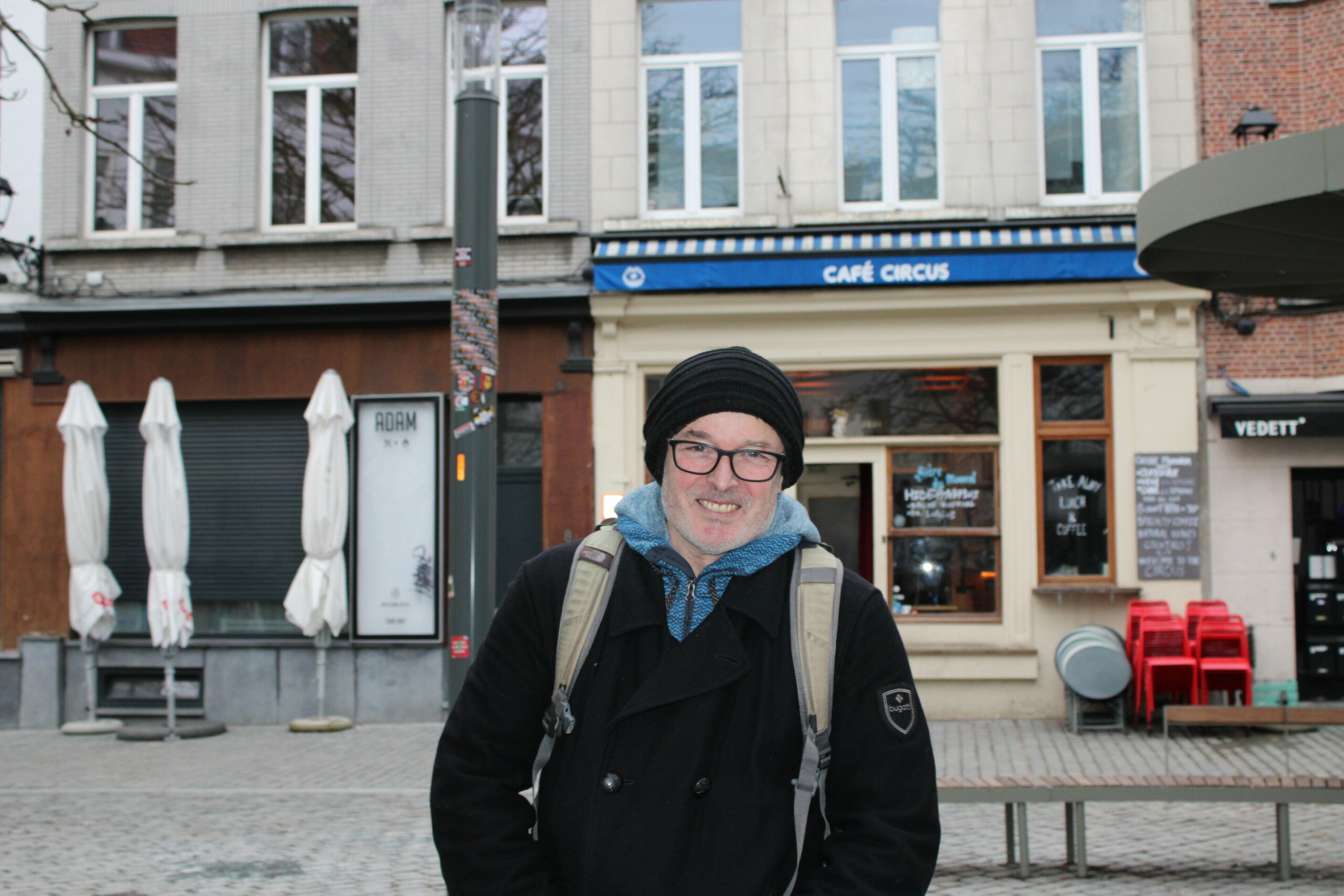
Anthony Oliver, who associates expats with the EU bubble. Credit: Isabella Vivian / The Brussels Times
Arzu Mouchtar, 45, from Germany, also working at the Parliament, identified with both words. "I'm an expat. I have lived here for 20 years, but I'm also an immigrant because I come from Turkish parents who came to Germany in the 1960s. My parents didn't have a choice. Expats have a choice."
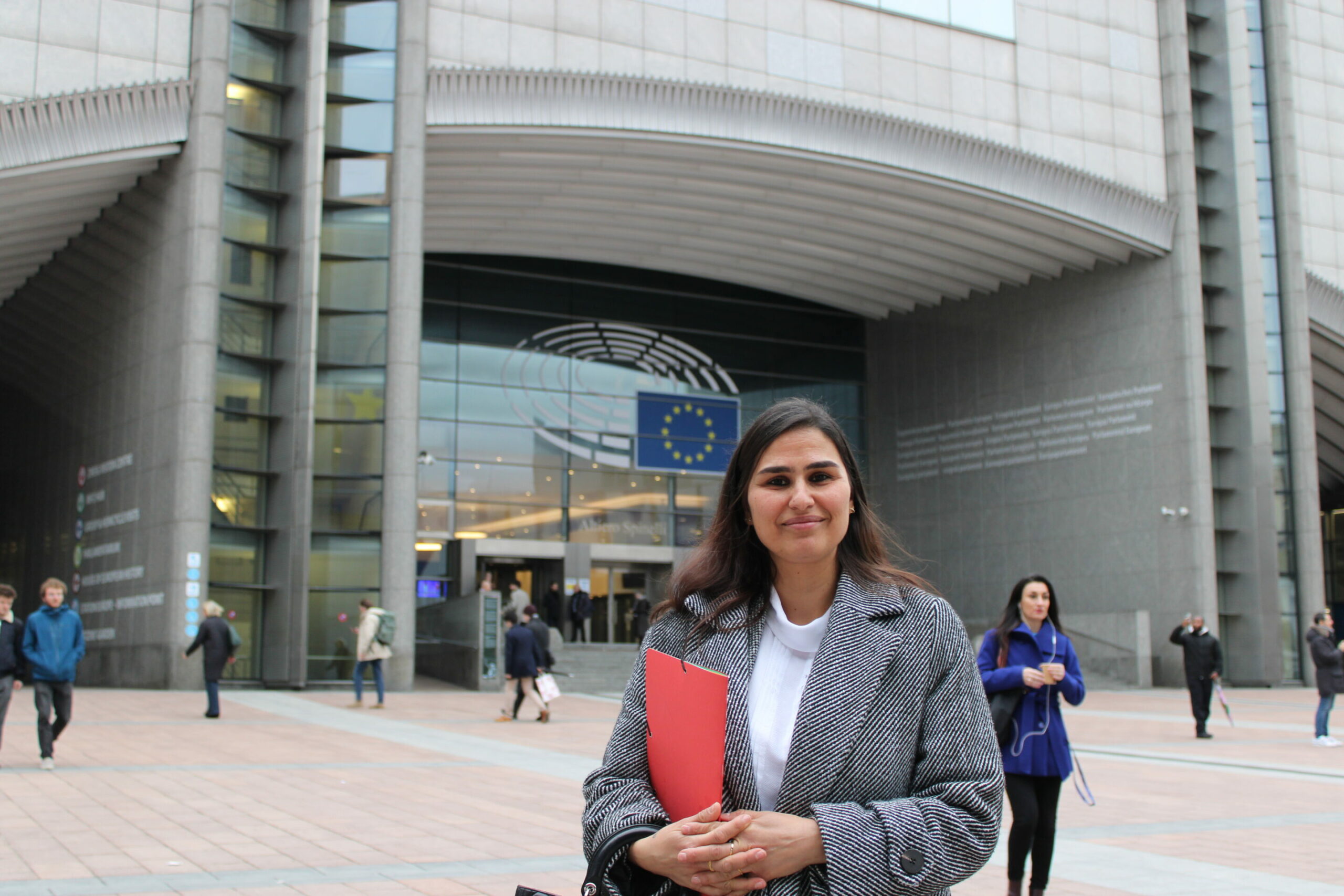
Arzu Mouchtar identifies as both an expat and an immigrant. Credit: Isabella Vivian / The Brussels Times
Ana Oliveira, 37, left Portugal for Brussels in 2010, and calls herself a "proud immigrant", adding that she would "always correct someone" who described her as an expat.
"By incorrectly calling people expats, we're reinforcing the stigma around the word immigrant, and we don't need that to happen, because in the current social climate with far-right groups causing so much harm with narratives on immigration, they're already doing that job for everybody, and we don't need to fuel that fire," Oliveira said.
Nigel Heavey, 65, a retired EU translator from the UK, was very much against using the word expat: "I consider myself to be European, and if anyone called me an expat, I'd strangle them."
Colonial origins
It's clear that people in Brussels feel very strongly about these words, but what do they actually mean?
"Expat" originally referred to a specific short-term work contract, lasting for up to five years, and on which people are not required to pay taxes. This includes diplomats and bureaucrats.
However, its modern-day meaning has expanded, Klekowski von Koppenfels said. "Broadly now, the term 'expat' or 'expatriate' seems to apply to people from the Global North, and a migrant seems to be somebody from the Global South."
Even when both groups of people carry out the same work or have the same reasons for migrating, the wealth of their country of origin results in major differences in terms of access, privilege, and the racism and discrimination they face.
"Traditionally, people have assumed that it is racialised because it comes from the colonial era," Huddleston added.
Legally, only a tiny share of immigrants in Europe today are expats, but sociologically, Huddleston says, "anyone can be an expat if they have the right mentality."
Subliminal discrimination
This artificial division is a form of "subliminal discrimination," Klekowski von Koppenfels said. "It's a racial answer to economic status." Using the word expat incorrectly can therefore perpetuate negative stereotypes.
Stigmatisation is frequently seen in the media when crime reports are associated with "immigrants". "Expats" who commit crimes, in contrast, are seen in a different light.
"This is similar to racial profiling anywhere. If a black person and a white person go into a store, the black person will be followed. If they both shoplift, it's the black person who's caught,” she said.
Huddleston notes that the media and politicians only use the terms "immigrants" or "migrants" to talk about a homogenous group of people or an anonymous person. While these people remain invisible to society, an individual expat's achievements are often highlighted.
Pre-emptively categorising people in this way can have broader consequences for society, namely hindering integration.
Klekowski von Koppenfels refers to the "context of reception", an area of migration theory. This states that, if society welcomes newcomers positively, they in turn will want to be part of society and contribute to it. But if they are rejected from the beginning, through racism or discrimination, they will retreat into a national community.
Similarly, if businesses market their products to "expats" to attract a specific population, they risk leaving others behind.
Related News
- 'The whole world is in this city': Meet the gregarious Greeks of Brussels
- Spain welcomes 500,000 undocumented migrants – will Belgium follow suit?
- A taste of the Med in Brussels: The family-run supermarket where foodies go to fill their boots
A possible way forward, she suggests, is to use "migrant" instead, which means "somebody who is from somewhere else."
As well as being more palatable for people from the Global North, migrant is more fluid in its meaning than immigrant. It therefore better reflects the transient nature of Brussels and those who come and go every year for internships and short-term jobs. "Migration is a human condition. It's a process, not a one-way single event."
The language we use certainly plays a role in the wider migration debate. "People who are really supportive and inclusive will still call themselves expats, and not think about the implications that that has, which is that they are distancing themselves from other migrants who are either from lower socio-economic levels or from a country that is further south than their own."
If more "expats" therefore described themselves as "migrants", she says, the word would likely lose many of its negative connotations.
