

Brussels is renowned for attracting people from across Europe and beyond in search of their dream job, resulting in a fiercely competitive job market. Here's how you can stand out from the crowd.
It's a joke often thrown around that possessing two Master's degrees and speaking four languages will get you nowhere in Brussels. Why is it particularly tricky to get a job in the Belgian capital?
Brussels is a "service-based economy" and home to countless European and international institutions and corporate headquarters. "This naturally leads to a high demand for consultancy services," Nora Ed-Daoui, spokesperson for Brussels' employment agency Actiris, told The Brussels Times.
Lana Lile, people and partnerships lead at Moylan Communications and former head of talent acquisition at POLITICO Europe, adds that the abundance of EU-oriented jobs makes Brussels particularly unique. "They draw people from every Member State here, and that inherently creates competition because it's 'the place to go' if you want to work in that sector," she said. "You have 27 countries' worth of people trying to get jobs in a single city."
This attracts large numbers of people with similar skill sets and impressive backgrounds, especially at the junior level. The recent AD5 EPSO competition, for instance, drew a staggering 170,000 applications, of whom almost 80,000 were Italian.
Sluggish economic growth and political instability are also playing a role. The longstanding economic downturn has resulted in declining job vacancies, including for highly skilled profiles, according to Ed-Daoui.

The Brussels employment office Actiris. Credit: Belga / Jonas Hamers
Belgian GDP has slowed considerably since 2021 (+1.0% projected in 2025), according to data from Actiris. There were 9.1% fewer job vacancies in the first half of 2025 (Statbel) and a 76% increase in bankruptcies in the first eight months of 2025, which had a direct impact on employment.
"Companies have also halted investments due to political instability and, consequently, have also introduced a freeze on recruitment." The non-profit sector is also affected by instability in public subsidies, late payments, unrenewed budgets and rising operating costs, Ed-Daoui added.
'Take your profile off the page'
To counter the competitive job market, Lile firstly suggested candidates "take their profiles off the page". By this, she means meeting people in person and helping them connect the dots: you're more memorable to an employer if they can put a face to a name.
"Don't let yourself just be a CV that gets sent around, but talk to people, learn more about organisations, get advice from people, go to events, and meet people. Have that conversation with someone in two different languages so they can automatically see that you're serious, that you really speak them both," she said.
This is how you can get the network of Brussels to "work for you", she said. Applicants may hear of opportunities before they've been advertised or be encouraged to apply for a role when it's published. "Brussels is built on coffees," she laughed.
But networking doesn't come naturally to some, especially if you're introverted or you've just arrived in the city.
In these cases, Lile recommends finding a community in which you can be your most authentic self, such as a running club, church, gym, civil society meet-up, political party, or yoga classes.
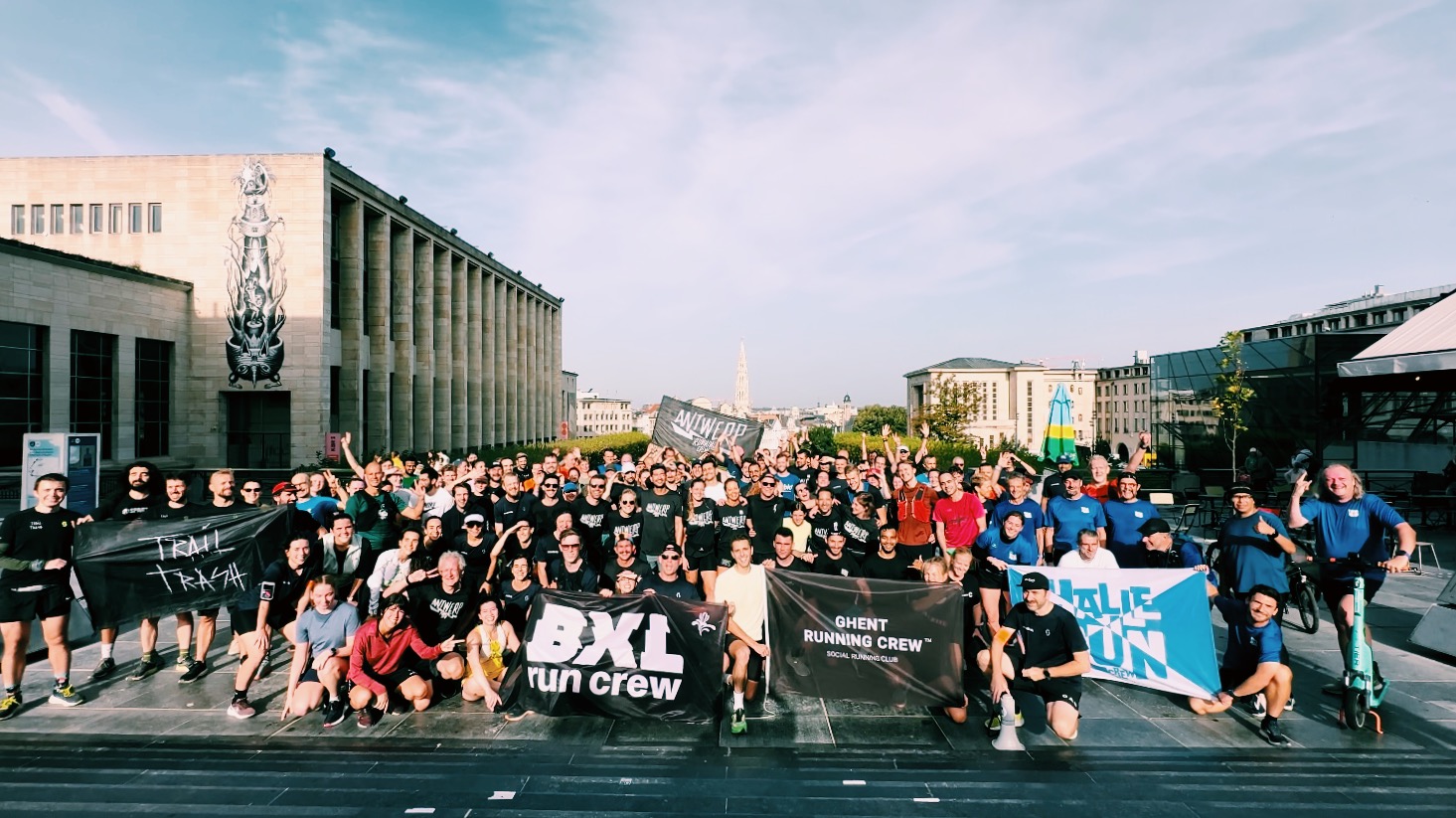
Credit: BXL Run Crew
From there, you can casually talk to people about what they do and make connections. "Just be yourself and show up, and have 20 anecdotes in your back pocket from university, internships or a first job that describe a skill set."
She did, however, say that pushing yourself out of your comfort zone is part and parcel of networking and there will undoubtedly be "a couple of uncomfortable situations now and then".
Work status and AI
Once you've spotted an interesting job ad, tailoring your CV and cover letter to the role and organisation in question is crucial.
"An immediate no for me was anyone who sent a cover letter that they had clearly not customised. I would sometimes get them where they had forgotten to remove another company's name from the middle of the cover letter. You would be surprised how often that happens."
Lile also stressed the importance of clarifying your work status, such as having EU citizenship or needing a visa. "We would have so many applications. If the profile was just as good as everyone else's, sometimes we'd say, 'Let's go with this one because we understand what the situation is.'"
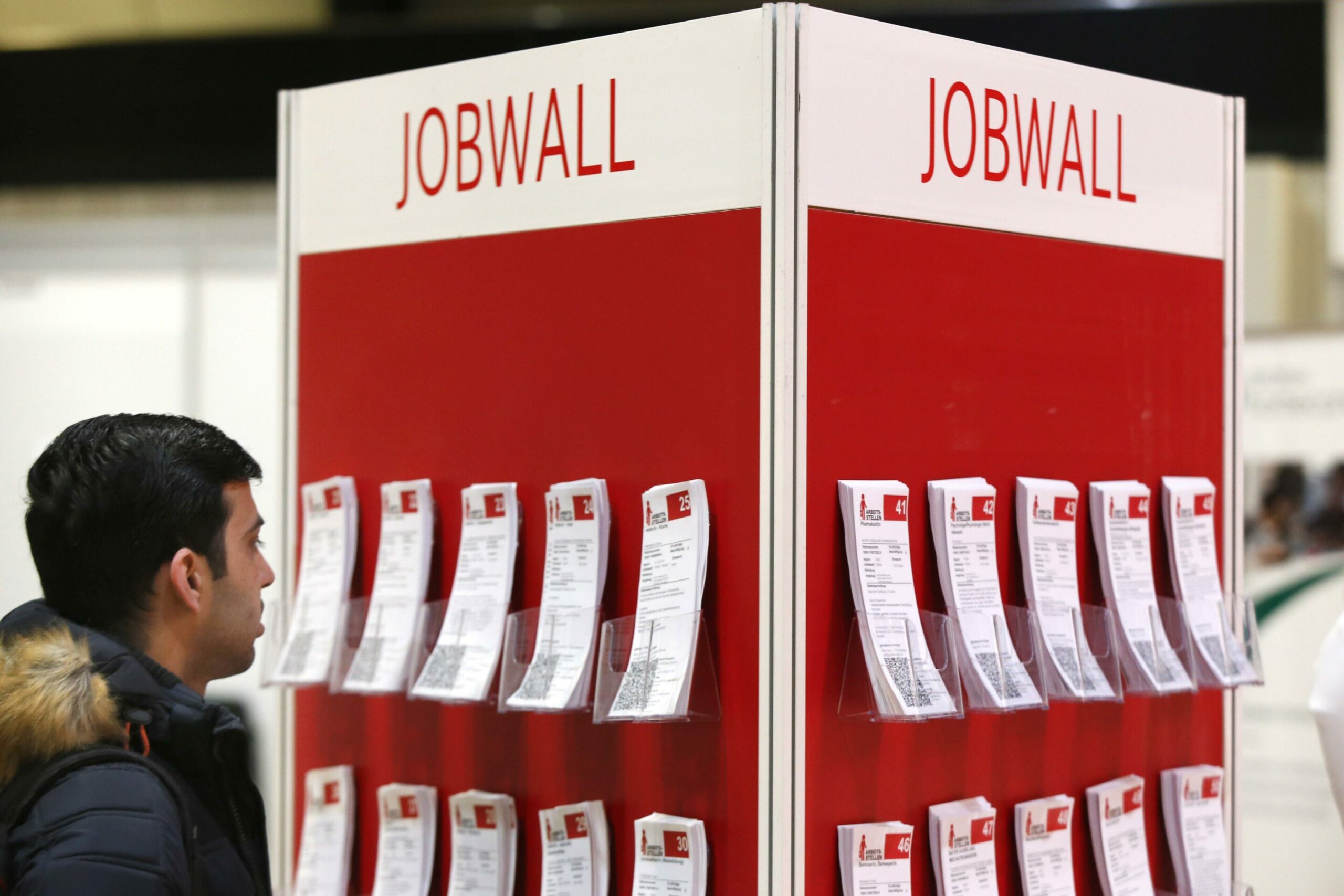
Credit: Belga
Finally, in the age of artificial intelligence (AI), Lile emphasised the need to make your cover letter your own. "AI can draft a lot of really beautiful cover letters, but if you're reading 150 applications, you see which ones are drafted by AI because they all look the same."
"If you're going to use that as a shortcut, you have to edit it and turn it into your own tone of voice, because otherwise someone's going to read and say, 'I read that one five minutes ago.'"
This is particularly important for communications roles, which require showcasing unique and punchy writing skills. "A bit of personality goes a long way," Lile said.
Many recruiters no longer read cover letters, and AI screening processes are now used in many companies to sift through large numbers of applications, she added.
The trick is therefore to find the balance between matching keywords to the job description and working with the system, while also ensuring your application sounds like it's been written by you.
Creating a standout CV
As cover letters often go unread, but recruiters still usually read CVs, Lile recommended adding a short introduction at the top of a curriculum vitae. It should be an "executive summary" relevant to the role you're applying for, laying out why you're interested and what you can bring to the table.
Lile also advised highlighting subtasks within roles and why they're relevant. The core skills required for cold calling, for instance, may prove more appealing to an employer than having a Master's degree.
While CVs should be kept to a maximum of two pages and shouldn't list absolutely everything, Lile cautioned against condensing them into a single page. "Don't list everything you've ever done, but don't cut out things that are potentially useful, just to make something shorter," she said.
One time, she almost didn't hire someone because their CV was so short. She was dubious, but the applicant seemed interesting and had been recommended internally, so she followed up. It transpired that they had cut out five years of relevant experience to fit everything onto a single page.
Ed-Daoui added that employers spend very little time looking at a CV, so the most important details must be immediately obvious and long sentences should be avoided. "You need to appeal to the employer and therefore place the most appealing information right under their nose," she said. Sometimes, this may involve placing education above experience if it's more relevant to the role, for example.
"A successful CV is well-structured, personalised and tailored to the vacancy. It is better to condense the information rather than overload the CV. The CV aims to secure an interview. It is during this interview that the candidate will be able to fully showcase their strengths and what they can bring to the employer."
Finally, including a photo in your CV is not mandatory, but if candidates opt for one, it should be professional and not a selfie taken in a non-professional setting.
Dealing with rejection
As with any tough job market, rejection is commonplace and can result in feelings of despondency when it happens frequently. Although it can be draining and demotivating, Ed-Daoui said, "every step is a lesson or an exercise, enabling you to adapt or improve for future applications."
Lile urged applicants to never take it personally and get angry, however, and to always assume people on the other side are doing their best. "It's hard when people often feel like they're not being respected in their time and their applications. But from the other side, you have people with full-time jobs trying to do the extra work of hiring people into their organisation, and they're doing their best most of the time."
In her previous positions, she would, on occasion, receive frustrated and snarky emails from rejected applicants, which never went down well. "It's a small town. Don't burn bridges during the hiring process."
Proactively asking for feedback, on the other hand, is the best response to rejection. "Not every organisation will give it to you, but it shows that you're interested in doing better, and interested in continuing the conversation."
Finally, for those struggling to find a job in Brussels, she advised thinking outside the box. Instead of having your heart set on a full-time, EU-oriented role, it's worth considering going part-time or freelance, volunteering, trying another sector, applying for a six-month temporary contract, or working for a Belgian company or a multinational, for example.
"These markets are constantly in flux, so think about how you can also be in flux."
