
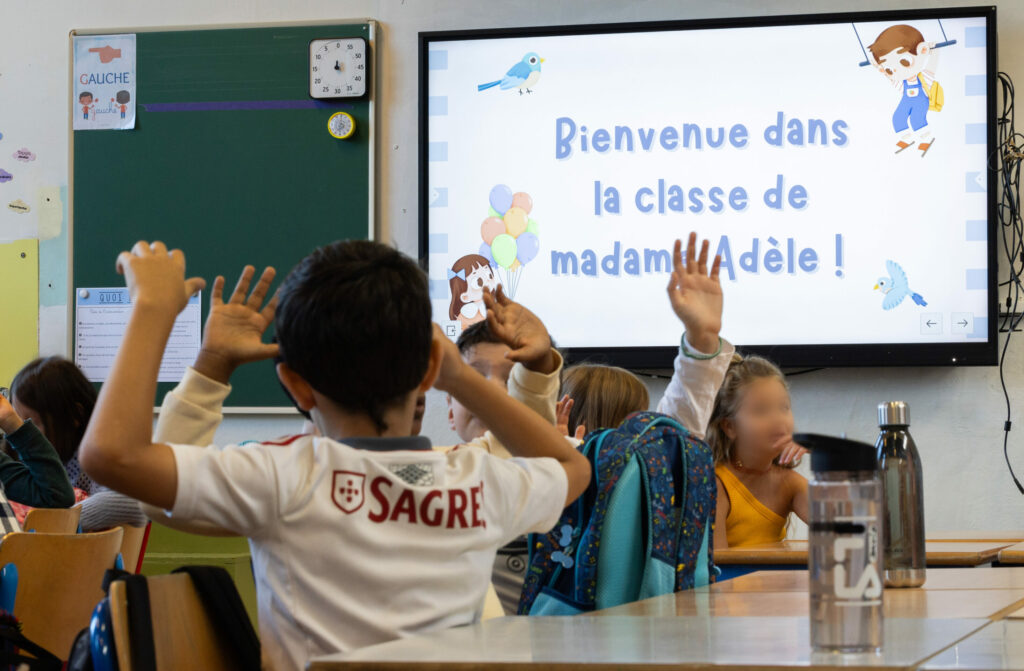
With 186 nationalities and a rich tapestry of linguistic diversity, it is perhaps no wonder that some school children in Brussels can already speak five languages. But how difficult is a multilingual upbringing in practice – for both parents and children – and are there any drawbacks?
Bringing up children to speak a variety of languages may seem second nature in bilingual Brussels. However, it's still an ongoing debate, as many parents are confronted with conflicting information and worry that mixing multiple languages from a young age can inhibit a child's language development and lead to confusion.
Dr Ily Hollebeke, a VUB researcher who specialises in early multilingualism and multilingual communication, says some children do indeed start to speak slightly later, but it depends on the child and their environment.
"While people often fear that children will get confused or keep mixing languages, there's no scientific evidence supporting this concern. In fact, babies are already able to distinguish languages at (and even before!) birth," she tells The Brussels Times.
"Very early on, children understand who speaks which language, and they learn to adapt their own language use to their interlocutors. They might make mistakes (especially in the beginning), but that is part of their developmental process."
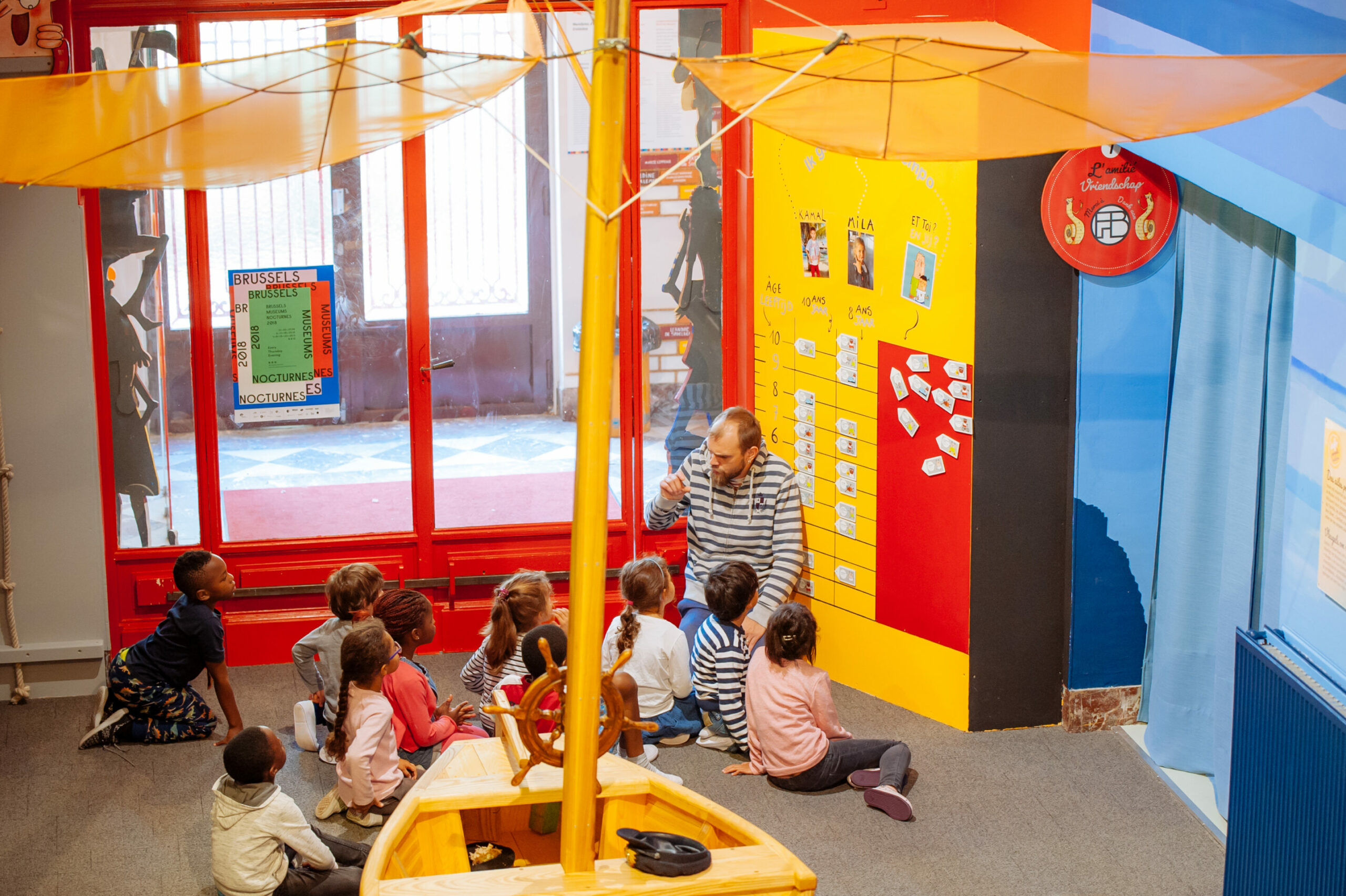
Credit: Children's Museum Brussels
This became clear to New Zealander Peter Muller, 68, who was told by teachers that he should only speak English with his children, as one of them has Down's syndrome. However, he went against the advice to not put the other two at a disadvantage.
"We were told that we would have to limit ourselves to one language, but it turns out that's not true. Kids who are brought up in a multilingual environment associate language with a person. In the case of our family, the kids associate English with me, and Dutch with their mother," he says.
"A lot of people think that they've got the answer, but the kids actually have the answer. They don't get confused. They just sort it out in their heads, and they speak it."
Rebelling through language
In addition, Dr Hollebeke says children may know fewer words in each language separately and struggle to adapt to different settings, such as when another language is spoken at school compared to home.
They also may rebel against their home language or not see the need to learn it, if their friends and teachers, for example, aren't using it, she says.
"Part of my adolescent rebellious phase was not wanting to speak French. And so, I’d speak English at home with my brother all the time, and my parents would go insane," says French-Portuguese Joachim Dos Santos, 29, who had learnt four languages by the time he was seven.
He only reconnected with French while at university in Montreal. However, he never found a similar connection with Portuguese, as his father "abandoned it" in favour of speaking French. Despite having spent the first few years of his life in the country, Joachim feels like a "foreigner" when on holiday with his family in Portugal, and he wishes his family had spoken more Portuguese to him.
"If you don't speak the language of the area, you lose that sense of belonging and identity. It connects you with your family and your roots," he said.
14 languages in one classroom
Dr Hollebeke also points to the common misconception that the home language is a hindrance to acquiring the school language. Instead, she points to the benefits: "Actually, children can build on their home language to pick up new languages."
Tim Gill, 68, sees the effects of multilingualism first-hand as a teacher at BEPS international school in Ixelles. "The first class I taught in Brussels had 12 kids and 14 different languages," he says, adding that one of his pupils speaks five languages.
For him, learning other languages gives children another perspective on the world. "It shows you that the world is bigger than just your particular cultural bubble. You also understand the idea of language not just being words on a page, but also cultural and carrying so much more than just learning or communicating in school."
This also benefits him personally: "When I'm teaching kids with different languages, I find that I'm enriched and it's just so rewarding. I pick up bits of their culture."
Dr Hollebeke says multilingualism is not only a key to other cultures, but it also leads to better cognitive control and delays the onset of symptoms of dementia in old age.
How to raise a multilingual child
Given the abundance of benefits, it is unsurprising that many families in Brussels want their children to grow up speaking multiple languages. How are parents in the Belgian capital raising the next generation of polyglots?
Martin Henry, 57, from the UK, has just had a baby with his partner Jaciara Topley Lira, a UN-accredited interpreter who grew up trilingual with Portuguese, English and French. He says it's important for his son to be able to communicate with the different parts of his family, as well as in the city where he lives.
Martin's approach is to teach his son English through nursery rhymes and poetry. "My job is to give him a passion and a flavour for English […] while Jaci does a lot of Brazilian music with him." The couple have also decided that they will send him to a French-speaking school in Brussels.
American-born Patrick Stephenson, 52, and his Spanish wife, Esther Pozo Vera, hope their newborn daughter will also be "at least" trilingual: her mother will speak to her in Spanish, her father in English, and she will go to a French-speaking crèche in June.
"We very much want her to speak both languages, French and Dutch. But we're just worried about how we're going to fit the Dutch in. It's not impossible, but when will she have the opportunity to learn it?"
"Spreekt u Nederlands?" ("Do you speak Dutch?") written on a blackboard. Credit: Belga
Patrick can't think of any challenges he and his wife might face bringing their daughter up trilingual – only benefits, such as having three passports.
"Maybe somebody would argue that she wouldn't have a solid sense of identity, but I would argue the opposite. We can be Belgian and Spanish and American at the same time and not suffer any loss of self. And if anything, it makes your sense of self more interesting."
Martha Méndez, 70, from Mexico, didn't have it easy, and recalls having to change tack when bringing up her children.
Initially, she and her Flemish husband spoke a mix of Spanish and Dutch with their children. However, a teacher then pointed out that their daughter was speaking Dutch with Spanish constructions and advised that each parent speak in their respective mother tongues so the children could differentiate between the two.
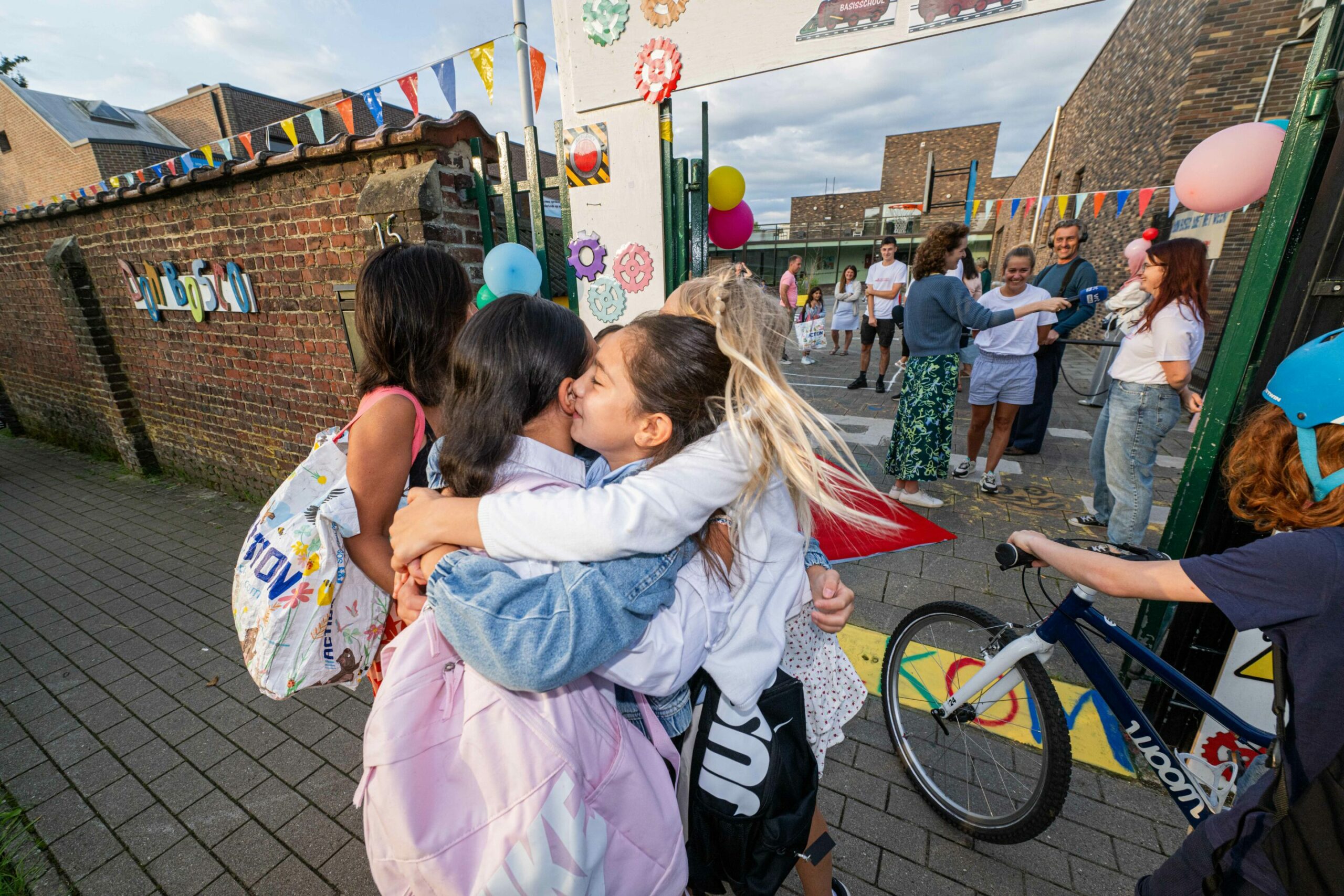
Pupils meet each other after the summer holidays in Sint-Pieters-Leeuw. Credit: Belga
Dr Hollebeke underscores that "raising a multilingual child is much harder than it sounds," so it's better to start as early as possible, as our brains are more flexible when we're younger.
Children sometimes rebel against the home language and refuse to speak it (as Joachim did with French). In these cases, the researcher says persistence is key. However, communication within families should also not be too rigid.
"Use all the resources you have at hand: You could look for age-appropriate fun ways to support the home language, such as books and movies, try to build a network with other native speakers, link the language to your own emotions and your (cultural) heritage," she said.
She also suggests that parents explain to children why it is so important that they learn the language. "Even at a young age, they might be more receptive to speaking the language if they understand why it is relevant."
A better way to be
A multilingual upbringing can sometimes present unexpected difficulties for parents – not just for children.
Martha, for instance, didn't speak Dutch well when her children were young. "It was difficult for me; I really had to catch up to be able to help them with school things and sports."
She therefore decided to enrol in a communications course at KU Leuven to stop feeling "ashamed" of her pronunciation and become more familiar with the language. "I was very much in love, so it was a very big motivation to learn."
Martin, meanwhile, recognises that he will not be able to participate in some conversations with his son as he doesn't speak Portuguese. "It's been an aspect of maturing for me. It's a good lesson that if you want to take part, you have to learn the language."
He also jokes that he feels slightly apprehensive knowing that one day his son's level of French will be better than his. For him, this is a "novel experience" as he brought up his other four children in a monolingual environment, and this is what makes Brussels so unique.
"I want to show an appreciation for the city we live in," Martin says. "Living in an environment where there's more respect for language and different cultures is healthy. And it's a much better way to be."
