
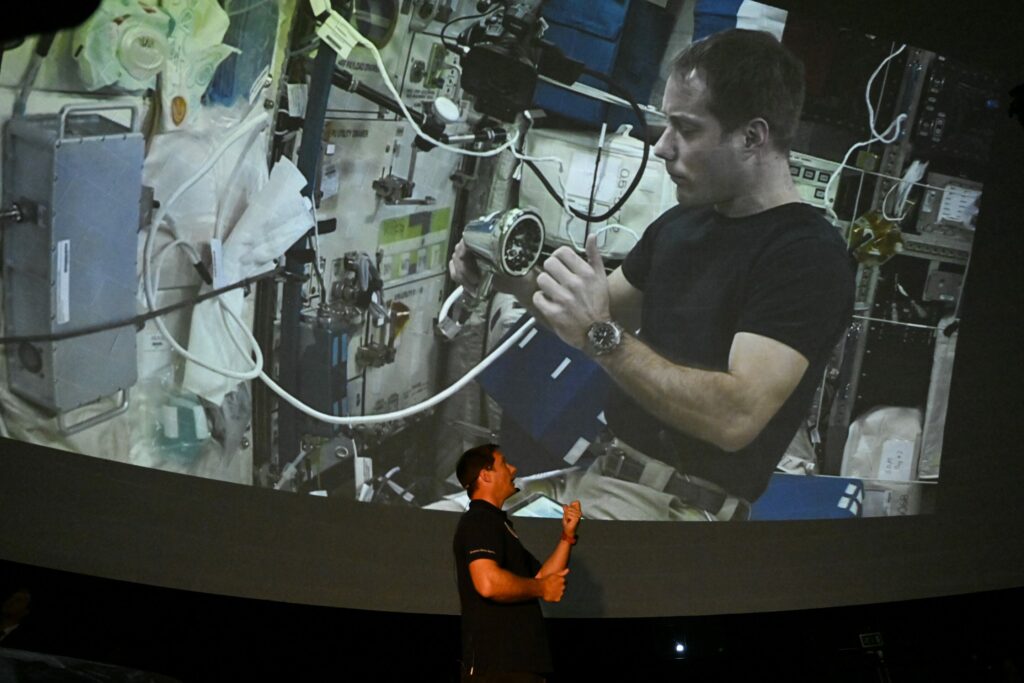
The human brain continues to behave as if gravity exists even after months in space, according to new research by scientists at UCLouvain.
The study, led by Professor Philippe Lefèvre, examined how astronauts adapted their movements in weightlessness using specialised equipment sent to the International Space Station.
Among the astronauts whose movements were analysed was French astronaut Thomas Pesquet.
Researchers discovered that astronauts consistently gripped objects more tightly than necessary while in microgravity, as if their brains still expected items to fall if released.
According to the research team, the brain does not simply account for the risk of an object slipping from the hand. It also anticipates the consequences of such an event.
"The heavier an object is, or the faster it is moved, the more the brain automatically adjusts grip force to avoid an error," the researchers explained.
Scientists also found that the brain retains deeply ingrained expectations about gravity, even when operating in an environment where gravity's effects are largely absent.
Astronauts returning to Earth must gradually relearn how to accurately calibrate their movements and motor predictions once they are back under normal gravitational conditions.
This demonstrates how enduring the brain's internal model of gravity remains, even after extended exposure to spaceflight.
Beyond helping scientists better understand how humans adapt to life in orbit, the findings could have practical applications on Earth.
The team believes the work may contribute to advances in neurological rehabilitation, robotics and the development of intelligent prosthetic devices.
