
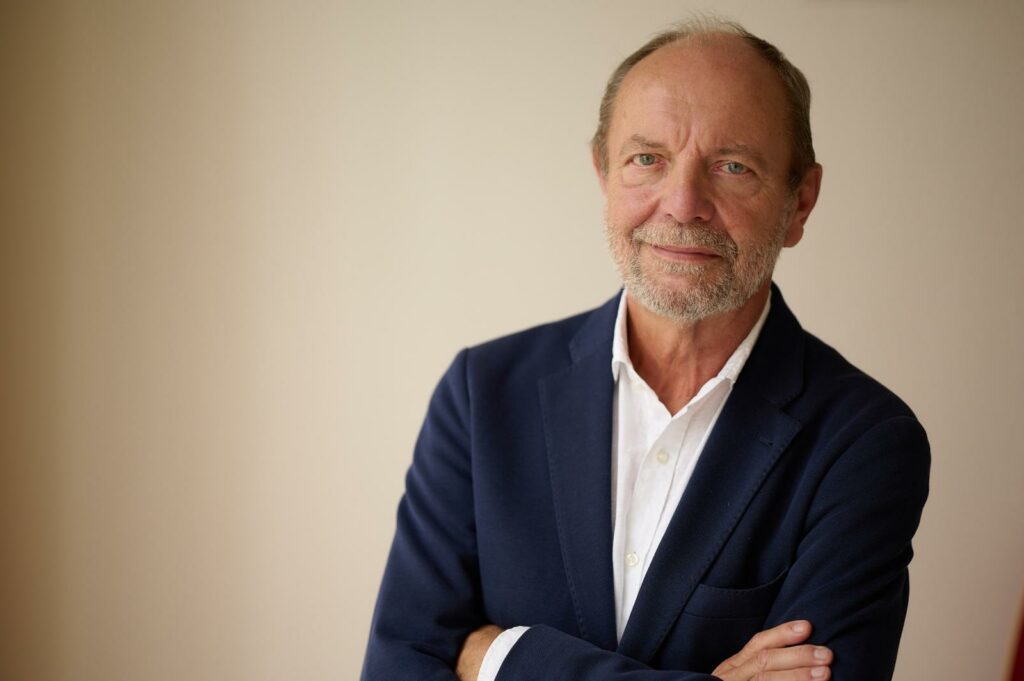
Alain Hutchinson, the politician responsible for bridging the City of Brussels with the EU institutions during a time when relations were "marked by frustration", has stepped down after 12 years.
"I am officially a pensioner," he tells The Brussels Times on Tuesday, the day of his departure.
"It feels good. But unfortunately, my position will not be renewed. There will be no replacement," Hutchinson says. "But the current Minister-President of Brussels-Capital Region, Boris Dilliès, will take over the responsibility".
"He seems genuinely interested in these issues, or at least that's what he told me, and I believe him," Hutchinson explains.
His team, on the other hand, will remain in place, and the office will continue to exist, but the Commissioner's position is being scrapped as part of the Brussels Region's savings. "Small streams make big rivers, apparently," Hutchinson says.
He hit headlines last year after the native Francophone misspoke during an hour-long interview held in English.
Yet since 2014, the socialist held an important, strategic role as the institutional link between the City of Brussels municipality and the European institutions. A responsibility he said he carried "without any regrets" and "with honour and pride".
Back when he began, EU institutions "regularly knocked on the wrong door" when seeking answers on planning, mobility or public space. These matters became the responsibility of the Brussels-Capital Region following the country's state reforms.
For example, the formal "seat policy" – the legal and diplomatic framework regulating international organisations (IOs) based in the country – remained a federal responsibility, leaving officials unsure whom to contact.
When asked about achievements, Hutchinson says he is responsible for "launching a regional seat policy", which facilitated relations between the two.
The man, after all, knows a thing or two about Belgian politics and its obscurity. As a member of the Socialist Party (PS), he served as a regional Brussels minister, a member of the European Parliament, and as chief of staff to former Brussels Minister-President Charles Picqué, among other stints.
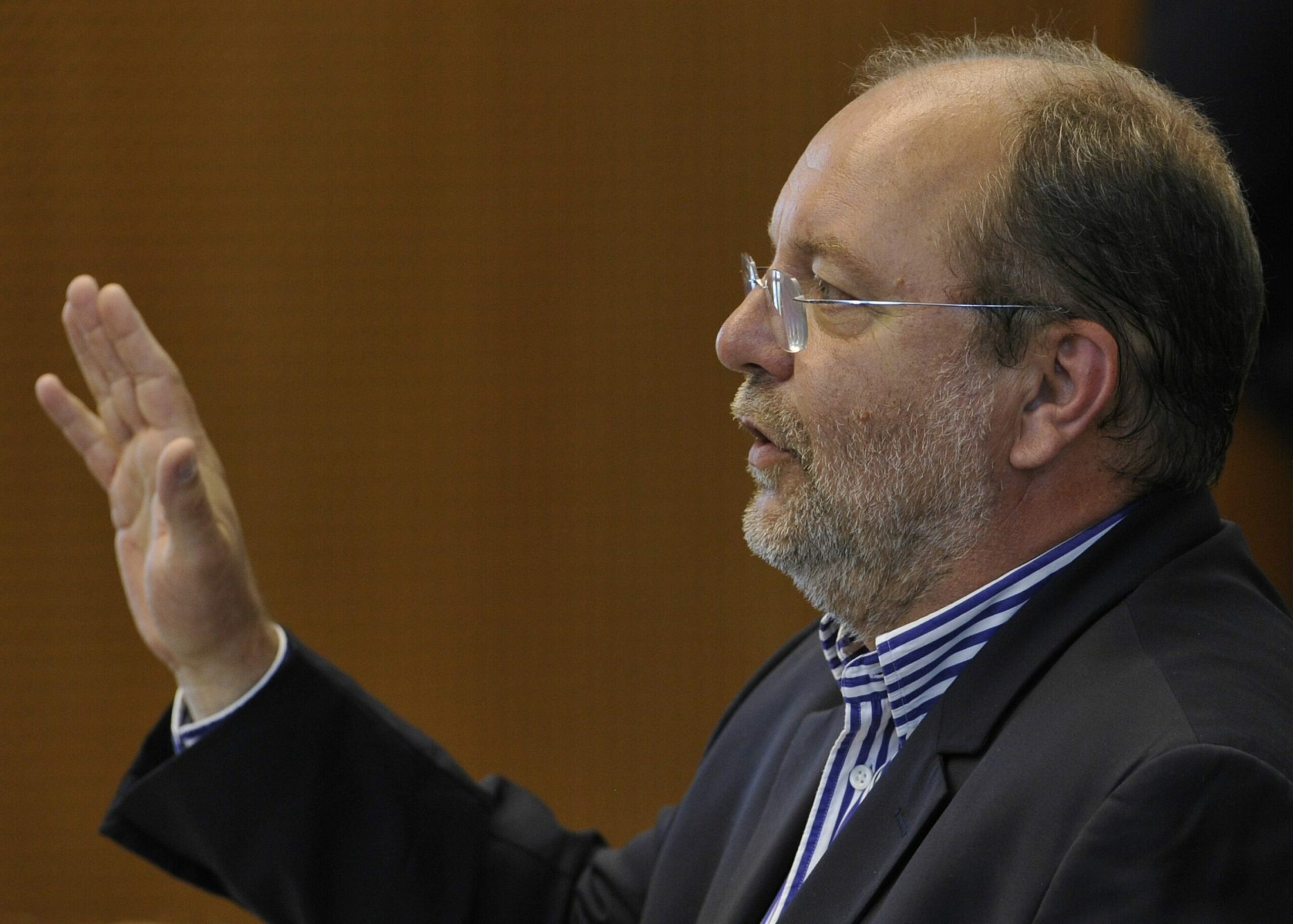
Alain Hutchinson takes the oath as a newly elected member of the Parliament of the Brussels-Capital Region following the regional elections, in Brussels on 23 June 2009. Credit: Belga/Benoît Doppagne.
However, he admits that, at the beginning, his liaison task was not a walk in the park. "It was complicated. When I arrived, I met commissioners, secretaries-general and heads of institutions – who were all in a very bad mood."
Today, he says he is "very proud" and people "are thanking him" for how things turned out, and "were a bit worried and had to be reassured that only the position of the Commissioner is gone, not the team."
Hutchinson listed a few projects that "helped the EU institutions feel happy being in Brussels today". "We helped them with a conference centre, the Paul Henri Spaak building, the renovation of the Justus Lipsius Building, securing the Schuman roundabout, and the revamp of other public spaces," he says.
"I think Brussels has shown that it is worthy of being an international and European capital," he adds. "Not only because of the way it welcomes the European institutions, but also all the international organisations and the thousands of expatriates who live and work here."
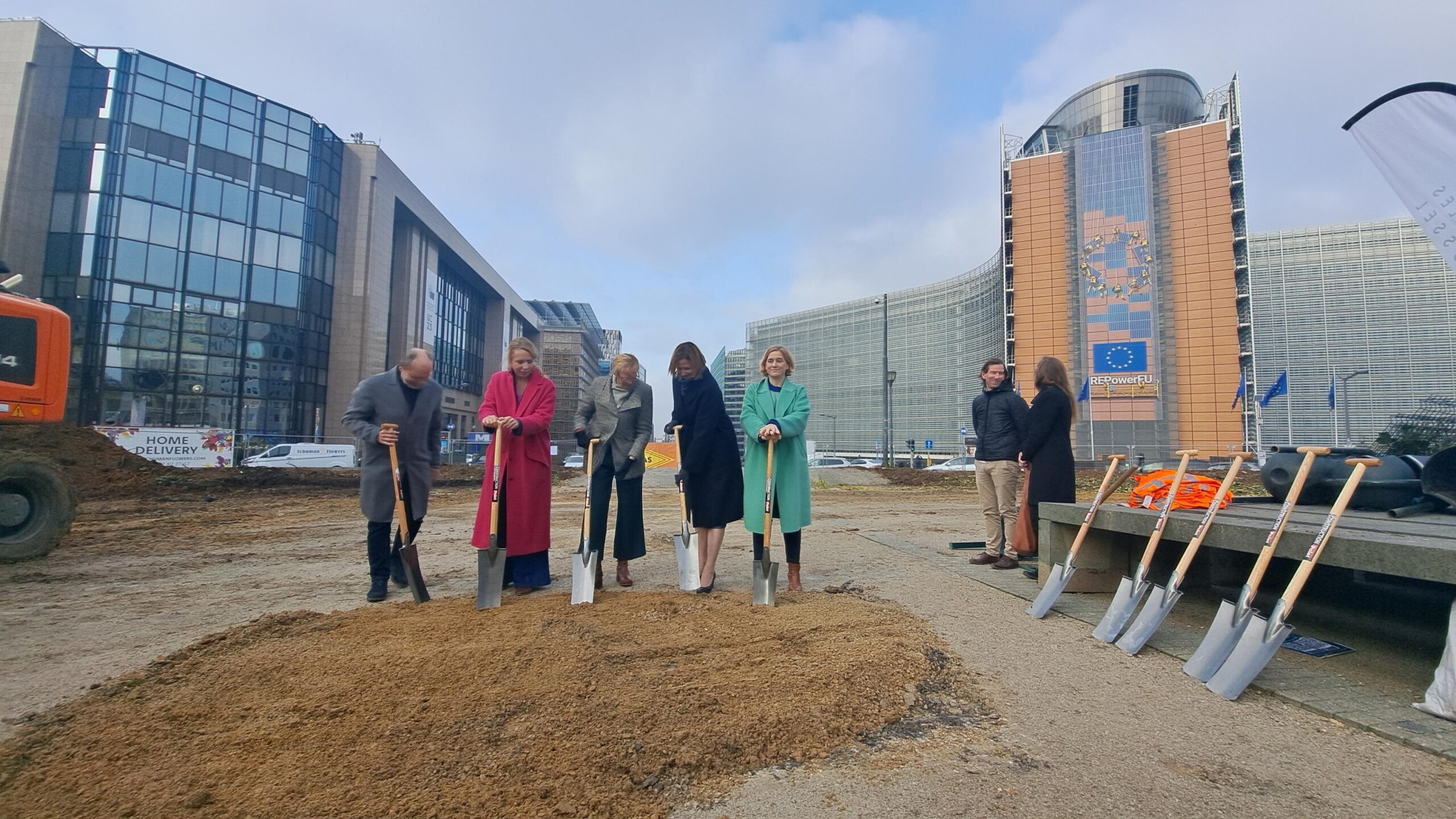
L-R: Former Brussels Commissioner for Relations with European Institutions and International Relations with other Brussels and federal ministers the official start of works at Schuman Square, Brussels, on Wednesday, 22 November 2023. Credit: Belga/ Timon Ramboer.
Beyond the EU
NATO, Eurocontrol, embassies, the World Customs Organisation, and numerous international organisations have turned to the liaison office during Hutchinson's mandate for assistance, he says. "International organisations today are very happy to be welcomed in Brussels."
With some United Nations agencies reconsidering their future following funding cuts in the United States, Hutchinson argues that the Belgian capital is well positioned to attract new organisations. "Brussels is beginning to earn a reputation as a city where international organisations are well received."
"If organisations feel welcome, they have no desire to leave. And when they speak positively about Brussels, others notice."
But perhaps the biggest change, Hutchinson believes, has not occurred within the institutions themselves but among Brussels residents. "When I started, there was permanent resentment towards the European institutions."
Many locals blamed them for traffic, security restrictions, and even rising property prices, and overlooked their contribution to the city's economy. Over time, Hutchinson says those perceptions have softened. "I think younger generations are much more open and much more aware of what Europe represents."
The former commissioner also credits years of work with municipalities, civil servants, and local stakeholders. "We trained municipal staff, worked with mayors and councillors, and created regular dialogue with hotels, restaurants and businesses in the European Quarter."
Part of that work involved the Expat Welcome Desk, which helps newcomers settle in the Belgian capital by providing free guidance on administrative procedures and everyday life. For Hutchinson, helping expatriates integrate into the city was "just as important as solving institutional problems".
"The objective is for them to become Brussels residents and not just live in a bubble."
