
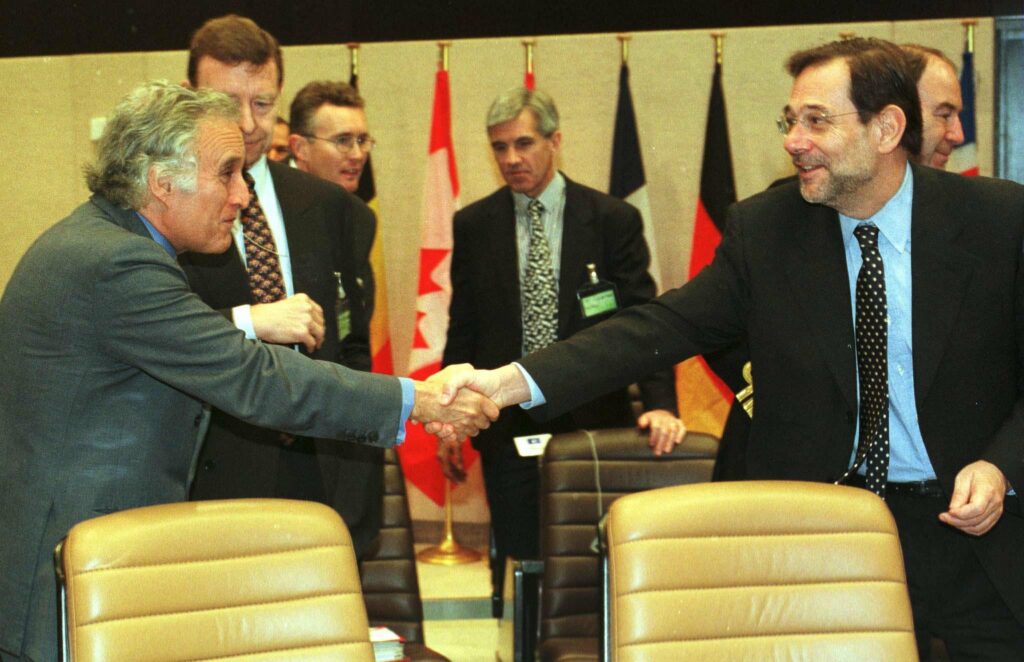
It is 15 years since the Western European Union (WEU) finally disappeared after nearly 60 years of existence.
It is rare that international organisations close. Some would say it was bad luck to have picked a loser, but I consider myself fortunate to have experienced the WEU’s glory years in the mid-nineties before its primary functions were subsumed into the EU.
For those not au fait with the work of the WEU, it was a European military alliance whose original members were Belgium, France, Germany, the United Kingdom, Italy, Luxembourg and the Netherlands. Founded in 1954, it operated as a forum to coordinate European defence and security matters.
The organisation provided a great school for budding diplomats and international civil servants, such as myself, to learn their craft. In a wholly male dominated environment, it taught me to stand my ground, and gave me the conviction that women could make their mark in defence organisations. The work was operational and highly stimulating and I worked with colleagues all of whom were colourful, formidable characters.
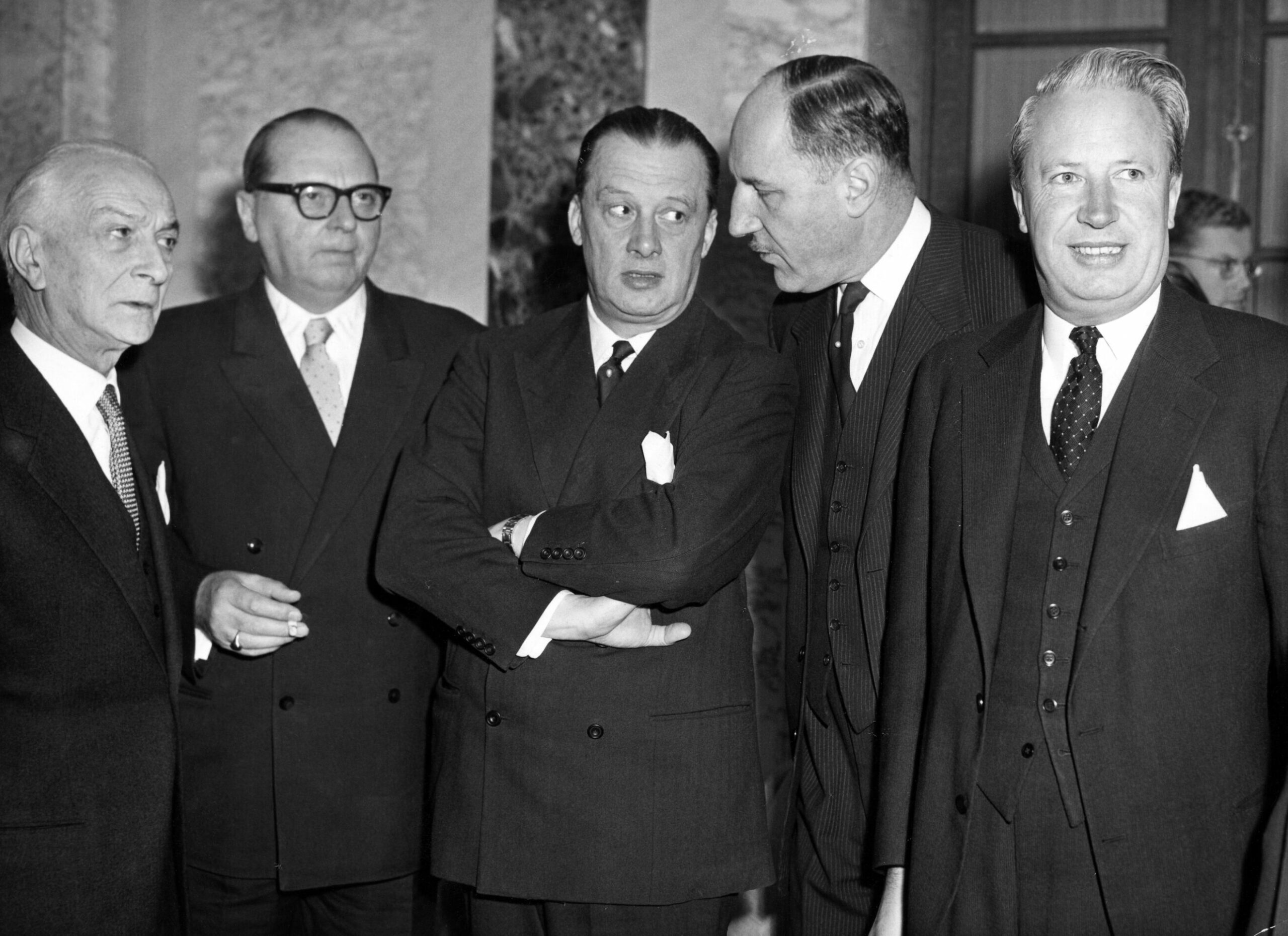
A meeting of ministers of the Western European Union in November 1960 in Brussels. From left to right: Antonio Segni, Italian Minister of Foreign Affairs, Heinrich von Brentano, German Minister of Foreign Affairs, Joseph Luns, Dutch Minister of Foreign Affairs and Edward Heath, British Lord Privy Seal. Credit: Belga Photo Archives
The WEU’s legacy is still very much alive and is to be celebrated. Its strongest feature was its collective defence commitment that was replaced by the mutual assistance clause Article 42 (7) of the Treaty on European Union. The Petersberg tasks remain a foundation for many EU security operations. The WEU Satellite Centre – now the EU SatCen in Torrejon – continues to support EU missions. The WEU’s Institute for Security Studies still operates in Paris as the EU Institute for Security Studies (EUISS).
I joined in Spring 1996. The organisation was blossoming, having come out of relative dormancy during the London years from 1961-1993. NATO’s Berlin Summit established the idea that military forces and assets should be shared between NATO and the WEU ("separable but not separate"), meaning the same units could be deployed for NATO or WEU missions without duplicating the command structure.
Working in the heart of Brussels
Superbly located at 4, Rue de la Régence next to the Sablon, my waistline was also booming with the constant stream of colleagues and friends keen to meet for lunch.
At 27, working in the Defence Policy Section, I helped establish the Multinational Advisory Police Element (MAPE) in Albania and the WEU’s Demining Assistance Mission (WEUDAM) in Croatia – carving the WEU’s niche in planning and launching civilian missions, and providing clear added value with respect to its more militarily capable big brother NATO.
On trips to Tirana, we were housed in immense palaces from the Hoxha era. In one of the Albanian ministries, the bronze-coloured toilet was at an unfathomably long distance from the door with no lock. In 1997, during the night, I would awake to the patter of fire – remnants of gang warfare which was still prevalent in the wake of the civil war following the collapse of pyramid investment schemes.
Then in 1999 came trips to Eastern Croatia – Osijek was as far as we could go, as further east was heavily mined. Following the end of the Yugoslav wars, new technologies were being developed for large scale demining using dogs and flail machines. MAPE and WEUDAM were the pre-cursors t what became the EU’s civilian police missions. I look back on these with pride and fondness. They made a tangible difference to countries seeking international assistance to rebuild after civil war and conflict.
Flamboyance and flair
The then-WEU Secretary General, José Cutileiro, would summon me to his office to hear the latest from the field ahead of meetings of the WEU Council. Entering Cutileiro’s office was an experience in itself. His door was upholstered in leather Chesterfield style –vestiges from the banking days when 4 Rue de la Régence used to house Euroclear.
Cutileiro used to be an avid smoker of cigarillos. After a puff or two had dispersed, his hunched stature would emerge through the fumes, his silvery grey hair swept back and his beady look eyeballing intently the incoming visitor. His voice was one of refined huskiness. Addressing me as “Roberts”, the encounters were genteel, his demeanour academic and professorial. Brideshead Revisited meets the Godfather.
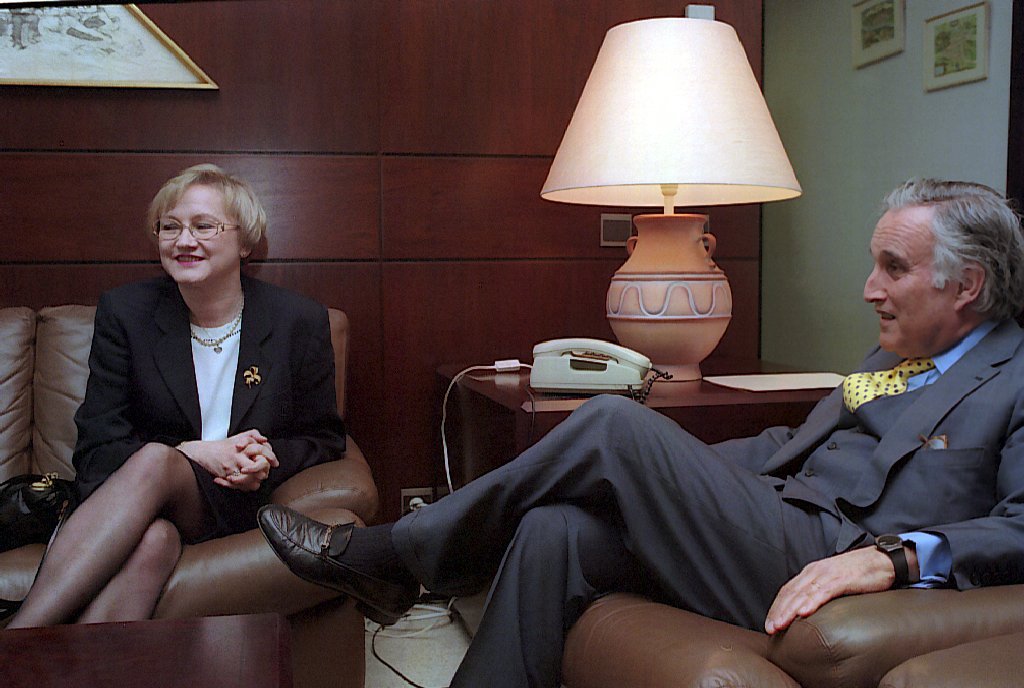
Finnish Defence Minister Anneli Taina being received by Western European Union chair Jose Cutileiro in the WEU headquarters in Brussels.
Credit: Belga Photo Archives
Other memorable characters included Jean Félix-Paganon – the fiery Political Director who hired me. As Chairman of the recently created Political-Military Group (later the EU’s PMG), he enjoyed sparring with the then representative of France, Salomé Zourabichvili, who later became the president of Georgia.
It could get theatrical hearing them argue their points about the “Petersberg” tasks with flamboyance and flair – peppering sophisticated argumentation with literary, witty repartee. During declaration drafting – which could go late into the night – Jean’s smouldering ashtray would gradually fill up, and on occasion, a bottle of red wine would appear on the table to keep the spirits high in the pursuit of consensus building.
Going into battle
There was a change of style when the formidable Alyson Bayles arrived in 1999. She would rattle off razor sharp policy papers in minutes and still have a few moments to brush up a point of Icelandic grammar or keep her Hungarian up to date. While her section heads were asked to notionally provide comments, the genius would have scribbled off further papers and letters for action. I have never worked with anyone so utterly productive, efficient and clear-eyed about her objectives.
My boss at the time was Peter Hesse – a retired Bundeswehr colonel. Entering Alyson’s office was like going into battle. He would march in first and we would follow like Roman soldiers in tortoise formation, shields up behind him.
He would take on the first wave of Baylesian “punches” and we would provide reinforcement after she had softened. My treat after surviving such encounters was to head to the Épicerie Fine on the rue Allard which used to do the best crusty baguette sandwiches of delicious terrine and onion confit.
I learnt much from Alyson Bayles: an efficient use of words, rigorously constructed policies and crap cutting. I also admired her for serving as a highly capable role model for women in defence organisations.
The death of the WEU
By the end of 2000, it was clear that the organisation’s functions would be subsumed into the EU. Then followed a disquieting period during which the WEU’s personnel were in limbo as to their future. Lunches on the Grand Sablon started to dwindle. We spent more time quietly contemplating the statue of Guillaume the Taciturn in the Petit Sablon.
Colleagues started to peel off, certain were lucky enough to find opportunities at the EU or at NATO (I would join NATO’s Operations Division later in 2006).
As a horn player, I had been involved in chamber music at the Brussels Conservatoire just up the road from the WEU. I had spotted a gap for a high-quality symphony orchestra destined for conservatoire students aiming for professional careers. In 2001, I took the “social plan” – a financial cushion of a year or so - and established the Brussels Philharmonic Orchestra (BPO) in 2002.
At a time when my career as an international civil servant had been prematurely curtailed, I launched myself into creating opportunities for other young people through the BPO. That’s a story for another day.
Clare Roberts works for the NATO International Staff. The views expressed in this piece are the author's own.
