

A more secure document is being introduced to combat fraudulent activities as the production of the new "attestation d'immatriculation" began on Monday 28 September.
Previously, people who did not yet have a Belgian residence permit but had applied for residence or international protection received an orange paper document that served as their registration certificate.
Unlike this previous paper document, the new certificate includes security features similar to those used for Belgian identity cards and passports.
Each certificate will receive a unique number which allows its status to be checked at all times. Police will be able to establish during an identity check whether a certificate is valid, expired, lost, stolen or has been invalidated.
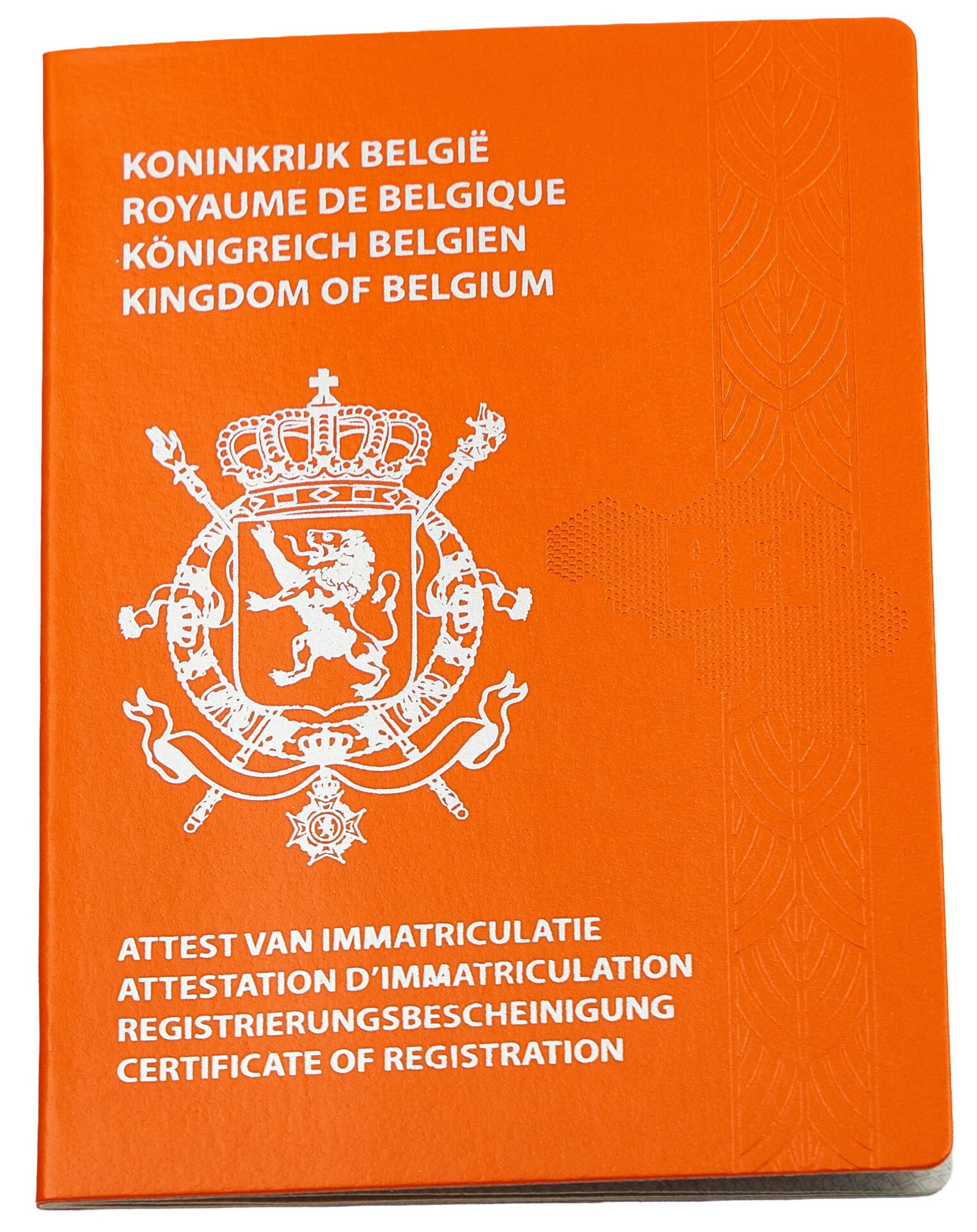
What the new certificate might look like. Credit: Ministry of the Interior.
This new reform also changes how documents are produced. A holder's photograph, name, date of birth and signature will be incorporated into the certificate during production rather than added to a paper document, making it more difficult to alter or replace information.
Until now, communes have maintained separate records of registration certificates, with some information still kept on paper or in systems that the government now considers to be insufficiently secure.
A new central database will instead gather information on certificates issued across the country, including the holder's identity, their application and issue dates, validity period, extensions and information concerning their right of residence.
Changes made when a certificate is issued, renewed or invalidated will be automatically recorded. The information will also be entered into the National Register, allowing the Immigration Office and police to access up-to-date information.
Interior Minister Bernard Quintin (MR) stated in a press release changes would help tackle both document fraud and identity theft.
"With this reform, we are moving from a paper document that can easily be forged to a secure document that is centrally registered and can be verified in real time," Quintin stated.
"A document that has been lost, stolen, expired or invalidated can therefore be detected during a check."
Related News
- Belgium was less likely to issue residence permits for work in 2025
- Thousands of Belgian military personnel share sensitive data via running app Strava
Asylum and Migration Minister Anneleen Van Bossuyt (N-VA) also stated in the same press release that the reform was also intended to make it easier for police to reliably identify people going through residence procedures.
"By finally digitising this system, our services will obtain accurate information more quickly, while at the same time making fraud much more difficult," Van Bossuyt wrote.
The Federal Government says centralising the system should also reduce administrative work for communes and allow for better coordination between authorities responsible for residence procedures.
Under data-protection rules, access to the new database will remain restricted.
The Immigration Office, police, judicial authorities, and State Security will have secure, direct access to information needed for their respective legal responsibilities.
