
Nearly a quarter of euthanasia cases in Belgium involve patients whose deaths are "not imminent". Who are they, and what drives their decision?
A woman, in agonising pain, would call Jacqueline Herremans every day at 7:30 in the morning to tell her about how she was in chronic pain and wanted to make it stop. One day, the phone ran and her voice had changed.
Herremans, the president of the Association for the Right to Die with Dignity (ADMD) and co-chair of Belgium's Federal Euthanasia Commission, said she had become "accustomed" to hearing the woman's distress through the phone. But on that day, her voice was so clear that Herremans barely recognised her.
"Ms Herremans, I have received the confirmation that my euthanasia request had been accepted, a date had been set, and my daughters would be there," the woman told her.
“She even arranged to have photographs taken with each of them," Herremans told The Brussels Times. "Yet the decision had initially been met with fierce opposition from her family. One granddaughter had accused her of no longer loving them because she wanted to die."
Eventually, however, both the woman and her relatives made peace with the decision.
“When the person hears that their request has been accepted and the date has been set, you almost see them come back to life,” Herremans explained.
She spent decades advocating for the right to die with dignity in Belgium.
Having reviewed hundreds of euthanasia cases, she is adamant that giving people the right to a farewell is “the most human thing we can do,” even when their death is not expected in the near future.
And new figures confirm that this is becoming increasingly common.
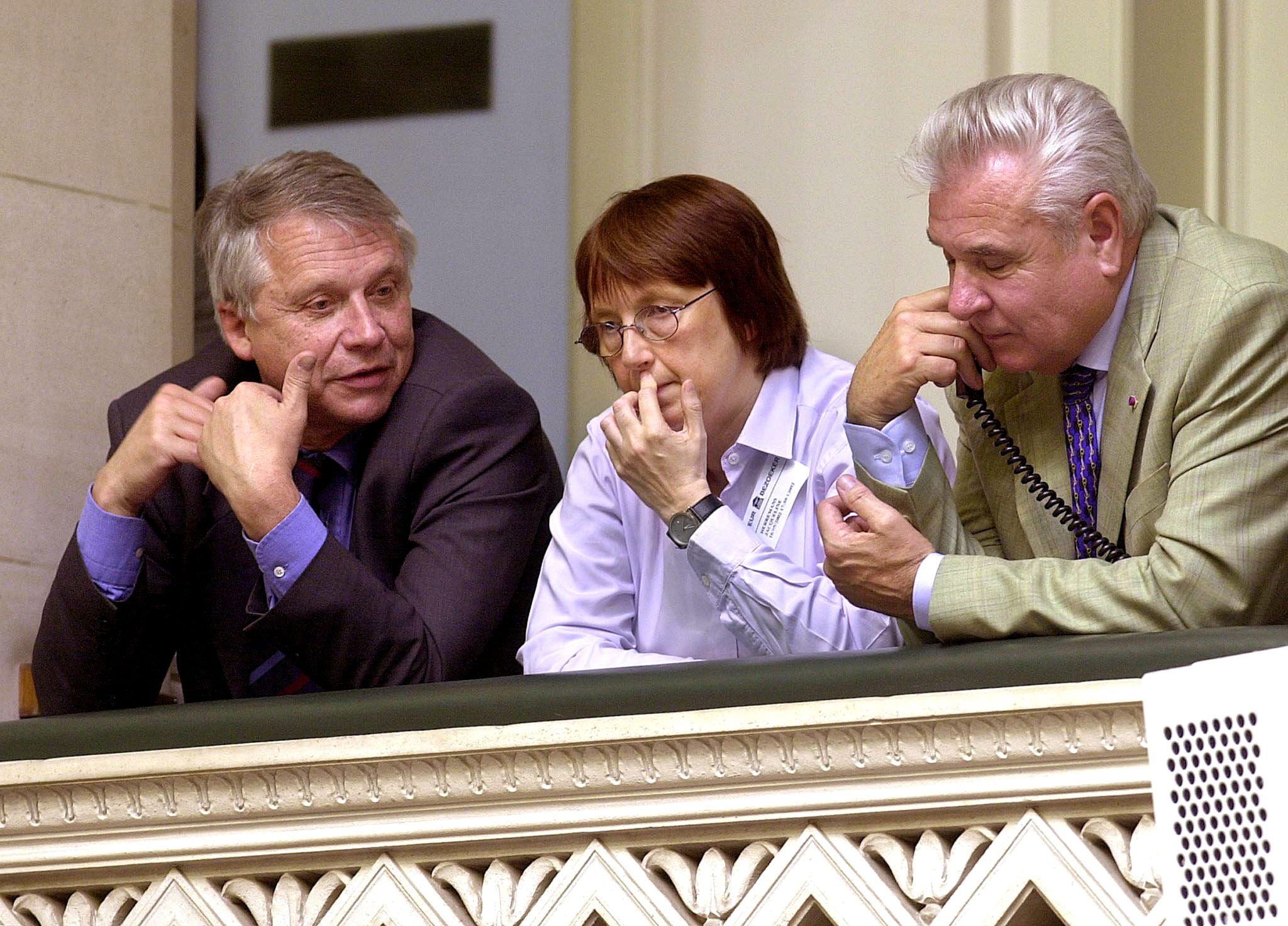
Jacqueline Herremans, president of the Association for the Right to Die with Dignity (ADMD), between Philippe Mahoux and Philippe Monfils during the Belgian Chamber's vote on the euthanasia law. The chamber approved the legislation by a vote of 86 to 51, with 10 abstentions. Credit: Belga/Benoît Doppagne.
More than 1,000 cases
In 2025, Belgium registered 1,117 euthanasia cases involving patients whose deaths were not expected in the short term – representing 24.9% of all registered cases, according to the latest biennial report from the Federal Commission for the Control and Evaluation of Euthanasia. That proportion increased from 23.4% in 2024.
The largest group, accounting for 57.3% of non-imminent death cases, involved patients with a polypathology, a combination of several chronic and incurable medical conditions.
People with neurological conditions accounted for 15.8% of cases, while cognitive disorders, including dementia, and psychiatric conditions each represented 6.3%. Across 2024 and 2025, the commission recorded 8,478 euthanasia cases, equivalent to 3.8% of all deaths in Belgium.
The vast majority involved older people: 73.1% of patients were over 70, while just 1.3% were younger than 40. Meanwhile, 52 patients were aged 100 or above.
But these figures raise a question that is often overlooked in discussions about assisted dying: who are the people requesting euthanasia when they could otherwise have years left to live?
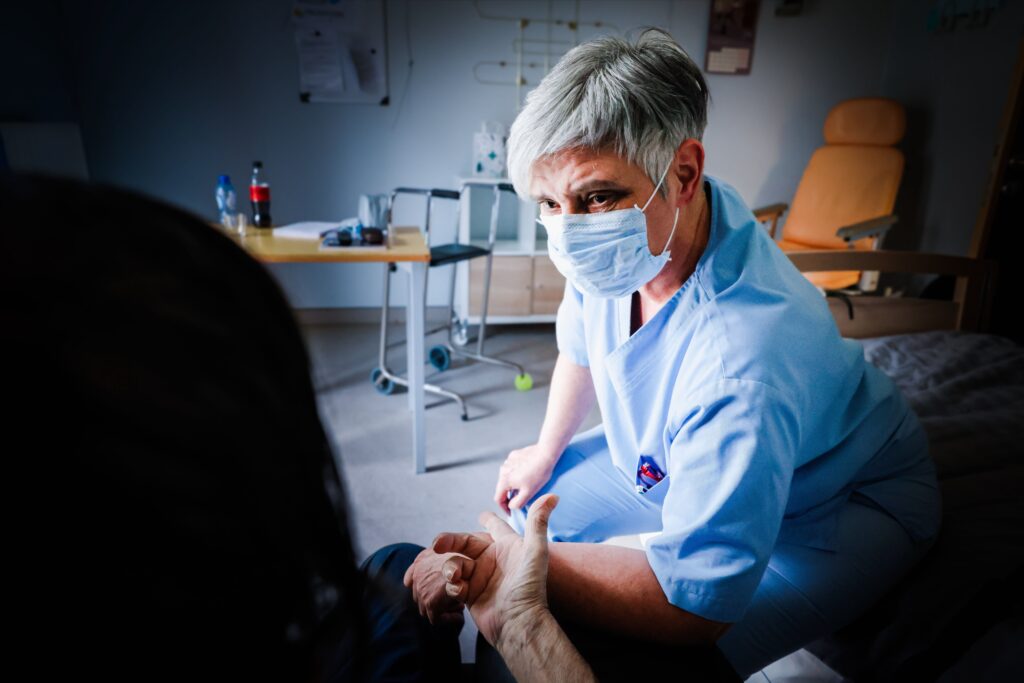
In 2024, euthanasia represented 3.6% of deaths in Belgium. Credit: Belga
Suffering without a terminal diagnosis
Belgium became one of the first countries in the world to legalise euthanasia in 2002.
Herremans recalled one of the country's first: a relatively young man with multiple sclerosis. The man, relieved his agony was soon to be ended, requested a bottle of red wine, which Herremans brought him to share with his friends on the day of his death.
Unlike jurisdictions in the United States, for instance, that restrict assisted dying to patients with a prognosis of six months or less, Belgian lawmakers deliberately avoided defining eligibility through life expectancy.
Herremans explained that doctors cannot always accurately predict how long a patient has left to live. Some people given only months survive much longer, while others deteriorate unexpectedly.
In certain cases, she said, patients requesting euthanasia might otherwise have a life expectancy of another ten years. The central question is not simply how long someone has left to live, but the suffering caused by their medical condition. "It is a suffering that affects the quality of your life."
She cited multiple sclerosis as an example of a serious and incurable illness that can progressively deprive people of their independence. Patients may experience physical pain, difficulties moving or swallowing, and psychological suffering associated with the deterioration of their condition.
While Belgian law does not require people to wait until the final stages of the disease before their request can be considered, suffering alone is not enough either. The request must be voluntary, repeated, considered, and without external pressure, while the patient must have a serious and incurable medical condition.
A life-changing accident, leaving a person paralysed or severely disabled, for instance, does not automatically justify euthanasia. "Humans are resilient, and they have an extraordinary capacity to adapt to big changes in their lives," Herremans explained.
Still, some patients may eventually feel that their suffering has become impossible to bear.
Who decides when suffering becomes unbearable?
The law provides clear safeguards when a patient's death is not expected in the near future. Alongside the physician examining the request, two other doctors must be consulted, including a psychiatrist or specialist in the condition concerned.
There must also be at least one month between the patient’s written request and the euthanasia procedure. The suffering must be constant, unbearable and incapable of being alleviated, with no reasonable alternative available in the patient's circumstances.
In an earlier interview with The Brussels Times, Dr Yves De Locht, who has performed euthanasia procedures since 2008, described the responsibility placed on doctors assessing these requests. “The law protects both the patient and the physician; however, it undeniably imposes substantial responsibility,” he said.
De Locht explained that not every patient requesting euthanasia meets the legal criteria. For Herremans, these medical assessments are essential because euthanasia should remain an active choice rather than an automatic response to suffering.
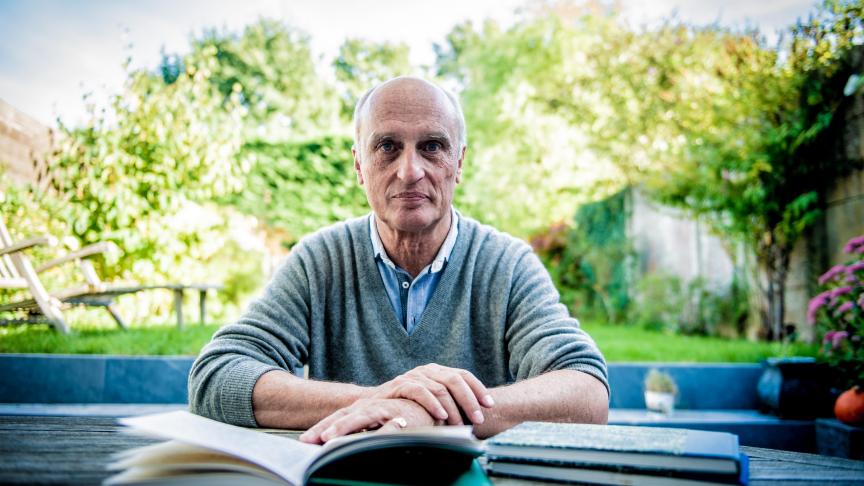
Yves de Locht has been performing euthanasia procedures in Belgium for fifteen years. He now shares his testimony in a book published in France. Photo credit: Mathieu Golinvaux
What about loneliness and poverty?
Could loneliness, financial difficulties or inadequate access to healthcare influence a patient's decision to seek euthanasia?
Herremans said that access to healthcare remains an important concern, particularly for the elderly facing isolation or financial insecurity. Pressure on social security and healthcare spending could weaken the solidarity on which Belgium's welfare system was built.
“It is not the euthanasia law that creates precariousness.” Herremans explained.
Belgium, she said, lacks social studies examining the circumstances of people requesting euthanasia. That makes it difficult to determine how factors such as loneliness, poverty and access to care might influence individual requests.
Herremans insisted that doctors must consider not only the patient's diagnosis but also their personal history and present circumstances.
"Euthanasia is not an end in itself," she said. "It is a solution for situations where there is no other solution."
A decision that remains under scrutiny
Belgium’s euthanasia commission examines registered cases after the procedure has taken place. According to its latest report, it referred no cases to judicial authorities during 2024 and 2025.
Herremans said this did not mean that every file initially submitted contained sufficient information. The commission sometimes requests further explanations from doctors, particularly when medical diagnoses or consultations have not been adequately documented.
Religious beliefs, however, remain another source of debate surrounding euthanasia, although they do not always stand in the way of a patient's decision to end their life.
De Locht said that his first euthanasia patient was a Catholic priest. “My health is one thing, my beliefs are another,” the priest told him.
Herremans similarly pointed to Catholic priests in Belgium who accompany patients during euthanasia procedures, sometimes organising a mass. She argued that the Belgian Church has shown greater openness on the issue than its French counterpart.
But opposition to euthanasia is not exclusively religious. Ethical disagreements also arise over whether minors and patients with psychiatric conditions can make fully informed and voluntary decisions. Recently, a lively debate about whether people with dementia could make that decision made the headlines.
“The day there are no longer debates about euthanasia, I will be worried," Herremans said. “Because I believe we must always ask ourselves questions.”
