
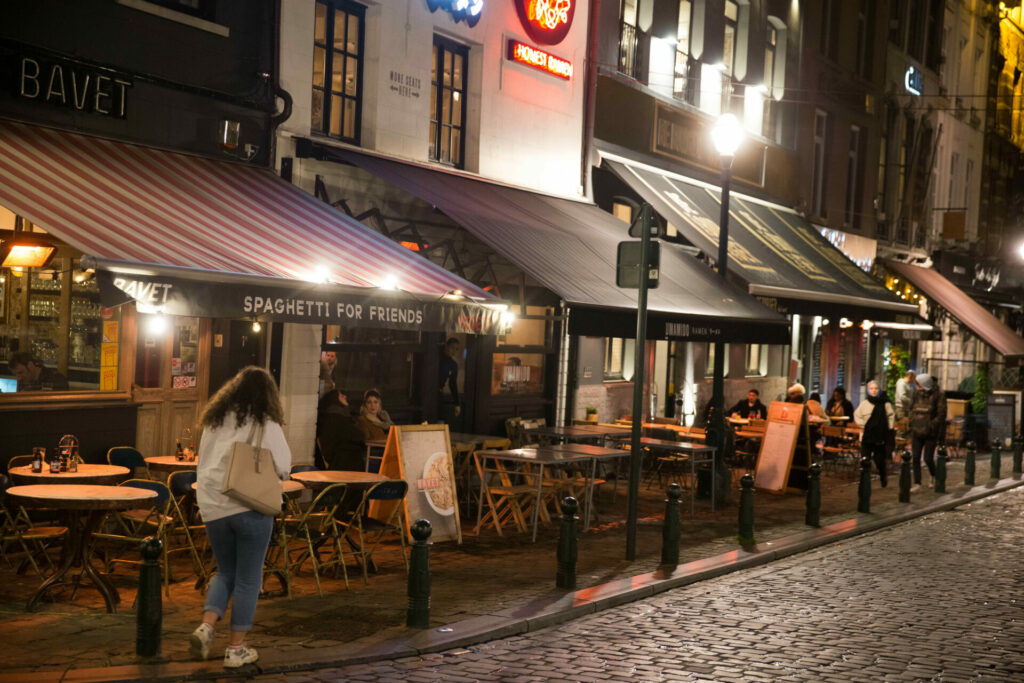
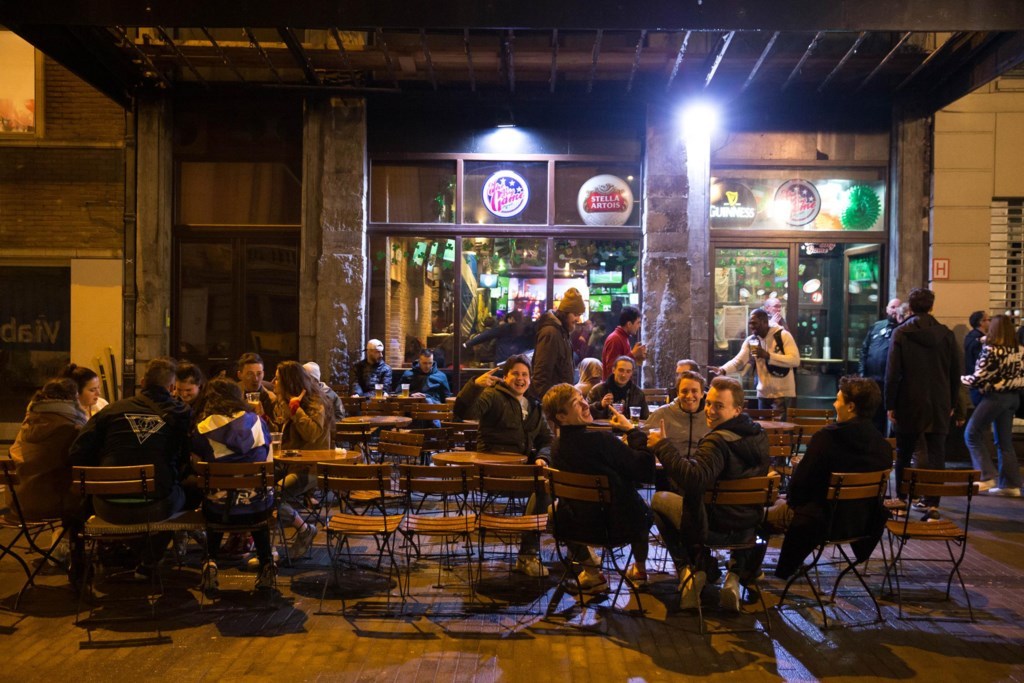
Brussels café culture revolves around terraces, an al fresco experience enjoyed year-round. Come rain or shine, clientele of the city's bars and restaurants sit stalwartly outdoors, waiting for a ray of sun in summer or testing their endurance in winter.
When conditions are especially cold (typically from September through to May), many venues offer warmth in the form of terrace heaters – an amenity that improves the customer experience and increases their spending. But the days of sipping a drink out of doors with hot air radiating around you might soon be over, with a proposed heater ban fuelling indignation within the Capital Region's hospitality industry.
A ban on terrace heaters was initially planned to come into force in June but the Environment Committee of the Brussels Parliament voted on Wednesday to push it back to June 2026. Debates on the topic have been politically charged, with many bar and restaurant owners disappointed that investments they made to keep patrons warm during the pandemic might now be prohibited.
The ban on heating devices in open spaces is part of temporary energy-saving measures taken during the energy crisis. A draft ordinance was intended to make them definitive but last week, major differences of opinion emerged during debates in the Brussels Parliament.
Referring to the difficult situation in the hospitality industry, the Francophone liberal MR party called for the ban on space heaters to be withdrawn altogether, while Les Engagés advocated an extension. The final text will have to be adopted at the plenary session.
Economy vs environment?
The Francophone socialist PS remained vague, calling for "flexibility" in implementing the measures. Above all, Brussels regionalist DéFI advocated a support plan for the hospitality sector. When first brought in, Ecolo tried to give reassurance by explaining that the sanctions would follow a period of awareness-raising.
In the end, it was Les Engagés' amendment and its one-year postponement of the ban that won the day.
"This extension aims to increase support for the measure, so as not to pit the economy against the environment," said Brussels MP Mounir Laarissi (Les Engagés). "This will allow us to wait until there is a support plan for the sector at the federal level and to provide for accompanying measures at the regional level."
However, the Brussels Horeca Federation left the meeting "disgusted", adding that the one-year postponement will probably not allow it to benefit from sufficient compensation measures, given that the governments concerned are still not in place.
Credit: Belga
The Federation's chair Matthieu Léonard regrets above all that the sector is falling victim to "petty political games." With this, he referred to a long process during which all the parties almost agreed on a third way: the ecologists proposed to postpone the ban until 2027. That way, they hoped to win the support of all the parties and avoid a further unravelling of the measure when it comes into force in two years' time.
"Both the Union of Middle Classes (UCM) and the hospitality industry representatives told us they could live with it, but the liberal MR stuck to its guns and refused to vote for this option," said Laarissi. "In the absence of agreement and a collective effort, Ecolo withdrew its amendment. And that's how we came back to my proposal with the deadline of 2026."
MR clearly did not want this deal to be set in stone but is expected to come back once the Brussels Government is formed.
In the meantime, the Horeca Federation has "little sympathy" for the political process, believing that MR's stubbornness has had counter-productive effects, and expressing disappointment that Ecolo did not maintain its amendment to put the interests of the sector ahead of other, more political considerations.
