
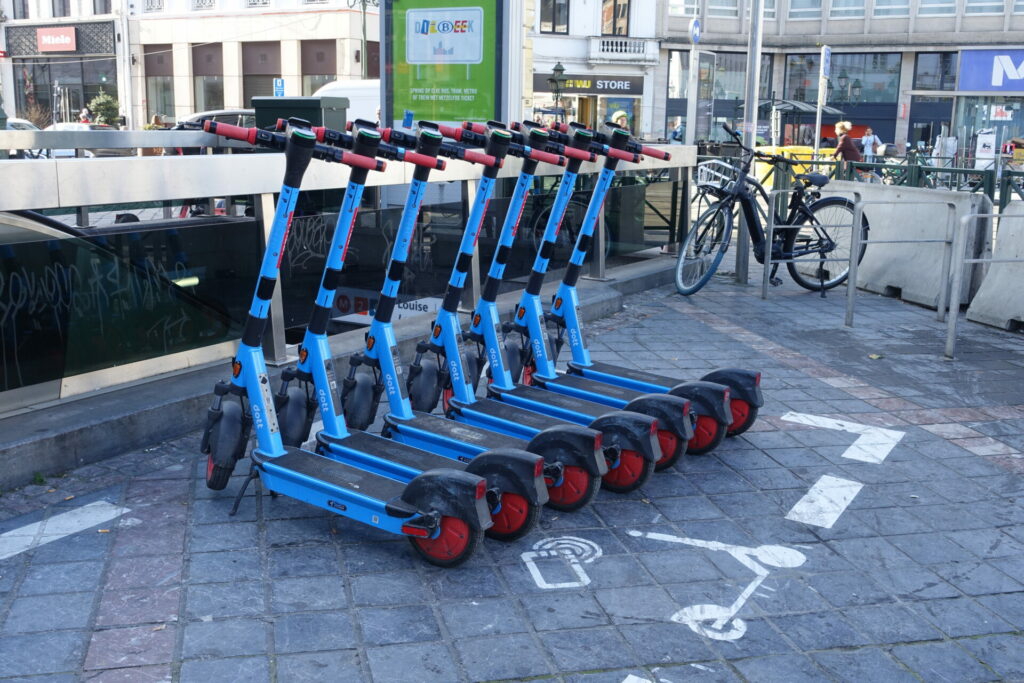
A survey by the Institute for Road Safety (Vias) on Wednesday highlighted a growing number of accidents with electric scooters across the country. This has triggered calls for more adherence to traffic safety rules. Part of the issue lies in a lack of awareness of the laws surrounding e-scooters.
In July 2022, stricter traffic rules were introduced to tackle the ongoing nuisance and dangers of electric scooters. However, last year, electric scooters were on average involved in five accidents per day in Belgium. Each resulted in injury or, in more extreme cases, death, according to a press release by the Flemish Safety Institute, VIAS.
In Brussels alone, last year saw a total of 541 e-scooter accidents, 15 more compared to the previous year. Across the whole country, 1,825 accidents resulting in injury or death were recorded in 2024, a 13% increase compared to 2023. However, VIAS warns that the recorded number is an "underestimate of the reality."
In a representative survey including 1,000 Belgians, VIAS concluded that a proportion of the general public remains unaware of the (stricter) e-scooter rules.
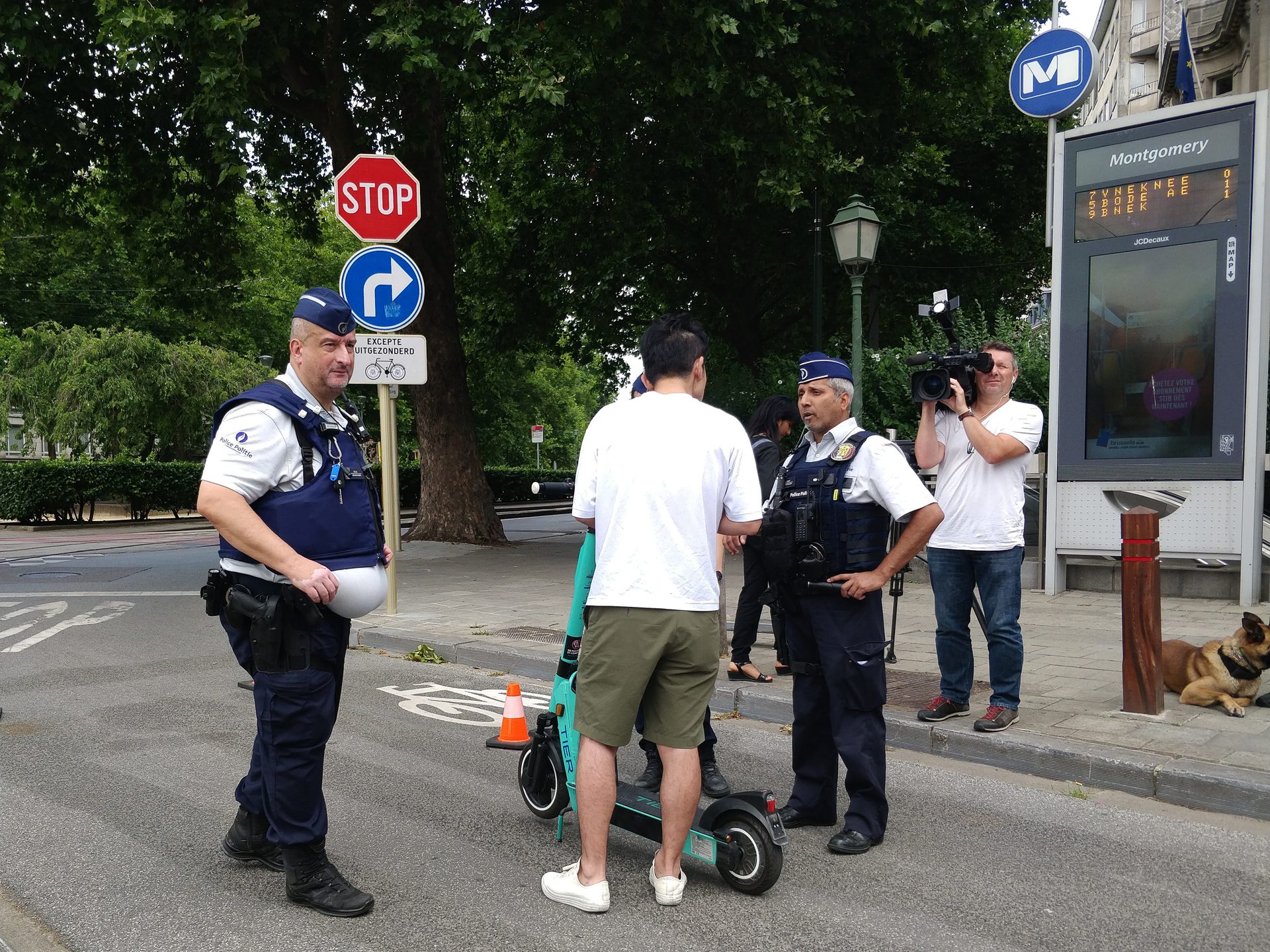
A previous police traffic operation involving e-scooters. Credit: Belga / Anthony Gevaert
One of the often-forgotten changes is the age requirement to use e-scooters. Since 2022, those who wish to ride an e-scooter in Brussels must be at least 16 years old. However, there is an exception to the rule in specific areas such as residential areas or 'play streets', which are streets where a section of the road is (temporarily) closed off for traffic to allow children to play.
Additionally, electric scooter users are treated the same as cyclists in regard to traffic rules. This means that just like cyclists, e-scooter users cannot ride on pavements but instead should stick to cycle lanes. If there are no cycle lanes, e-scooters must join the traffic on the road. Overall, e-scooter users must respect regular traffic rules applicable to cyclists, including traffic directions or traffic signs.
Moreover, e-scooter users must ride alone as it is prohibited to carry passengers. "With two people on such a scooter it is impossible to steer and control it properly," VIAS explained in a statement on Wednesday.
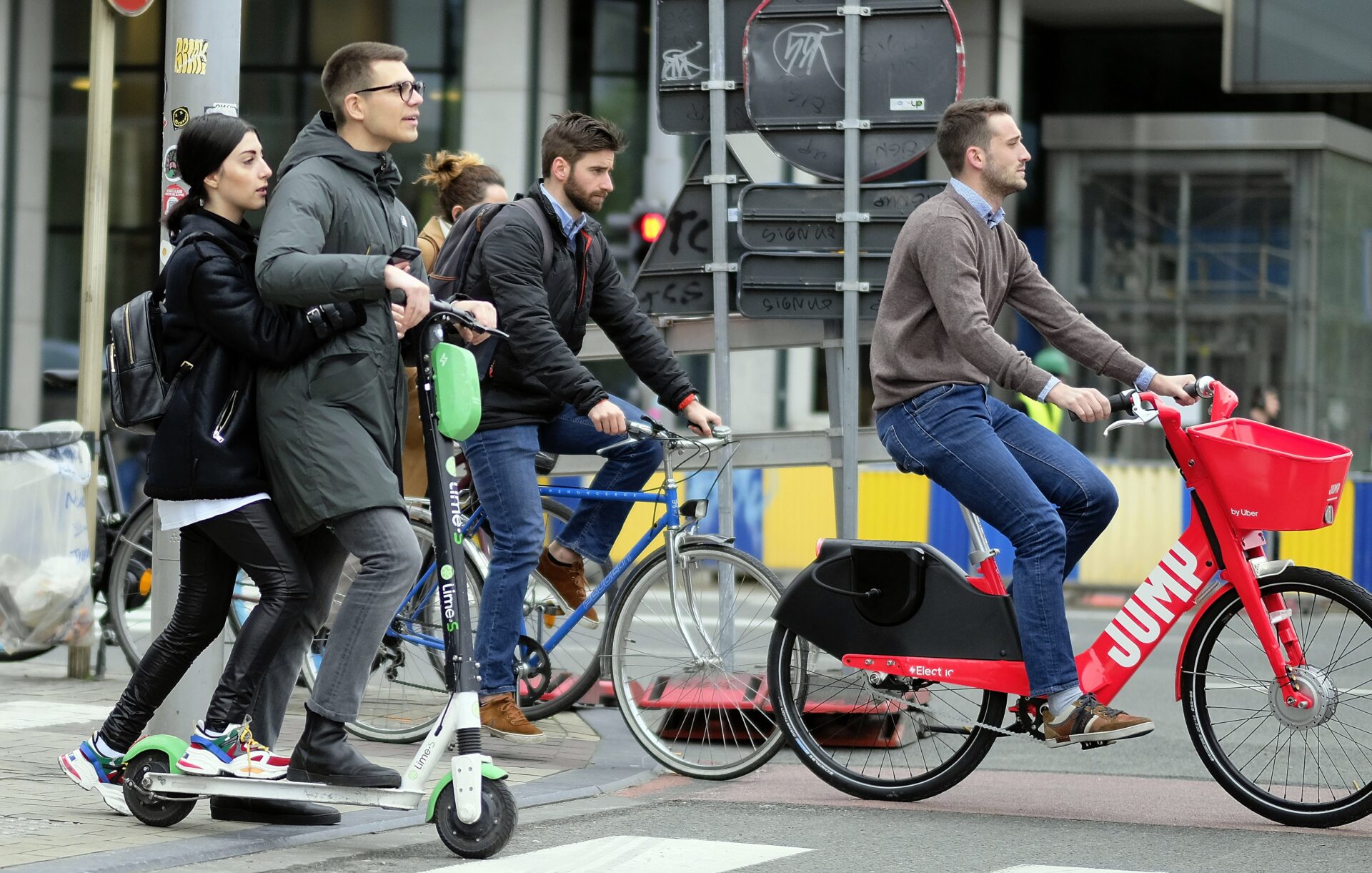
You are not aloud to ride an e-scooter with two people. Credit: Belga / Eric Lalmand
In terms of speed limits, there is a 20km/h limit for e-scooters used in most parts of the Brussels-Capital Region. Notably, the speed of self-service e-scooters, those which can be rented throughout the city, is limited to 8km/h in pedestrian areas of Brussels' city centre, as well as "semi-pedestrianised" areas in Chaussée d'Ixelles, between the Chaussée de Wavre and Place Fernand Cocq, according to the Brussels mobility.
While it is not compulsory to wear bicycle helmets, the Region's mobility department recommends the use of helmets to reduce the risk of severe injuries in the event of an accident.
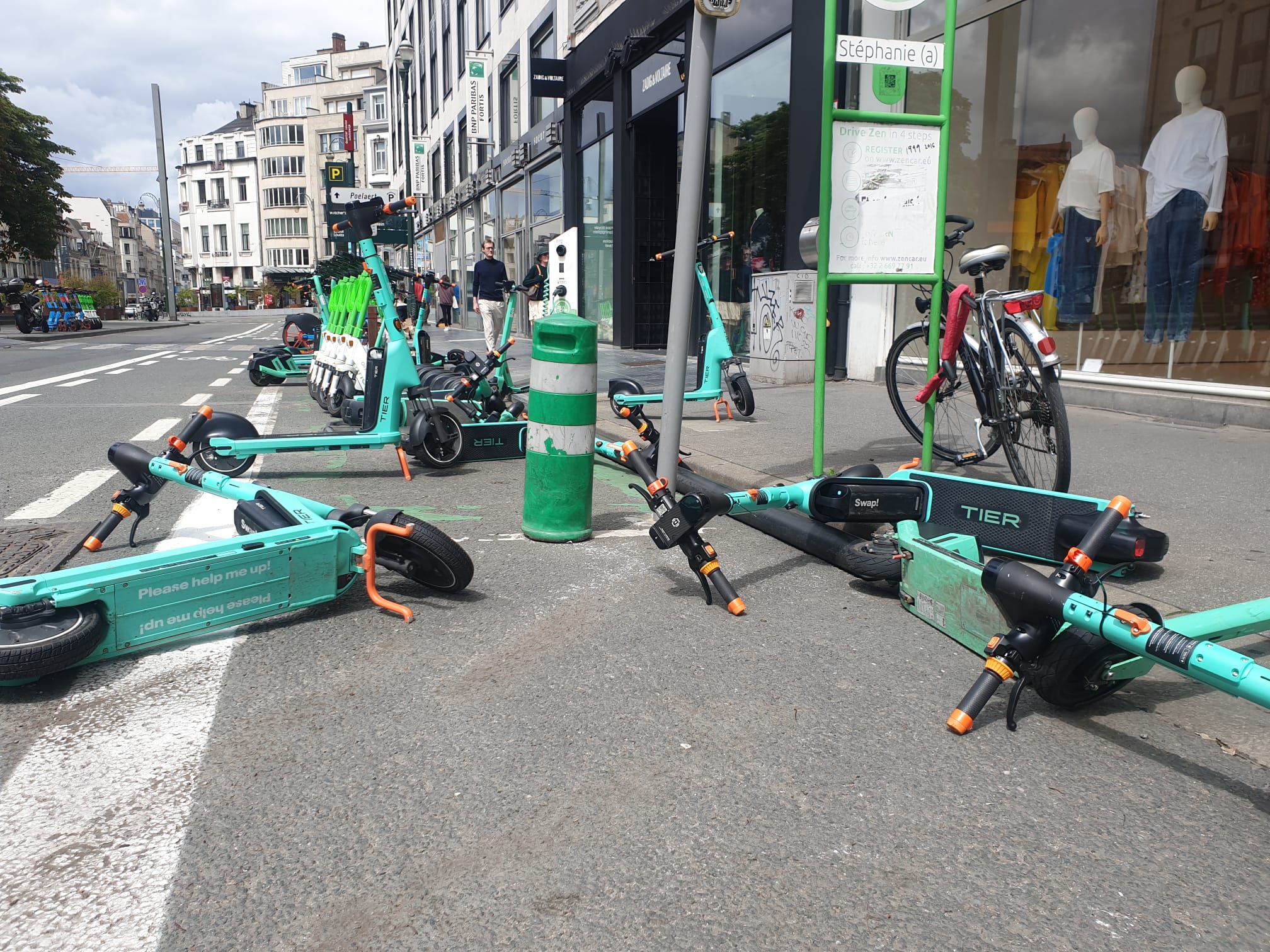
Incorrectly parked e-scooters. Credit: Lauren Walker / The Brussels Times
Moreover, it is recommended that e-scooter users avoid blind spots of other vehicles such as cars or buses. It is also strongly encouraged that e-scooter users park scooters at appropriate parking spots that don't disrupt mobility on roads or pavements.
Finally, while e-scooters can often be intuitive, it is recommended that new users practice riding an e-scooter in quiet car parks or private areas before venturing into traffic.
Related News
- 'Don't be a Putin': Uccle residents take action against parked cars 'annexing' pavement
- Netherlands fines drivers using mobile phone €430 with new cameras - Belgium could be next
- 'No miracle solution' to e-scooter nuisance in Brussels
- Low Emission Zones: What are they and what fines do drivers risk?
This article was updated at 14:59 to clarify the automatic speed reduction of some e-scooters.
