
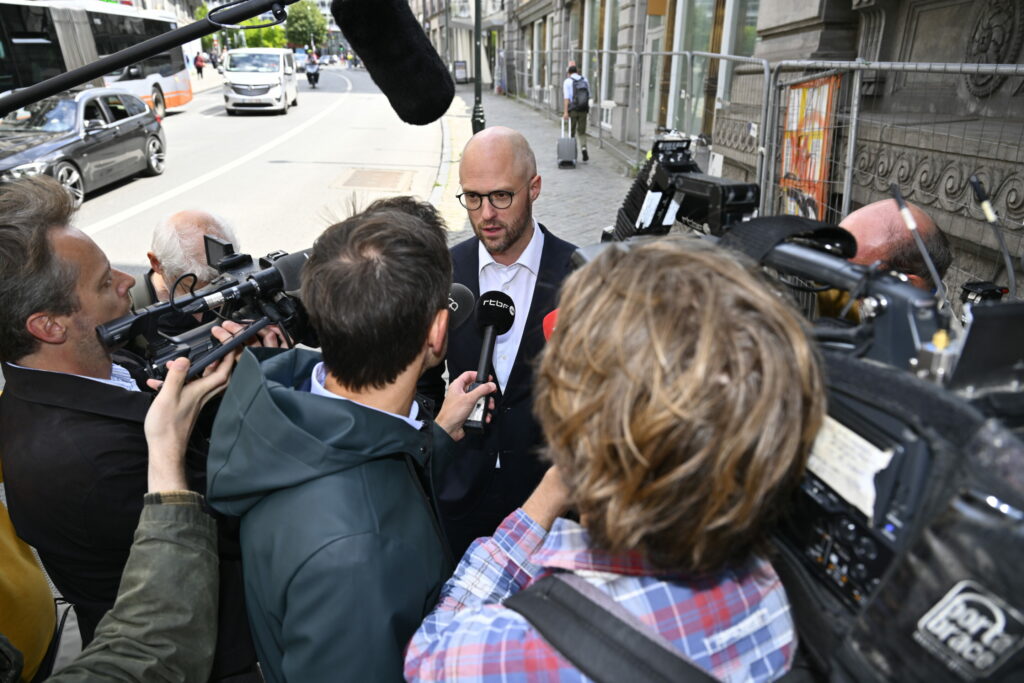
While short-lived glimmers of hope alternated with disappointments for a year, a new Brussels Government is no closer to being formed than the day after the elections.
The situation, however, is extremely polarised as the region's finances are in a dire state and many parties are playing political games.
Need a refresher on everything that happened over the past 365 days? Here you go.
Election day: 9 June 2024
After all the election results had trickled in on Sunday 9 June, it became clear that a major shift had taken place in the Brussels-Capital Region: for the first time in 15 years, liberal MR became the biggest French-speaking party in Brussels – securing just under 26% of the vote among French-speaking parties in Brussels (much higher than their 2019 score of 16.9%).
Among Dutch-speaking parties in Brussels, environmentalists Groen scored best with 22.28% of the vote. The list of Fouad Ahidar (a former politician from socialist Vooruit who started his own party) also scored remarkably, with over 16% among Dutch-speaking parties in Brussels. This made the party the second on the Dutch-speaking side in Brussels, ahead of Vooruit at just 10.1%.
While it was not immediately clear, this unexpected success, and the resulting fragmentation of the other Dutch-speaking parties, would pose a large obstacle in the formation process.
June
Immediately after the elections, Francophone socialists PS announced that they would not enter any governments (federal or regional), after their electoral defeat. Two days later, French-speaking greens Ecolo made the same announcement.
Meanwhile, the big winners in the French-speaking parts of the country, MR and centrist Les Engagés, announced that they would work together "on all government levels."
The two parties gained enough votes to form the Walloon Region and the French-speaking Community (FWB) without a third partner, but they also committed to partnering in negotiations to form coalitions at the federal and Brussels levels.
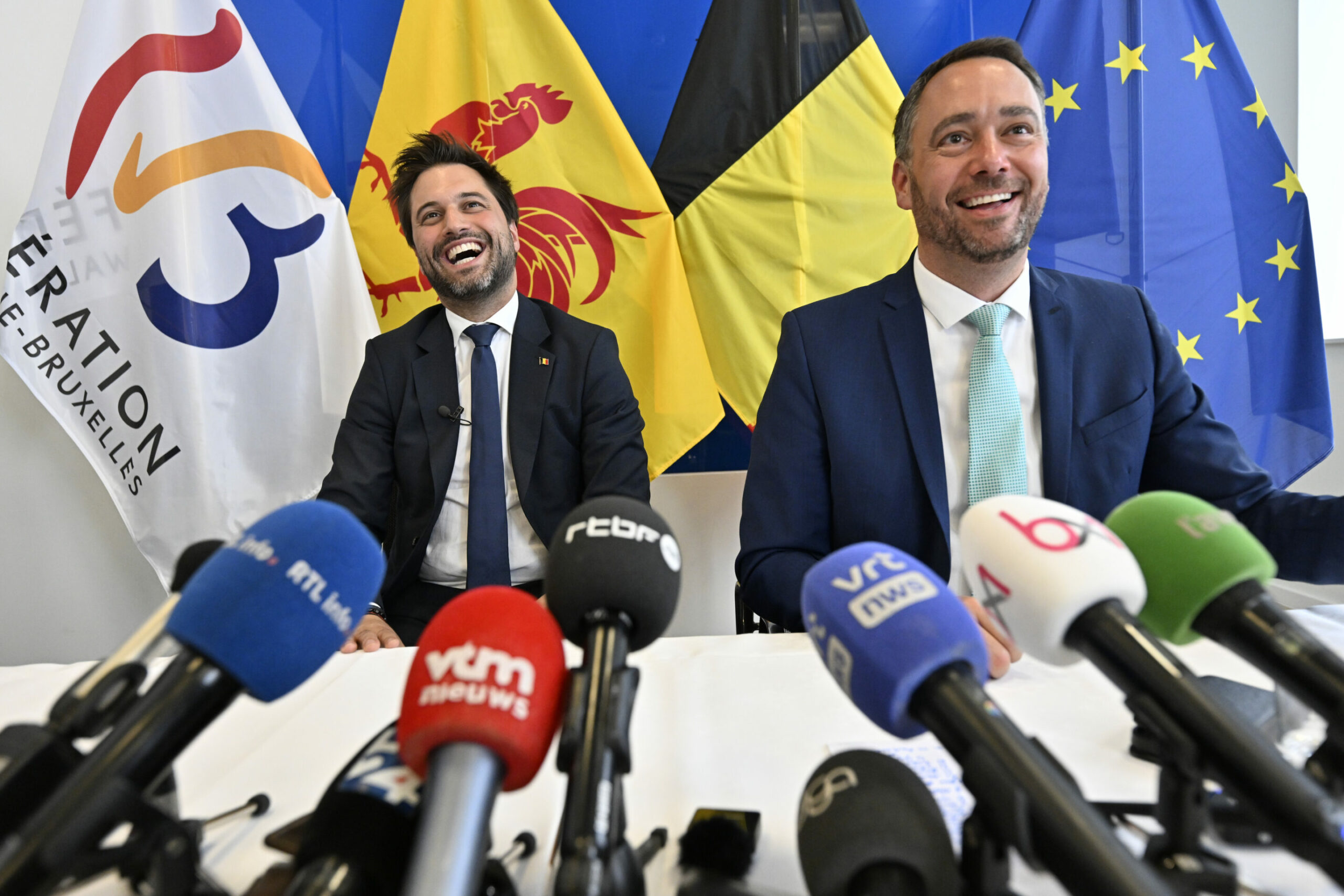
MR leader Georges-Louis Bouchez and Les Engagés' leader Maxime Prévot. Credit: Belga/Eric Lalmand
Not long after, MR leader Georges-Louis Bouchez (who lives in Mons, not Brussels) launched an attack on the capital's Good Move mobility plan introduced by Groen.
Immediately, it became clear that the largest Dutch-speaking party (Groen) and the largest French-speaking party (MR) were diametrically opposed to each other – making it obvious that the Capital Region was in for a long and difficult process.
Additionally, MR and French-speaking regionalist DéFi vetoed the presence of the Team Fouad Ahidar party (which they accused of focusing mainly on the Muslim community and wanting to bring religion back into politics) in a future government – despite the latter being part of the Dutch-language group.
The formation of the Brussels Government happens in two steps: majorities are first sought in the Dutch-speaking and the French-speaking sides, before these majorities negotiate a coalition agreement together.
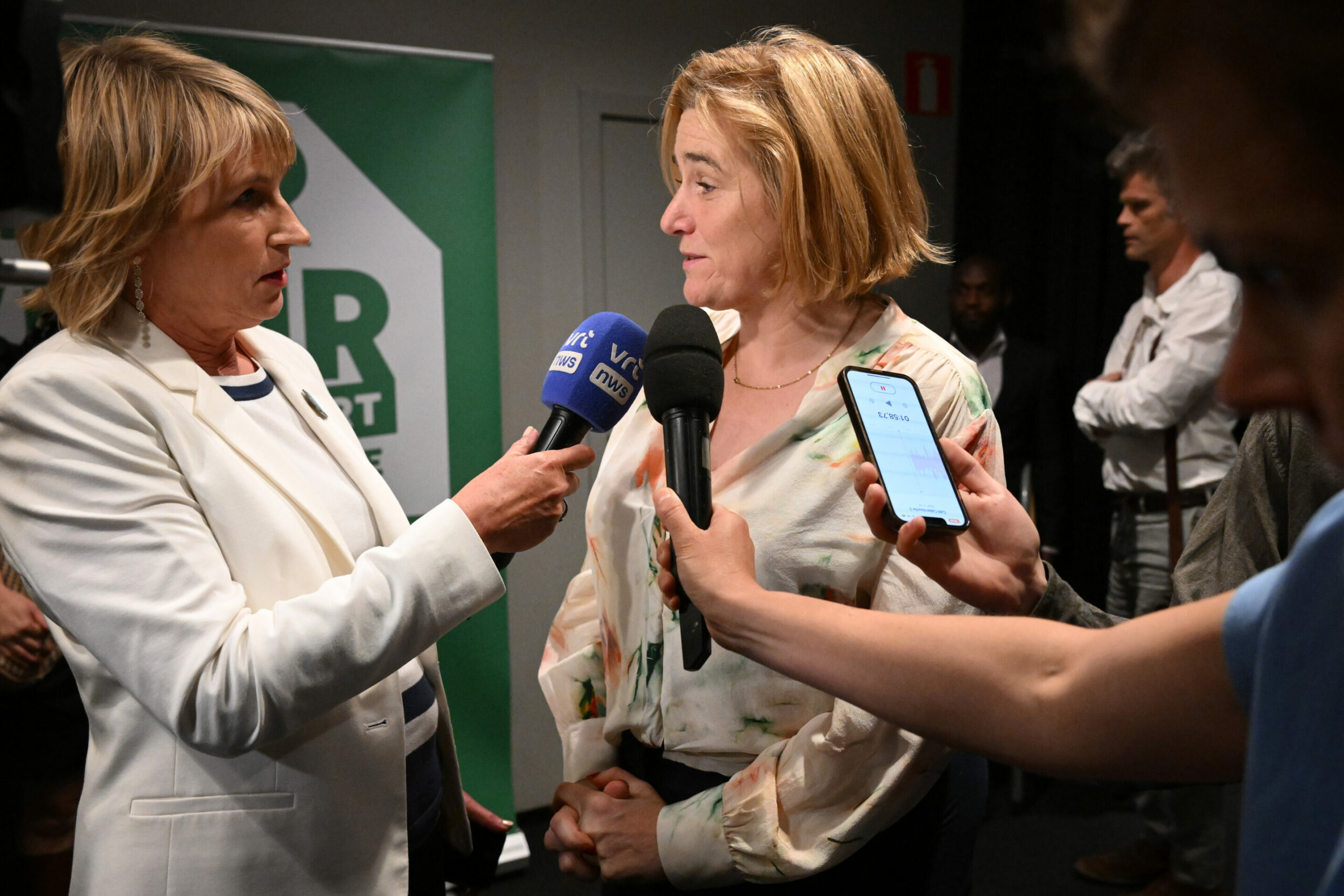
Groen's Elke Van den Brandt. Credit: Belga/ David Stockman
Theoretically, the Francophone side of the Brussels Government does not have any say over the formation process on the Dutch-speaking side (or vice versa). In practice, however, the opinions of the other side of the language border are usually taken into account, with a view to forming a uniform and coherent government.
At the end of the month, Dutch-speaking liberals Open VLD also stated they would not join a government that included Team Fouad Ahidar.
Brussels formator on the Dutch-speaking side Elke Van den Brandt (Groen) – whose party won four seats – held exploratory talks and tried to form a majority with the liberal Open VLD, socialist Vooruit and centrist CD&V. However, with only three ministerial positions to divide, forming a four-party coalition has proved to be tricky.
July
As attempts by Van den Brandt to form a four-party coalition did not lead anywhere, Fouad Ahidar – who gained the second-most seats – announced that he would start contacting the other parties in an efforts to form a coalition.
On the French-speaking side, MR and Les Engagés had been holding discreet talks with PS, despite the party's initial announcement that it would not enter any government.
Meanwhile, Bart De Wever (N-VA) – who was Federal formator, at the time – set a deadline of 20 September for all regions to form their government, as they had to communicate their budget drafts to the European Commission by that date.
August
On the first day of the month, a glimmer of hope was on the horizon as PS confirmed that it was willing to participate in the government negotiations with MR and Les Engagés after all.
With a French-speaking majority secured, the Brussels Government was one step closer to being formed. Now, they just had to wait for the Dutch-speaking side to find an agreement before the real negotiations could start.
By the end of August, however, it was clear that one swallow does not make a summer.
On the Dutch-speaking side, Groen entered into talks with Open VLD and Vooruit. Together, those three parties have eight seats (of the 17 reserved ones for Dutch speakers) – one short of a majority. This means one party was still missing to form a majority and start real negotiations.
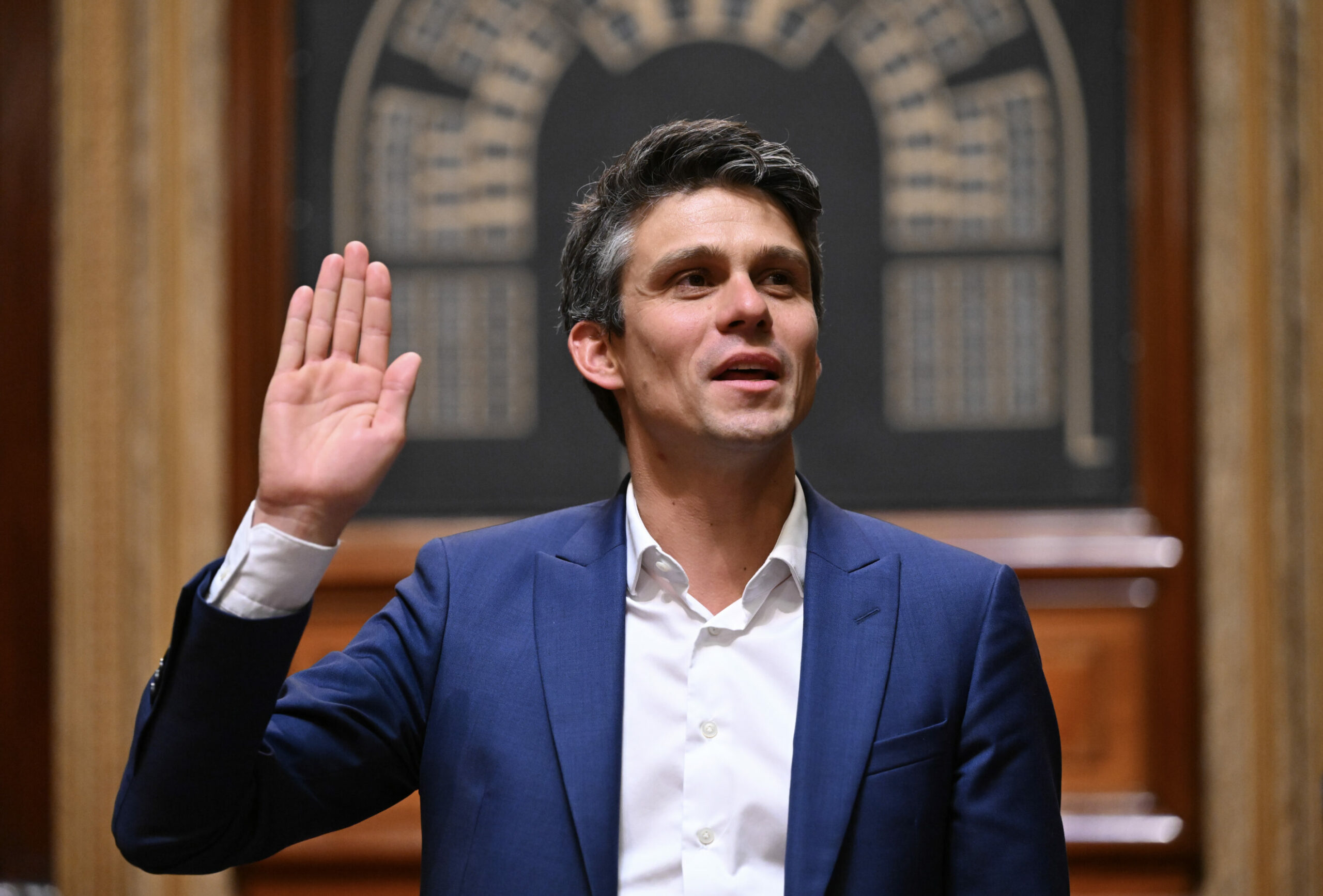
CD&V's Benjamin Dalle pictured during the oath-taking ceremony, Thursday 18 July 2024, in Brussels. Credit: Belga / John Thys
Initially, Groen approached the Flemish Christian Democrats (CD&V), who have one seat. However, the party declined: without a ministerial position, leader Benjamin Dalle said that his party had nothing to win by entering the majority.
This quickly led to Dalle being blamed for "holding Brussels hostage," while he accused Van den Brandt of "not doing her homework."
Still, he made the already complex puzzle even more complicated by wanting to swap Open VLD for the Flemish nationalist N-VA – a very sensitive move, as would later become clear.
September
September not only marked the start of a new school year, but also a new chapter of issues as the different negotiating parties already started thinking ahead to the local elections coming up in mid-October.
Although no coalition had yet been found, the French-speaking partners (MR, PS and Les Engagés) proposed to postpone Brussels' stricter Low Emission Zone (LEZ) standards by two years – dropping "a bombshell" on the formation talks.
As Van den Brandt is also the outgoing Brussels Mobility Minister, she won the election on the fact that her mobility policy focuses on cleaner air and fewer (polluting) cars, meaning this is not something the party wants to compromise on. Van den Brandt called the proposal, and especially the fact that it was agreed behind her back, a "deep breach of trust."
Later that week, Flemish nationalist N-VA reacted to the difficult negotiations for the first time since the elections, with leader Cieltje Van Achter saying that her party was willing to join the talks. In Brussels, N-VA wants to focus on the budget, security problems and the lack of bilingualism in the capital.

N-VA's Cieltje Van Achter (left) and Les Engagés' Christophe De Beukelaer. Credit: Belga/Arthur Gekiere
On the French-speaking side, centrist Les Engagés showed a willingness to work with N-VA. The party's Brussels leader Christophe De Beukelaer called it "the most logical course," saying N-VA has the "democratic legitimacy" to be part of the Regional Government.
Meanwhile, MR leader Bouchez provoked Groen, posting on social media that he wanted to do away with the entire Good Move mobility plan. Citing the continued provocations and "back-stabbing" by MR, Van den Brandt announced that her party was quitting negotiations talks.
She stepped away from her formator role, ceding it to the second party: Team Fouad Ahidar. He took his role seriously, and contacted Groen, Vooruit, Open VLD, N-VA and CD&V to try to form a Dutch-speaking majority.
As all parties were too busy bickering, De Wever's 20 September deadline for a regional budget was not just missed, but seemingly entirely forgotten.
October
October was consumed by local politics as the municipal elections took place in the middle of the month. As parties' focus shifted to campaigning for their mayoral and councillor positions, it remained silent on the regional formation front.
November
While the attention of most parties was still on their local chapters at the start of the month, this changed after an unexpected announcement.
On 13 November, exactly one month after the local elections, Flemish liberals Open VLD agreed to become the crucial fourth partner in a majority on the Dutch-speaking side. The party said it was willing to "sacrifice itself" and become the fourth party – meaning it would not get a ministerial position.
The news was received with enthusiasm on the Francophone side, with negotiators optimistic that the formation would now move quickly. "We will be able to reach an agreement for the Brussels Government within three or four weeks," said Bouchez.
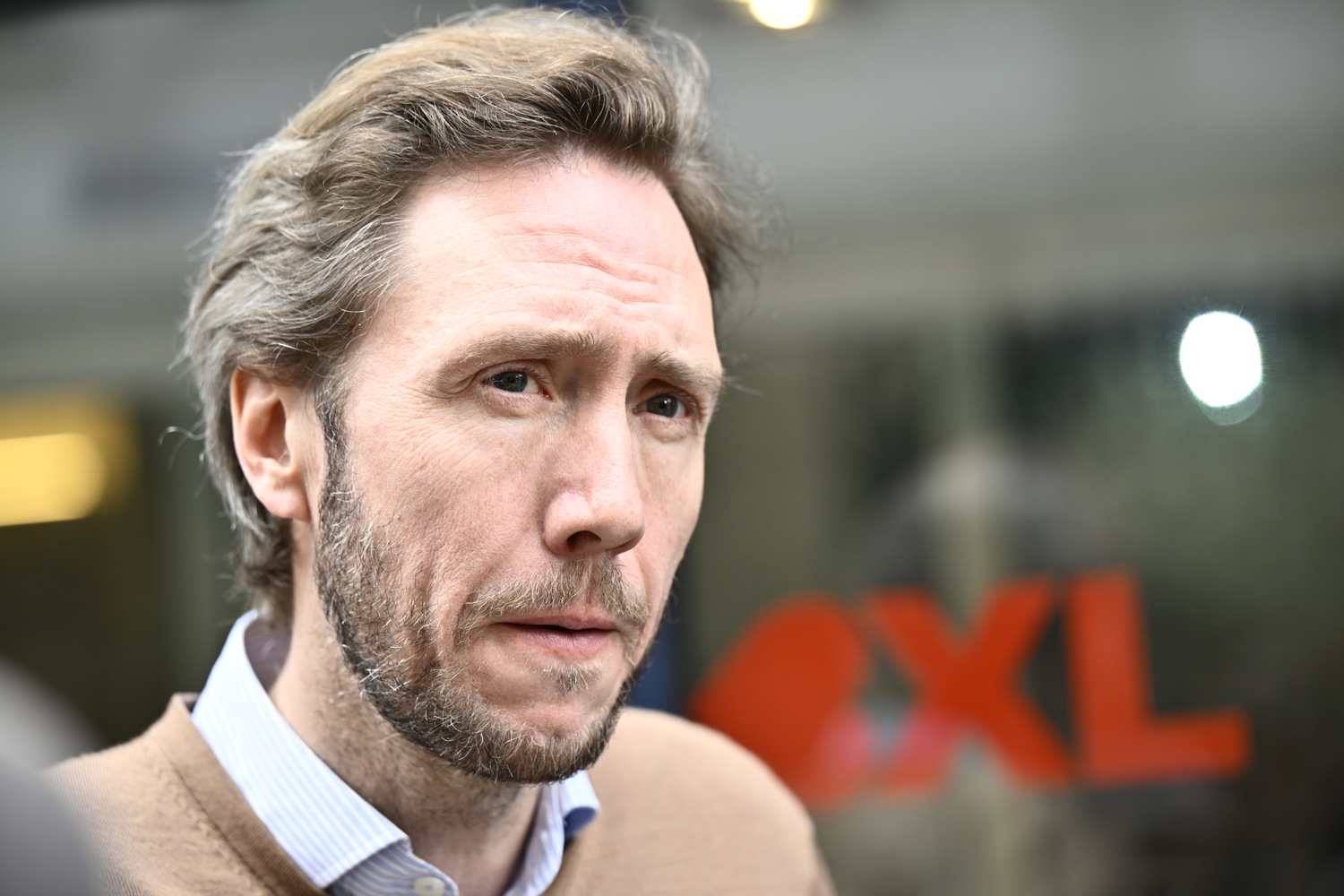
Open VLD's Frederic De Gucht on the participation in a regional government, after last June's elections. Credit: Belga
Open VLD's sacrifice paid off: on Thursday 28 November, Van den Brandt announced a breakthrough in the formation talks as she had succeeded in forming a Dutch-speaking majority of four parties: Groen, N-VA, Open VLD and Vooruit.
The discussions took place based on a 'framework note', the contents of which were leaked to the media. Its "surprisingly strong institutional overtones" immediately put several Francophone parties on edge, but Van den Brandt said the text was "only a starting point after analysing the four parties' programmes."
With both a Dutch-speaking and a French-speaking majority found, proper formation talks for a Brussels Government could start. Or so everyone thought.
December
Any hope that a Brussels Government was in the making was very short-lived. Having tried and failed to digest N-VA's participation in the Brussels Government over the weekend, Francophone socialist PS announced that it was quitting the formation talks.
Referring to the Dutch-speaking 'framework note' that was leaked in the press and contained proposals to merge Brussels police zones, municipalities and social welfare services, PS said that the conditions to take part in the negotiations were "no longer in place."
While there was now a majority on the Dutch-speaking side, the one on the French-speaking side had collapsed – essentially catapulting formation talks back to square one.
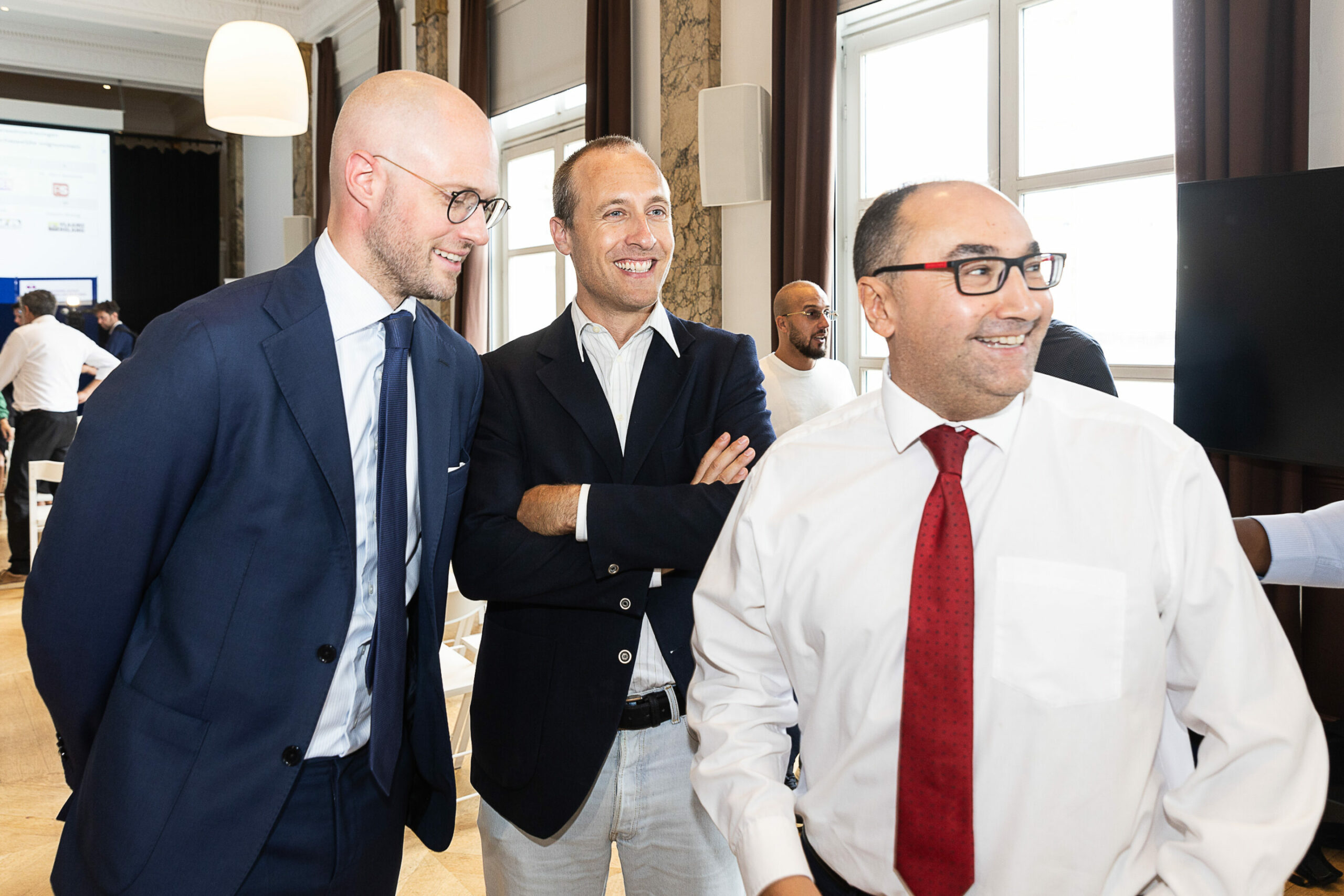
MR's David Leisterh, Les Engagés' Christophe De Beukelaer and PS' Ahmed Laaouej. Credit: Belga/James Arthur Gekiere
To replace PS and break the new deadlock, MR and Les Engagés then started looking at Francophone greens Ecolo. To reach a majority without PS, they would also need to get regionalist DéFI on board. However, Ecolo outright refused to come to the table with MR, saying the "conditions for respect and trust are not there."
Meanwhile, the first instalment of the so-called "provisional twelfths" was approved, meaning that the outgoing government and its administration can continue to function after 1 January – even though there is no budget for 2025.
At the same time, questions were being raised about whether French-speaking formator David Leisterh (MR) was still the right person to find a new coalition for the regional government in the Belgian capital. "Maybe it’s time for someone else, like a mediator, to take on this role for a while," said Vooruit's Ans Persoons.
With Christmas and New Year's coming up, the Capital Region marked six months without a new government.
January
While a new year would be considered the perfect opportunity for a clean slate, this was not the case in Brussels. The formation remained deadlocked – because of "nothing more than a battle of egos," according to some insiders.
During the Christmas holidays, very little progress was made, but there had been "a number of contacts" between negotiators. Despite several options on the table, they all assumed compromises that not many were willing to make.
The rest of the month, the country's focus was mainly on the Federal Government talks, as parties were in the final straight line to a coalition agreement. On the last day of the month, De Wever presented the country's new government to the King.
In Brussels, however, nothing changed.
February
With the Federal Government formed, MR leader Bouchez, who had already been meddling in the Brussels negotiations, announced that he now had time to focus all his attention on the formation talks in the Capital Region.
Leisterh held two weeks of extensive "last chance" talks with all parties to untangle the complicated knot of party politics, vetoes and linguistic balance in Brussels, but did not find a way forward. Instead, PS once again stressed that it would "never" form a government with N-VA.
At the start of the month, a spate of shootings took place in the municipality of Anderlecht. Some had hoped that the situation would prompt the negotiators to put petty party politics aside and assume their responsibilities, but the rift seemingly only deepened.
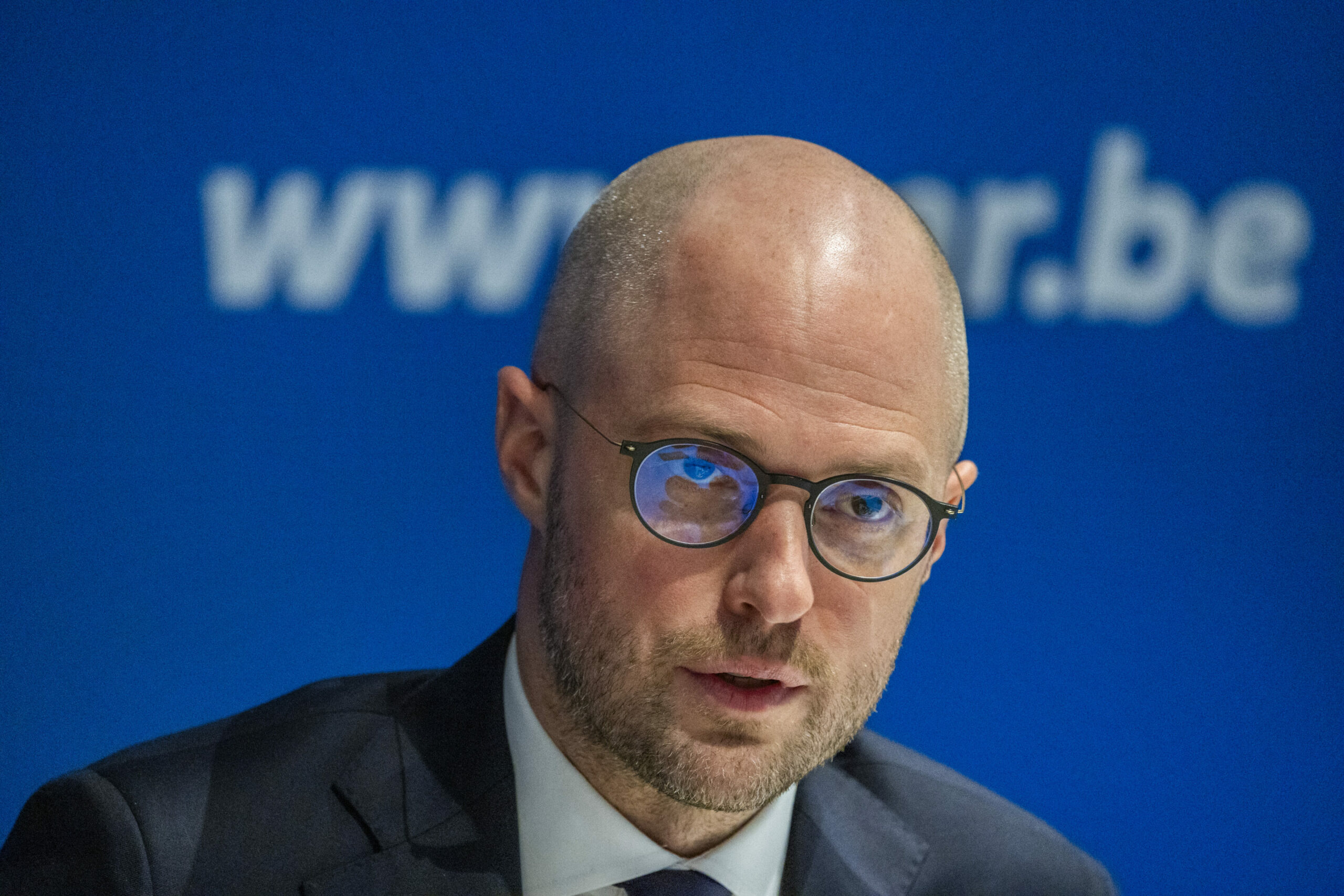
David Leisterh (MR) during a press conference on the negotiations for a new government for the Brussels Capital Region. Credit: Belga/Nicolas Maeterlinck
As a result, Leisterh threw in the towel as formator after more than eight months.
Under the rules, if the largest party (in this case, MR) fails to form a government, the second one (PS) is given an opportunity to form one. However, as PS already made its position very clear, that route would not lead anywhere either.
Instead, another unexpected scenario unfolded: Les Engagés and Groen announced that they would take the initiative to start a new round of talks together.
March
March started with more than 400 organisations putting pressure on the talks, demanding the unblocking of the formation.
The entire month, De Beukelaer and Van den Brandt organised more than 40 bilateral meetings and dialogues, mainly but not exclusively with Brussels' political heavyweights, in addition to a host of informal contacts.
As a result of these talks, they officially brought together the representatives of seven parties – MR, PS, Les Engagés, Groen, Open VLD, Vooruit and CD&V – for a so-called "plenary" meeting.
They said that they saw a government made up of these seven parties as the only possible coalition – notably with CD&V instead of N-VA on the Dutch-speaking side.
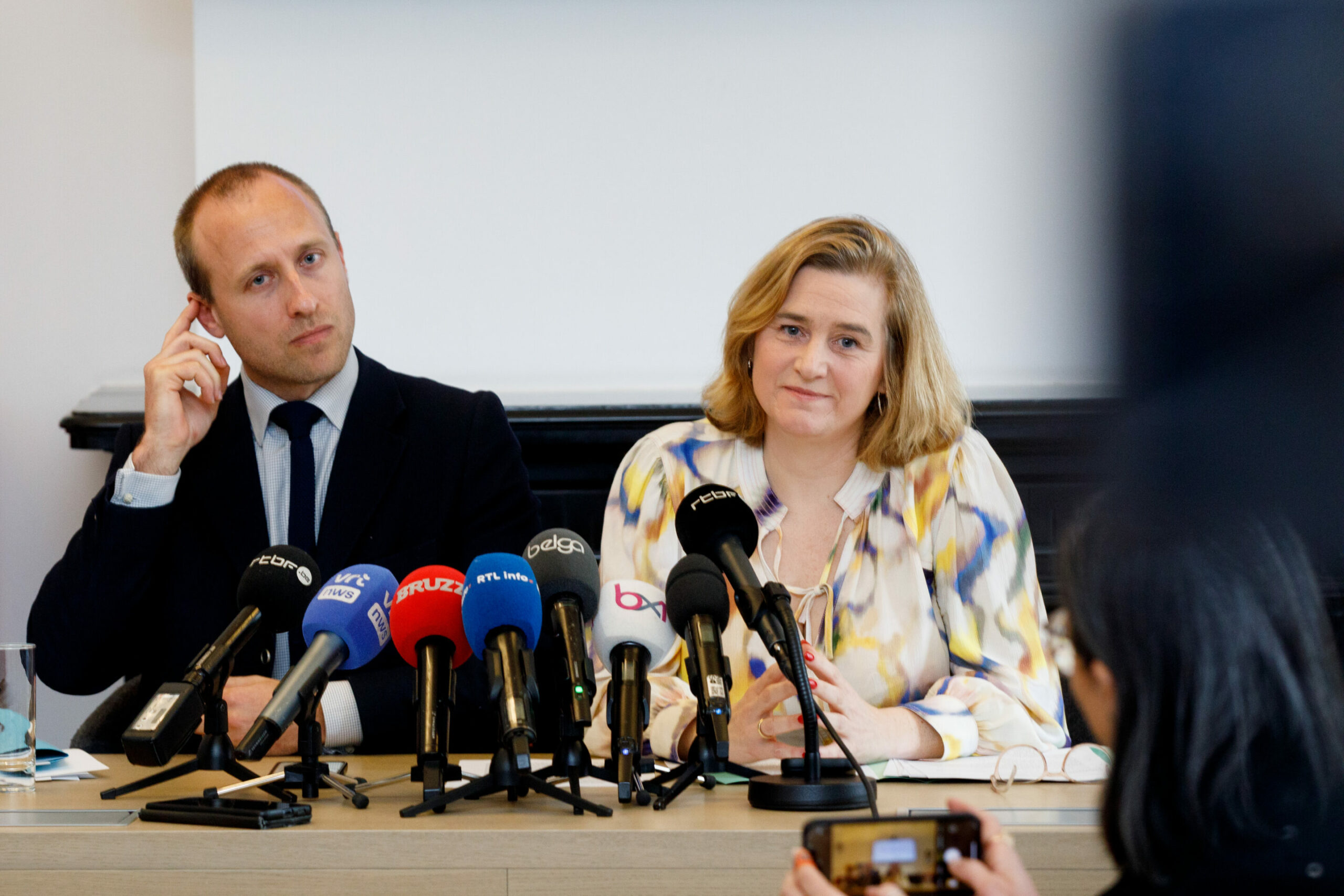
Les Engagés' Christophe De Beukelaer and Groen's Elke Van Den Brandt pictured during a press conference. Credit: Belga/Hatim Kaghat
This formula has the advantage of bringing together three political families: socialists PS and Vooruit, liberals MR and Open VLD and Christian democrats Les Engagés and CD&V, while also adding Flemish greens Groen.
The plenary meeting, however, led nowhere as Open VLD continued to refuse to enter into any kind of negotiations without N-VA. The party stated that the Brussels Government must cooperate with both the Flemish and Federal Governments, both of which are led by N-VA.
Additionally, Brussels CD&V leader Benjamin Dalle once again made it clear that he would not join the Brussels Government without a government position – bringing the negotiation talks back to square one.
April
While the start of April always has people on edge, Bouchez insisted that it was no April Fools joke when he proposed forming a government without a majority in one of the language groups – most likely without PS.
In practice, a minority government means that all the MPs from governing parties would not hold the majority of seats in parliament. MR spoke of "a coalition of the willing," and tried to form as big a group as possible.
The proposal, however, did not achieve full support from the parties.
With the spring holiday coming up later in the month, Les Engagés leader De Beukelaer called on MR to take immediate action to break the deadlock, saying that the refusal of MR and PS to collaborate in Brussels is a significant obstacle. "When the region’s two major parties refuse to sit at the same table, it’s no longer a playground, it’s a sandbox."
May
With a large portion of the month taken up by school holidays, long weekends and bank holidays, most of the month remained relatively quiet on the government formation front.
Towards the end of the month, Leisterh stated that he had quietly been working on a draft for a "general policy statement" to present to potential coalition partners. While the text was based on MR's electoral programme, he noted that "anyone with a constructive approach" could propose amendments.
His draft declaration focuses on three priorities: getting Brussels’ finances in order, restoring security, and boosting the economy.
Normally, drafting a general policy statement concludes the process of forming a new majority. However, due to the political stalemate in Brussels, MR decided to reverse the usual process to try to break the deadlock.
Then, in the last week of the month, PS leader Laaouej also launched an initiative to try and form a progressive coalition. He organised talks with six partners: Vooruit, PTB-PVDA, Team Fouad Ahidar, Groen and Ecolo. Ecolo's participation is particularly noteworthy, as the party had previously made it clear it would be in opposition.
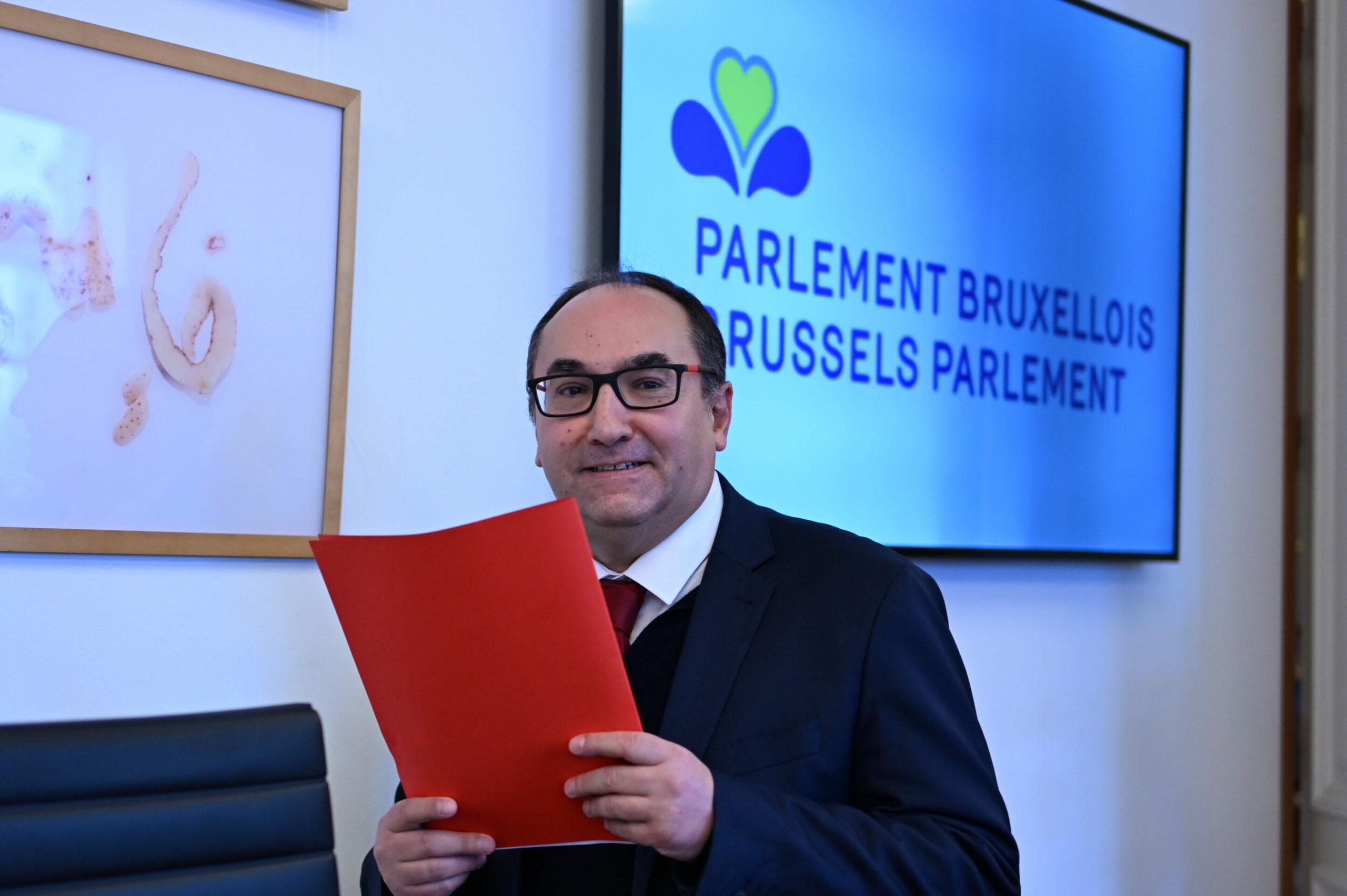
Brussels PS federation leader Ahmed Laaouej arrives for a press conference in Brussels region parliament, in Brussels, Wednesday 29 January 2025. Credit: Belga
The day after, MR's policy statement was ready to be presented to the world: Bouchez and Leisterh called the press together to present the 80-page document that would "save Brussels."
After presenting the document to the press, they would send it to all other "democratic" parties, except PTB-PVDA, Flemish far-right Vlaams Belang and Team Fouad Ahidar. The duo said that they expected replies after the long Ascension weekend, on Monday 2 June.
Then, on Ascension day (Thursday 29 May), PS' plans to unblock the government – which had already been sent to the five other progressive parties – also made their way into the press. While the proposed measures remained vague, the text made a clear assessment of the capital's climate and social crisis.
Meanwhile, the S&P credit rating agency came to Brussels to gather information ahead of a new credit rating for the Capital Region (due on 13 June). While the region's rating is expected to drop, the fear is that the current lack of government might result in a downgrade that is bigger than foreseen.
June
While parties used a long weekend to consider their options, a new month brought no relief. Instead, most parties responded to MR's statement with criticism – about the contents of the document, about the 'take it or leave it' way it was presented, or both.
It even led to Les Engagés' new leader Yvan Verougstraete calling on MR and Open VLD in Brussels to accept a coalition with the greens and socialists – abandoning the N-VA on the Flemish side. For him, a coalition with Groen, Open VLD, Vooruit and CD&V is the "only realistic option."
While many politicians and experts agree with Verougstraete's analysis, this would also bring the entire formation talks full circle: this composition was the very first one to be explored back in June 2024.
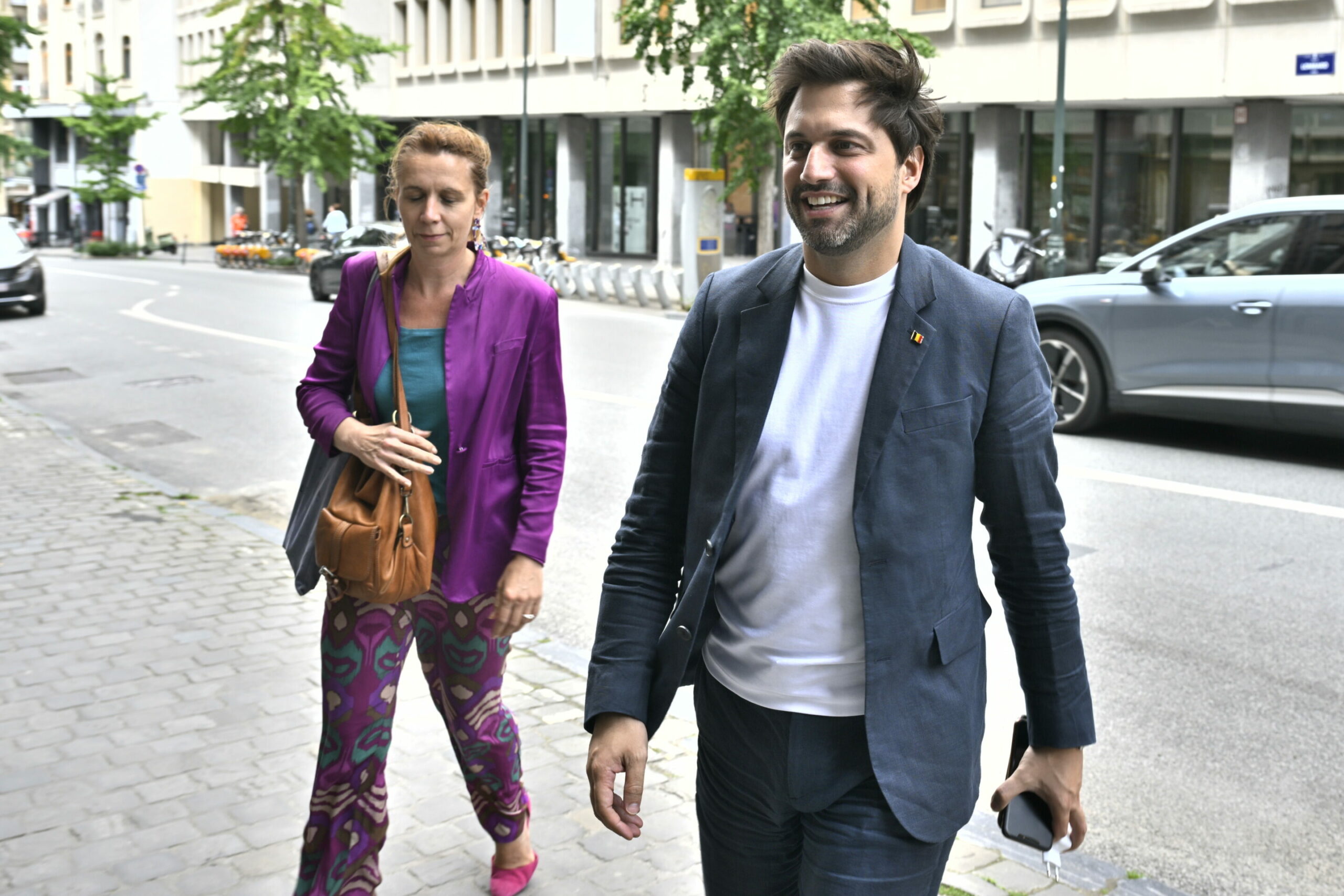
MR leader Georges-Louis Bouchez (right) and Vooruit's Ans Persoons arrive for a meeting with all parties willing to start talks, on Friday 06 June 2025. Credit: Belga/Eric Lalmand
Still, the other parties (with the exception of PS) seem willing to start negotiations based on MR's text again, even though they have many questions about the method. However, Ecolo and DéFI declined the invitation for MR's meeting, partly because of the presence of N-VA.
On the Dutch-speaking side, five parties are at the table: Groen, Open VLD, Vooruit, N-VA and CD&V. On the French-speaking side, only Les Engagés showed up. Afterwards, however, the parties all spoke of a "constructive" conversation.
Over the weekend, Leisterh continued bilateral talks with the different parties, and he will soon present a new proposal on how to proceed. In short, this means that a year after the elections, a Brussels Government is not closer to being formed than it was exactly 365 days ago...
