
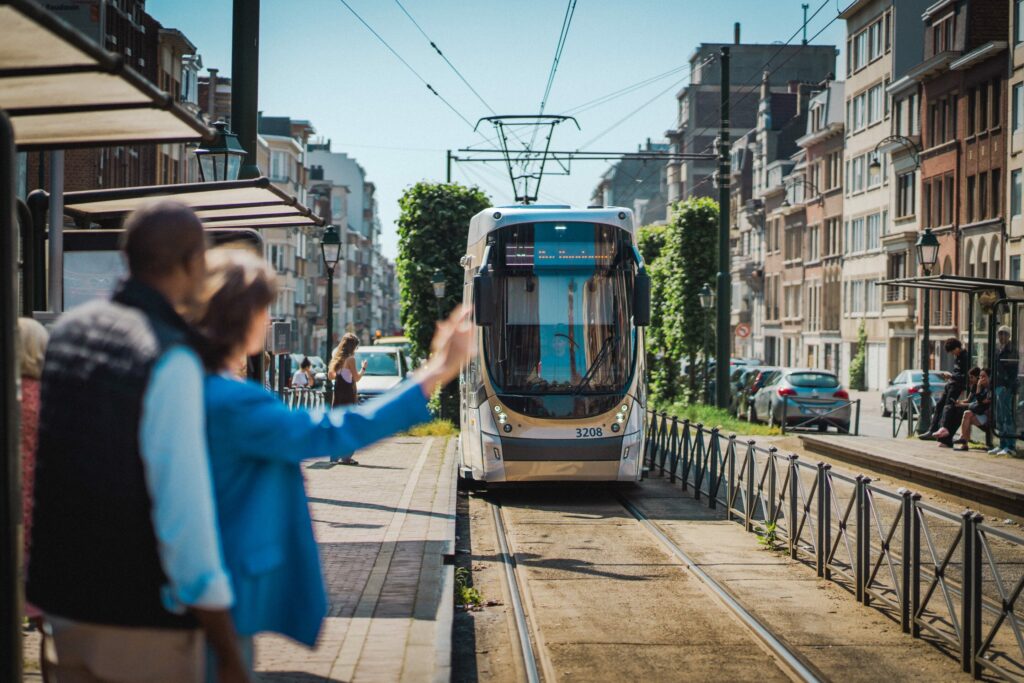
Public transport has become equally as important a means of transport in the Brussels-Capital Region as the car, according to recent research into travel in the capital commissioned by Brussels Mobility.
After a decline during the Covid-19 pandemic, the metro, tram and bus are regaining popularity in Brussels: public transport operator STIB/MIVB recorded a "significant growth" in absolute passenger numbers, but public transport is also gaining importance in the total number of journeys.
"We can see that the significant investments made by the Brussels Region in public transport are paying off," said STIB/MIVB's CEO Brieuc de Meeûs. "Passengers are not mistaken: if you improve the quality of the service, the passengers will show up."
In 2024, 31% of journeys in Brussels were made on foot, just over 8% by bicycle and 29% by car. Meanwhile, metro, tram and bus account for 27% of all journeys in Brussels. When adding the 2% of journeys made by train, public transport has fully caught up with the car.
Clear trend
For public transport, this is a significant increase compared to the previous study: in 2022, the share of metro, tram and bus was 22%. Going further back in time, there is an even lower market share for public transport.
The methodology was different then, so the figures cannot simply be compared. Still, the trend is clear: the car, which at the turn of the century still accounted for more than half of all journeys, is losing ground to active modes of transport: public transport, walking, cycling and shared mobility.
"The share of public transport is higher today than before Covid-19. If we want to maintain this, we must continue to invest in the metro, tram and bus in Brussels. This is important for mobility, for the environment, for the economy and for the well-being of residents," de Meeûs said.
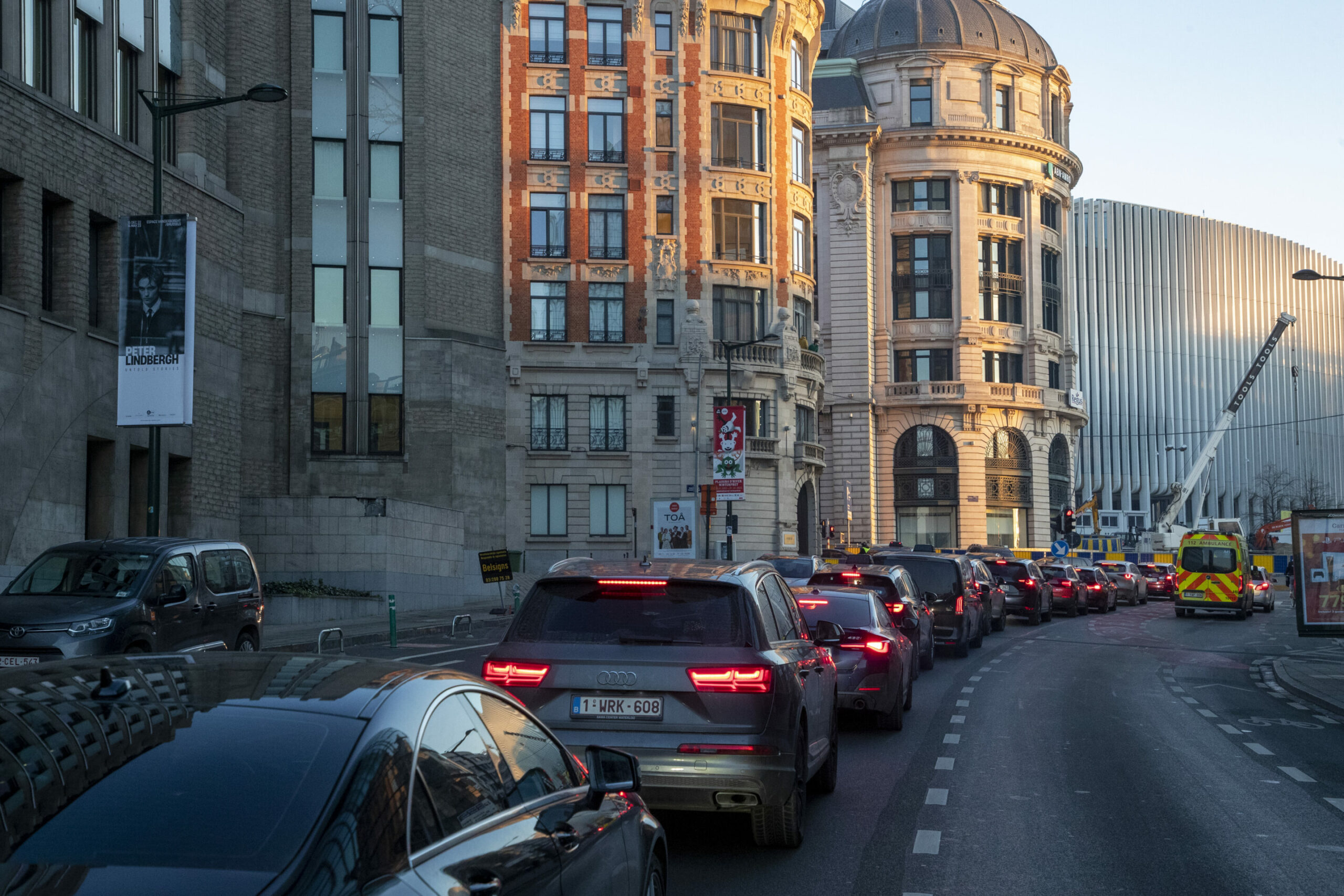
Credit: Belga/Nicolas Maeterlinck
For teenagers and people in their twenties, public transport is relatively more important for getting around. In the 12-17 age group, 49% of journeys are made by metro, tram or bus, while in the 18-24 age group, the figure is 46%. The share of public transport is lowest in the 45-54 (21%) and 55-64 (22%) age groups.
"Car use has fallen sharply over the past 25 years, walking and cycling together account for 40% of journeys, public transport is regaining importance after a decline during Covid-19, and shared mobility has taken off," said Kristof De Mesmaeker, Director of the Planning Department at Brussels Mobility.
"These are the main findings of the latest edition of the survey on travel behaviour in the Brussels-Capital Region, which we conducted between November 2023 and November 2024 among nearly 6,000 respondents," he said.
Another observation: 54% of Brussels residents work from home at least one day a week – which has led to a decrease in commuting. However, this is largely offset by additional journeys during leisure time (shopping, hobbies, etc.). For example, 20% of journeys by metro, tram or bus are for work, and 19% are for shopping.
