
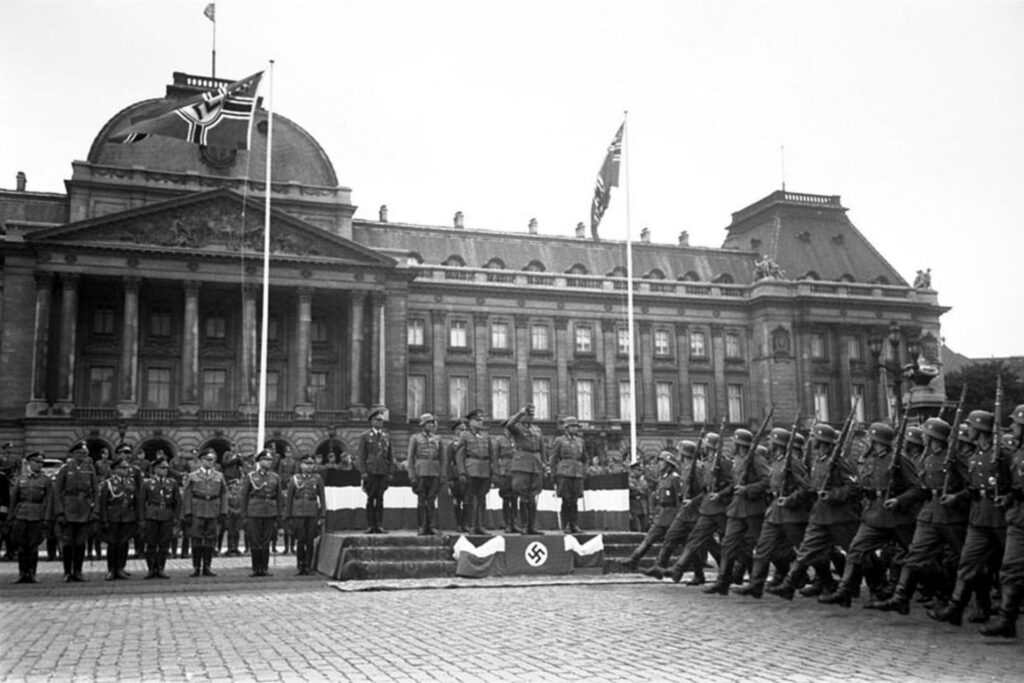
Brussels was occupied by Nazi Germany between May 1940 and September 1944. The rapid invasion of the country in summer 1940 resulted in the swift occupation and requisitioning of many of the Belgian capital’s key buildings.
After installing its military regime, the Nazi occupation was brutal. Inside the country, the enemy was fought off by the valiant Belgian Resistance, made up of mainly ordinary civilians, who covertly mobilised to sabotage and help bring down the Nazi war machine from the ground while the Allies advanced.
But where in Brussels did the Nazi live and work? While most ordinary soldiers would be quartered with locals, the Nazi elite requisitioned palaces, buildings and key infrastructure after seizing power.
Many of these locations still exist today, hiding away their Nazi past while posing as just any old building.
Gestapo headquarters
Avenue Louise (n. 347, 453, 418 et 510), 1000
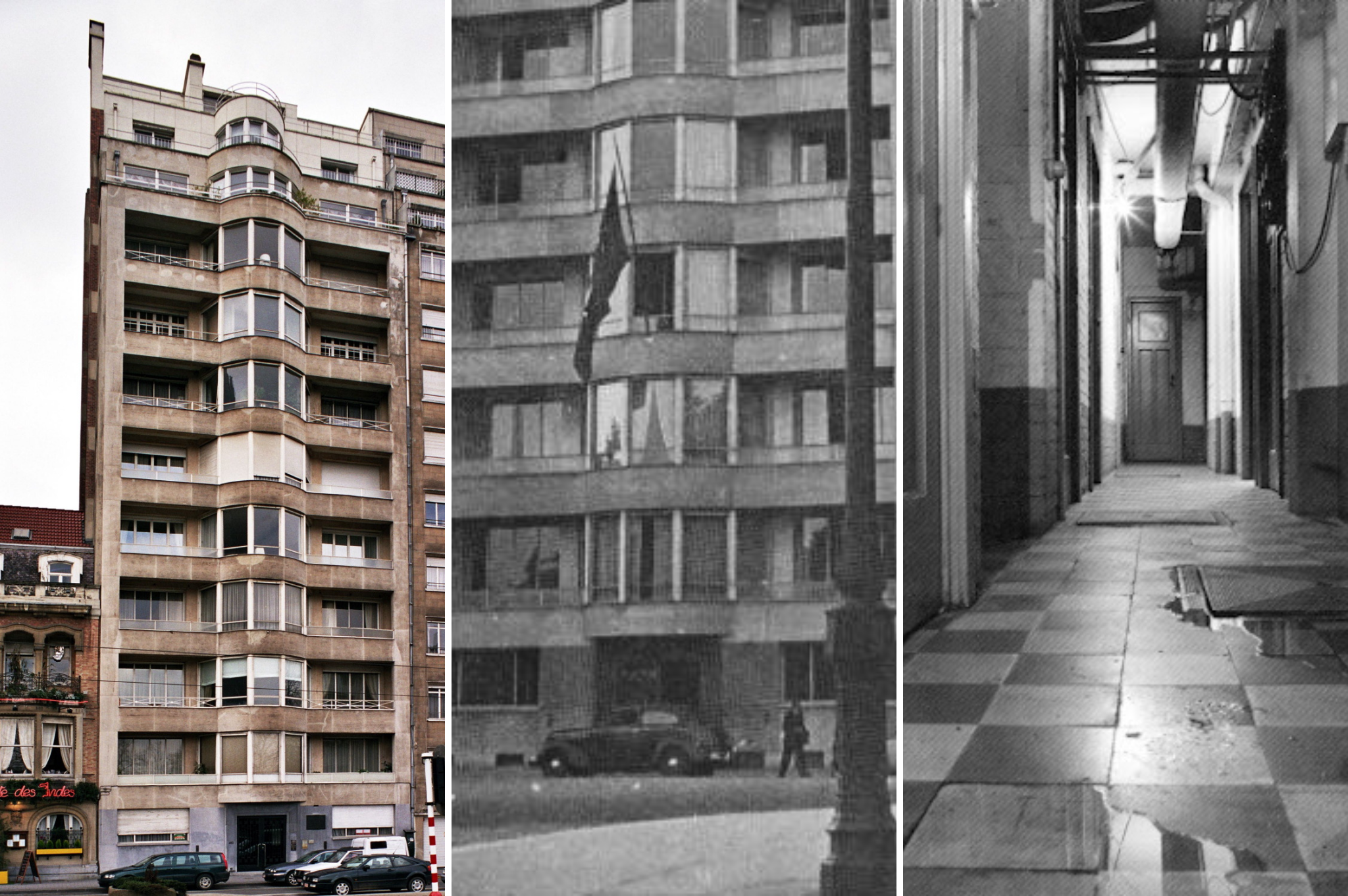
The main Gestapo headquarters during WW2 at 453, Avenue Louise. In (c), the building during the war and (r) are the prison cells.
The Gestapo was the official secret police of Nazi Germany and in German-occupied Europe. They are associated with some of the worst atrocities during the war, persecuting political opponents, ideological dissenters (clergy and religious organisations), career criminals, the Sinti and Roma population and Jews.
In Brussels, the Gestapo was based at the Residence Belvedere at 453 Avenue Louise. Built in 1936-37, this modernist building was barely a few years old before the Nazis marched through the door to requisition it as the Gestapo headquarters.
It is best-known for the heroic attack carried out by Belgian-born RAF pilot, Captain de Selys Longchamps, who defied orders to fly down Avenue Émile Demot to fire on the building, inflicting serious damage. A statue commemorates the attack.
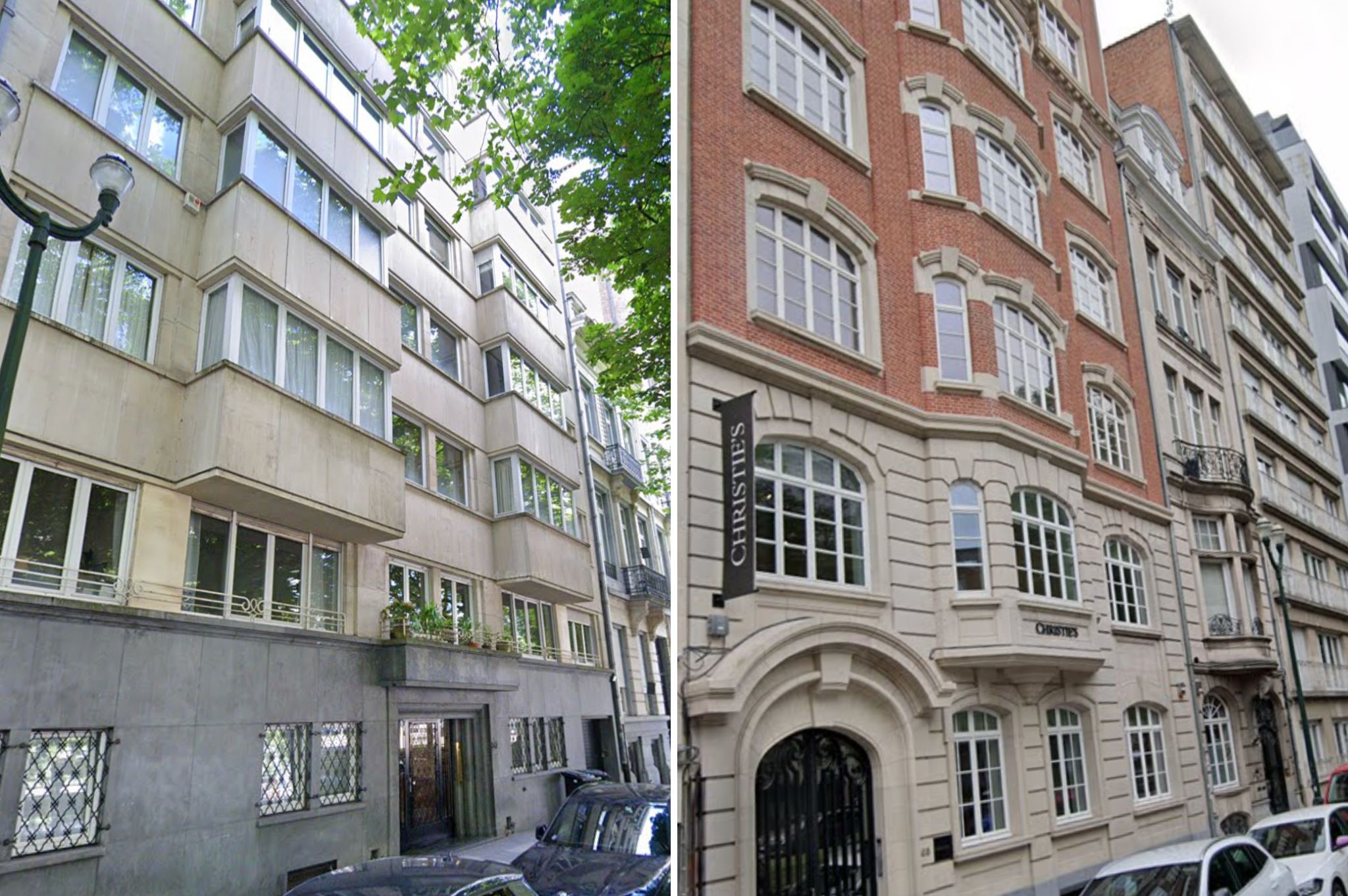
The other buildings used by the Gestapo during the Nazi occupation. Avenue Louise 347 (left) and 418 (right) today. Credit: Google Maps
The Gestapo actually seized more buildings on Avenue Louise for their administration: numbers 347, 418 et 510. The cellars of 347 and 418 were used as prison cells for members of the resistance and other political opponents. These were listed in 2016. The graffiti of prisoners can still be seen today, although sadly it is not open to the public.
Number 347 is also remembered for the daring escape from captivity of Belgian Resistance member Youri Livschitz. He was arrested for an attack on on the twentieth convoy, freeing 230 deportees being sent to Auschwitz. He was caught and eventually executed in 1944 after being recaptured.
High Command Headquarters
1-9 Place du Trône (1000)
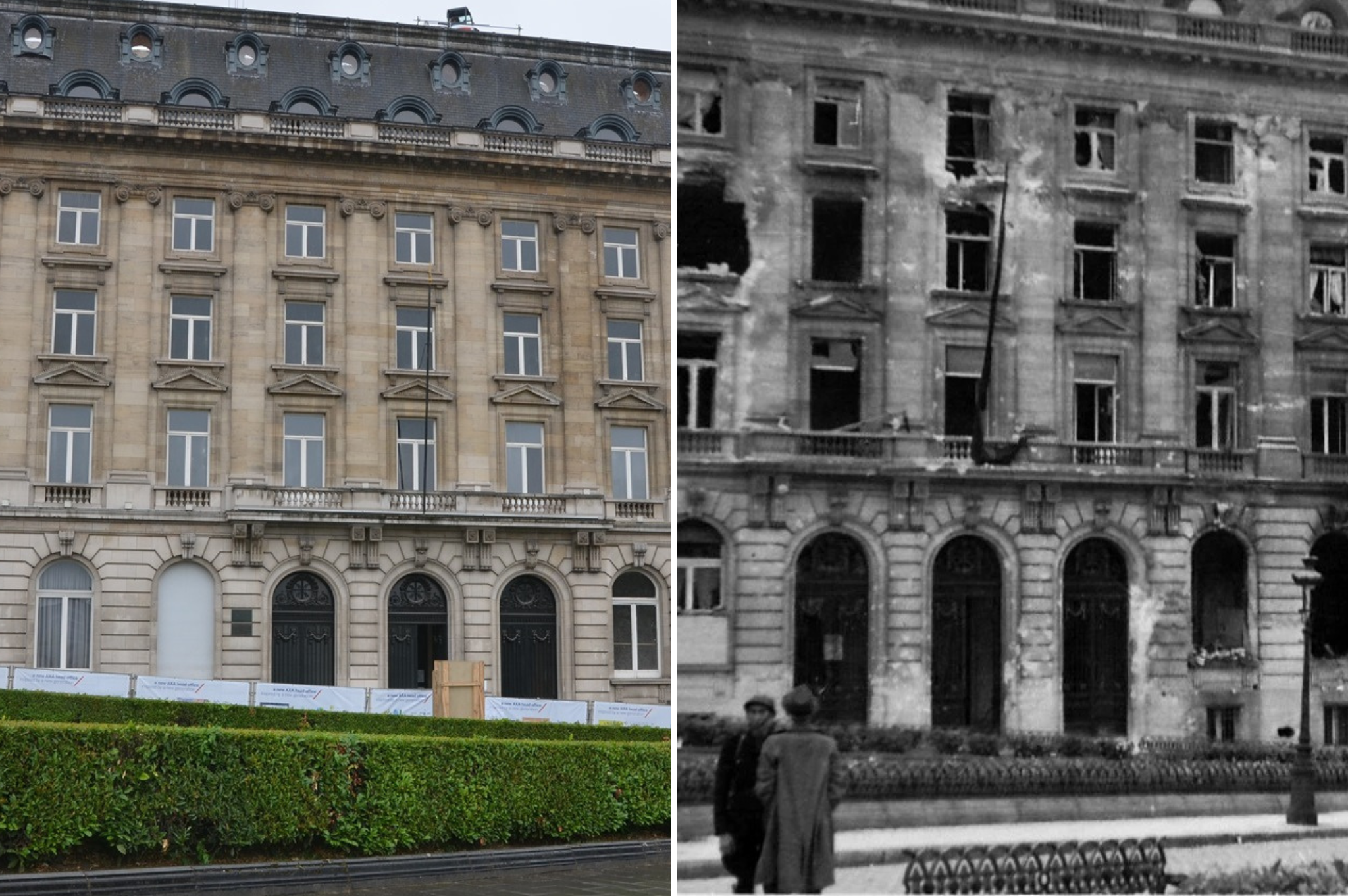
9 Place Trone in Brussels. Requisitioned in 1940 by the Nazi Oberfeldkommandantur, it was used as a gun emplacement and then taken over by the British artillery in 1944. It was restored in 1949, as indicated by a plaque on the façade.
This prominent building on the fringes of the Royal Palace holds a special significance: it was requisitioned by the Nazis to make it into the High Command Headquarters, the Oberfeldkommandantur.
The headquarters for the Military Administration in Belgium and Northern France was also here. From this building, the Nazi administered the occupation of present-day Belgium and the French departments of Nord and Pas-de-Calais. Northern France was added for military reasons due the (eventually failed) Nazi plans to invade Britain in 1940.
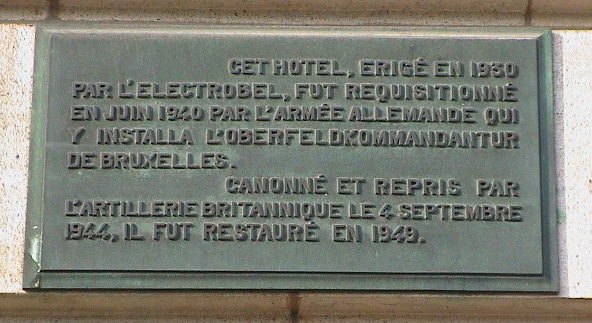
Plaque reads: This hotel, built in 1930 by Electrobel, was requisitioned in June 1940 by the German army, which installed the Brussels Oberfeldkommandantur there. Bombed and recaptured by the British artillery on September 4, 1944, it was restored in 1949.
During the occupation, the Nazis were assisted by far-right Belgian collaborationist parties, such as the French-speaking Rexists in the south and the Flemish National Union in the north, which supported Flemish independence.
The building was badly damaged by one of the few scenes of fighting during the liberation of Brussels in September 1944. It was bombarded by British artillery and then stormed by members of the Belgian Resistance as Allied forces were at the doors of Brussels.
Residence Palace
155 Rue de la Loi (1000)
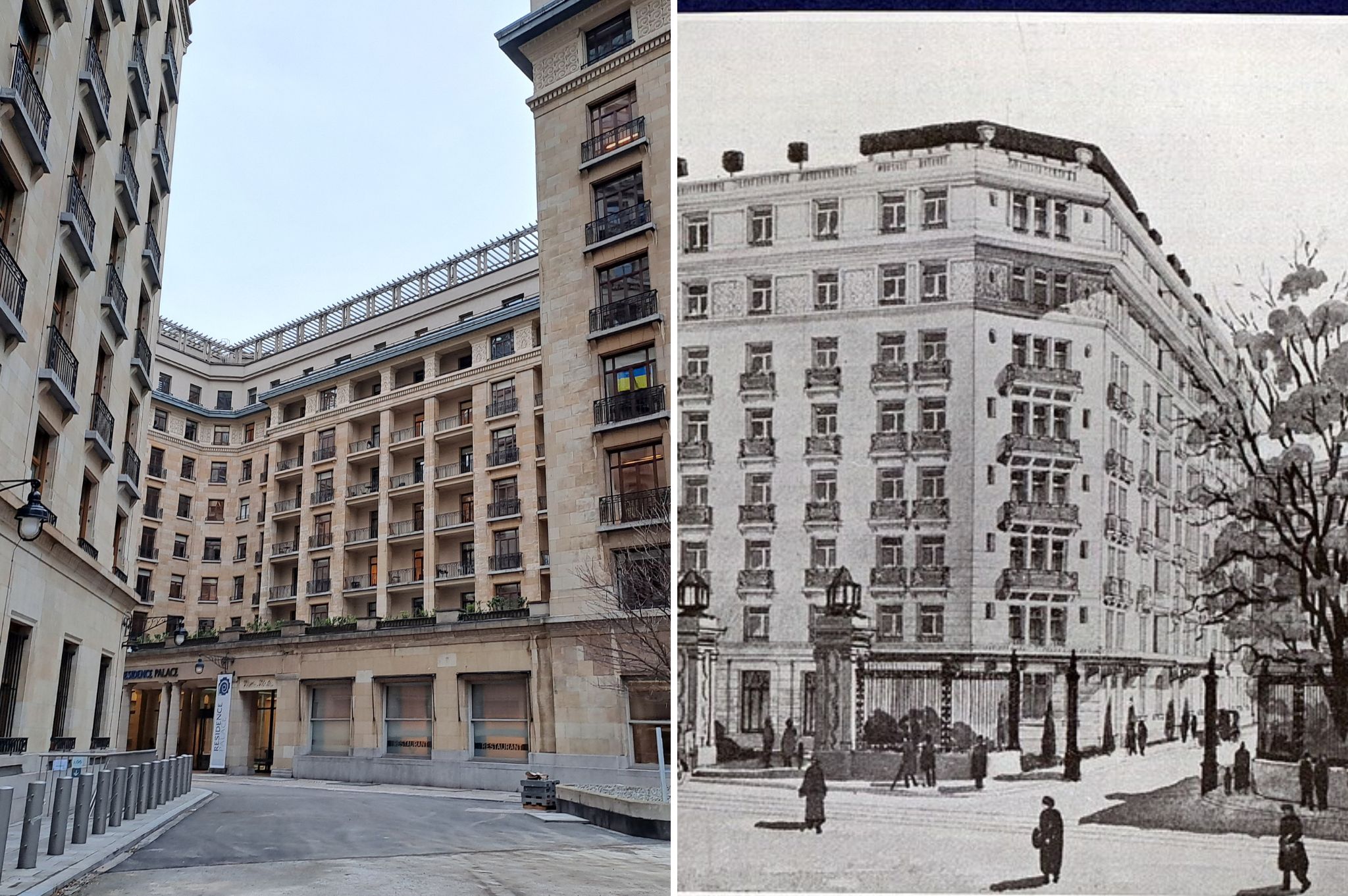
Residence Palace, Brussels
Just a stone’s throw away from both the European Commission and the European Council, this monumental building was intended as a luxurious apartment complex for Brussels’ bourgeoisie and aristocracy.
It included its own restaurants, theatre, swimming pool, hairdressing, salon, bank, post office, garages, grocers, florist's shop, chocolate shop, newsagent, gymnastics hall and a terrace on the 11th floor.
However, the building’s success was short-lived. In 1941 this too was requisitioned by the Nazis shortly after the occupation. It was used by German forces to house their highest-level officers.
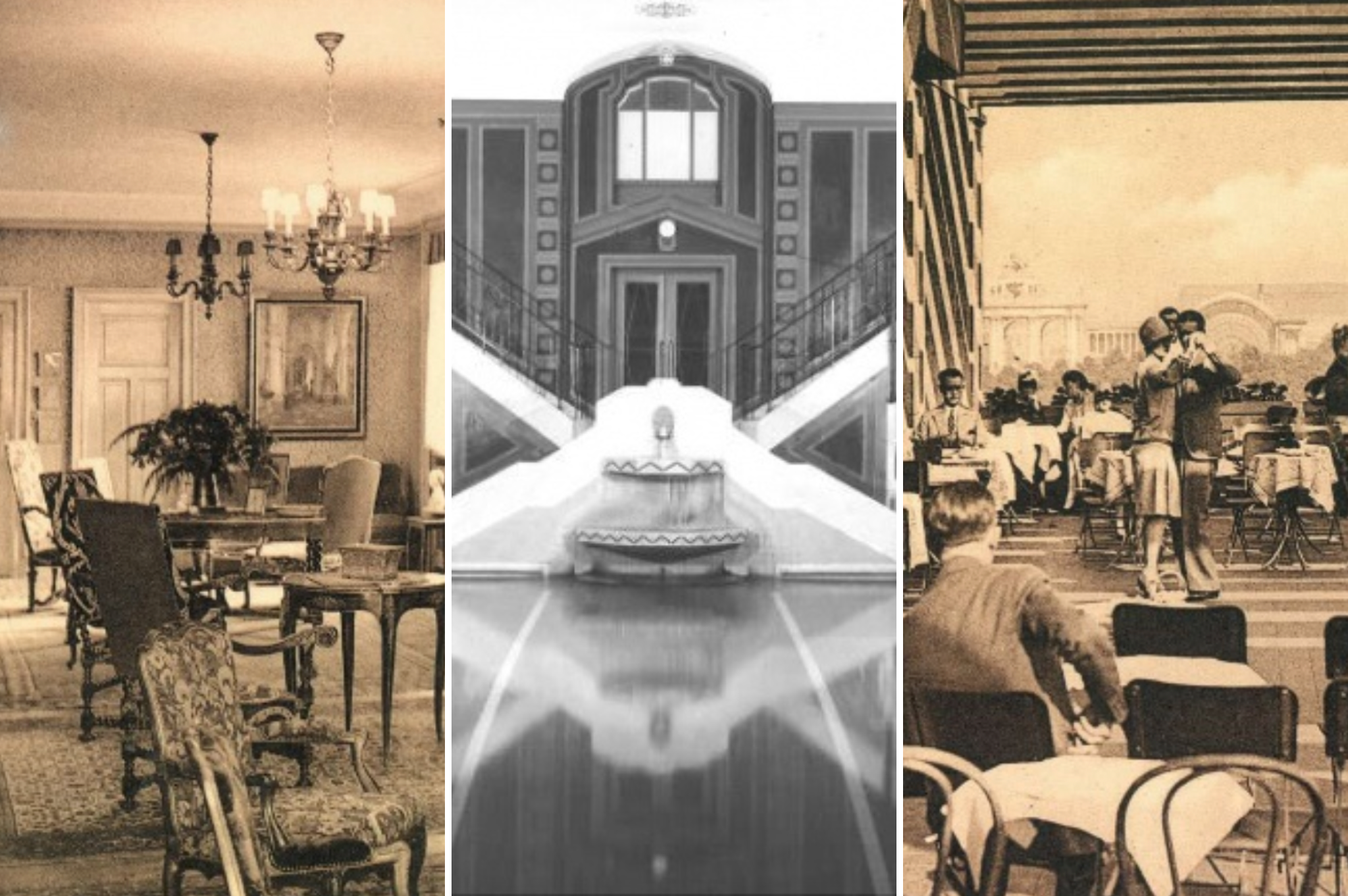
Pre-war photos of the Residence Palace.
The building was taken over as headquarters for the Supreme Headquarters Allied Expeditionary Force (SHAEF) and the RAF Second Tactical Air Force. At the end of the war, the palace was taken over by the Belgian Government for a symbolic franc and was subsequently occupied by government departments.
National Institute of Radio Broadcasting
Place Sainte-Croix (1050)
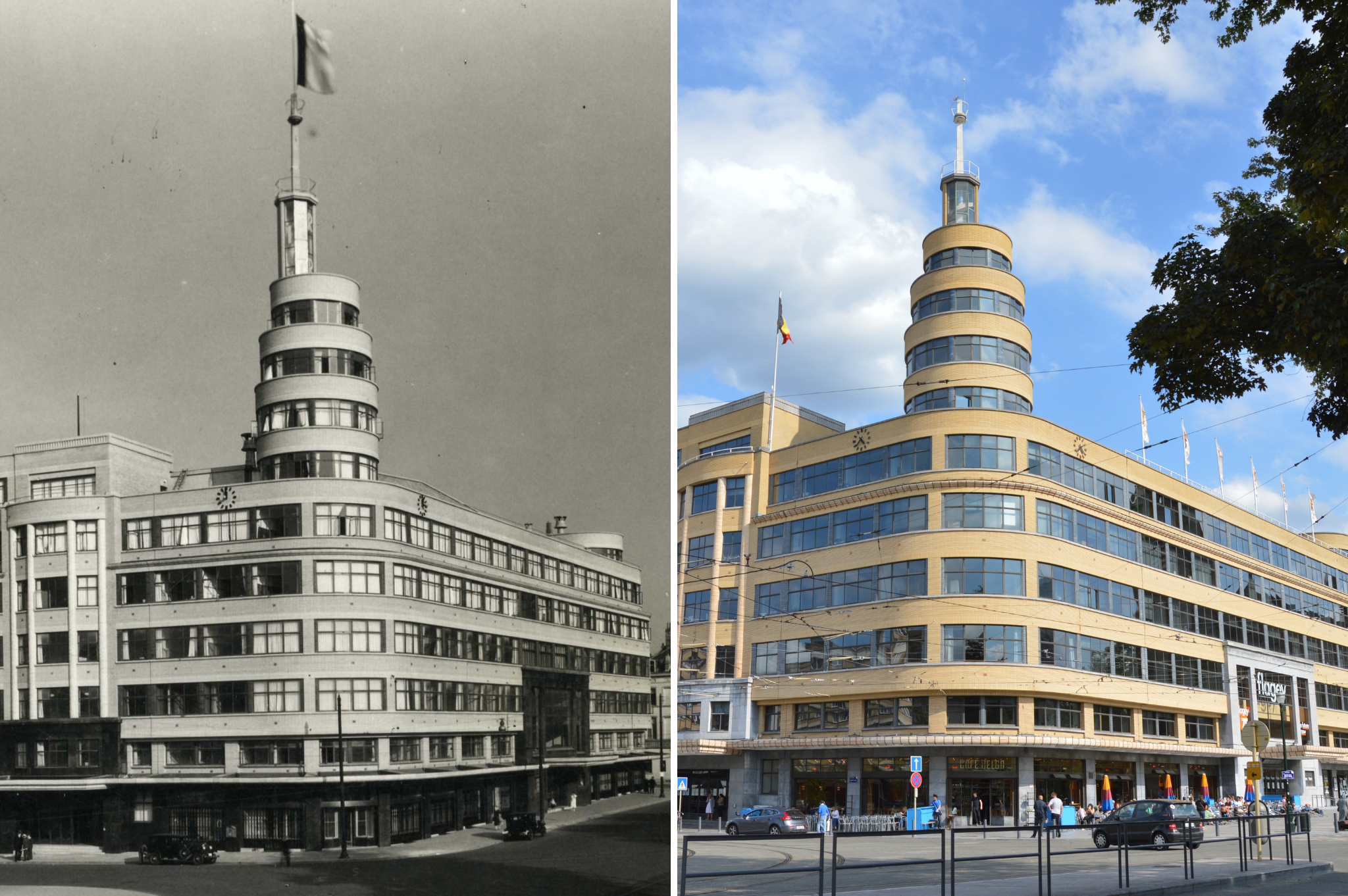
The National Institute of Radio Broadcasting in Flagey, shortly before the war (L) and the building today.
The Art Deco gem at Flagey is a known landmark of Brussels. The building used to be the headquarters of the National Institute of Radio Broadcasting.
During the war, it was taken over by the Nazis despite staff efforts to dismantle or destroy their transmitters and radio equipment. Some the staff members managed to escape to London, where some of them were given airtime on the BBC and founded the Belgian National Broadcasting Office in London in October 1942.
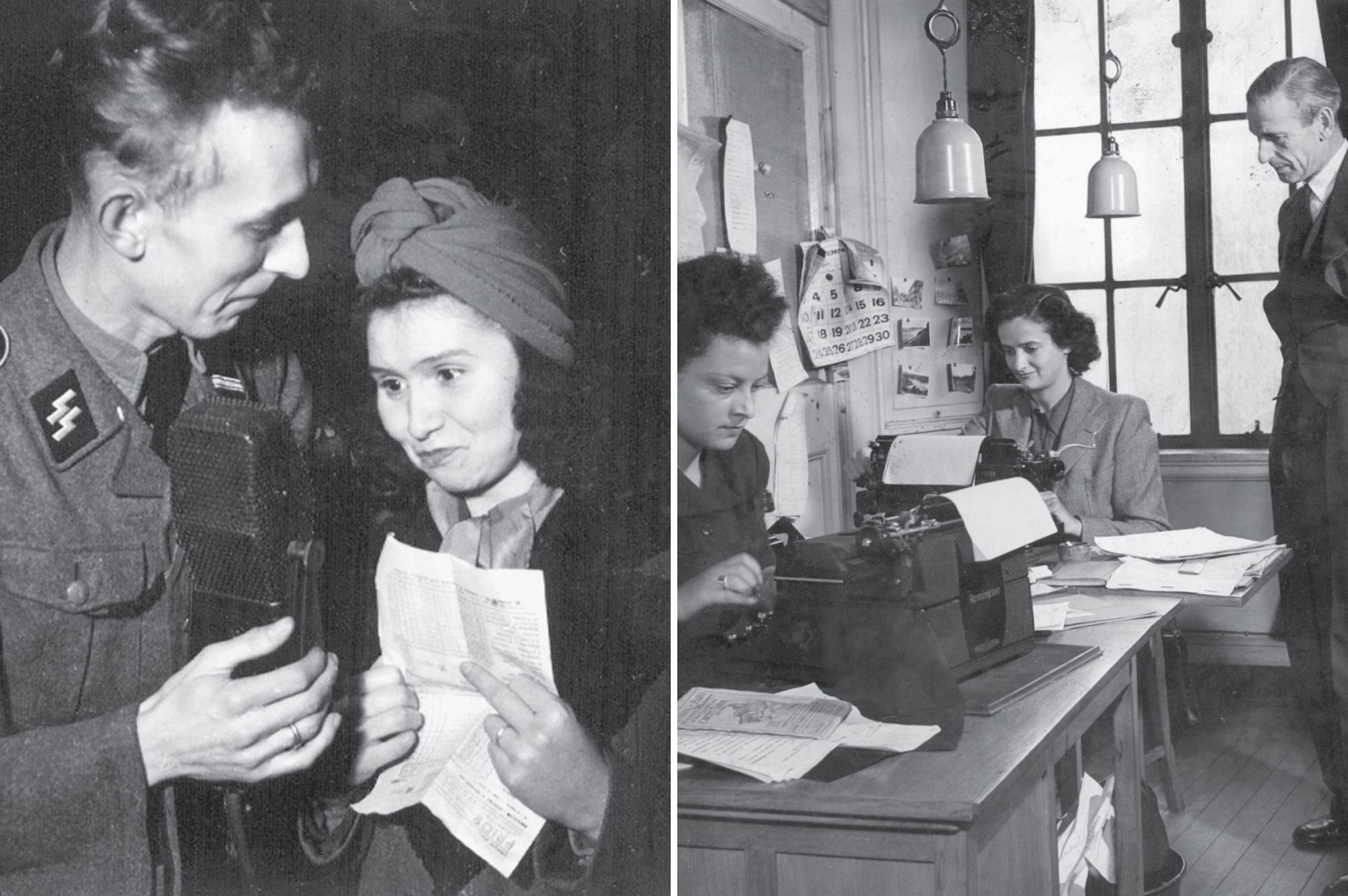
Left: people read letters for soldiers on the eastern front on the Nazi propaganda station Radio Bruxelles during the war. Right: Victor de Laveleye, voice of Radio Belgium and BBC's Belgian broadcasts in London, September 1944.
Others, however, remained in their posts and worked for the German authorities, such as Stan Brenders, who played jazz with his orchestra. On 6 August 1940, the French-speaking Radio Bruxelles and Dutch-speaking Zender Brussel was created and placed under the authority of the military administration to broadcast Nazi propaganda.
Hôtel des Colonies
6-8-10 Rue des Croisades (1210)
This neo-classical hotel, built at the beginning of the 20th century, does not feature in Nazi accounts of occupied Belgium. It was known at the time as Rainbow Corner, and was another building requisitioned to house German soldiers.
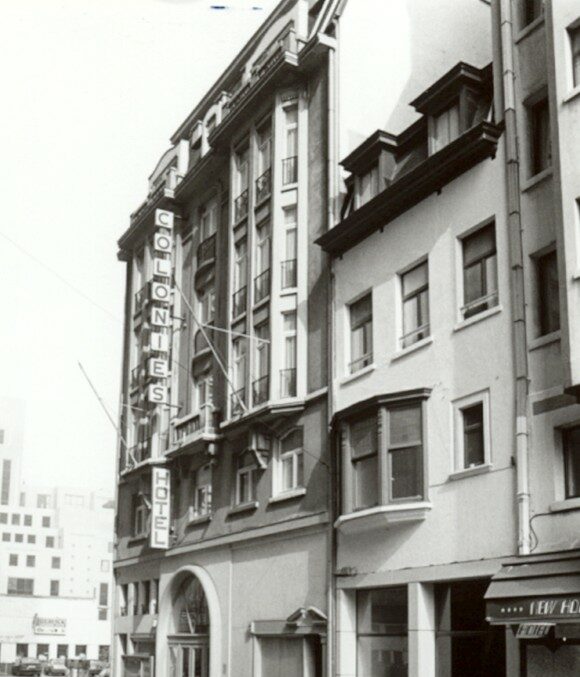
Hotel Des Colonies
After the liberation, it was occupied by British and American troops, who carried out extensive alterations to the ground floor and first floor.
Other Nazi locations
Due to the presence of two military barracks on Avenue de la Couronne and Etterbeek railway station (1050), the area was bombarded heavily by the Anglo-American forces on 7 September 1943 at about 09.15. Over 200 people were killed in Ixelles alone.
The Nazi air force, the Luftwaffe, requisitioned the Koninklijk Atheneum Etterbeek at 2 Avenue Edmond Mesens (1040)
The barracks of the Petit-Château on 27 Boulevard du Neuvième de Ligne (1000) were also used as a prison during the occupation. Today, it houses Belgium’s federal asylum agency Fedasil.
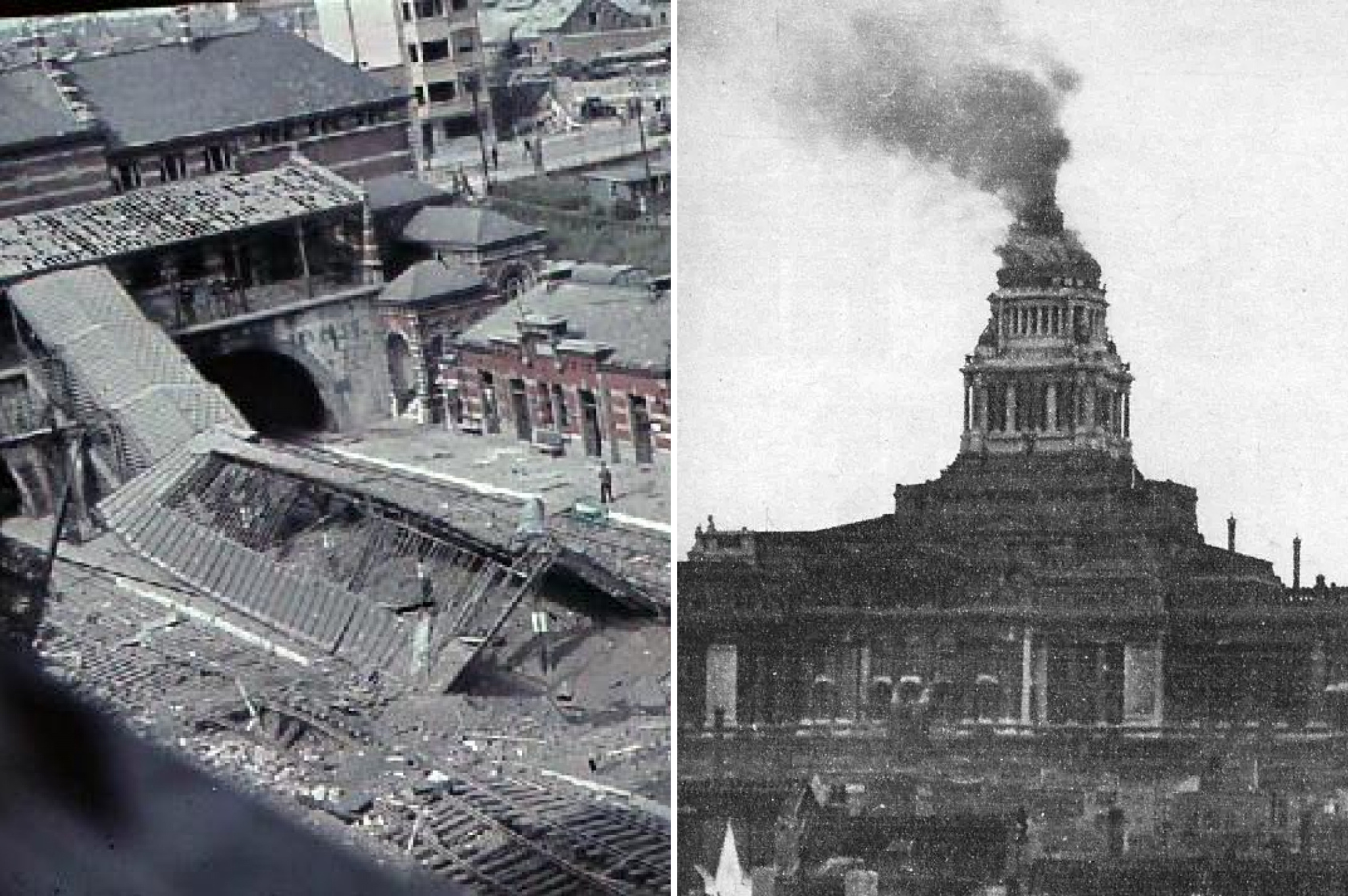
Left: Etterbeek station after being bombed by Allied forces. Right: Palais de Justice set on fire by escaping Nazis, 1944.
Another address used was 4 Champ du Vert Chasseur (1000), just by Bois de la Cambre, which was damaged during the war after housing first Nazi and then Allies soldiers. There was a Soldatenheim [Soldiers' Home] on Boulevard Botanique that was freed by the resistance during the liberation of Brussels, although the exact address is unclear (maybe demolished).
In Forest, part of Manufacture Frans Fils shoe factory on 302-302a-304 Avenue Van Volxem (1190) was requisitioned by the German army as a pharmaceutical warehouse.
There was also a recruitment centre for the German Navy (Kriegsmarine) on Rue Neuve (1000), which was set alight on the day of liberation by Belgian Resistance, while its headquarters was the Art Nouveau gem at 86 Avenue Franklin Roosevelt (1050).
A monument today lies at the scene of the now-demolished Tir National in Schaerbeek on 102 Rue Colonel Bourg, 1030, where prisoners were assassinated in both German occupations, as was the Saint-Gilles Prison.
Perhaps most famously, the Palais de Justice is where the Nazi held their occupation archives. Hitler was said to be a huge fan of the building's grandeur. As the city was being liberated, the Nazi's set the palace on fire in one final act of petty revenge.
For an account of the Liberation of Brussels, read this. Have we missed any? Let us know!
