
After a striking press conference by Brussels Public Prosecutor Julien Moinil on Tuesday, political parties are now demanding measures and more resources to combat the increasing drug violence in the capital. However, the cry for help has been met with a wall of silence.
So far, 20 shootings have taken place in Brussels this summer, resulting in two deaths and eight injuries. This number even rises to 57 when taking all of 2025 into account. In light of these alarming figures, Moinil highlighted the underfunding of the police and the judiciary, and problems with the camera network.
"Should we wait until innocent civilians are killed before investing the necessary resources?" Moinil said during a press conference.
The Brussels Times contacted the office of Brussels Minister-President Rudi Vervoort (PS) for comment, but did not receive a reply. However, his office told VRT that Moinil's criticism was "aimed at the Federal Government. That is where the additional resources should come from."
Yet, the Brussels Minister-President himself is the one responsible for public order in the capital. Over a year ago, he took on the coordination of the fight against drug trafficking in Brussels. At that time, the Brussels Regional Security Council also identified 15 hotspots where priority is given to safety and prevention.
Six months to fix 20 years of inaction
Moinil stressed that the police and the judiciary are doing their best, but Belgium's many governments are falling short in many areas when it comes to security and drug violence; the additional 30 people he got for the Federal Judicial Police are not enough, he stressed.
"I do not want people to think that the judiciary is not doing its job. Since January 2025, a total of 6,211 adult and 874 minor suspects have been placed at the disposal of the Public Prosecutor's Office – a threefold increase," he said.
This work destabilises some gangs, which is causing other gangs to try and seize territory. However, there are too many to keep up with: more than 600 people are active in organised crime in Brussels, potentially employing thousands of people.
"We are trying the best we can," Moinil stressed. "But we cannot solve 15-20 years of lax policies in six months."
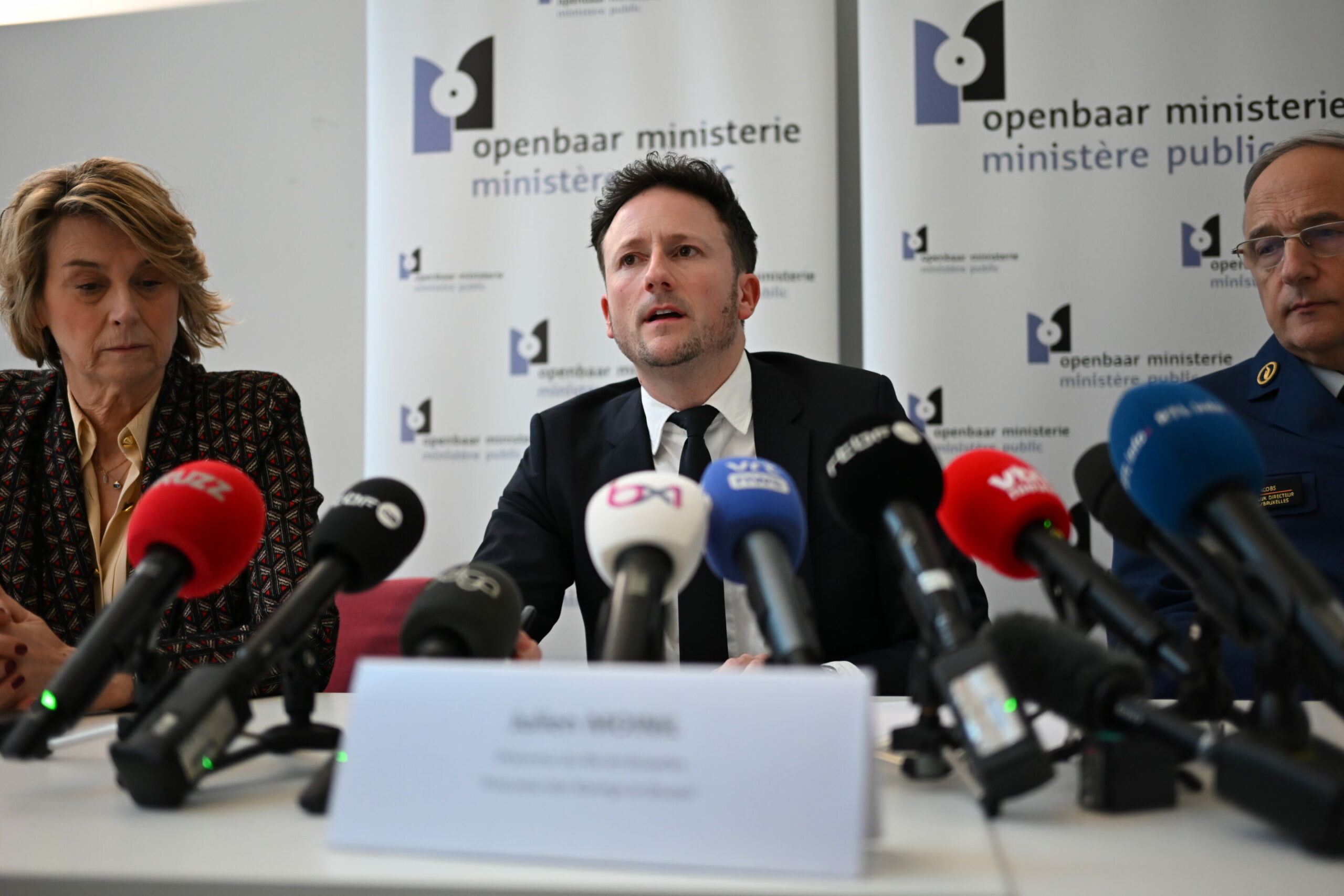
Brussels Public Prosecutor Julien Moinil (middle). Credit: Belga / Eric Lalmand
For help, he is primarily looking to the Brussels Government – which has still not been formed, even over a year after the elections in June 2024. Since the recent wave of gun violence, no additional resources have been allocated to tackling this problem, he said. "But they are desperately needed."
Following the press conference, his criticism was shared by the Brussels factions of several political parties, including Flemish nationalist N-VA, French-speaking socialist PS, and Brussels regional DéFI. The acting mayor of the municipality of Molenbeek Saliha Raïss (Vooruit) spoke out.
Raïss said that she supports Moinil's call to strengthen the capacity of the police and judiciary in Brussels. Last week, she already called for "structural measures" in response to the shootings in her municipality.
Culpable negligence?
Additionally, she believes a task force should be established at the federal level to address the escalating drug violence in Brussels. "The drug and arms trafficking and the crime that are currently affecting our region originate in other major cities in the country, and the federal level must also keep its word."
Raïss stressed that the reinforcements Brussels and Molenbeek have received so far are "not structural" and "do not yet correspond to the reality on the ground. We must go further."
Meanwhile, Brussels MP Mathias Vanden Borre (N-VA) sees Moinil's message as confirmation for what his party has been saying for years: Brussels has a structural security problem. He criticised the fact that the regional camera network is 10 years old and costs millions of euros, but is still not fully functional.
"Without footage, the police cannot do their job properly," he said. "Brussels needs a decisive government that makes security a genuine priority. Inaction is culpable negligence."
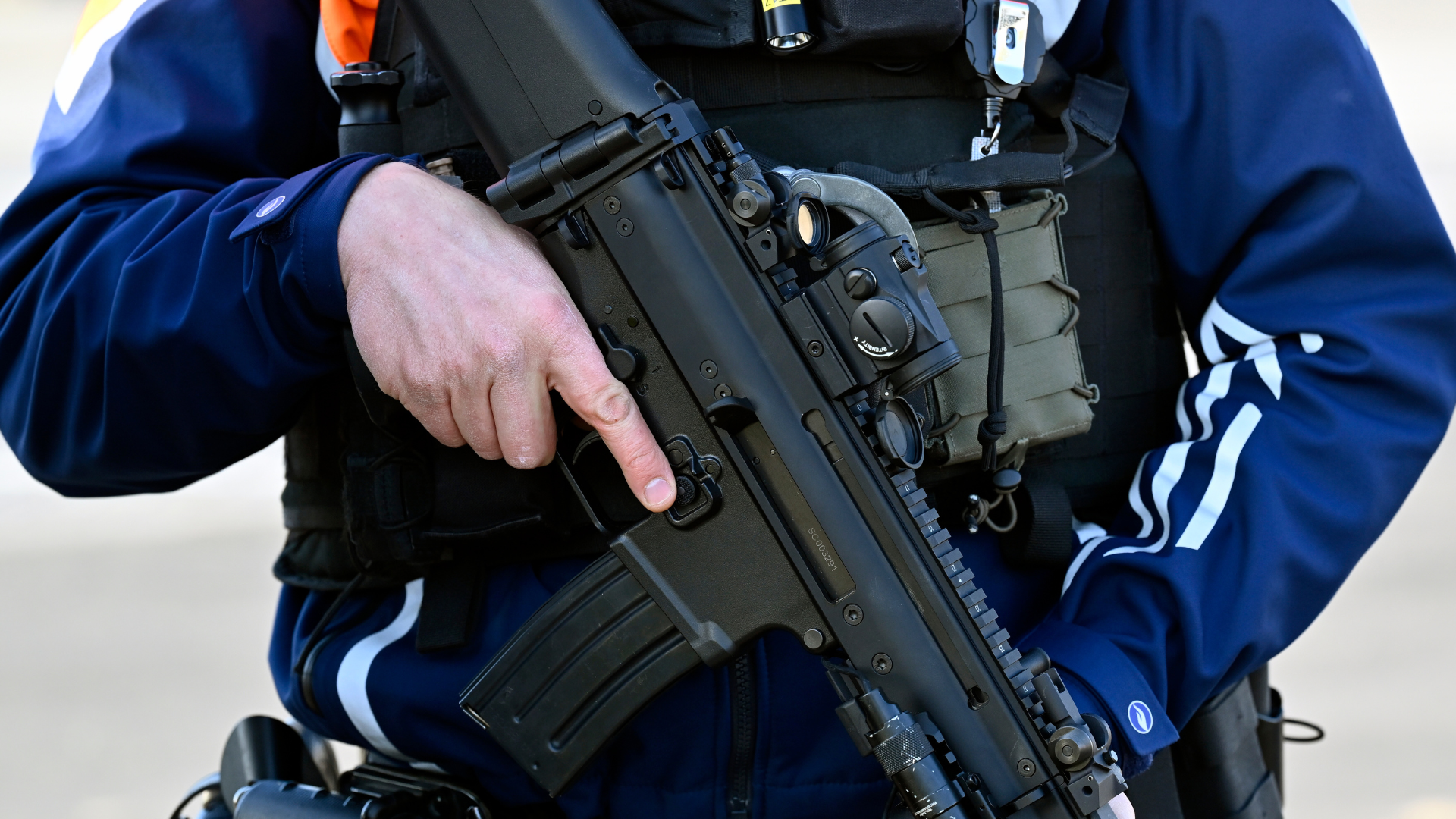
Image of a police officer holding a weapon. Credit: Belga
On social media, outgoing Brussels Employment Minister Bernard Clerfayt (DéFI) echoed Moinil's words, saying: "it is time to wake up."
He posted an urgent call for resources to tackle the drug violence. "Will the police receive the resources from the government to effectively combat this harmful drug trafficking and its deadly consequences? Reminder: there is a shortage of €70 million per year."
Meanwhile, PS group leader in the Brussels Parliament Ridouane Chahid took to X to wonder where the Federal Ministers of Justice, Annelies Verlinden (CD&V), and Interior Affairs, Bernard Quintin (MR), were in this situation.
"Where are they? Where are the budgetary and human resources? Enough with the slogans, let's take action! The campaign is over. Now they have to do something. Take responsibility," he said.
Closely monitoring
The office of Verlinden responded briefly to Moinil's statements, saying that she had already announced that part of the additional resources obtained through the Easter agreement "will also be used to strengthen the judiciary and, therefore, to combat organised drug crime."
She stressed to VRT that this was agreed within the framework of consultations with the judiciary and consultations with the Brussels Public Prosecutor and the Brussels Attorney General. A few weeks ago, Verlinden also promised additional resources for the National Institute for Criminalistics and Criminology (NICC).
The office of Quintin, for his part, said that the minister was "closely monitoring" the situation in Brussels. "He is working on it every day. We have heard the Public Prosecutor's proposals, and they have been noted," spokesperson Olivier Schotte told Bruzz.
He added that additional measures have already been taken this year. "We have responded to every request from a Brussels police zone for additional support. Since the series of shootings in Anderlecht (in February), federal police officers have been deployed for night patrols in the Midi and West zones."
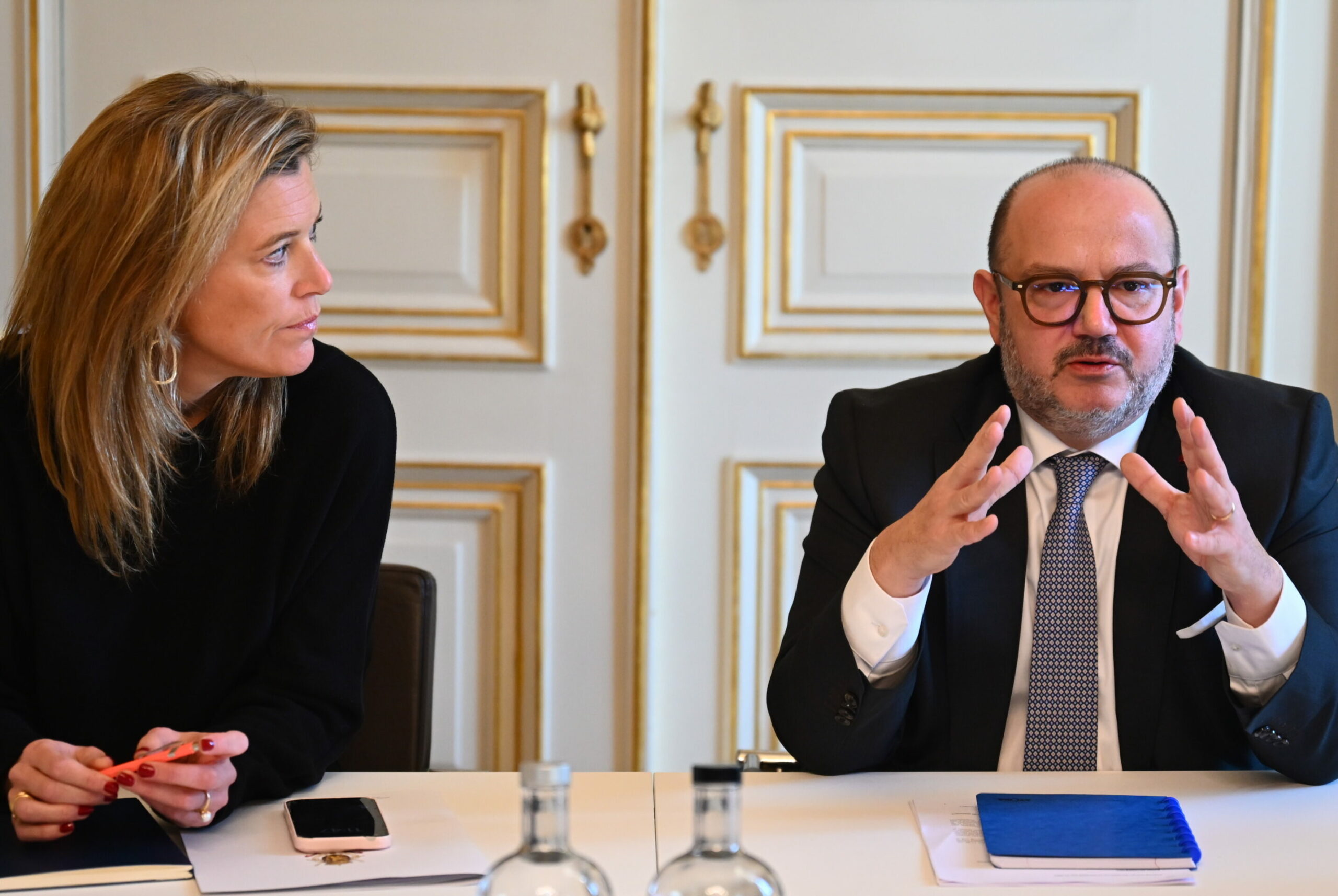
Justice Minister Annelies Verlinden (left) and Interior Affairs Minister Bernard Quintin organise a meeting to discuss recent shootings incidents. Credit: Belga/Eric Lalmand
He stressed that more federal officers have also been deployed in the Brussels metro, and confirmed Moinil's statement that the Brussels Federal Judicial Police has been supported with 30 additional people.
Additionally, a roundtable meeting will be held in early September where Quintin will examine measures to increase the attractiveness of the job of police officers in Brussels.
The planned merger of the six Brussels police districts will also improve security, Schotte said. A review of the Brussels police's funding is also being worked on, but as part of a general reform for all police districts. A working group on this has already met about 20 times, "but this is a far-reaching reform, which takes time."
"We know there's still a lot of work to be done, for example, to address the understaffing of the Federal Judicial Police, but that's also being worked on."
