
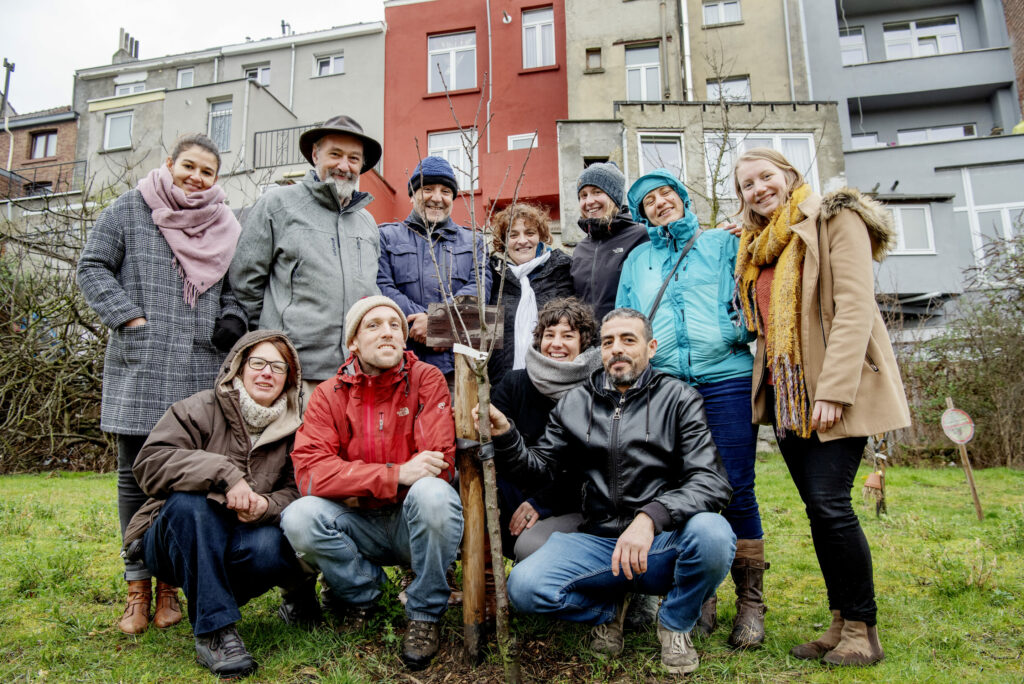
When was the last time you ate fruit picked directly from a tree? Over the last few years, a quiet revolution has been taking place in the squares, roundabouts and balconies of Brussels with fruit trees popping up to combat the grey.
The aim - to bring the sensation of picking and eating a fruit back to the residents of the city, while also strengthening communities and improving the resilience of the food system in Brussels. The Brussels Times spoke to those taking part.
"We wanted people to reconnect with a pear or apple grown on the tree, free from chemicals and that sort of thing." Danielle Beeldens, from Square Marguerite, saw this as a worthy goal to pursue. Ten years ago, she tried to take over part of the square near the EU institutions, but was rejected by the commune for "invented reasons that weren't really accurate."
The community persevered, pushing back to demonstrate their competence through an EU-funded initiative, and two years later, the keys arrived.
Square Marguerite is flanked by apartments that "don't have gardens". Danielle notes that many wanted to bring their children to show them how to work with nature. Now the project is bearing fruit, literally, with the proceeds from the garden being distributed among the community or through initiatives to support the homeless.
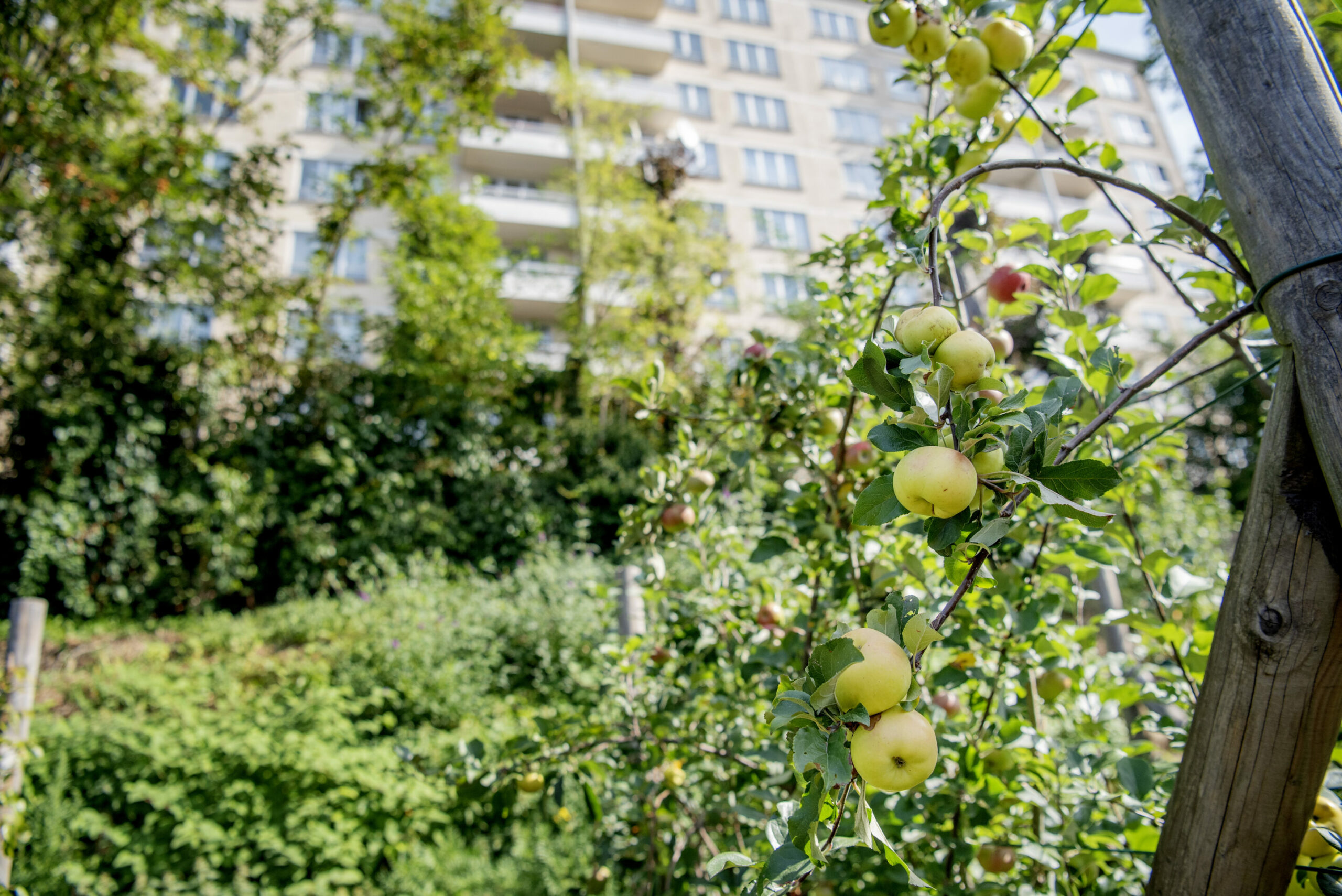
Credit: Velt
Square Marguerite is just one of many community groups that have benefited from a fruit tree initiative run by Velt and supported by Brussels Environment. Through this programme, residents and groups can benefit from a 10% discount on the cost of buying a tree as part of a Brussels-wide bulk purchase.
Since 2019, over 8,000 fruit trees have been distributed to individuals and community groups by Velt. Haut Woluwe is another one of these groups which planted their fruit trees in the spring of 2018, and where "visitors to the park can help themselves", explained Béatrix Tilquin from the neighbourhood committee.
Square Marguerite and Haut Waluwe join many others trying to bring more fruit trees to Brussels. Trees have been planted in schools, roundabouts and in private spaces. Uccle municipality will also be working with Velt to distribute trees for free in neighbourhoods with high concentrations of social housing as part of its Climate Plan.
Catheline Pieters from Velt shared that the City of Brussels also has several orchards used to put on workshops to "support the community understand how to care for the trees and share the proceeds".
The target for 10,000 fruit trees in Brussels
This November, Velt are aiming to distribute enough fruit trees and bushes to reach 10,000 distributed. A key part of their strategy is encouraging residents to get trees for their balconies.
"The trees are well adapted to city life," Pieters confirmed to The Brussels Times. For balconies, residents can buy trees for specific levels of shade or shapes to meet their needs. "We hope that everyone can find something they want," she said, with fig trees for balconies starting at €15.
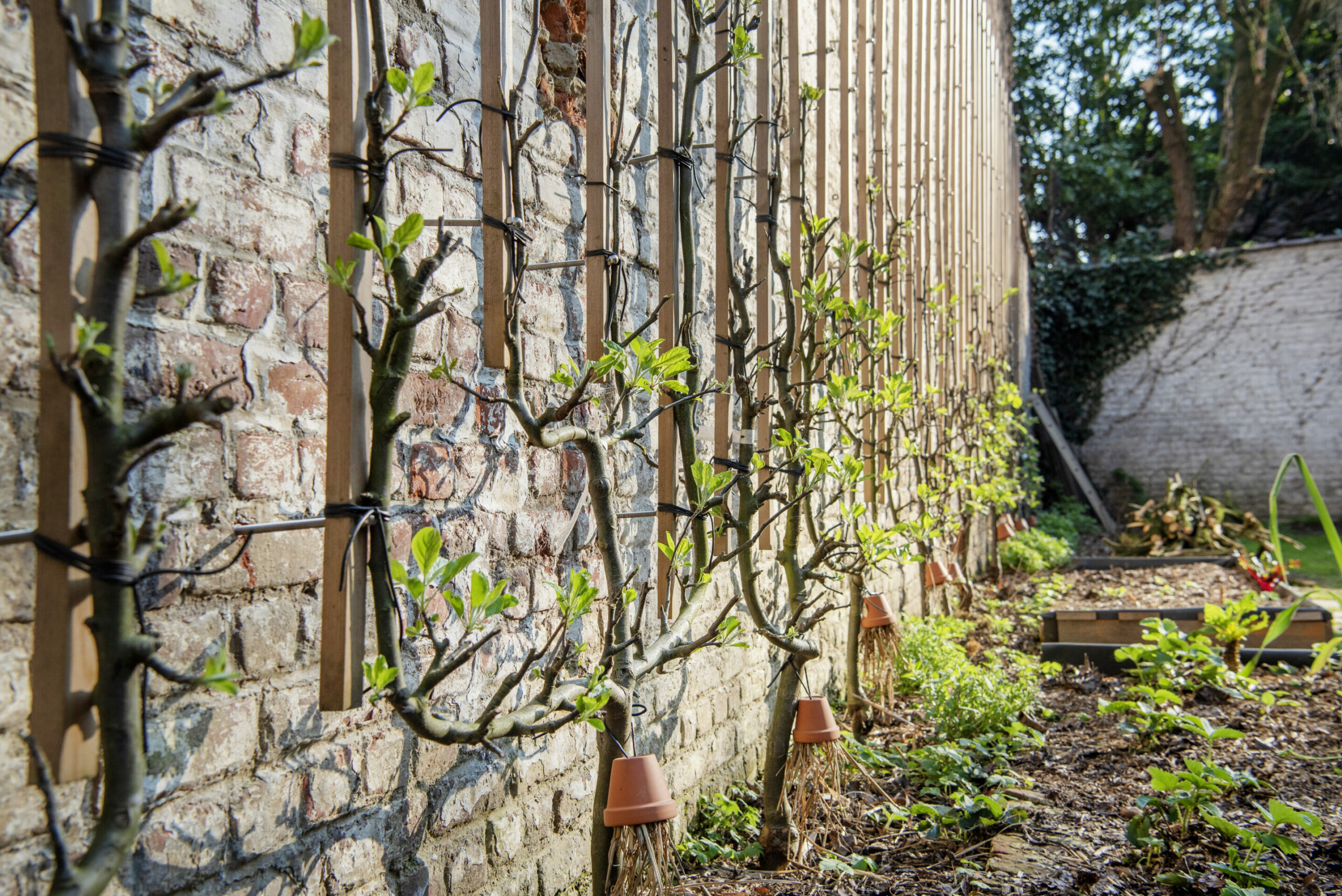
Fruit trees budding. Credit: Velt
Despite the number of trees distributed, Beeldens cautions that this isn't all easy, "sometimes I am discouraged, then other days it is fine again, things will go more or less how they have to go." The trees are planted young and take time to fruit, perseverance and resilience are key ingredients.
And when they do fruit, some groups have had to manage this success. Tilquin notes that Haut Waluwe's trees "have recently become quite productive, and this year we are trying to discourage park visitors from picking the fruit" before they ripen. To counter this, the trees now come with QR codes so that visitors can understand what they are and when they are ready to eat.
Is Brussels a good environment for fruit trees?
One of the main barriers to success is likely to be doubts about how safe it is to eat fruit from trees grown in Brussels. In a city with worsening air quality, how feasible is it to grow and consume fruit from trees in Brussels? Maëlle De Brouwer (Ecolo-Green), a member of the governing college for Uccle municipality, downplays this concern.
She explains that the municipality took part in research alongside Forest commune, Brussels Environment, Velt, and the Centre for Urban Ecology to answer this question. This research found that most of the Brussels-grown fruits analysed met EU limits, "the fruits tested had contamination levels comparable to those sold in shops," she explained.
Despite this, residents who want to be sure about the quality of their soil can contact Brussels Environment for a free soil analysis, and Velt can offer guidance not just on the best trees but on how to navigate taking over a public space as a group.
On Friday, the window opened for this year's bulk purchase. Following the deadline of 1 October, the trees will be distributed from the end of November, including instructions on how to care for them so they survive.
The municipalities of Jette, Anderlecht, Molenbeek, Uccle, Woluwe-Saint-Lambert and Schaarbeek are working with Velt to support distribution.
"There are plenty of fruiting shrubs that grow well in pots and are perfectly suited for balcony cultivation", referencing factors such as balcony size, sunlight, and orientation, De Brouwer encouraged those interested to "get in touch with Velt, who can recommend the type of fruit tree that would work best."
