
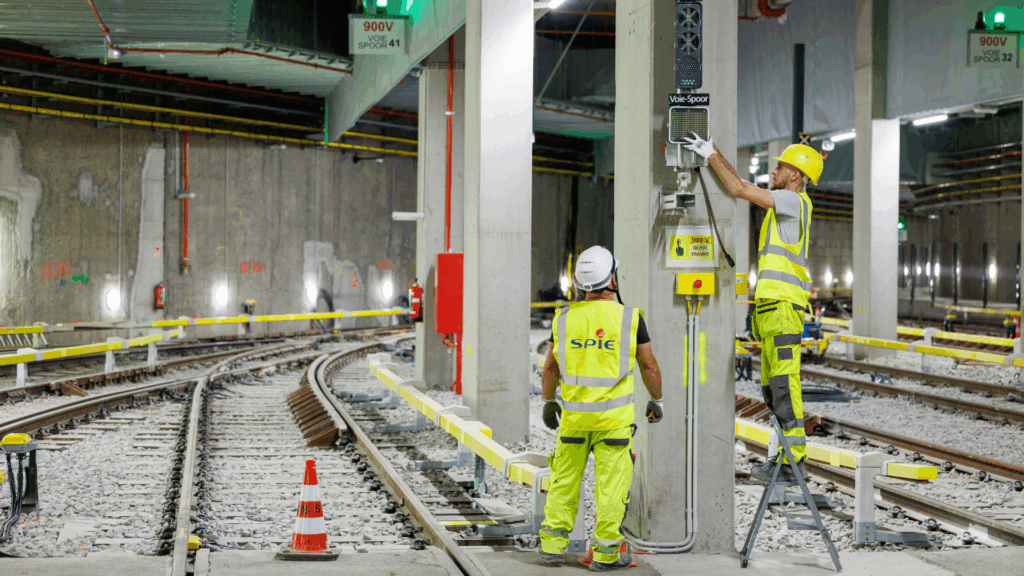
The installation of a new signalling system is set to decrease the waiting times on metro lines 1 and 5, according to the Brussels transport operator, STIB/MIVB.
While the current system remains functional and safe, after almost 50 years since its installation, STIB is working on upgrading the signalling system with the goal to have a more reliable and flexible metro network.
The current signalling system works via fixed blocks. This means that while a metro train is on a specific block, the one behind it cannot move forward to the same block, ensuring a safe distance between the two trains.
However, the more modern system works through direct communication between the metro trains instead of fixed blocks, allowing each metro train to know how far they are in front or behind others at all times. This is known as the Communication Based Train Control (CBTC) system.
The new system would allow metro trains to run closer together. "For passengers, this will mean more regular intervals between trains, smoother incident resolution and, ultimately, shorter waiting times," reads a statement by STIB.
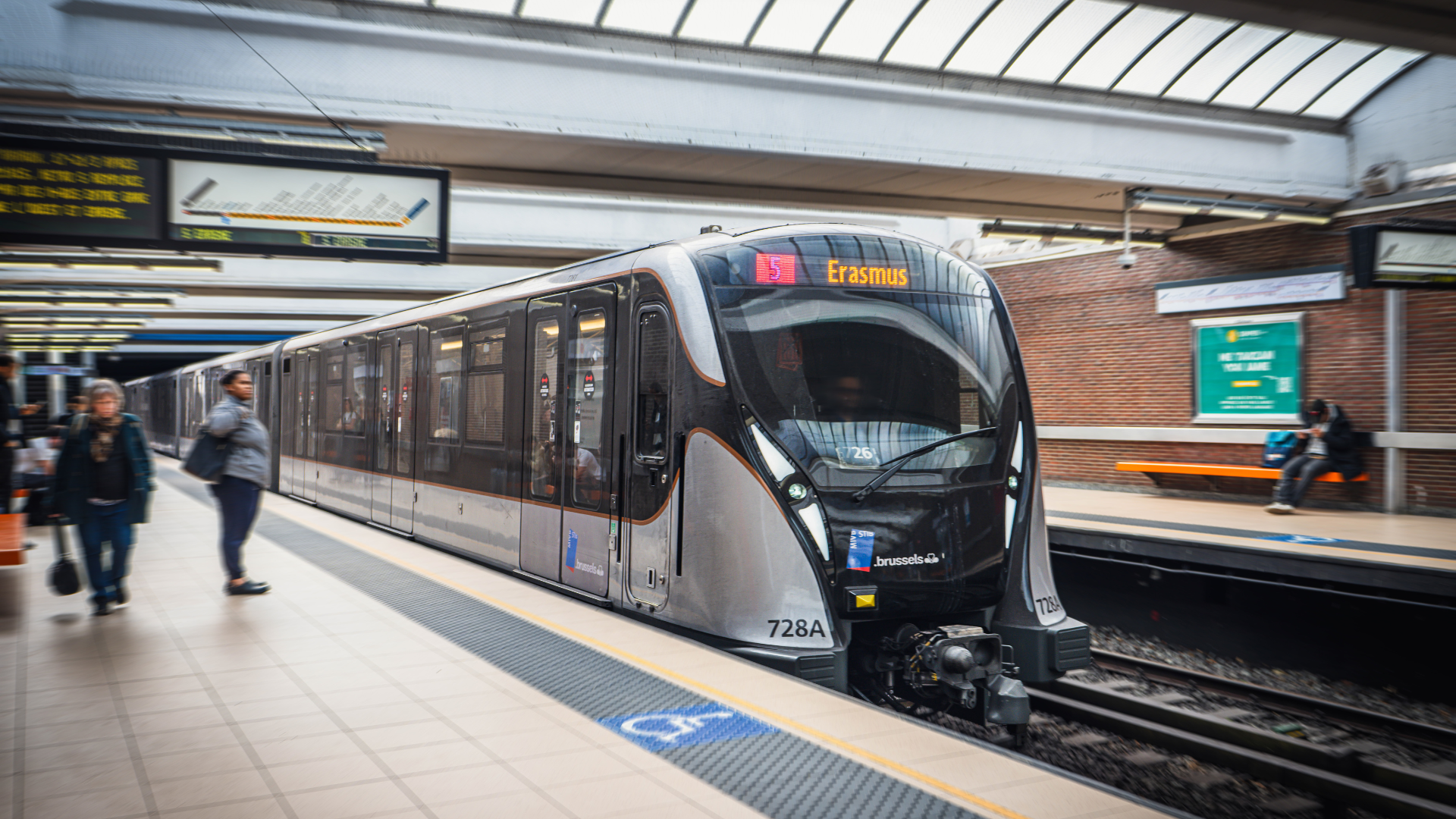
Credit: STIB/MIVB
The transport operator anticipates that the installation of equipment in the tunnels of metro line 1 and 5 will only be completed in early 2026.
Nonetheless, parts of the project have already been concluded over this summer. Currently, work between Jacques Brel and Erasme on line 5 has been completed, while work between between Tomberg and Stockel on line 1 is being finalised. Additionally, progress has been made on the line 5 section between Herrmann-Debroux and Jacques Brel.
Once the installation in the tunnels are completed, the system will undergo several test. Since the start of 2025, around 780 hours of tests have been completed on the line and at the Erasme depot.
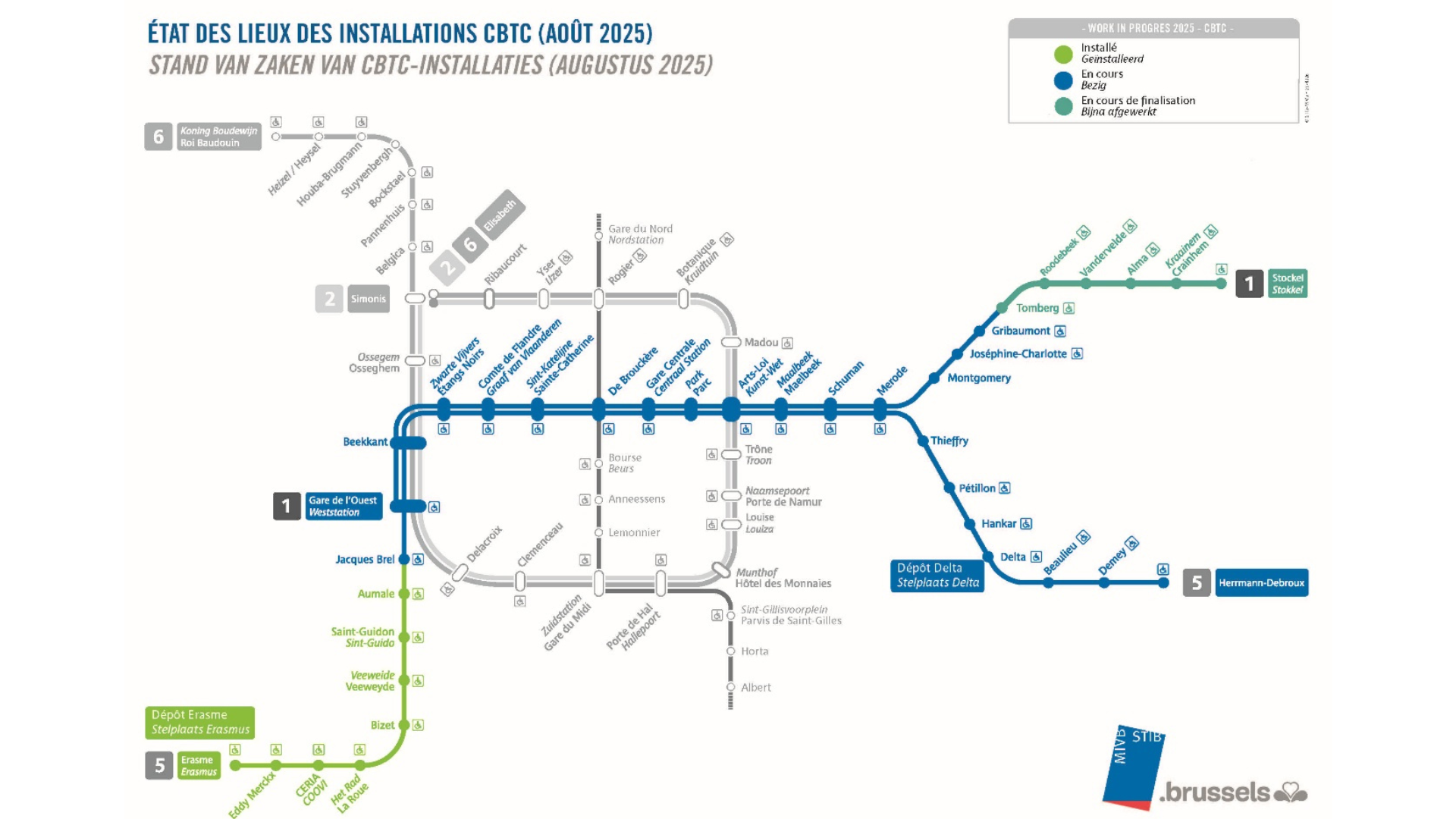
Status of the work done to install the new signalling system. Credit: STIB/MIVB
Additionally, a new supervision software has been installed at the dispatching centre from where STIB teams supervise the metro network in real time. The transition to the new system is taking place gradually to allow for staff to become familiarised with the new interface.
"The signalling system on metro lines 1 and 5 dates back to 1976. Although robust, safe and efficient, it needs to be modernised after nearly 50 years," STIB concluded in a press release.
