
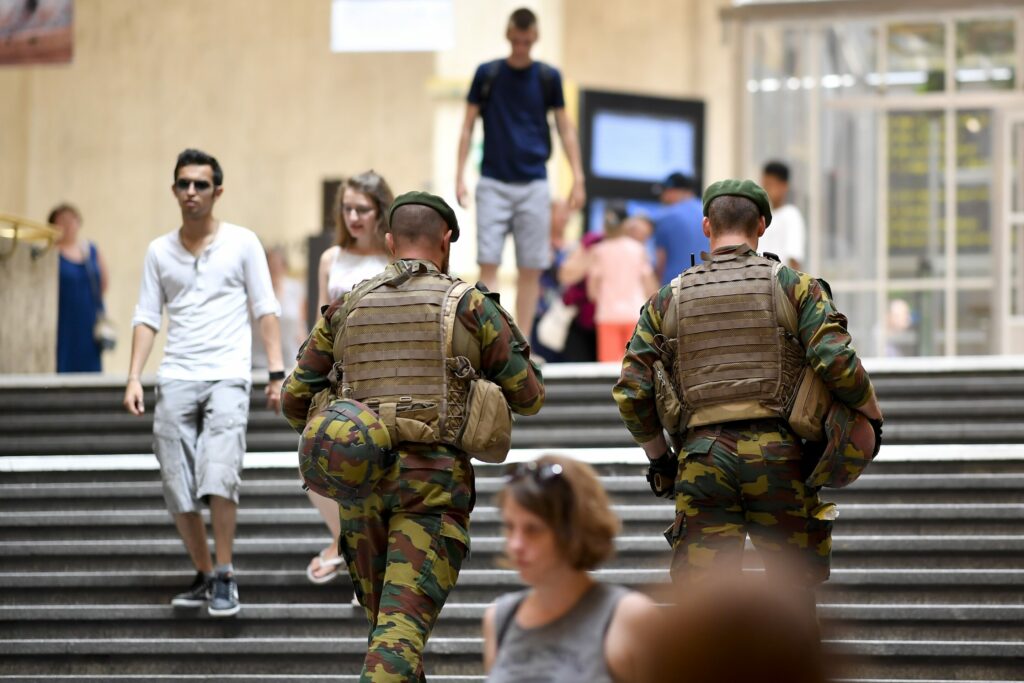
In the fight against drug-related violence in Brussels, the leader of the Francophone liberals MR Georges-Louis Bouchez has again issued a call to deploy the army in and around the designated drug hotspots. The military unions, however, reject the proposal.
The measure would be part of a general plan for security in major cities. In certain sensitive areas in Brussels, soldiers would participate in mixed patrols to support the police to deal with drug-related violence, and have a comparable intervention capacity to the French military, Bouchez stated on RTL-TVi last weekend.
"It is actually quite bizarre that MR is raising this question at the very moment they are also dismantling military personnel's statutes," Chris Huybrechts, chair of the VSOA-Defence trade union, told The Brussels Times.
The military unions have been furious about the Federal 'Arizona' Government's plans to reform the sector for months, stressing that the proposals show "a blatant lack of respect for the military profession." In May, they stressed that military personnel are the only workforce not compensated for every hour worked. Meanwhile, their retirement age is also being increased.
As a result, Bouchez's proposal is "rather illogical," Huybrechts stressed. "On the one hand, you consider the military second-class citizens and do not want to pay them hourly, but on the other hand, we are apparently the solution to every crisis?"
Rules of engagement
The union's main issue is the lack of a legal framework for having soldiers on the streets. "As long as those rules of engagement are not clear, you cannot put soldiers on the street, because there is no way to protect them."
The military does not have police powers, meaning that there are no laws on how to intervene, said Huybrechts. "Soldiers carry different weapons than the police. If something happens and they have to take action, what are the rules? We need assurances that military personnel will not be held personally liable in case something happens."
For the unions, the question the Federal Government should ask is not whether soldiers could be deployed in this context, but rather should they not ensure that the soldiers are properly protected before deploying them.
"Soldiers do not have police powers. If certain things happen on the street that require intervention – and these things apparently happen every other day in Brussels lately – then they must also be protected, legally speaking," Huybrechts said.
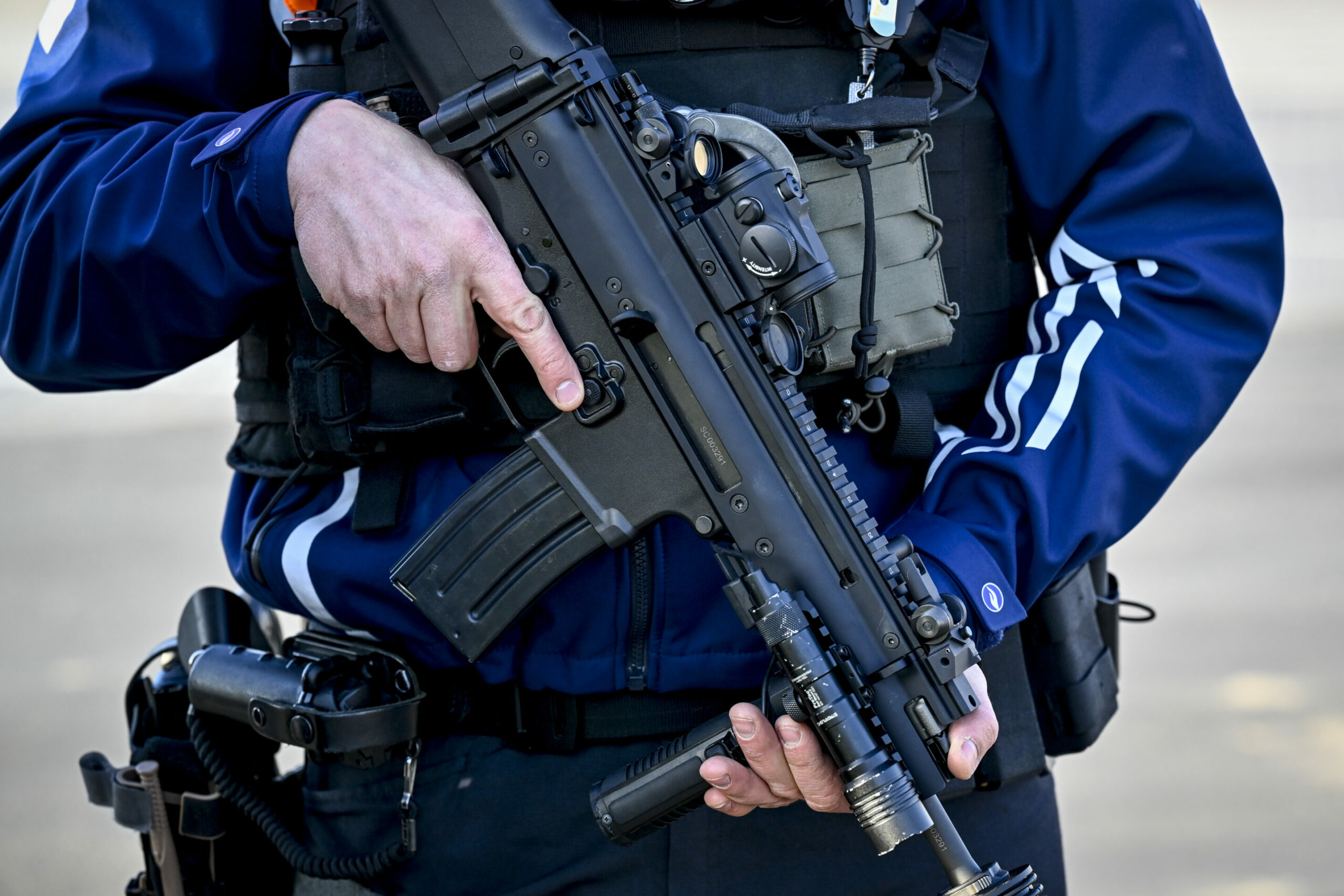
Hands of a police officer holding an automatic rifle. Tuesday 18 February 2025. Credit: Belga / Dirk Waem
According to MR, the army should be deployed at certain metro stations, in the Peterbos district in Anderlecht, and several neighbourhoods of Molenbeek.
Meanwhile, Interior Affairs Minister Bernard Quintin (MR) stressed that "we must dare to take radical measures," given the seriousness of the situation. "Everything must be done to restore security and order in Brussels and throughout the country."
He added that efforts have been made to increase the number of police officers, "but when it comes to drug traffickers shooting at each other in the heart of our cities, we must dare to take radical measures, including deploying the military."
The proposal will be submitted to the Federal Government. The Brussels Times contacted the Defence Ministry for a reaction, but did not receive a response by the time of publication.
No zero-risk scenarios
According to the VSOA-Defence union, "MR would do better to work on creating a legal framework before discussing the easy, cheap solution of deploying soldiers to solve the problem."
While Huybrechts stressed that politicians have been discussing such a legal framework for years, nothing concrete has been put in writing. Even when the army was deployed in the streets across Belgium as a response to the terrorist threat in 2015 and 2016, there was no legal framework.
"If a soldier has to intervene, they can neutralise the threat. But then they have to call the police to come and take over," Huybrechts said. "But if neutralising involves using a weapon, there is always a risk. A bullet that leaves, especially from a weapon of war, can hit something and ricochet, and therefore injure an innocent civilian."
There are no zero-risk scenarios in these kinds of situations, he stressed. "Of course, soldiers are trained to react quickly and effectively, but something can always go wrong."
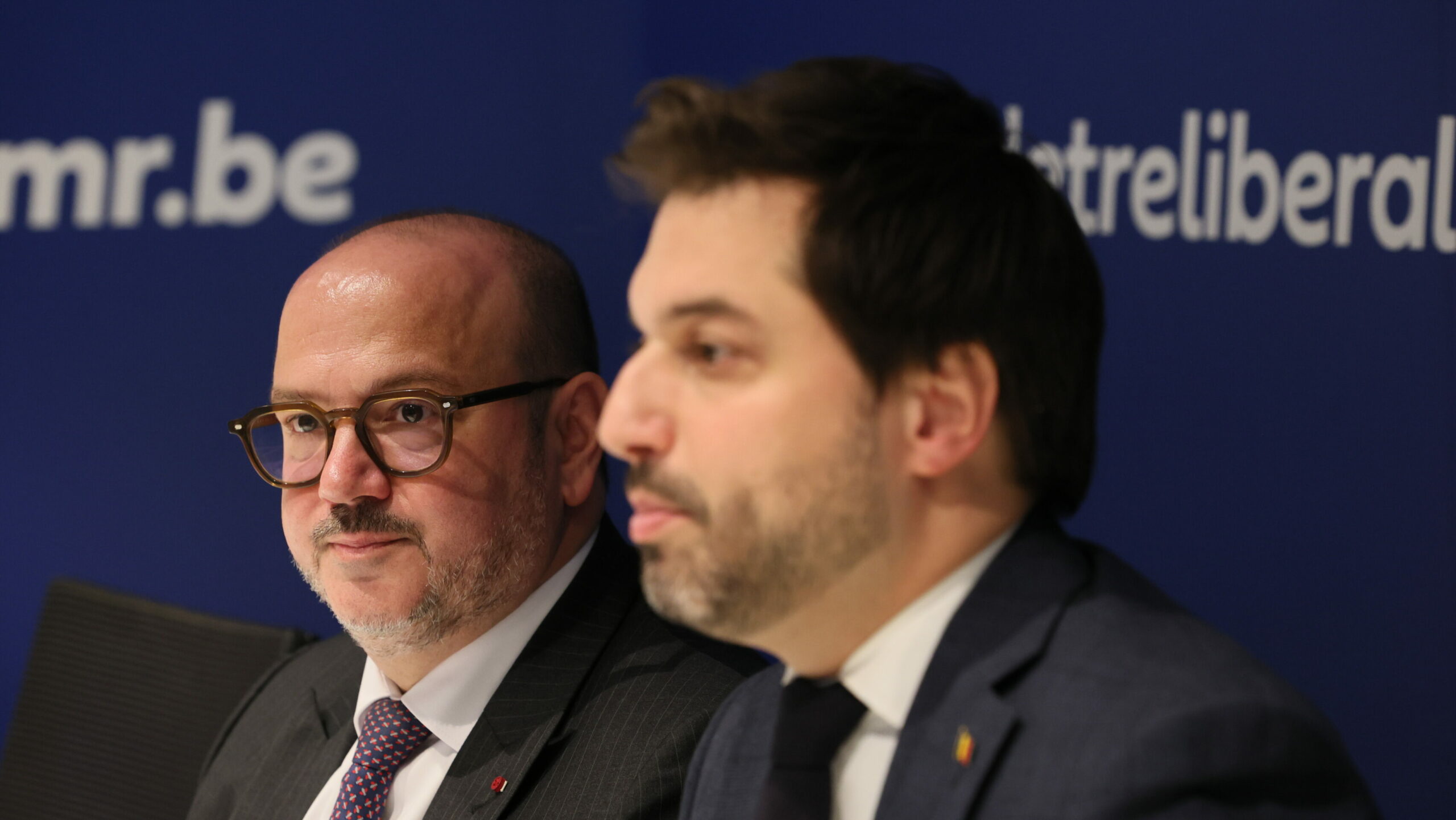
MR's Interior Minister Bernard Quintin and MR leader Georges-Louis Bouchez on 2 December 2024 in Brussels. Credit: Belga / Benoit Doppagne
If the Federal Government wants to legally protect soldiers in these cases, they have to give them an airtight legal framework to fall back on, Huybrechts said. "Or they can give us police powers. But I do not think the Interior Ministry would be too happy with that, because soldiers are not trained for police tasks."
Last year, MR also advocated for the deployment of the military in response to drug violence – a proposal that was heavily criticised at the time. The Defence Ministry also rejected a similar proposal following the spate of shootings in February of 2025, citing the same lack of legal framework for allowing military personnel to take over the duties of police officers.
"We hear Bouchez saying things like this all the time, but he should maybe think twice before he speaks," Huybrechts said. "We agree that the military should be responsible for the safety of citizens; that's not the issue. But you have to take care of your own people first.
Related News
- 'Should innocent civilians die first?' Brussels Prosecutor's cry for help met with silence
- 20 shootings this summer: 'Everyone in Brussels is at risk'
- Anderlecht is not abandoning Cureghem, Mayor Cumps says
- Troops on the streets, cameras, police action: Interior minister's plan for Brussels and big cities
- Soldiers on our streets by New Year - is that really possible?
