
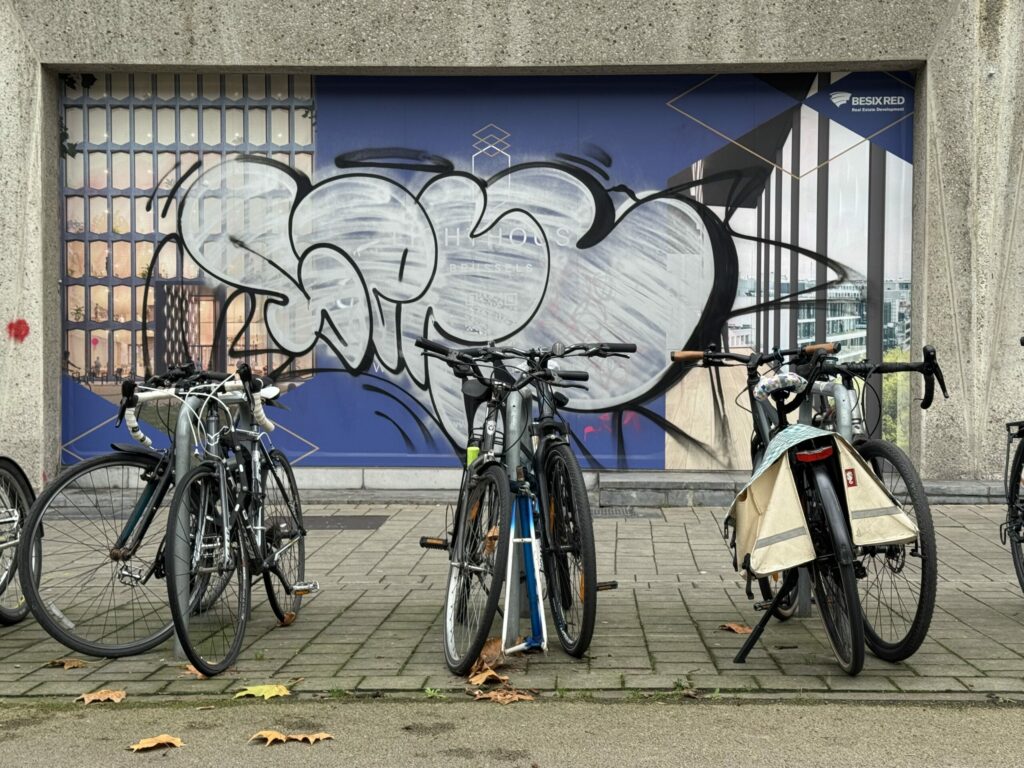
Bike theft happens a lot in Brussels. There is no magic fix. At the Morning Cycles bike shop in Madou, the wall of cumbersome chains, U-locks, and folding plates on affair show that this is an issue that Brussels residents take seriously. But the prices of some of these locks may make cyclists think twice. This begs the question: what actually keeps a bike safe in the Belgian capital?
Pascal, the manager, kept it simple. “No lock is 100% theft-proof,” he said. “Thieves are professionals. They choose a bike and calculate how long it will take. Your goal is to waste their time.”
Build every choice around that idea. Think in minutes. How long will the bike sit alone? How much work will a thief need to do before anyone notices?
Start with two locks
“Two locks are the minimum,” Pascal said. “Heavier is better. That’s the trade-off if you want a real chance to keep your bike.”
His go-to setups are simple: a solid U-lock on the frame with a heavy chain, or a ring lock on the rear wheel with a plug-in chain that clips into it and loops around a rack. Folding plate locks can help, but they work best as part of a combo, not alone. Two different lock types force a thief to switch tools, slowing them down. That beats one pricey lock with one weak point.
What thieves look for
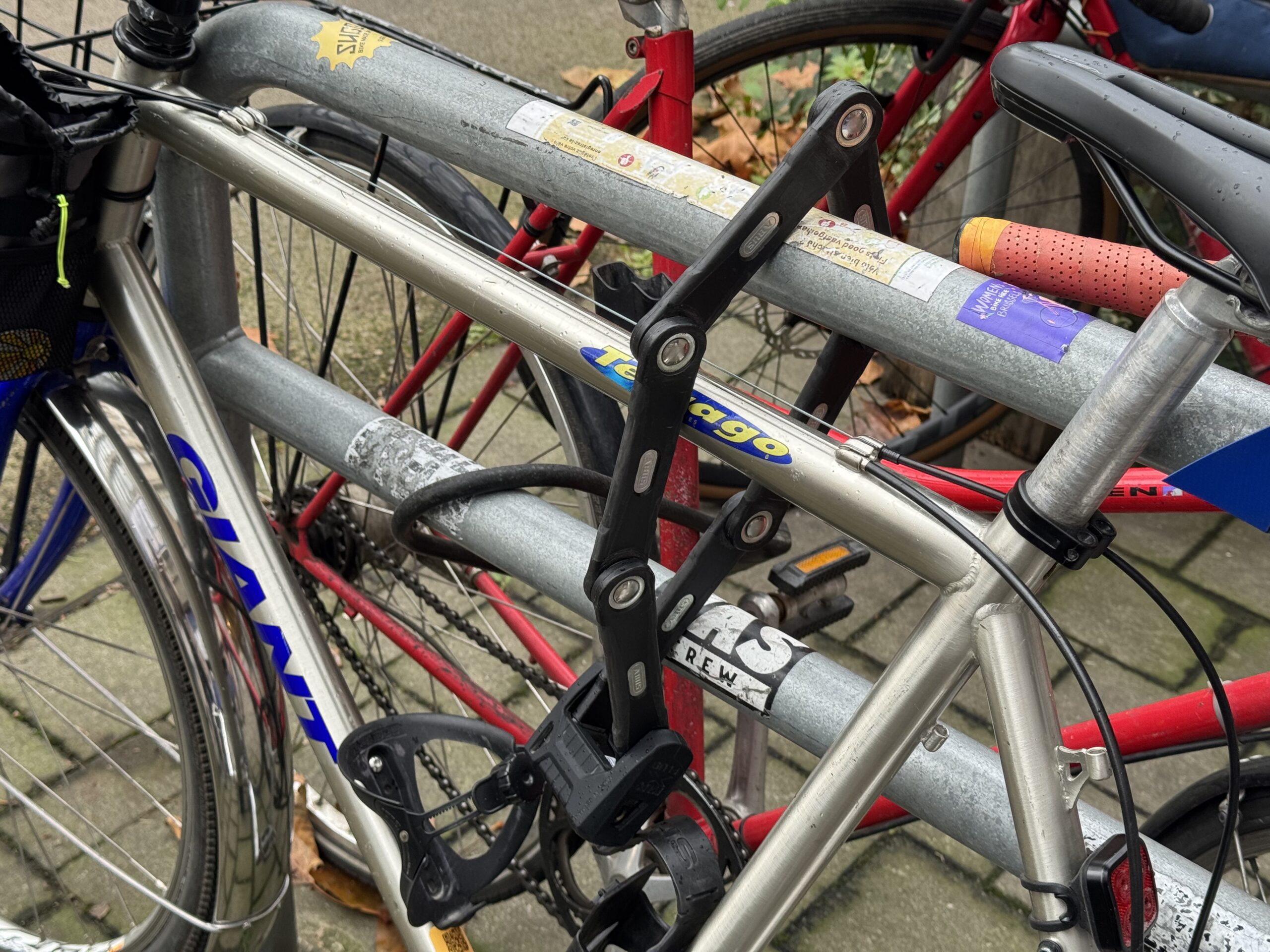
Folding plate lock on the frame at a public rack in central Brussels. Many riders use this as the second lock. Credit: Darius Korickij/The Brussels Times
Thieves want speed and cover. Pascal told me a former colleague ran a street test: he cut his own lock with a battery grinder, loud on purpose, to see if anyone would step in. No one did. People don’t risk getting hurt over a bike. Plan as if no one will help. Choose where you park, when you park, and how long you leave the bike.
Electric bikes need extra care
The most common mistake is simple. Riders leave easy parts on the bike. If your display comes off, take it with you. Bring the battery inside when you can. Swap quick releases for bolts. There is a parts market and thieves know it.
“We have seen frames cut so a big lock stays on the rack,” Pascal said. “You come back and the lock is still there but the bike is gone.” If your bike has valuable parts, don’t count on a thick shackle to solve everything.
Lock it right
Pascal teaches every new rider one habit. Lock the frame and one wheel to a solid closed stand. Keep the lock high and tight so it does not rest on the ground. Avoid thin signposts or anything that moves. If you use a ring lock on the rear wheel, click a plug in chain into it and loop that chain around a rack. Add a second lock of a different type. Take your lights and any quick release parts with you.
What to buy today
Prices change, but the ranges are clear. U-locks start around €50 for basic models. Stronger thicker ones can reach €150 or more. Insurance rated chains start near €75 and go up with length and thickness. Folding plate locks sit in between and work best as a second lock. Small extras like wheel or seat bolts stop quick grabs and cost less than a new wheel.
If you can only buy one thing today, get a solid U-lock. Plan to add a second lock soon. If you can carry two now, pair a rated chain with the U-lock or use a ring lock with a plug-in chain.
What riders said at the rack
On a busy Tuesday morning in central Brussels I did quick vox pops at a public bike rack. Most riders said they use two locks. One commuter said, “I use a U-lock and a chain. It slows them down.” Another said, “If I park longer than an hour I add a second lock. If it’s five minutes I stay in sight.” A third said, “My e-bike stays inside at home. For short trips I take my old city bike.” Someone who lost a bike a few months ago told me, “Now I lock through the frame and back wheel and I pick a rack near a shop or another busy building.”
Where and when to park

Full racks of bikes and a mix of lock setups highlight Brussels residents' fears over bike theft. Credit: Darius Korickij/The Brussels Times
“If you are going to a late show or a night out in the centre, don’t take the bike,” Pascal said. “You will park under the worst conditions and worry all evening.”
For daytime, pick busy well lit racks near shops or cafés. Avoid thin posts, loose street furniture, and anything that moves. Many offices keep bikes in closed cages. Public racks work if you lock well but they are not the same as an indoor cage.
Registration and recovery
Register your bike on MyBike (mybike.belgium.be). You create an account, add your bike details, and MyBike mails you a free sticker with a unique QR code. Stick it on the frame.
Anyone can scan the code to see if you reported the bike stolen and to contact you with the info you choose to share. MyBike is the national register run by the federal government and the three regions.
If someone steals your bike, file a police report first. Take photos of the cut lock, any damage, and the spot. Keep your frame serial number and a clear photo of the whole bike. You’ll need those for insurance. File online or at a station and do it fast.
Related News
- Up to four years in jail for countrywide bike theft gang
- More cyclists are taking out insurance for their bikes
- Crime in Belgium: Less internet fraud, break-ins, but rising pickpocketing and stalking
If you want an extra label, many bike shops also offer QR ID sticker services that link a bike to an owner account. Use that as a backup if you like, but MyBike already gives you a free, official QR sticker.
What the police say right now
“Most thefts are opportunistic, sometimes using the seat as a lever on weak locks," a spokesperson from the Brussels-Capital Ixelles police zone told The Brussels Times. "We also see more thieves arriving with cutting tools. Check racks and posts before you lock because some get sawn or loosened in advance. Always lock your bike, even for short stops.”
They recommend keeping a small bike file. Write down the frame serial and save one clear side photo. If someone steals your bike, add photos of the cut lock, any damage and the spot, then keep everything with your police report number for insurance. After you report, check local “found bikes” groups and the Brussels recovered-bikes depot by appointment.
