
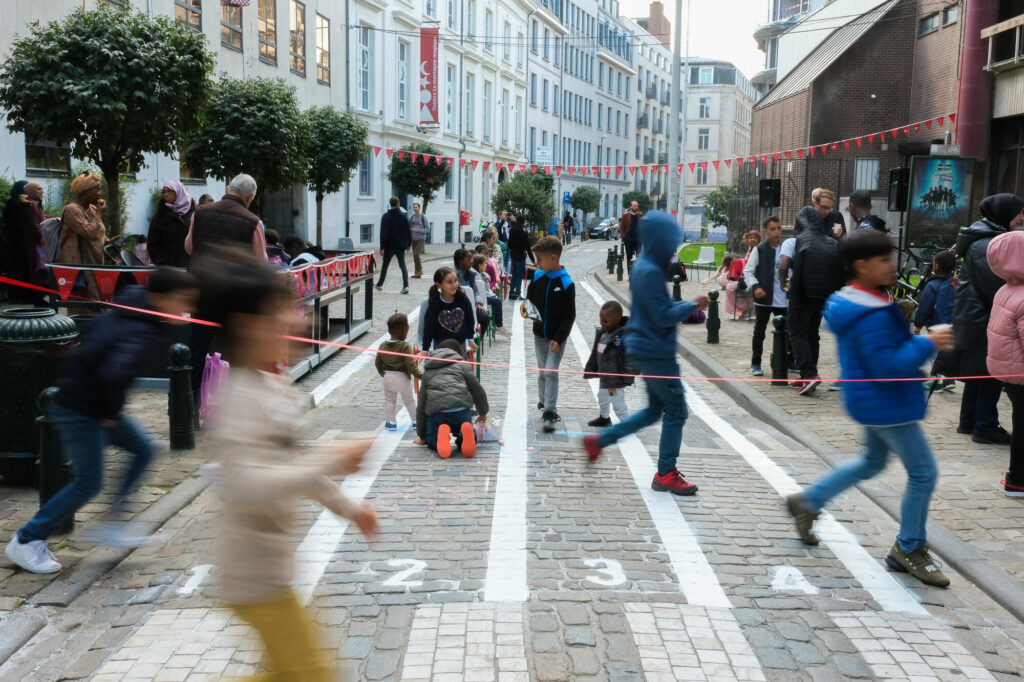
Despite Brussels' bustling traffic – especially during rush hours – just five of the Capital Region's 19 municipalities are committed to developing low-traffic streets in front of their schools, according to a new ranking published by the non-profit Les chercheurs d'air.
Closed to motorised traffic during the start and end of the school day (or permanently), 'school streets' aim to protect children from road accidents, as well as air pollution and noise pollution. In the capital, Saint-Gilles, Forest, the City of Brussels, Jette and Schaerbeek are the only municipalities working on concrete projects.
"It is a shame that some municipalities do not seem to care about the well-being of their children," said Renaud Leemans, Campaign Coordinator at Les chercheurs d'air.
Out of 622 nursery and primary schools in Brussels, 121 are exposed to nitrogen dioxide (NO₂) concentrations between two and three times higher than the threshold set by the World Health Organisation (WHO). None of the schools is below this recommendation.
While only 11% of primary schools in Brussels have a school street, Les chercheurs d'air stressed that 70% could easily have one. "Children's exposure to dangerous levels of air pollution is likely to cause them serious health problems in the short, medium and long term," Leemans said.
This lack of political ambition contrasts with public opinion: 72% of Brussels residents support the creation of pedestrian zones in front of schools. "This situation is all the more regrettable given that school streets play an essential role in children's health and safety, particularly in the context of worrying air pollution levels," Leemans added.
Only five committed municipalities
To draw attention to this problem, Les chercheurs d'air gave the municipalities a score out of 10, based on seven criteria, such as the proportion of schools benefiting from a school street or the promise by municipal mobility councillors to create new ones.
In the ranking, Saint-Gilles comes out on top (7.1/10) – with 40% of its primary schools already benefiting from a school street, and its continued efforts to create new ones.
While Forest (6.5/10) and the City of Brussels (5.9) have a low rate of school streets, they are both committed to catching up by creating new ones – including a pedestrian street in Forest.
Schaerbeek (5.3) and Jette (5.3) also score above average. Nearly 20% of schools in the former already have a school street, but there are plans to create only one more. Jette, for its part, has few facilities but is committed to setting up two new school streets by 2027.
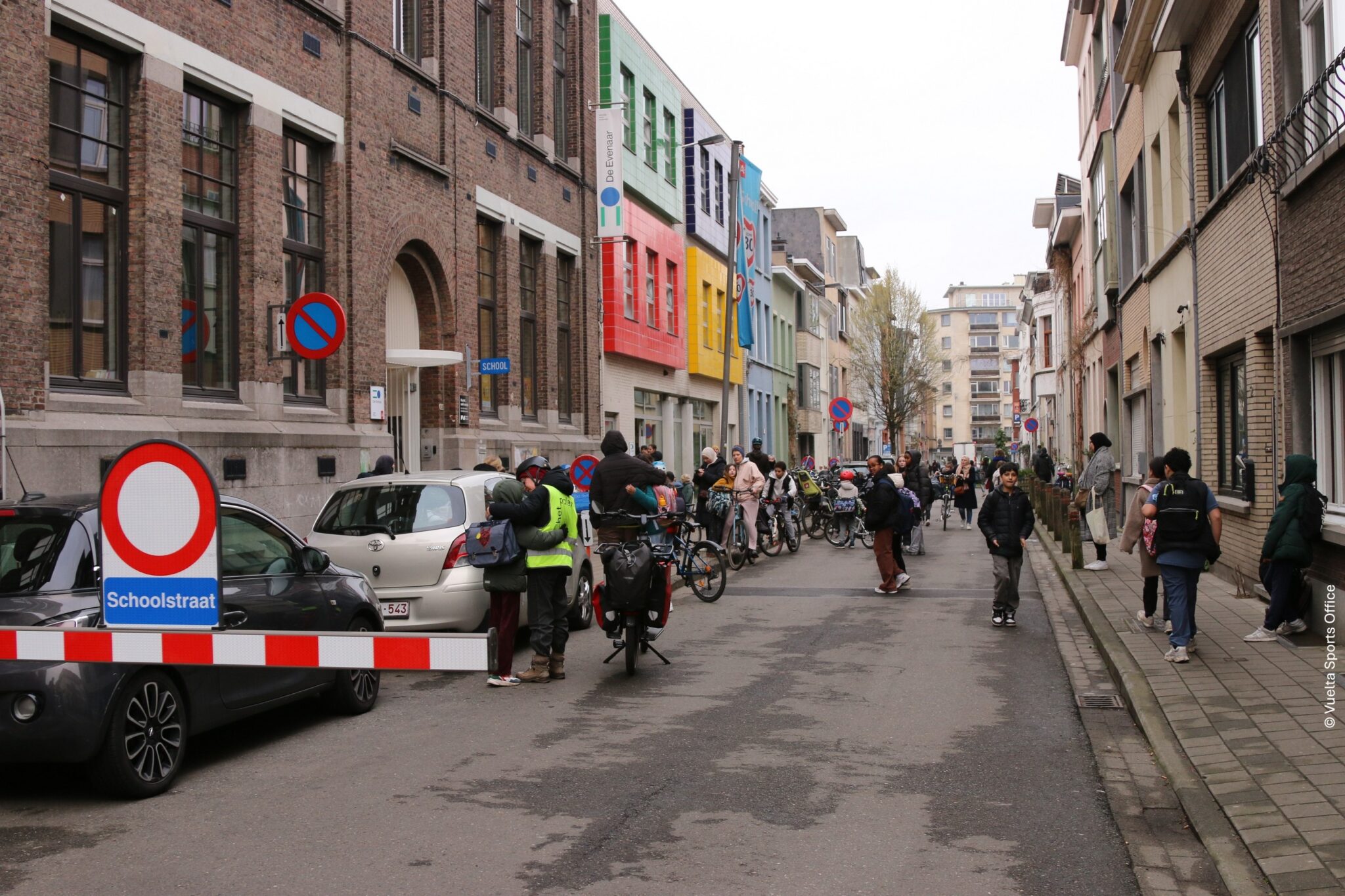
Credit: Belga
The other 14 municipalities did not meet the 5/10 threshold – either due to a lack of existing school streets, a lack of willingness to create more, or a combination of both, according to Leemans.
Watermael-Boitsfort (4.1) and Evere (3.5), in sixth and seventh place respectively, also have low scores but are the only two to have committed to creating a new school street by the end of 2027.
All three with a 2.9/10 score, Ganshoren, Ixelles, and Molenbeek close out the top 10. In a shared 11th place are the municipalities of Berchem-Sainte-Agathe, Etterbeek, Saint-Josse, Uccle, Woluwe-Saint-Lambert and Woluwe-Saint-Pierre, with 2.4/10.
In 17th and 18th place are Koekelberg (1.8) and Anderlecht (1.2) respectively, but the last place is going to Auderghem – with a score of 0/10.
Auderghem is the only one that has not created any school streets, according to Les Chercheurs d'air. "It does not seem willing to remedy this delay, as it does not mention them in its General Policy Statement and its mobility councillor is not committed to creating any."
