
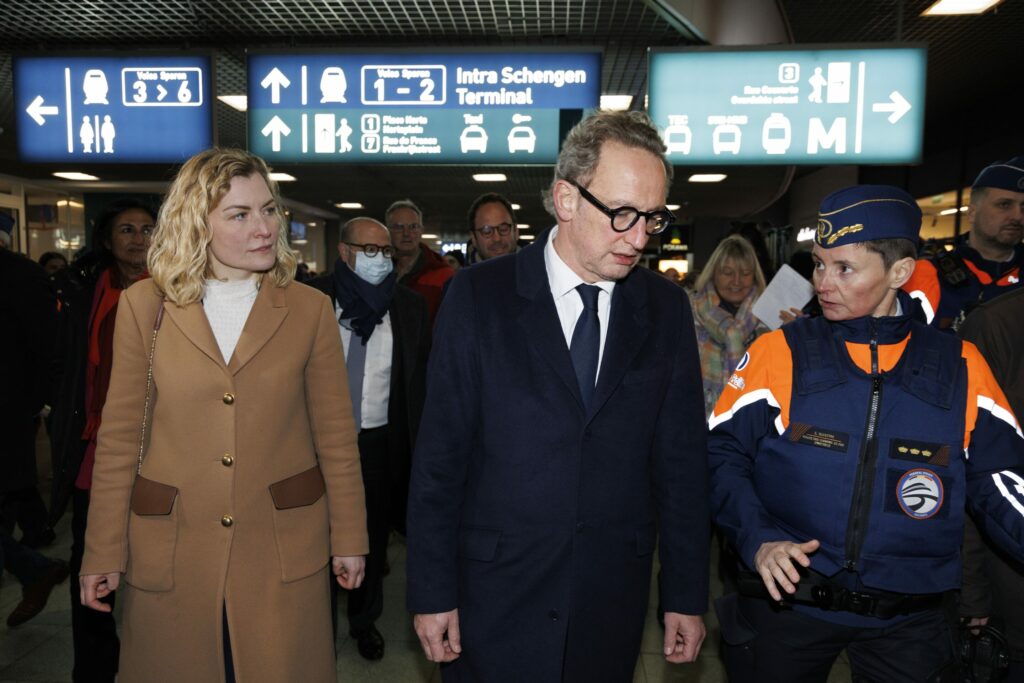
After over 600 days of inaction, the new Brussels Government is determined to "put things in order" in various areas in the Belgian capital. First order of business: cleaning up Brussels-Midi station and its surroundings.
The Brussels-Midi station and the authorities' inability to deal with the continued feeling of insecurity and rising drug use in the area have been denounced by local mayors, neighbourhood collectives and even the Federal Government for years.
Now, however, the new Brussels Government is making Brussels-Midi station its priority, according to the region's fresh Minister-President Boris Dilliès (MR). "The station's image and the security in the area urgently need to be worked on," he told reporters.
"Beyond Brussels-Midi's symbolic value, I think it is important because a station is a gateway to a city," he said on Francophone television. "Here, it is even a gateway to the Brussels-Capital Region."
'A showcase for tourists'
Zooming out, the Midi station is more than that. To those arriving by Eurostar from London or Paris, or by EuroCity or ICE train from Germany or the Netherlands: the station is also the gateway to the entire country – something Dilliès also realises.
“The Brussels-Midi station is a showcase for tourists and investors. People need to feel safe here," he stressed, adding that three key issues play a part: safety, cleanliness, and the social situation of people who are vulnerable in the station neighbourhoods.
During Dilliès's first day on the job, he put his money where his mouth is and immediately paid a visit to the station, alongside his party colleague and Interior Minister Bernard Quintin (MR).
“We need to better coordinate these dimensions and work more smoothly with the municipalities, aid organisations, and the federal level, because the Midi station is a gateway to Brussels," Dilliès promised reporters during the visit.
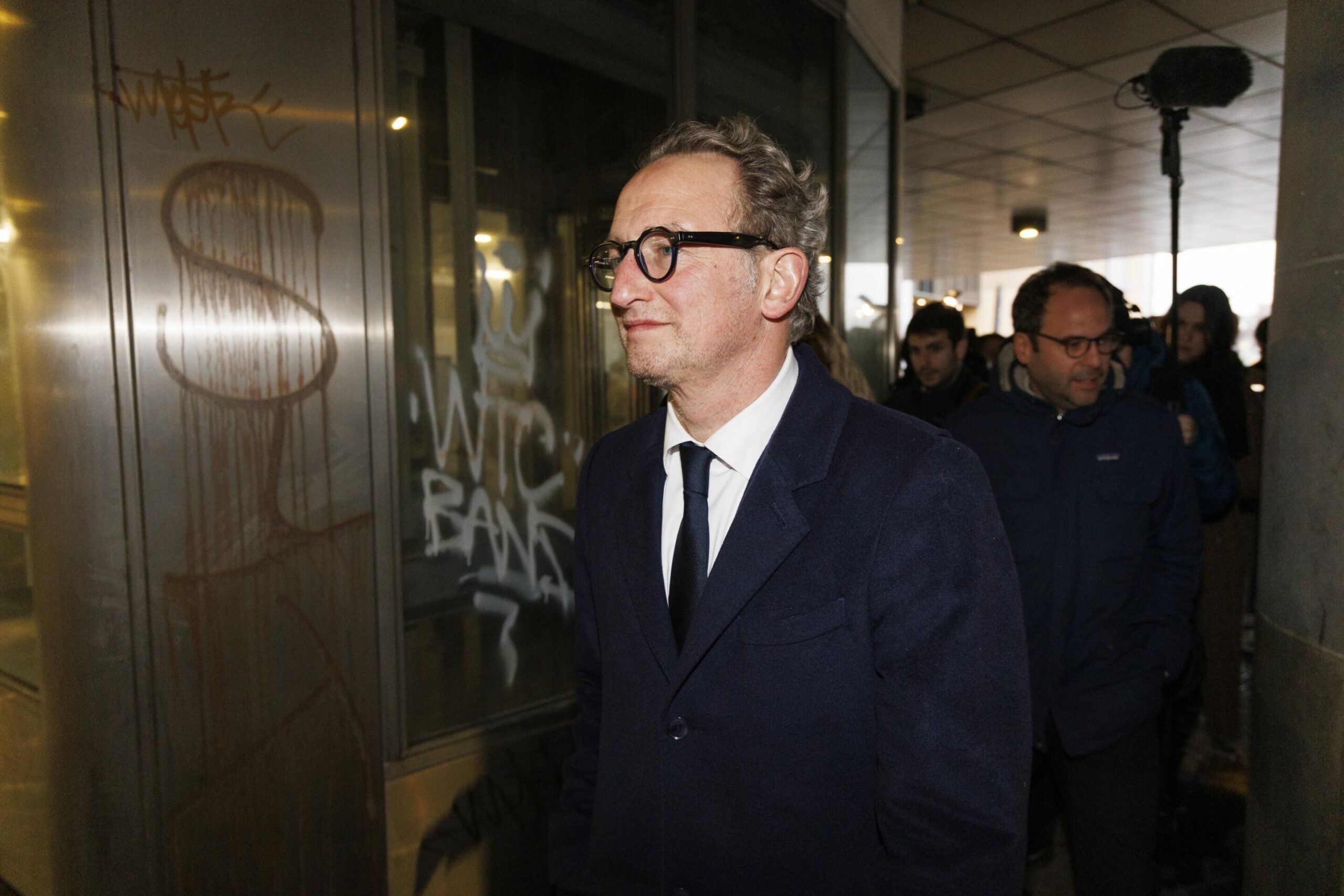
Brussels Minister-President Boris Dilliès (MR) pictured during a visit to the Brussels Midi station, on Monday 16 February 2026. Credit: Belga/Nicolas Maeterlinck
"There are many actors involved. But with the station plan, we want to coordinate everything better. The problems will not be solved tomorrow, but we are going to start right away," he added.
Previous attempts to sanitise the station and its surroundings have not worked, with some asserting that the previous Federal Government's "clean up operation" in 2023 just moved the problem elsewhere, and arguably made it even worse.
Now, the Brussels Government is investing an additional €10 million in securing the perimeter around stations in its territory – in particular the Brussels-Midi station and the Brussels North station – as part of its "enhanced safety and prevention policy" laid out in the coalition agreement.
In addition to focusing on security, stations will also be considered as "priority areas" in Brussels' new redevelopment approach; social policy, safety and cleanliness will get a more prominent role in any urban renewal plan.
From petty crime to global criminal networks
"Like other large cities, Brussels is confronted with international drug trafficking controlled by transnational criminal networks. This criminal activity translates into an increase in certain forms of violence, which have a major impact on the lives of residents in certain neighbourhoods," the coalition agreement reads.
These recent factors come on top of other difficulties, which together form fertile ground for the development of petty crime, anti-social and aggressive behaviour in public spaces or on public transport.
The new "station plan" will be part of "a broader vision for hotspots, using surveillance cameras," the agreement reads.
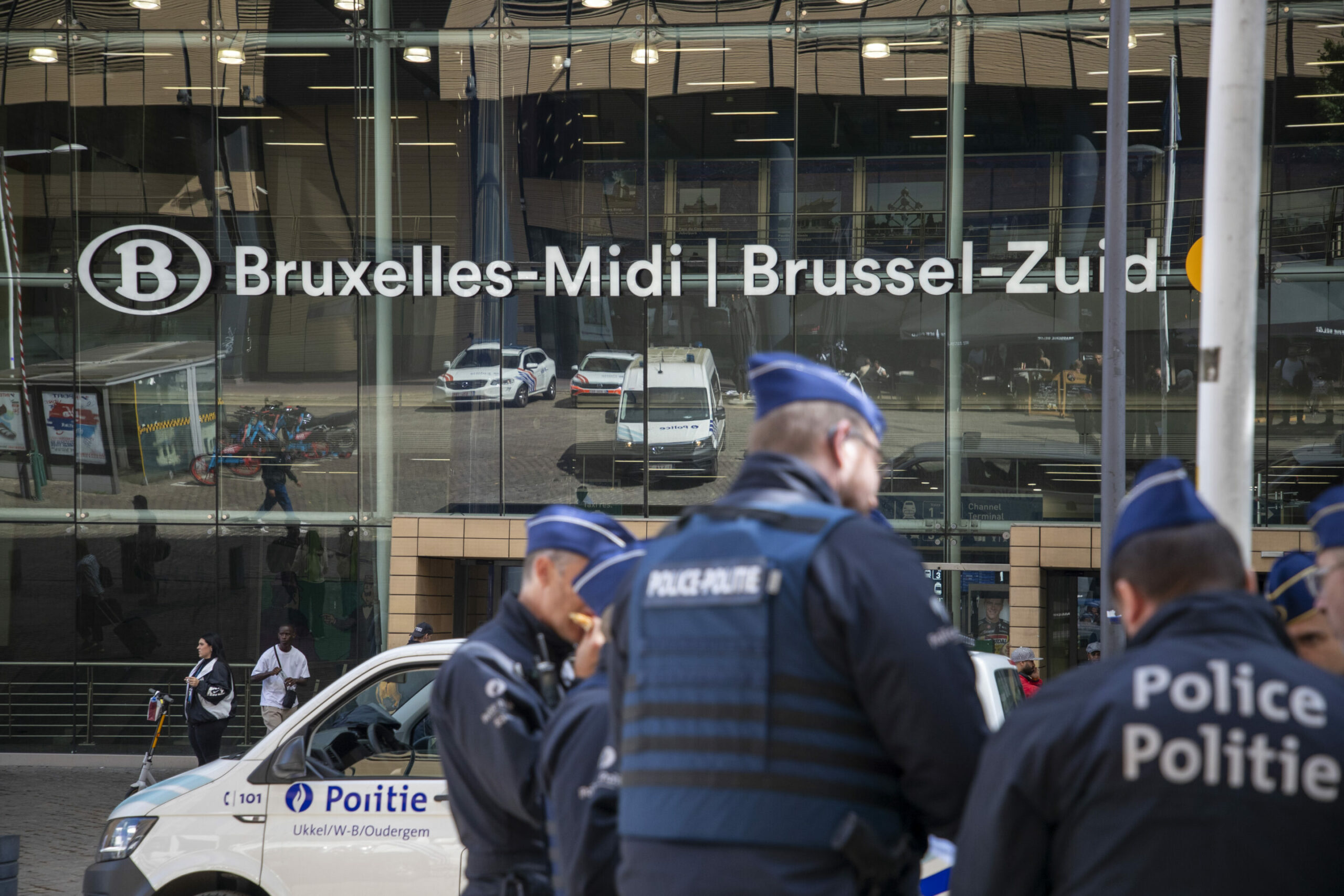
Police officers in front of Brussels-Midi station, Saturday 26 August 2023. Credit: Belga / Nicolas Maeterlinck
To improve security, the camera recording systems of local authorities will also be integrated into the central camera system of the federal police.
This should ensure "a comprehensive and coordinated view of the images" within a clear administrative framework that guarantees respect for competences, fundamental rights and the applicable legal provisions.
The regional prevention and security agency safe.brussels has also been asked to connect its video platform to the central platform "as soon as possible," according to the coalition agreement.
This way, the footage can be connected to the integrated federal police's management camera platform. "These resources will also have to be used for prevention. The Capital Region will therefore increase funding for its prevention and security policy and expand its coordination tools."
Finishing what was started
Concerning the wider area around the Brussels-Midi station – which has been disrupted for years due to the ongoing/stalled construction works for Metro Line 3 at Lemonnier and the Palais de Midi – the new Brussels Government will complete the open construction sites.
The new multi-year investment plan for the public transport operator STIB/MIVB will be aligned with the government's multi-year budgetary trajectory.
The government will continue the infrastructure works on the tunnels at the Toots Thielemans metro station near the Midi Station "within a financially feasible timeframe," so that they can be used by the tram instead of the originally planned metro.
The commissioning of this new tunnel should help to eliminate the bottleneck in the Lemonnier area. "This measure should ensure smoother and safer traffic flow while providing the necessary capacity for the later roll-out of an additional line."
In addition, the Brussels Government will explore proportional above-ground solutions to strengthen tram services for the connection between Evere and the North District, and within the Midi District.
