
When most of us think of the Brontë sisters, we are transported to the wild, windswept moors of Yorkshire in northern England, where the celebrated sisters were born and raised – and where many of their books were set.
But for a crucial two-year period in the early 1840s, two of the Brontë sisters – Charlotte and Emily – briefly became Brusseleirs. From 1842 to 1843, before their literary careers took off, the women taught at a girls’ boarding school called Pensionnat Heger in the city centre.
“Very few people would associate the Brontës with Brussels, and they wouldn't think of Charlotte and Emily Brontë eating waffles in Grand Place – but they probably did,” says Helen MacEwan, a leading expert on the Brontë sisters and co-founder of the Brussels Brontë Group.
Brussels as literary inspiration
While Emily never wrote about her experience of living in Brussels (and by all accounts she felt deeply homesick for the duration of her stay), Charlotte's work was heavily influenced by her time in the Belgian capital.
Two of her novels, Villette (1853) and The Professor (1857), are set here. In Villette, Belgium is thinly disguised with the less-than-flattering name ‘Labassecour’, which means ‘farmyard’.
Villette, the better-known of the two novels, follows the trials and tribulations of Lucy Snowe, a prickly and headstrong young woman who moves to ‘Labassecour’ from England to teach and finds herself falling in love with a colleague.
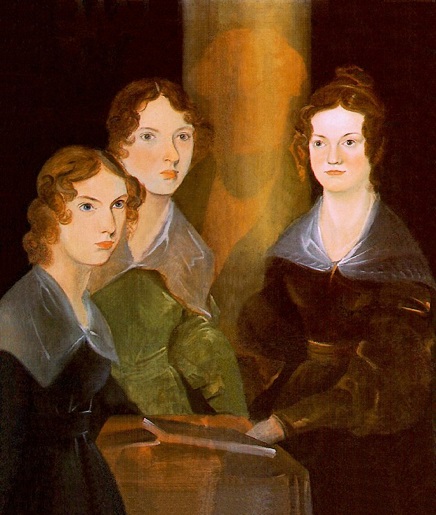
A portrait of the Brontë sisters.
Helen, who moved to Brussels in 2004, has made it her mission in life to educate people about the Brontë sisters and their time in Brussels. Villette provided her gateway into what she describes as her “obsession” with the Brontës.
“Shortly after moving here to work, I re-read Villette and became fascinated by the Brontë sisters’ time in Brussels,” says Helen. “You could say I became obsessed.”
The novel resonated with her because, she explains, it is an “expat novel”.
“It’s about an expat in Brussels observing, trying to adjust to a foreign city and foreign life. And it feels very modern, not only is it about a working woman, but there's a lot about mental illness in it – depression and isolation – and finding your place in a foreign city.”
According to Helen, Charlotte Brontë’s feelings towards Belgium were “intense, but they were also painful”.
“It was the place where she fell in love,” she says. “But she had mixed feelings because it was an unrequited love.”
Charlotte was, Helen explains, “fairly satirical about the country and the people in general”. She criticised Belgians, primarily for their Catholicism, but also for being “too phlegmatic, too laid back – and for not really caring very deeply about anything”.
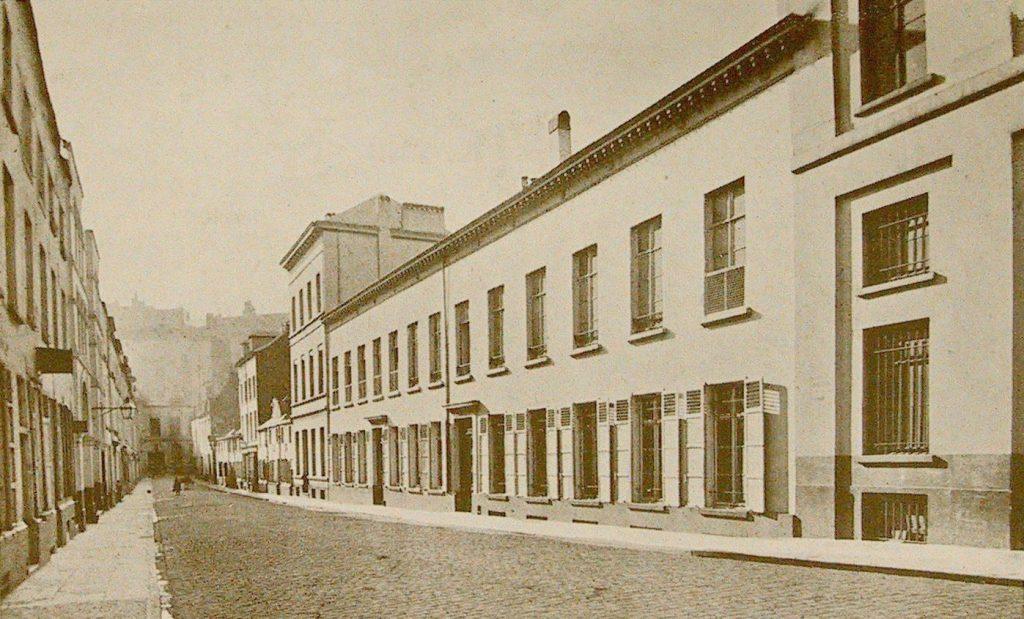
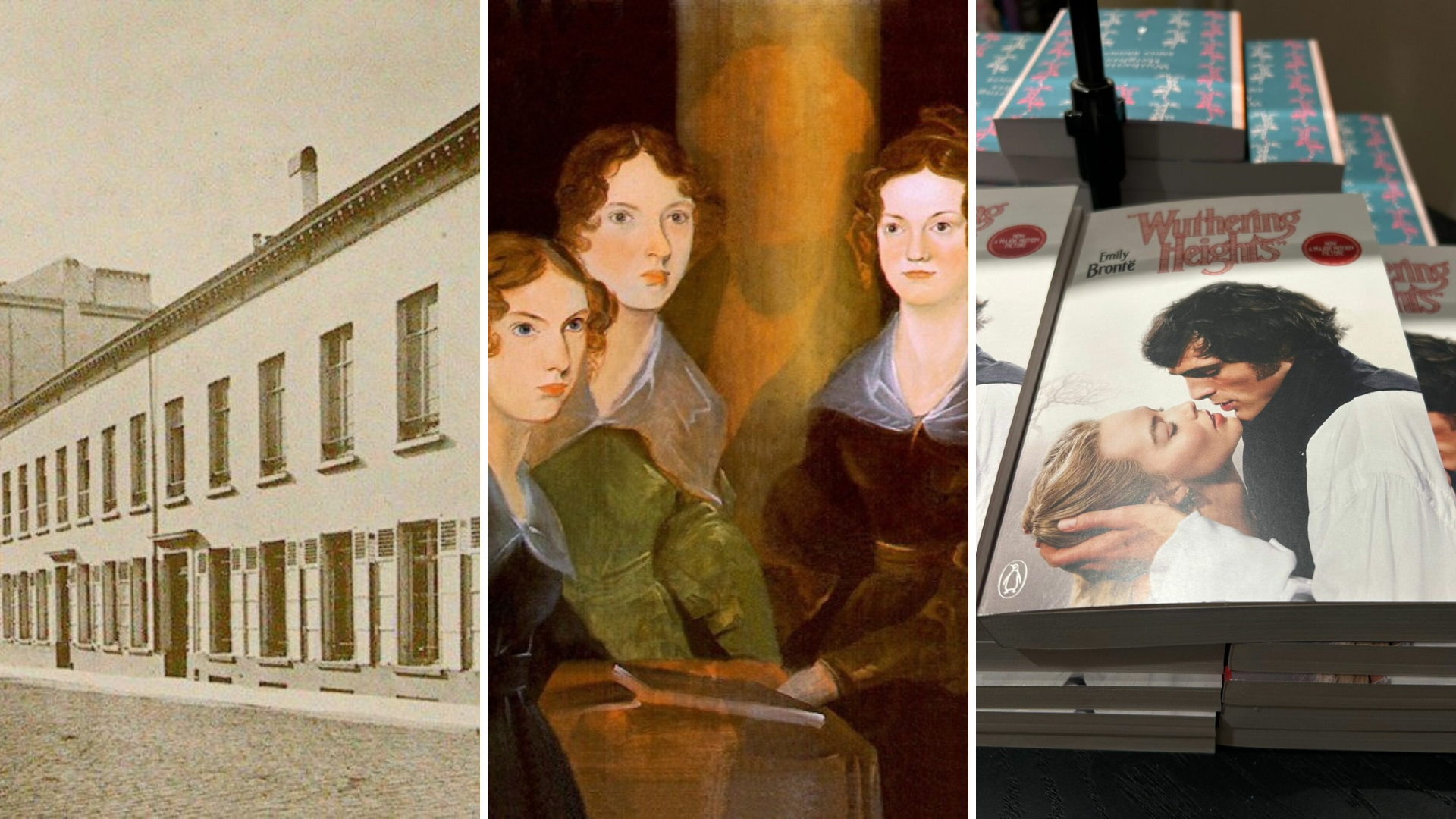
The Pensionnat Heger on Rue Isabelle. Credit: Brussels Brontë Group
On the trail of the Brontë sisters in Brussels
Last month, Helen invited The Brussels Times to join her and a hardy band of Brontë devotees on a fascinating Brontë-themed walking tour of Brussels.
Sadly, the pensionnat where the sisters lived and worked is no longer standing, but Helen showed us a number of landmarks associated with their stay in the city.
We started at the Chapelle Royale off Place Royale where the Brontës worshipped every Sunday, before making our way to the Bozar, which was built on the site of the Pensionnat Heger. A plaque commemorating their stay in Brussels can be found at the front entrance of the building.
Rue Isabelle, the street on which the pensionnat was located, was razed in the early 20th century to make way for Central Station and Mont des Arts, but Helen showed us the remnants of the old streets the sisters would have walked on: Rue Villa Hermosa and Rue Terarken.
We then took a short detour to a rain-soaked Parc Royal, the setting for a memorably deranged scene in Villette when the heroine wanders around in a hallucinogenic state after taking opiates.
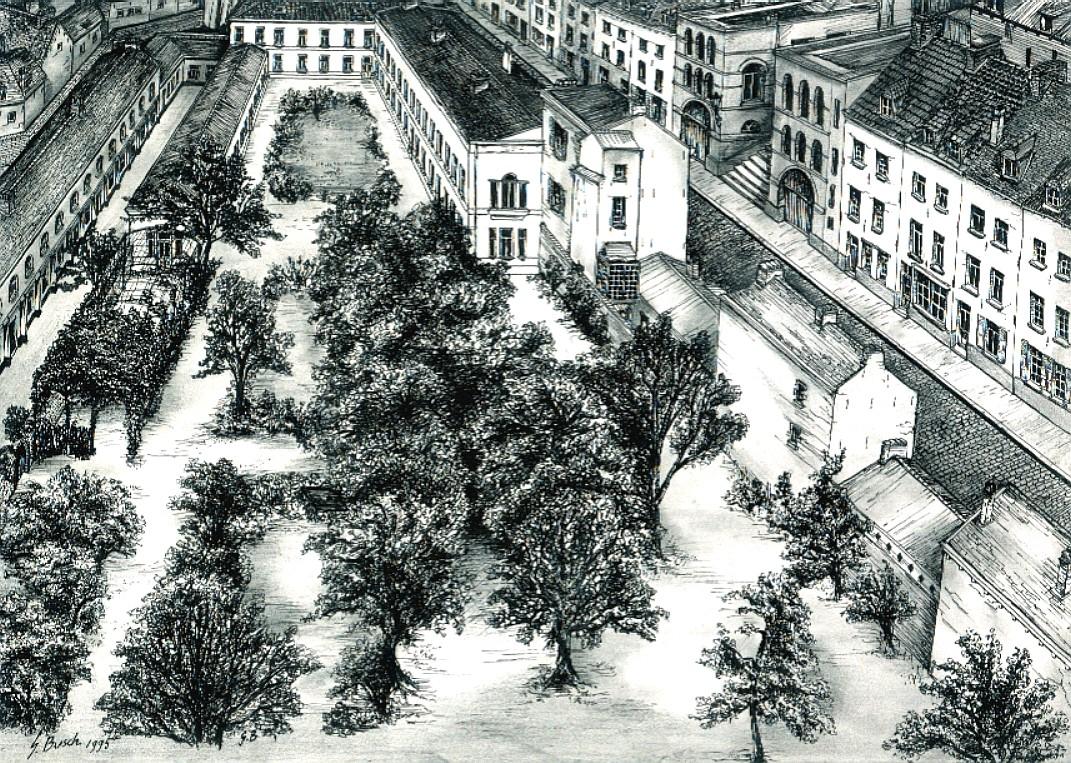
A panoramic view of the garden of the Pensionnat Heger in 1843. Credit: Brussels Brontë Group
The fact that so many of the sites in Brussels associated with the Brontës were razed in the name of modernisation is naturally a source of great sadness for fans of the sisters’ work.
Helen does not believe there was any sexism involved in the decision-making – but she thinks that if the sisters had been French or Dutch literary greats, then there might have been greater interest in preserving the sites.
In Helen's view, the destruction of the neighbourhood was simply a pragmatic choice by the city authorities. “They were redeveloping the whole area so it just wasn't feasible to keep the pension there,” she says.
“At the beginning of the 20th century, and the end of the 19th century, there were lots of plans for that area. They were already thinking of Mont des Arts...there was no way the pensionnat could have survived.”
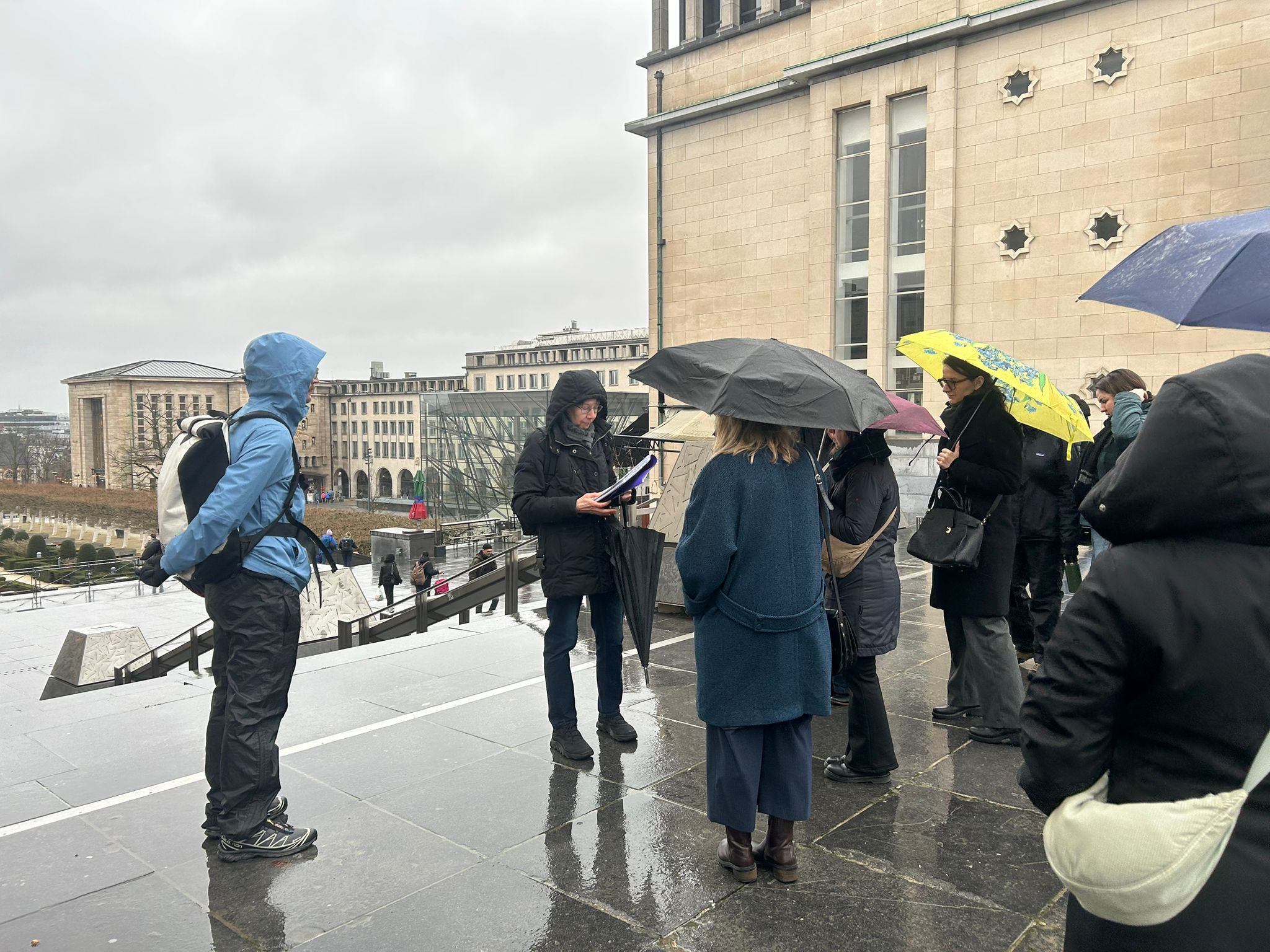
Helen MacEwan guides a group of Brontë fans on a walking tour through Brussels. Credit: The Brussels Times
Wuthering Heights reignites interest
Over the years, Helen and the Brussels Brontë Group have made valiant efforts to inform people about the Brontë sisters’ link to Brussels – but she feels more can be done by local authorities to promote the connection.
“I've always thought that the fact that the Bronte sisters lived here for two years is a really good literary link for Brussels and Brussels has never made as much of it as it could,” says Helen.
In addition to the guided walks, the group, which was founded in 2006, has organised numerous literary events over the years to celebrate the Brontë link. One of Helen's dreams is to see a small Brontë museum in Brussels one day – or at least a Brontë corner in one of the city's museums.
Emerald Fennel’s recent film interpretation of Emily Brontë’s only novel, Wuthering Heights, has been a boon for the group, reigniting interest in the sisters’ work among a new generation of readers.
While the reviews for film have been mixed to say the least, Helen is not among the naysayers. “Let's just say that I went expecting to hate it, and I found that I was quite well entertained,” she says. “It's just visually so wonderful.”
Helen is optimistic that the Brontë sisters' work will continue to be read and loved by future generations. It certainly bodes well that a dozen young people chose to sacrifice their Sunday lie-in to attend a rain-sodden walking tour.
"People are really interested in their lives so there's a kind of emotional appeal that most writers' lives don't have," she says.
"They feel this emotional attachment to these people who suffered, died young..It's a big thing with the younger generation, and each generation seems to rediscover it."
Helen MacEwan’s book, The Brontës in Brussels is out now in paperback and is available to buy at Waterstones Brussels.
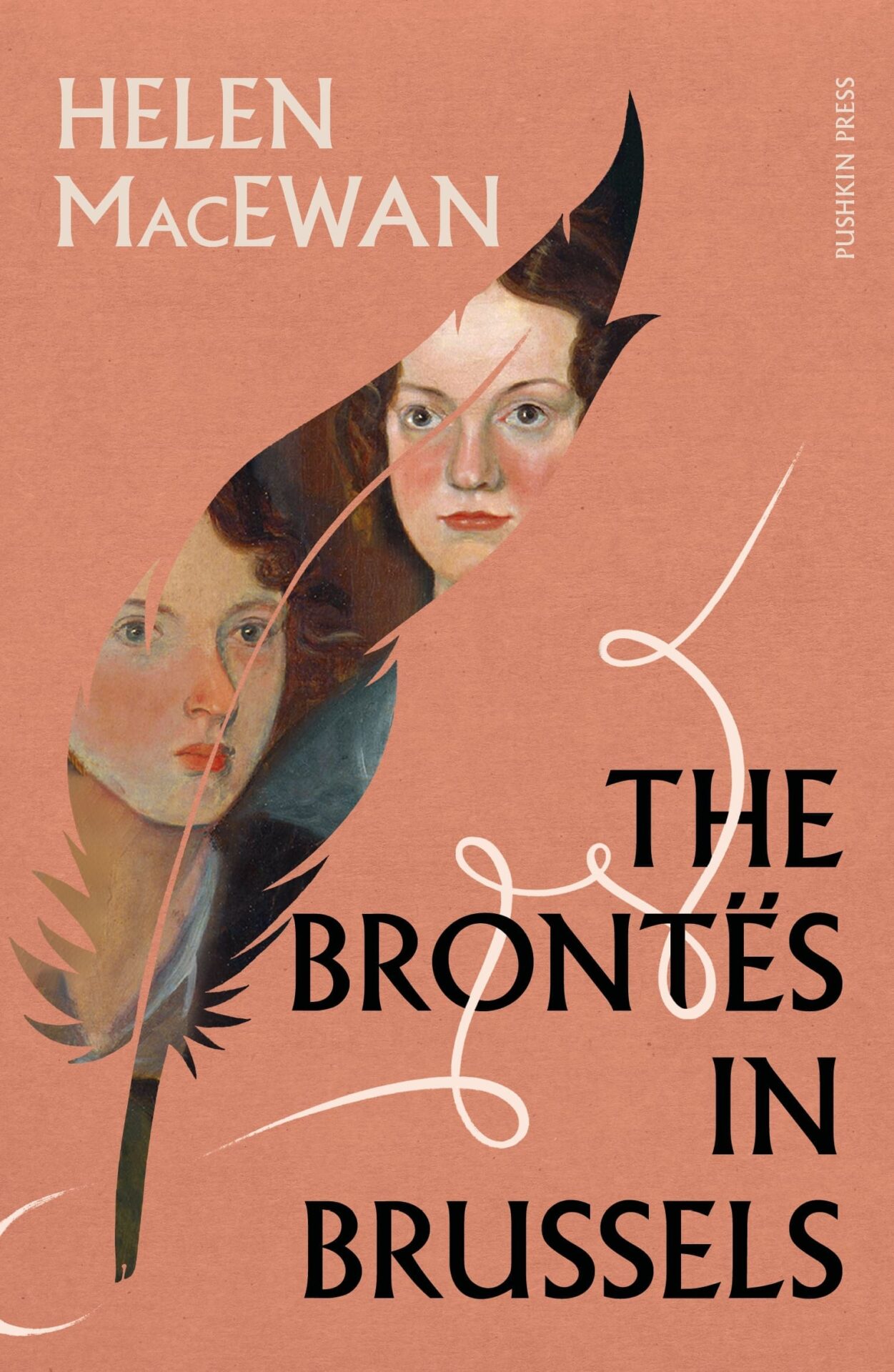 The Brontës in Brussels by Helen MacEwan
