
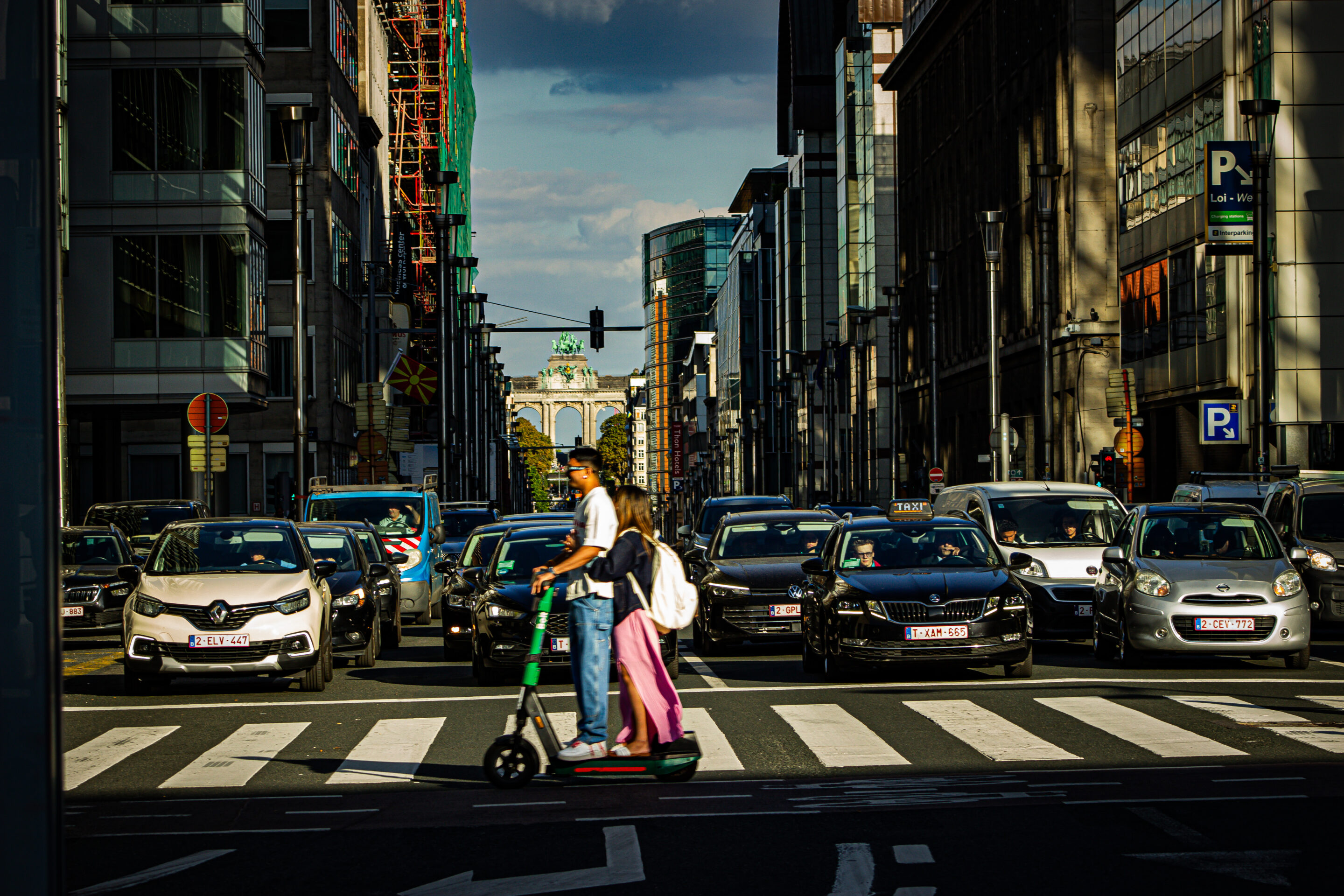
From coffee and friends to festivals and bike lanes, some Brussels residents say the little things make the biggest difference when it comes to finding happiness in the Belgian capital.
According to the latest NN-UGent National Happiness Survey, the people living in the capital are the happiest in the country.
Yet, the national average of Belgians' cheerfulness has been in decline since the end of the Covid-19 pandemic, dropping from 6.58 in 10 in 2025 to 6.53 at the start of 2026 – both down from 6.73 in early 2020.
With an average of 6.62 in 10, Brussels comes slightly ahead of Flanders at 6.61, with Wallonia trailing at 6.36.
To get an idea of people's feelings on the matter, The Brussels Times went to the streets with one question in mind: what are the little things in Brussels that make its residents happy?
Community
Worship leader Romualdo is an active member of his church and considers himself a "permanently joyful individual". Of Filipino origin, the 44-year-old father grew up in Brussels and cherishes most its simplicity.
"Coffee, people and community," he tells the Brussels Times. Romualdo speaks warmly of "tiny secluded places". Not massive coffee chains but smaller, more intimate, and peaceful spots where "you can sit quietly".
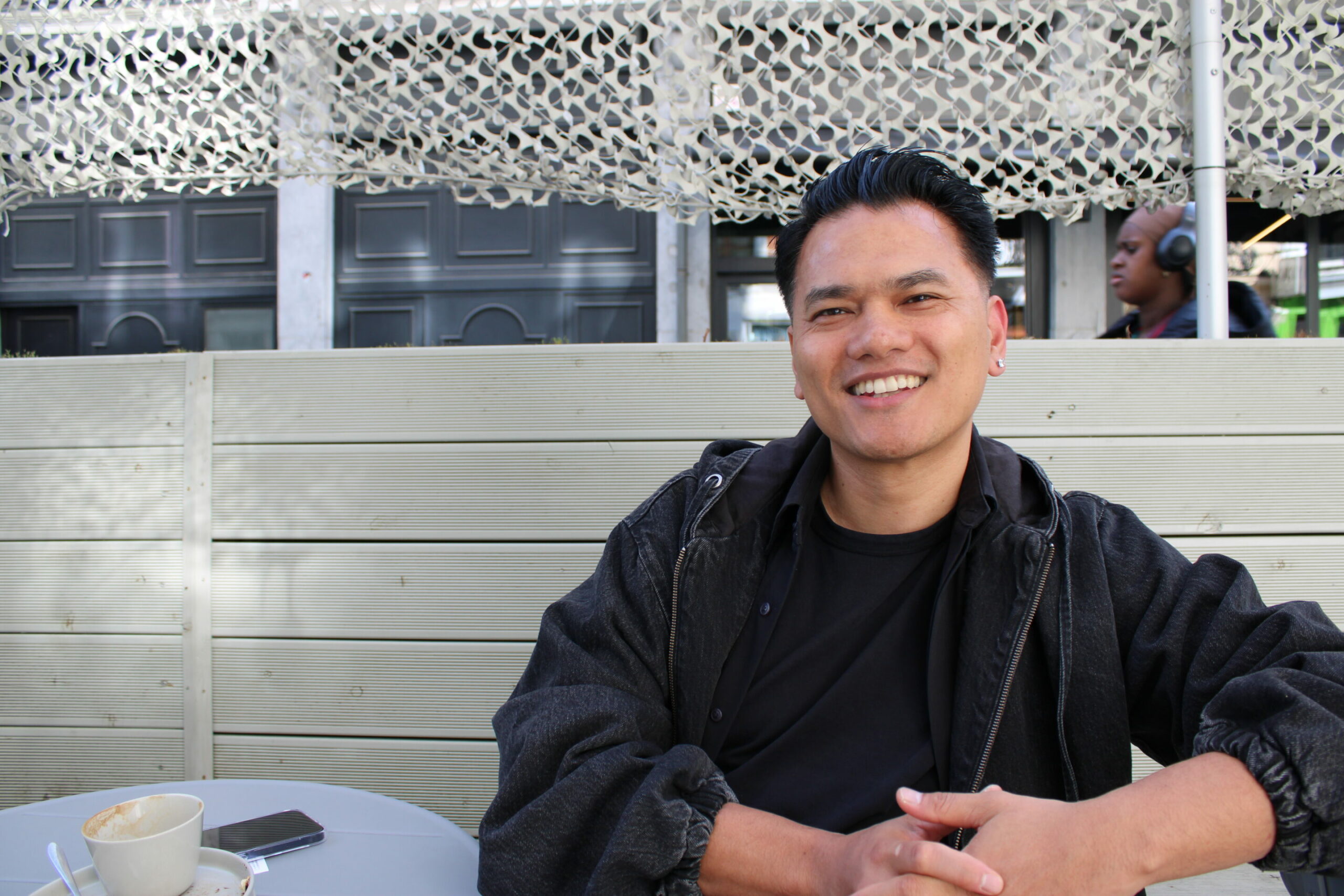
Romulado leads worship in a church in central Brussels; to him, community is paramount. Credit: The Brussels Times/ Anas El Baye
"These simple encounters give extra colour not only to life, but to the city itself," he smiles.
As a Filipino, he appreciates that Brussels does "not impose one dominant culture." Instead, Romualdo sees the capital proudly celebrating other cultures. "That openness matters," he insists.
Nonetheless, he misses the Philippines' intensely relational and family-oriented culture, a deeper and more rooted form of community than here in Brussels. "But that's just how we are," he adds.
Haydée, 37, a wife and mother, says that above all, she finds happiness in Brussels in the closeness to the people she loves. Born in Cuba, with roots in Guinea-Bissau and raised in Brussels from the age of two, she considers herself a happy person largely because she is well surrounded by family, her husband and friends.
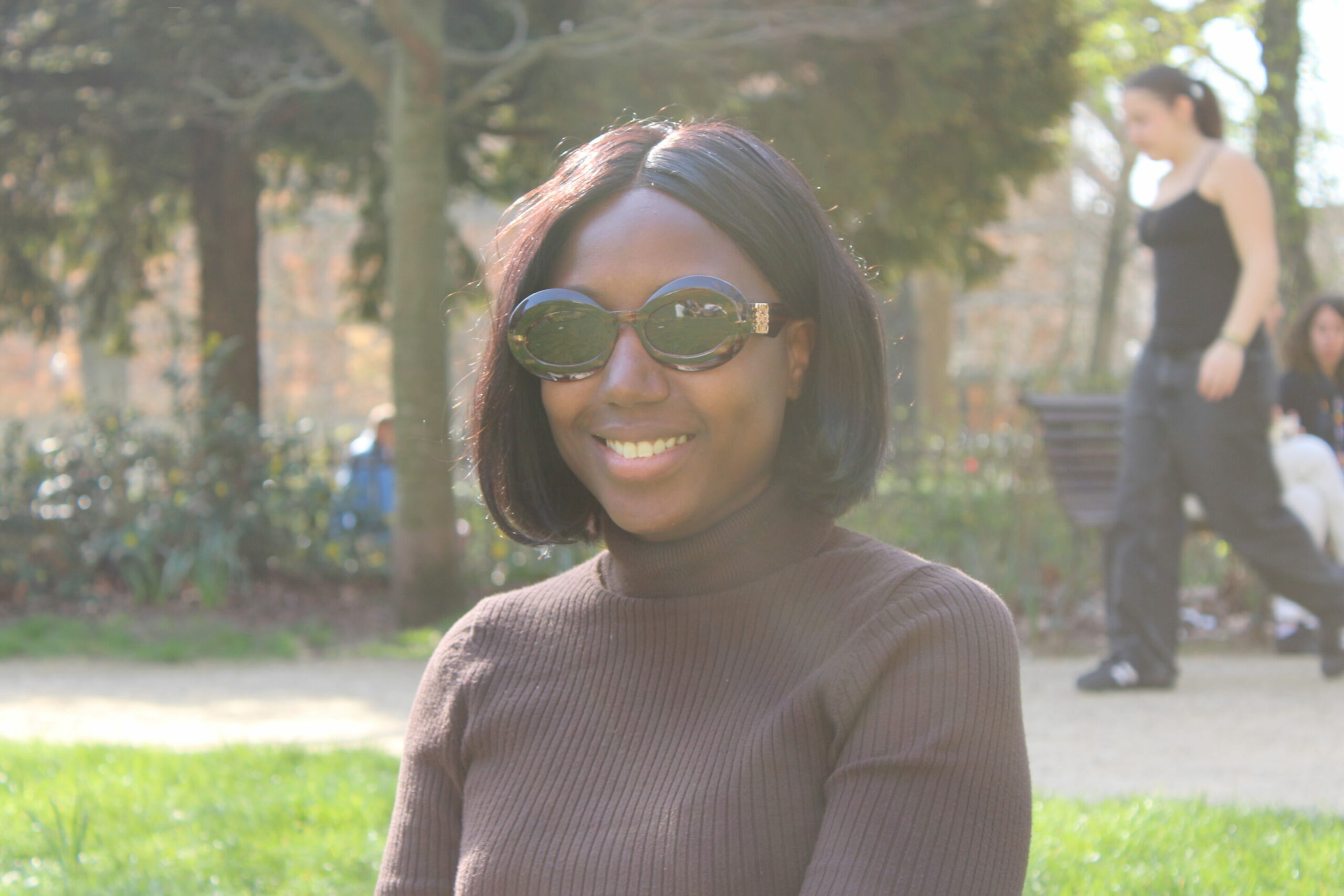
When asked to describe Brussels in one word, Haydée chose "unpredictable, like the weather." But also because of the city’s eclectic and diverse character. Credit: The Brussels Times/ Anas El Baye
The little things that make her happy in Brussels are moments of sharing: birthdays, time together, the social side of the city. When the sun is out, terraces become part of that pleasure. So do concerts, festivals and Brussels' packed cultural calendar.
"Happiness is not dependent on sunshine alone," she says. Even when the weather turns, people still meet up, go for a drink, eat out and try to enjoy themselves together.
Brussels, she says, remains comforting because it holds everything that matters to her: her circle of friends, her family, her husband. "It's like a cocoon."
Still, she sees the city's edge. Brussels can feel individualistic, and she regrets that its people are more reserved than those from the warmer, more immediately social cultures she knows from elsewhere. "Someone arriving in the city without already knowing people can feel very alone."
Liveliness
Frédéric De Gucht, 44, is the leader of Anders, the Flemish liberal political party in Belgium. Speaking not as a politician but as a Brussels resident, De Gucht says the capital never feels monolithic. Instead, it is a mosaic: of cultures, languages, places and people.
"There is always something to do, at almost any hour of the day or night," he adds.
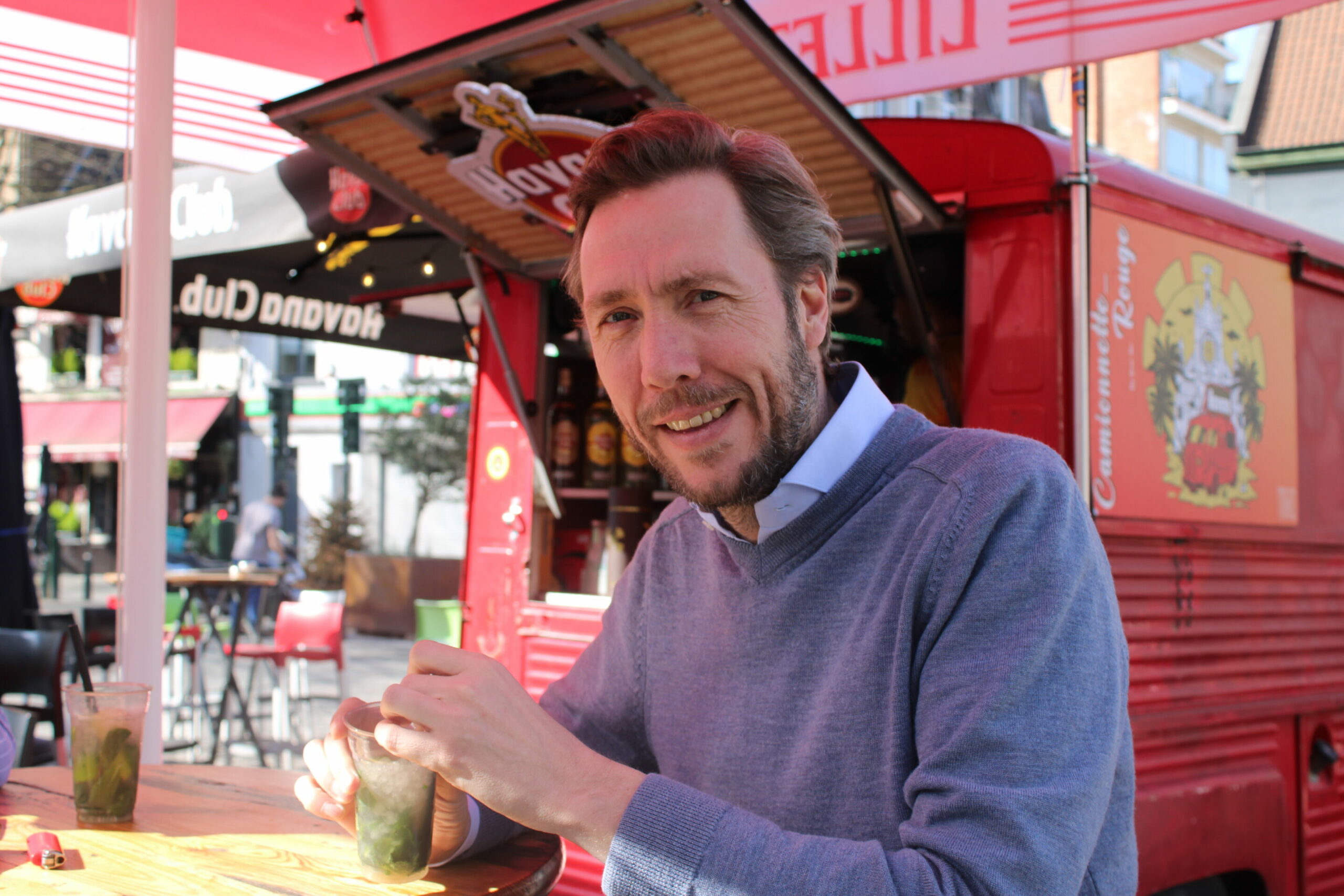
Often dubbed in the press as "the man who made a name for himself by saying no," Fréderic De Gucht played a considerable role in the talks leading to the Brussels government. Credit: The Brussels Times/ Anas El Baye
Brussels, he said, is always in motion. It offers the cuisines of the world, a mix of origins, and the chance to meet new people constantly.
English, French and Dutch can all be spoken in the same group of friends, he said, creating a cultural mix he finds deeply enriching.
Even after the 2016 terrorist attacks, he argues, Brussels residents seemed more united, not less. For him, longer daylight hours also lift the city, and when he travels, what he misses most are friends and the proximity of everything.
Brussels' food scene, he added, is underestimated.
Sun and cycling lanes
In another part of the city, Michelle, 26, and Matteo, 27, have freshly arrived to start their traineeship in the European Parliament. As Italians, they both appreciate the sun in Brussels, if and when it shows up. "If it were like this all the time, we'd be sold," they laugh.
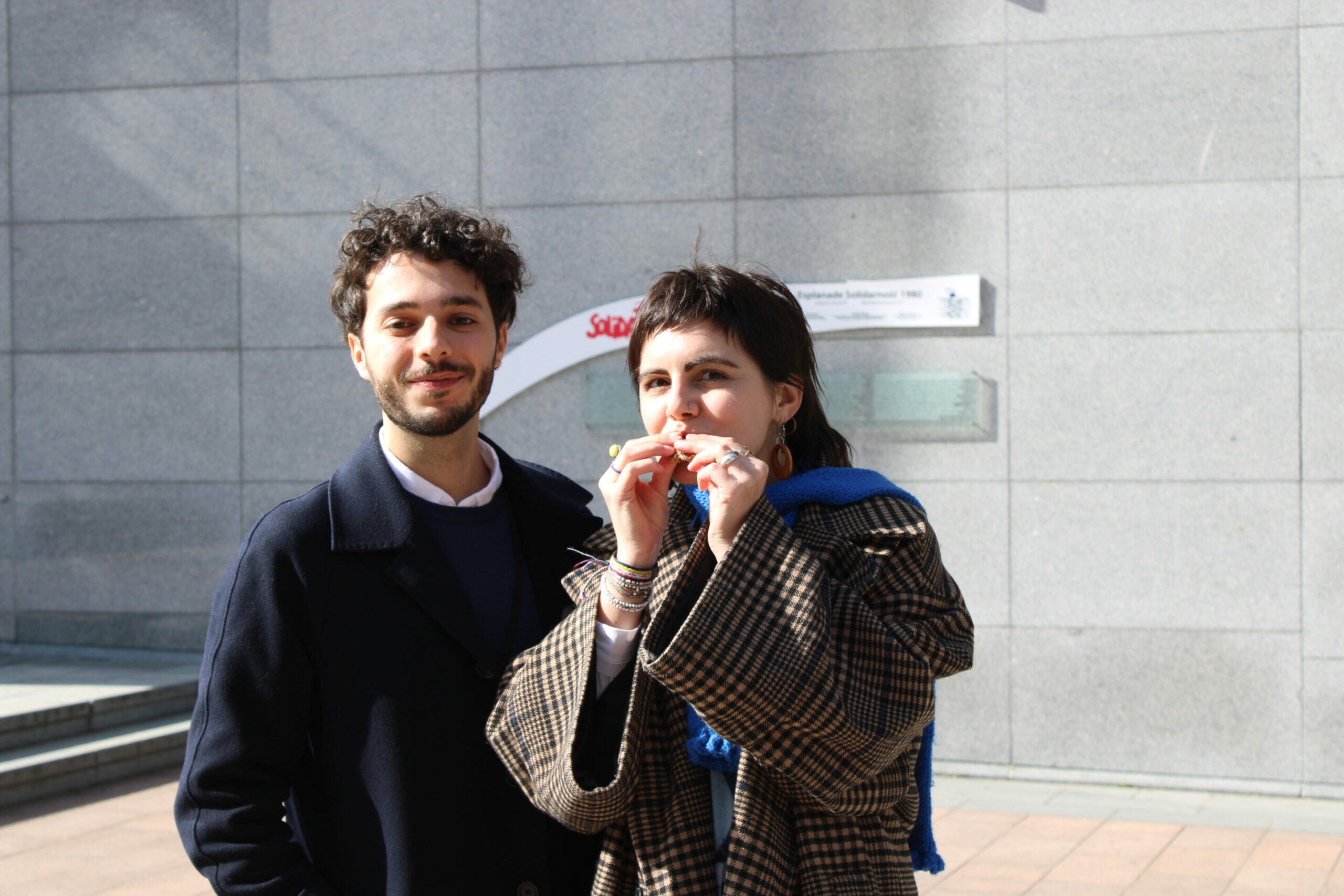
In the week they have been in the capital, the two friends are experiencing the excitement of discovering Brussels. Credit: The Brussels Times/ Anas El Baye
Little things like discovering the cycling lanes on Brussels roads made Michelle happy. In her home country, she said, people often risk their lives commuting by bike.
"Cycling is accessible, normal and integrated into urban life," she notes.
Upon arrival, the young pals fell in love with the city's "lively, young and international energy", where "English and other languages are heard everywhere" and "the underground scene is impressive with fairly cheap drinks."
Easy-going rhythm
Hamburger restaurant manager Filip, 28, originally from Walloon Brabant, enjoys the "little free and affordable events" Brussels has to offer.
"Pride, Fête de la Musique and guinguettes, for example," he says.
When he travels abroad, the thing he misses most is getting from A to B in 30-40 minutes, something that is easily doable with Brussels public transport.
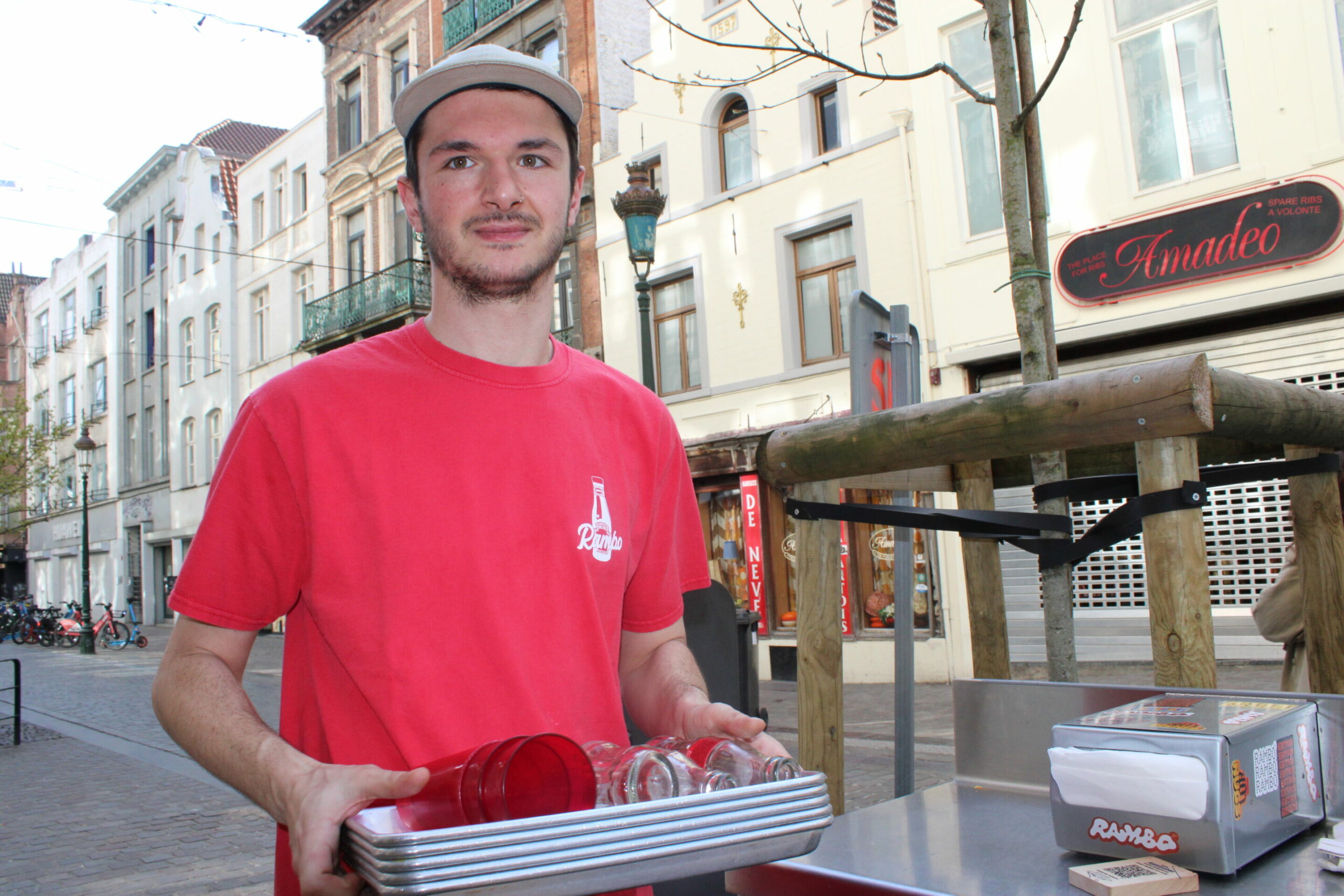
Even as a foreigner, spending a week in the city can quickly build habits, Filip says: a favourite café, a favourite butcher, a favourite bakery. Credit: The Brussels Times/ Anas El Baye
He also loves the fact that night shops stay open late, that cigarettes can still be bought after 20:00, and that "alcohol remains available late into the night."
Brussels, for him, is also full of easy-going and kind people willing to help.
Unexpected encounters
The survey points out that for the first time, retirees in Belgium are no longer happier than the working population. Meanwhile, happiness scores are lowest among unemployed people (5.32/10) or those with a disability (5.13).
According to the researchers, this is not solely due to finances.
"People who are jobless or disabled primarily experience a lack of autonomy, have less of a sense of accomplishment, and struggle with a lack of purpose. This presents a significant policy challenge, both in terms of reactivation and prevention," Professor Lieven Annemans told Belga News Agency.
Éliane, 85, a retired clinical psychologist born in Brussels, finds joy in strolling through remarkable sites, such as those around the Town Hall and Monts-des-Arts.
Wary of a "general retreat into oneself in society" and "a loss of solidarity and exchange," Éliane still thinks that life in Brussels brings unexpected encounters.
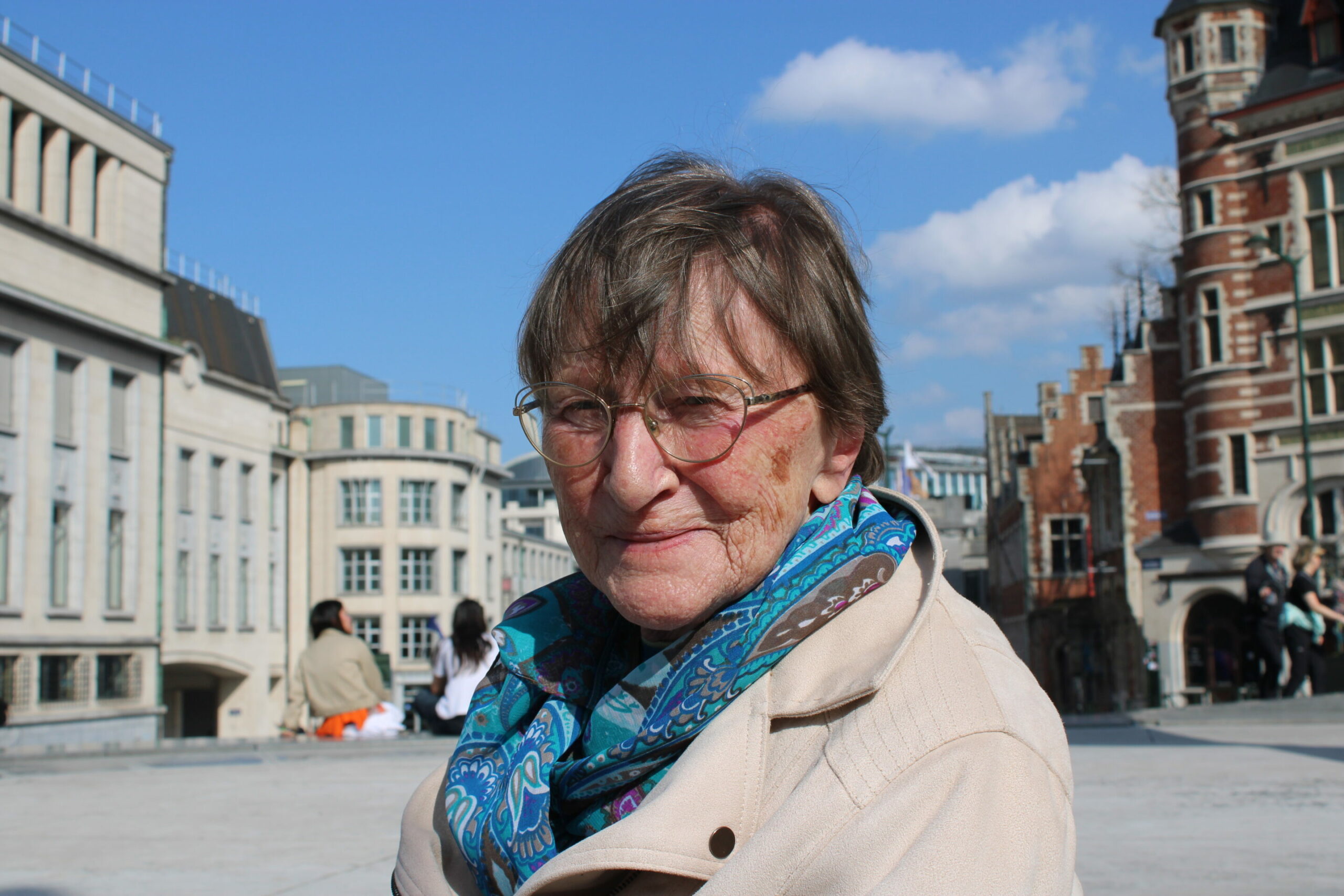
Éliane is a Brusseleir at heart, a former clinical psychologist. She pointed out that during her practice, she concluded that happiness is something that one constructs little by little. Credit: The Brussels Times/ Anas El Baye
On retirement, however, she strongly pushed back against the notion that stopping work necessarily brings unhappiness. She loved her profession, but retirement allowed her to realise projects she had long kept waiting in drawers.
She had always had plans, she said, and retirement finally gave her the time to pursue them.
Cédric, 26, now working in a CBD shop, is simply content that he found a job. "Being without work was stressful," he insists.
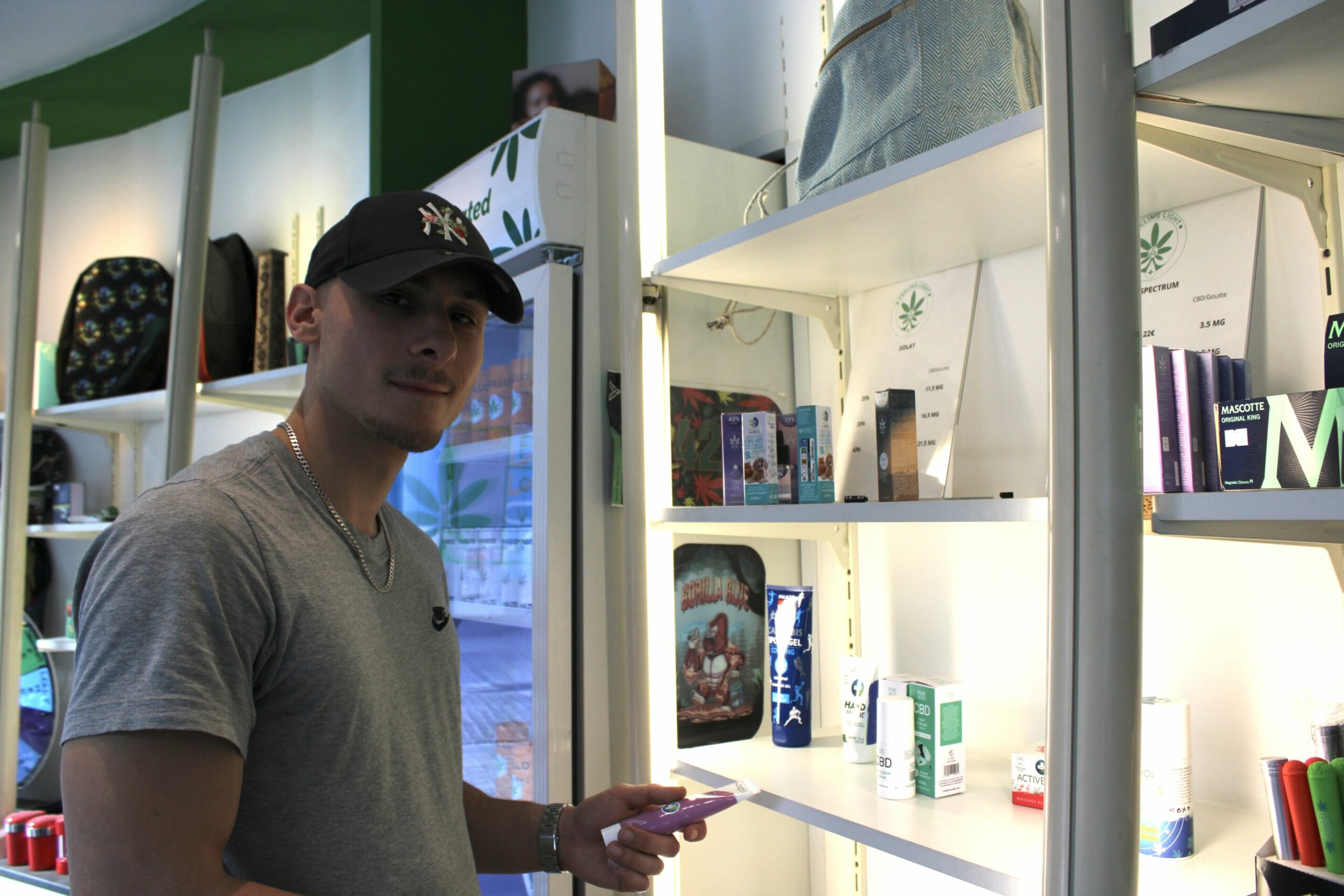
Cédric, longtime jobless, is content to have a new job. Credit: The Brussels Times/ Anas El Baye
Now able to provide for himself and his family, he feels there should be more family-friendly spaces in the city. When he was a child, he remembers going to aquaparks and enjoying the slides – a simple thing, he says, that can bring joy to his child now.
The little things that make Brussels residents happy are not all the same. Brussels is a city that is "polyvalent" for Cédric, "curious" for De Gucht, "a melting pot" for Éliane, "unpredictable" for Haydée and "easy" for Filip.
